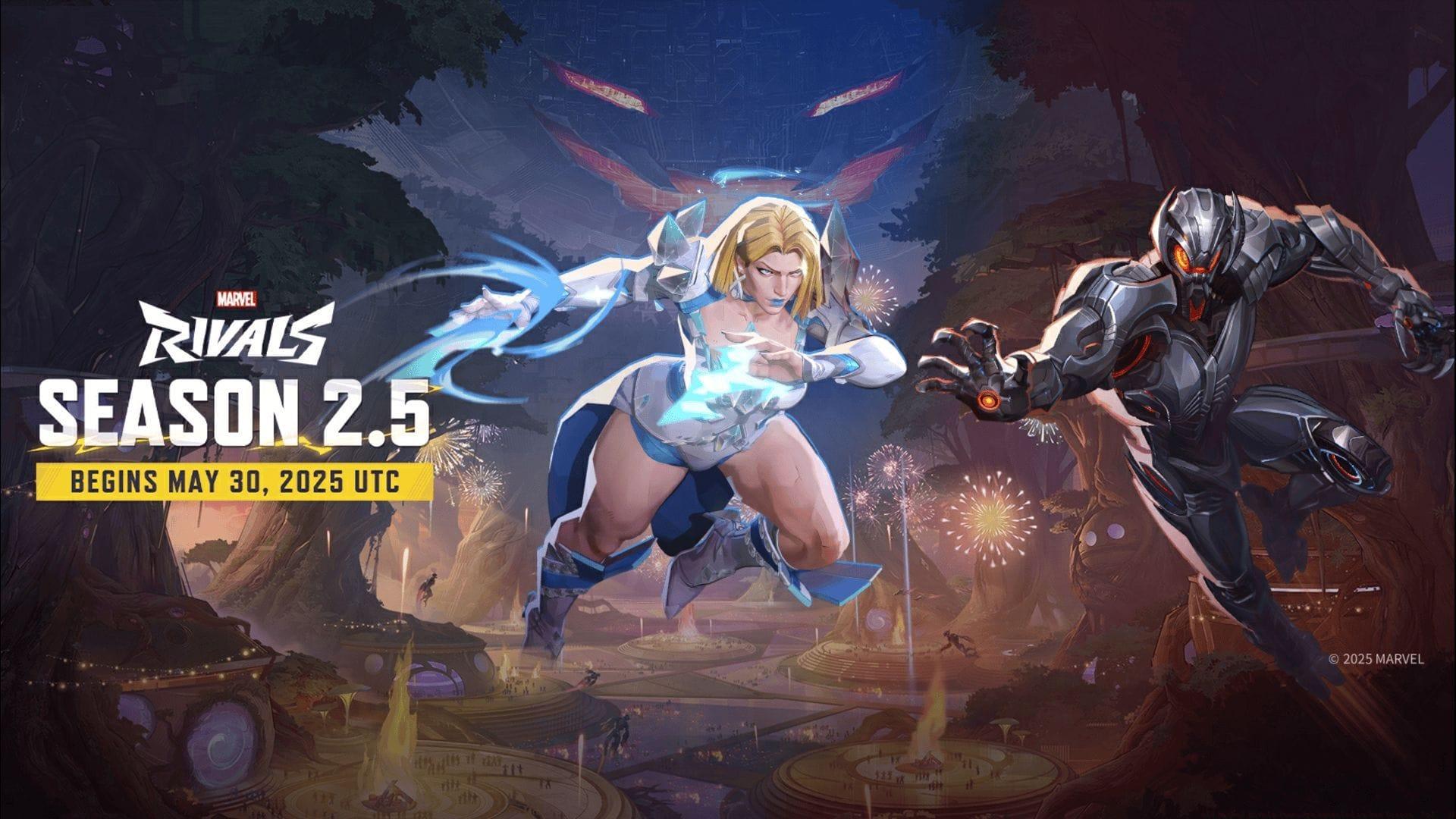
Strategic guide to Marvel Rivals Season 2.5 Team-Up Ability changes: new combos, meta impact, and competitive tactics.
Introduction: The Meta Shift in Season 2.5
Team-Up changes in Marvel Rivals Season 2.5 (Image via NetEase Games)
Team-Up changes in Marvel Rivals Season 2.5 (Image via NetEase Games)
Marvel Rivals Season 2.5 is poised to deliver a significant meta shake-up, with the recent Dev Vision Vol. 06 video from NetEase Games providing the first deep dive into the incoming changes. The focal point of this update is a substantial overhaul of the Team-Up Ability system, which serves as the cornerstone of hero synergy and coordinated play. This isn’t merely an addition of new content; it’s a deliberate rebalancing act designed to retire underperforming or overly dominant synergies and introduce fresh tactical combinations that will demand new strategies from both casual and competitive players. Understanding these changes is crucial for maintaining a competitive edge as the landscape evolves.
The adjustments follow a clear design philosophy: to increase strategic diversity and prevent the meta from becoming stale. By cycling out certain pairings and introducing others, the developers ensure that the optimal team compositions are in constant flux, which keeps the gameplay experience dynamic. For players, this means that mastery of the game now includes adaptability—the ability to quickly learn and leverage new synergies while discarding obsolete tactics.
New Team-Up Abilities: Analysis and Strategic Potential
Here are the newly added Team-Up Abilities:
Jeff-Nado: Jeff the Land Shark teams up with Storm. This pairing likely creates a powerful area-denial or crowd-control combo, merging Jeff’s disruptive melee presence with Storm’s elemental weather control. Expect synergy around locking down objectives.
Symbiote Shenanigans: Venom teams up with Jeff the Land Shark. This suggests a brutal, close-quarters assault duo focused on overwhelming single targets or causing chaos in the backline, capitalizing on both heroes’ aggressive mobility.
Operation: Microchip: The Punisher teams up with Black Widow. This indicates a tactical, precision-strike ability, potentially involving target marking, vulnerability debuffs, or coordinated takedowns of high-priority enemies.
Chilling Assault: Luna Snow teams up with Hawkeye. This likely combines Luna’s ice-based slowing fields with Hawkeye’s precision arrows, creating a deadly synergy for trapping and eliminating slowed targets from a distance.
Rocket Network: Peni Parker teams up with Rocket Raccoon. This points towards a technology and gadget-focused synergy, possibly involving turret enhancements, shared cooldown reductions, or combined area bombardment with mech and explosives.
Stark Protocol: Iron Man teams up with the recently added Ultron. As a pairing of two tech geniuses, this ability could revolve around drone swarms, defensive matrix overrides, or a powerful combined beam attack, reshaping the tech-support meta.
While the exact effects remain undisclosed, the naming conventions and hero pairings offer strong clues. Strategic players should prepare by understanding the core design of each hero. For example, tech-based pairings (Rocket Network, Stark Protocol) will likely dominate objective-holding strategies, while brawler combos (Symbiote Shenanigans) will be key for aggressive, dive-centric team compositions. A common mistake will be to undervalue these new synergies before their full potential is revealed in high-level play.
Retired Combos: Understanding the Removed Synergies
Here are the four existing Team-Ups that will be removed soon:
Cheering Charisma: Jeff teams up with Luna Snow. This removal likely addresses a balance issue where the healing/support synergy between these two may have been too reliable or stifling to counterplay in certain team compositions.
Allied Agents: Hawkeye teams up with Black Widow. Retiring this classic spy duo synergy suggests a shift away from pure stealth-and-snipe combos, possibly to make room for more diverse tactical pairings for these heroes.
Ammo Overload: Rocket teams up with The Punisher. This removal indicates a decoupling of sustained ballistic damage synergies, which may have limited design space for other heroes or led to overly oppressive spam tactics.
Symbiote Bond: Venom teams up with Spider-Man and Peni Parker. Cutting this three-hero combo simplifies the synergy web and likely preempts balance nightmares associated with coordinating three specific heroes for one powerful effect.
Additionally, Iron Man has been removed from the Gamma Charge combo. This is a critical change. Gamma Charge, likely involving Hulk, now loses its tech-enhancer. This significantly alters the viability of certain tank-buster strategies and forces teams to find new ways to empower their primary initiators. Players who relied on this combo must now explore alternative pairings for both Iron Man and the Gamma Charge core hero, fundamentally changing their approach to engagements.
The retirement of these abilities creates immediate knowledge gaps. Teams must audit their standard playbooks and eliminate tactics that depend on these specific interactions. The meta will initially be unstable as players discover which retired synergy leaves the biggest strategic hole and what new pairing best fills it.
Meta Impact and Strategic Predictions
That’s everything you need to know about the new and changed Team-Up Abilities in Season 2.5. The meta keeps shifting with every update, ensuring that the gameplay stays fresh and exciting. It will be interesting to see how the professional players will use the new abilities in competitive events such as the upcoming Ignite Stage 1.
The immediate impact will be a period of experimentation and volatility. The six new abilities introduce variables that will disrupt established tier lists and counter-pick strategies. We predict the following meta shifts:
Rise of Tech Comps: With Stark Protocol and Rocket Network, compositions centered around technological area denial and sustained gadget damage will become more prevalent, potentially countering traditional brawler-heavy teams.
Shift in Tank Synergy: The removal of Iron Man from Gamma Charge devalues certain tank partnerships, possibly elevating heroes who can provide similar offensive buffs through other means.
New Priority Targets: Duos like Jeff-Nado (Jeff/Storm) will likely become prime targets for focus fire, as their combined crowd-control potential could single-handedly win team fights if left unchecked.
Adaptation Period: Competitive players during Ignite Stage 1 will have a narrow window to master these new synergies. Teams with faster adaptation times and deeper analytical understanding of the new pairings will gain an early tournament advantage.
The key for players is not to view this as a simple substitution list, but as a complete recalibration of team dynamics. Successful adaptation requires analyzing the strategic intent behind each change, not just memorizing new names.
Practical Playstyle Adaptations and Common Pitfalls
To successfully navigate the Season 2.5 transition, players must adjust their mindset and gameplay. Here are practical tips and common mistakes to avoid:
Tip: Re-learn Your Mains: If your main hero gained or lost a key Team-Up, spend time in custom games exploring their new optimal partner(s). Understand the new combo’s likely range, cooldown, and tactical use case.
Tip: Draft Adaptively: In competitive modes, your draft strategy must evolve. Don’t just pick strong individual heroes; pick heroes whose new Team-Up synergies complement your team’s overall composition (e.g., pairing area control with dive heroes).
Common Mistake: Clinging to Old Meta: Forcing your old favorite duo that had its Team-Up removed is a recipe for failure. Their synergy is gone; treat them as independently powerful heroes who must now work with new partners.
Common Mistake: Misreading Ability Intent: Don’t assume “Symbiote Shenanigans” is purely for damage. It might be a mobility or disruption tool. Wait for official details or pro play demonstrations before locking in your assumptions.
Optimization for Advanced Players: High-level teams should pre-plan rotations for their new duo abilities. For example, if Stark Protocol is a powerful cooldown-based ability, structure your engagement rhythm to have it available for key objective fights.
Furthermore, keep an eye on community discoveries. The first week of the patch will see rapid innovation. Watch professional streams and tournament matches from Ignite Stage 1 closely to see the most effective applications of the new Team-Ups in high-pressure environments.
Competitive Outlook and Pro Player Strategies
The upcoming Ignite Stage 1 tournament will be the first major test of the Season 2.5 meta. Professional teams have the most to gain from quickly deciphering the optimal new synergies. We anticipate several strategic layers to emerge:
Pocket Strategies: Teams may hide their most potent new Team-Up combinations during early rounds, revealing them only in crucial playoff matches to catch opponents unprepared.
Counter-Drafting: The draft phase becomes even more critical. Banning a hero not just for their individual strength, but to dismantle an emerging powerful duo (e.g., banning Ultron to nullify Stark Protocol), will be a key tactic.
Composition Archetypes: New team composition archetypes will solidify, such as “Tech-Poke” comps built around Rocket Network and Stark Protocol, or “Freeze-Trap” comps centered on Chilling Assault.
The teams that invest time in theory-crafting the potential effects, scrimmaging extensively with the new pairs, and developing flexible strategies will dominate the early Season 2.5 competitive scene. For viewers, this makes the tournament exceptionally exciting, as the meta will be discovered live on the global stage.
Read more articles here:
Amaranth leaked in Marvel Rivals: Everything we know
Marvel Rivals announces new tournament series featuring a $3 million prize pool
Marvel Rivals Season 0 Battle Pass returns for a limited time