
TL;DR
- GTA 2 suffered from clunky mechanics and minimal innovation despite visual upgrades
- Original GTA established the open-world crime genre with revolutionary freedom mechanics
- Liberty City Stories demonstrated impressive technical adaptation for handheld platforms
- Each title contributed uniquely to Rockstar’s evolving design philosophy
- Understanding these foundations provides context for modern GTA innovations
Grand Theft Auto represents one of the most transformative developments in open-world gaming history. While contemporary titles like Red Dead Redemption and Spider-Man games offer spectacular experiences, none match the unprecedented freedom that GTA pioneered. This criminal sandbox phenomenon launched in 1997 and continues evolving, with anticipation building for Rockstar’s next major release.
As Rockstar expanded the universe through spinoff series and prequels, it’s essential to acknowledge these contributions alongside mainline entries. This analysis includes significant supplemental titles like Liberty City Stories and Vice City Stories, though downloadable content integrated into original game narratives is excluded. Let’s explore the foundational titles that shaped gaming’s most influential franchise.
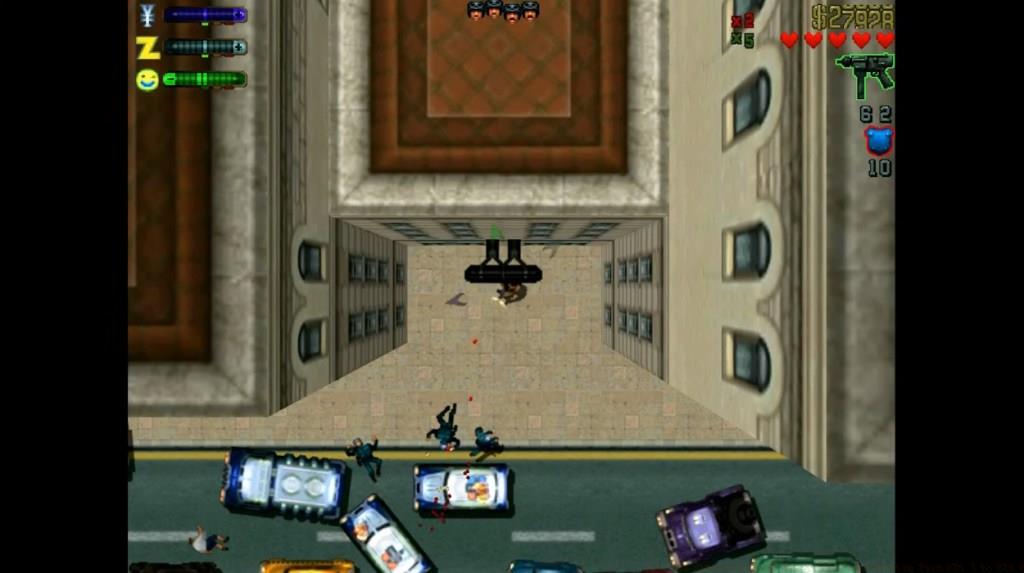
Grand Theft Auto 2 occupies the bottom position primarily due to its failure to deliver meaningful evolution. Following the groundbreaking top-down open-world original, this sequel offered superficial visual enhancements without addressing core gameplay limitations. The control scheme remained awkwardly implemented, with vehicle handling particularly suffering from imprecise responsiveness that undermined the chaotic fun central to the series identity.
Unlike later narrative-driven entries, GTA 2 continued the tradition of minimal storyline structure, focusing instead on criminal mission progression. This approach highlighted the game’s fundamental weakness: insufficient innovation. With additional development time dedicated to mechanical refinement and mission diversity, Rockstar could have created a worthy successor rather than what felt like an expanded level pack.
Common Pitfall: Many players struggle with the dated control scheme. Practice vehicle theft in less crowded areas initially to master the awkward steering mechanics before attempting high-speed pursuits.

The original Grand Theft Auto established the blueprint for everything that followed. While technological limitations resulted in minimal distinction between this debut and its immediate sequel, the 1997 release fundamentally altered gaming landscapes by introducing unprecedented player freedom. The isometric perspective concealed remarkably sophisticated systems that rewarded experimentation and chaotic creativity.
Grand Theft Auto’s genius lay in its sandbox philosophy—players weren’t merely completing missions but inhabiting a living criminal ecosystem. The game prioritized emergent gameplay through its wanted system, vehicle variety, and urban environment design. Released during an era dominated by linear experiences, this title pioneered the concept of virtual playgrounds where the journey mattered more than any predetermined destination.
Advanced Strategy: Master the police evasion mechanics by learning how wanted levels decrease when out of sight. Use alleyways and parking garages strategically rather than simply outrunning pursuit.

Liberty City Stories represents a remarkable technical achievement, delivering a nearly complete 3D GTA experience on handheld hardware. This prequel to GTA III maintained the series’ signature open-world design while adapting mechanics for portable play sessions. The mission structure featured more compact objectives suitable for on-the-go gaming without sacrificing the franchise’s trademark freedom.
The narrative followed Toni Cipriani’s rise through Liberty City’s criminal underworld, providing backstory to locations and characters familiar from GTA III. While hardware limitations necessitated some compromises in draw distance and pedestrian density, the core experience remained authentically Grand Theft Auto. The game demonstrated Rockstar’s ability to scale their vision across hardware generations while preserving essential gameplay elements.
Optimization Tip: Adjust mission approach for portable play—complete shorter side missions during brief sessions and save major story missions for longer gameplay periods when you can fully engage with the narrative.
Technical Insight: The developers achieved this portable adaptation through clever memory management and simplified physics systems that maintained the illusion of complexity while operating within hardware constraints.
Action Checklist
- Practice GTA 2 vehicle controls in empty districts before attempting missions
- Master police evasion techniques in original GTA using environmental cover
- Adapt play sessions for Liberty City Stories based on mission length
- Explore emergent gameplay opportunities in each title’s sandbox
- Compare mechanics evolution across the three titles to understand series development
No reproduction without permission:Tsp Game Club » Best GTA Games of All Time (Ranked) Comprehensive analysis of GTA's foundational titles with expert insights and practical gaming strategies