
TL;DR
- Sleep in Private Rooms remains the fastest method to advance time cycles
- Audio cues like rooster crows and wolf howls signal time progression naturally
- Night offers stealth advantages but reduces visibility for navigation
- Daytime provides better visibility but increases enemy detection ranges
- Strategic time management can optimize mission success and resource gathering
Death Stranding 2 introduces revolutionary gameplay enhancements that significantly alter how players interact with the game world compared to its predecessor. The implementation of a dynamic day-night cycle represents one of the most substantial improvements, addressing a limitation from the original game where technical constraints with the Decima Engine prevented this feature. Unlike the smoking mechanic used to pass time in Metal Gear Solid V, Death Stranding 2 employs more immersive methods for temporal progression that directly influence strategic decision-making.
As you journey across the expansive landscapes, time advances organically through natural progression, though this method operates at a deliberately measured pace. The game provides distinctive audio indicators to signal temporal shifts—dawn announces itself with a rooster’s crow, while dusk is heralded by the haunting howl of distant wolves. These auditory cues serve as your primary method for tracking the passage of time without requiring constant menu checks.
The most efficient approach to manipulate time cycles involves utilizing the sleep mechanics within Private Rooms, which we’ll explore in detail. Understanding these systems becomes crucial for optimizing your gameplay experience and mission success rates.
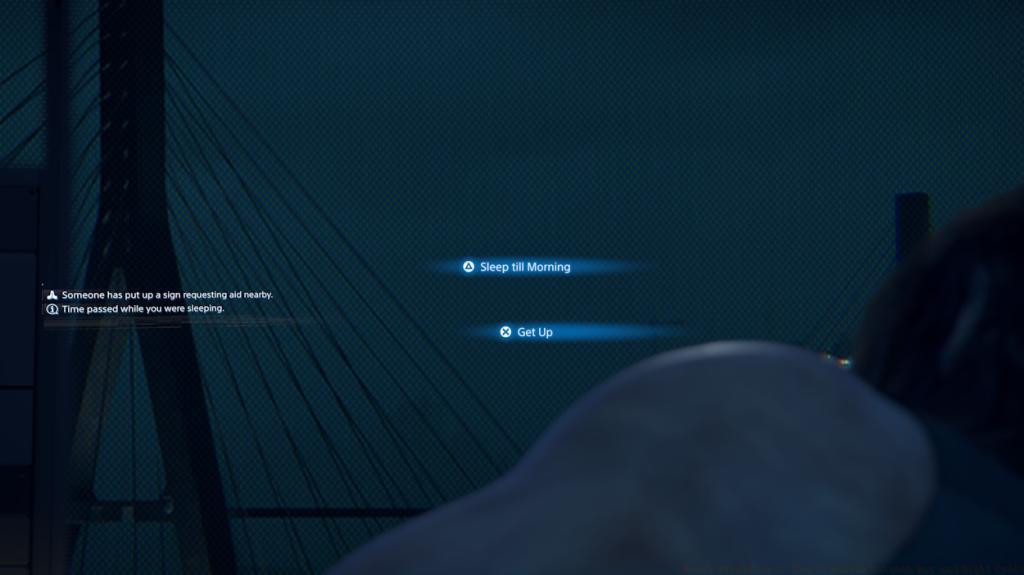
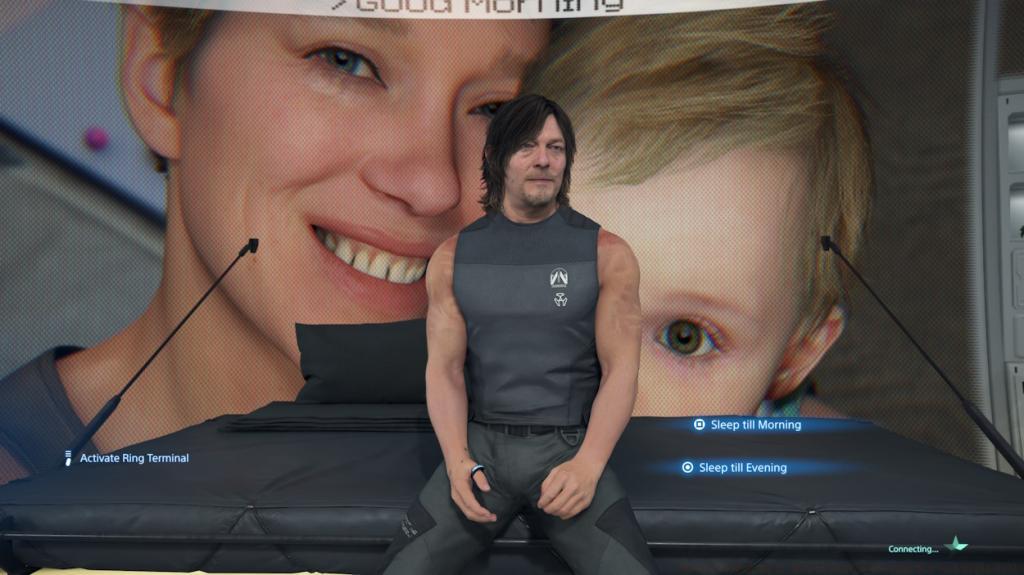
Locating and entering the nearest Private Room initiates an automatic sleep sequence for Sam Bridges. The duration of sleep correlates directly with your entry timing—arriving during evening hours results in awakening at night, while daytime entries yield morning awakenings. This system provides predictable control over time advancement, allowing strategic planning around mission requirements and environmental conditions.
- Upon reaching any Private Room facility, Sam will immediately begin resting once inside. The time-skip magnitude depends entirely on your arrival moment; evening entries typically advance to nighttime, while later arrivals may progress to dawn.
- After initial awakening, players retain the option to continue sleeping through additional cycles via the prompt displayed above the bed interface.
This sleep continuation feature offers exceptional flexibility for players who need specific time conditions for their objectives. Whether preparing for a nighttime infiltration or coordinating a daytime supply run, the ability to fine-tune your temporal positioning becomes an invaluable tactical tool. Many experienced players utilize this to synchronize their operations with favorable weather patterns or reduced enemy patrol densities.
The day-night implementation in Death Stranding 2 transcends mere cosmetic enhancement, delivering substantive gameplay ramifications that reward strategic foresight. Night operations provide distinct advantages for stealth-oriented approaches, with reduced enemy visual acuity and quieter environmental conditions facilitating covert movement. However, players must contend with significantly impaired visibility that complicates navigation and target identification.
Daylight conditions favor aggressive playstyles with superior visibility for both navigation and combat engagements. Enemy detection ranges expand during daytime, making stealth approaches more challenging but offering clearer sightlines for ranged combat and environmental assessment. The strategic depth introduced through these temporal variations encourages players to develop multiple loadouts and approaches tailored to specific time-based conditions.
This sophisticated time cycle mechanism represents a critical strategic layer that enables extensive playthrough customization. Mission planning now requires consideration of temporal factors alongside route selection and equipment choices, adding remarkable depth to the core gameplay loop.
Seasoned players can leverage the time advancement system for optimizing mission efficiency beyond basic stealth/assault considerations. Certain story missions and side content feature time-sensitive elements that benefit from specific temporal conditions. Resource gathering operations often yield better results during particular times, with some materials appearing more frequently at night while others dominate daytime spawns.
A common mistake involves sleeping excessively without considering mission preparation requirements. Always ensure you have adequate supplies and equipment configured for your intended time-based strategy before advancing cycles. Additionally, pay attention to weather forecast terminals near Private Rooms, as certain precipitation patterns correlate with specific times and can impact mobility and visibility.
For maximum efficiency, coordinate your sleep cycles with anticipated mission durations. If you expect a lengthy operation requiring daylight, begin sleeping during early evening to maximize usable daytime hours upon awakening. This approach to strategic planning mirrors the tactical considerations found in class selection for optimal mission performance.
The integration of temporal strategy with comprehensive gameplay systems creates unprecedented depth in the Death Stranding universe. Mastering these mechanics will significantly enhance your effectiveness in navigating the challenging landscapes of On the Beach.
Action Checklist
- Identify nearest Private Room using map interfaces and plan route accordingly
- Time your arrival based on desired awakening period (evening for night, late night for dawn)
- Utilize sleep continuation option for precise time adjustment to mission requirements
- Adjust equipment loadout and supplies based on time-specific strategic needs
- Coordinate time advancement with weather patterns and mission objectives for optimal conditions
No reproduction without permission:Tsp Game Club » Death Stranding 2: How to Switch Between Day and Night Cycle Master Death Stranding 2's day-night cycle with strategic time management and tactical advantages