
TL;DR
- Master weapon kill rewards: shotguns earn $900, SMGs $600, while AWP only $100 per kill
- Understand round loss streaks: $1400-$3400 based on consecutive losses
- Strategic bomb planting provides $300 individual + $800 team bonus even on loss
- Avoid double eco rounds after pistol loss – you’ll have $4300 for rifles
- Use ‘1500 buy’ strategy to maintain economic balance across rounds
Economic management stands as the cornerstone of competitive success in CS2, demanding constant vigilance throughout every match. Proper financial oversight provides the foundation for dramatic comebacks when facing multiple consecutive round defeats. This comprehensive guide explores both fundamental mechanics and advanced strategic applications of in-game economics that separate amateur from professional play.
Sustained poor performance inevitably leads to financial collapse, as weapon, armor, and utility costs substantially exceed even round victory rewards. The fundamental economic principle dictates that maintaining fiscal health requires minimizing deaths while maximizing eliminations and team utility. Merely accumulating frags without contributing to round victories represents an inefficient economic approach that will ultimately fail.
CS2’s developers engineered a sophisticated economic system with tiered reward structures that create meaningful strategic decisions around weapon selection. Understanding these financial incentives transforms how you approach each round’s purchasing decisions.
- Pistols – $300 per kill. This baseline reward has remained consistent since the original Counter-Strike 1.6.
- Submachine guns (SMG) – $600 per kill. The community designation “farm-guns” accurately reflects their economic generation potential. These weapons excel when you anticipate opponents lacking funds for superior armaments. The singular exception is P90, which provides the standard $300 kill reward despite its substantial magazine capacity and impressive damage output.
- Shotguns – $900 per kill. This premium compensation reflects the inherent positional challenges and limited engagement ranges. Mastering close-quarters combat with shotguns can generate significant financial advantages for your entire squad.
- Rifles – $300 per kill. As the game’s most accurate and lethal weapon category, rifles command average economic returns. This necessitates maximizing survival duration with each rifle purchase, as replacement costs may exceed next-round budgets. Standard assault rifles, Scout, and semi-automatic G3SH1 and SCAR-20 maintain this $300 standard.
- AWP – $100 per kill. Sniper specialists face severe economic constraints, with eliminations yielding minimal profit. Strategic foresight becomes essential before acquiring the AWP, as both personal finances and team economy suffer from its loss. Passive AWP usage represents inefficient capital allocation.
- Knife – $1500 per kill. While technically the most lucrative action available, knife kills typically represent psychological victories rather than sound economic decisions.
- Grenades – $300 per kill. These rewards provide straightforward compensation for successful explosive deployments.
Team coordination generates substantial economic advantages beyond individual eliminations. These objective-based rewards create critical financial incentives that shape round strategy and team play.
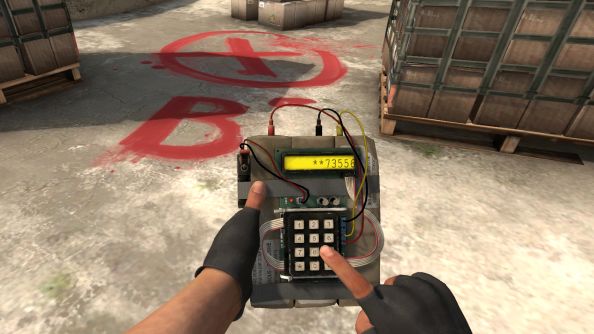
- Planting the bomb yields $300 for the executing player. Crucially, even unsuccessful bomb plants following detonation provide an additional $800 team-wide bonus. This mechanic makes bomb planting imperative even in apparently hopeless situations.
- Victory through bomb detonation grants the attacking team $3500 in subsequent rounds.
- Successful round conclusion via bomb defusal rewards defenders with identical $3500 compensation.
- Eliminating all opposition as the attacking team delivers $3250 to each player.
- Preventing bomb placement throughout the entire round duration rewards defending teams with $3250.
Strategic purchasing decisions separate coordinated teams from disorganized squads. Understanding when to invest versus conserve resources determines long-match success.
- Eco round represents the fundamental conservation strategy when teams lack sufficient capital for proper armaments. In these scenarios, preserving funds for future rounds typically provides optimal strategic positioning.
- Force-buy occurs when teams opt for limited purchases during economic distress or when eco rounds wouldn’t generate adequate subsequent round funding. This approach also applies when confident in opposing economic weakness and capable of confronting rifles with pistols and economic weapons. While inherently risky, successful force-buys can dramatically shift match momentum.
- Half-buy emerged as a CS2-specific tactical approach. Teams employ this method to standardize economic distribution across all members. When certain players lack proper weapon funding but retain sufficient resources for sidearms and protection, typically preserving $1500-2000 to ensure adequate subsequent round purchasing power.
Understanding CS2’s economic progression reveals critical strategic insights. The initial pistol round provides each competitor with $800. Round victory compensation varies based on consecutive loss history.
- $1400 following a single round defeat.
- $1900 after two consecutive losses.
- $2400 following three successive round failures.
- $2900 after four straight losses.
- $3400 after five or more consecutive defeats.
Consecutive round losses establish economic streaks. Extended losing sequences increase subsequent round funding, creating recovery opportunities. The $3400 minimum enables acquisition of entry-level rifles like Famas or Galil, providing opportunities to regain competitive footing.
Inexperienced players often misinterpret professional eco round execution. CS2’s economic system enables pistol victories against fully-equipped opponents, a scenario nearly impossible in earlier iterations like CS 1.6. However, effective eco rounds involve sophisticated tactical play rather than simple purchasing abstinence.
The most prevalent amateur error involves unnecessary consecutive eco rounds following pistol round defeat. With contemporary economics, you receive $1900 after initial loss plus $2400 following subsequent defeat. This provides $4300 total, sufficient for proper rifles, armor, and utility. Proficiency with Famas and Galil (significantly underrated firearms) enables comprehensive equipment acquisition.
Additionally, avoid post-pistol round force-buys. If determined to purchase, acquire P250 or Desert Eagle. These cost-effective options provide marginal round victory chances without jeopardizing future economic stability.
However, successful bomb plants during lost pistol rounds create entirely different circumstances. The additional $800 enables rifle acquisition or implementation of the “AK drop” strategy. This involves wealthier players providing AK-47s to teammates, who reciprocate with Desert Eagles and personal armor. Professional players frequently employ this coordinated approach, creating near-parity with opponents likely purchasing economic weapons.
Team decisions to execute eco rounds shouldn’t translate to reckless rushes against fortified positions. Minimum coordination involves discussing subsequent round strategy. Attacking teams should prioritize bomb plants, employing deception and diversionary tactics. Defending squads should anticipate attack vectors and concentrate forces accordingly.
Another strategic eco round application involves systematic opponent disarmament. Forcing enemy rifle repurchases strains their economy, potentially creating their own eco rounds later.
When your roster includes exceptional marksmanship, calculated Desert Eagle investments can dramatically alter round outcomes. Consider this tactical scenario:
Visualize this situation: your team executing eco strategy, with one member financing Desert Eagle and armor. After securing several eliminations, remaining teammates aggressively pursue bomb plants with standard pistols, assuming victory. Suddenly, remaining opposition ambushes the plant site with superior weaponry.
To prevent such scenarios, structure play around premium weapon carriers. Avoid engaging rifle-equipped enemies with basic pistols. Protect Desert Eagle operators to maximize investment returns.
Even comprehensive knowledge of CS2’s economic mechanics doesn’t guarantee opponent financial forecasting. Mastery requires extensive experience to accurately predict enemy equipment and counter accordingly.
When economic collapse leaves multiple teammates with only $1400, avoid questioning their purchasing decisions. Full eco rounds wouldn’t enable proper subsequent round buys. Economic streaks provide only $3300, inadequate for mid-game engagements. However, armor and sidearm purchases for round contention represent sound force-buy strategy.
When consecutive $3400 loss streak rounds occur, avoid full eco execution. Accumulating $6800 represents inefficient resource allocation. Implement the “1500 buy” approach, purchasing equipment while retaining $1500 minimum. This balanced strategy improves current round success chances while preserving $4900 for subsequent full purchases.
Best wishes for your competitive endeavors!
Action Checklist
- Calculate opponent economy based on round history and visible equipment
- Prioritize bomb plants in losing situations for $800 team bonus
- Use shotguns on force-buy rounds for $900 kill rewards
- Implement ‘1500 buy’ strategy when on loss streaks
- Coordinate weapon drops with teammates to optimize team economy
No reproduction without permission:Tsp Game Club » How does the economy work in CS:GO? Guide by SCOPE.GG Master CS2 economy management with advanced strategies, kill rewards, and team coordination tactics