
TL;DR
- Wordle challenges players with daily five-letter word puzzles using color-coded feedback
- Strategic starting words and vowel isolation significantly improve guessing accuracy
- Today’s June 17 puzzle requires careful letter positioning and pattern recognition
- Avoid common mistakes like repeating eliminated letters and ignoring positional clues
- Utilize Wordlebot analysis and community resources for continuous improvement
The New York Times’ Wordle presents a compelling daily vocabulary challenge that tests both linguistic knowledge and logical deduction. Each 24-hour cycle introduces a fresh five-letter word puzzle that has captivated millions worldwide. When the daily solution proves particularly elusive, players often seek guidance to maintain their winning streaks without excessive frustration. For those tackling puzzle #1459 on June 17, 2025, our comprehensive hints and solution guide provides the assistance needed to overcome today’s word challenge.
Wordle operates on a straightforward yet engaging premise: players receive exactly six attempts to identify the target word. The game’s brilliance lies in its color-coded feedback system that transforms each guess into a learning opportunity. When letters illuminate in yellow, they indicate correct letters positioned incorrectly within your current attempt. Green highlights signify perfectly placed letters that match both character and position in the solution. Grey letters represent characters completely absent from today’s target word, allowing for systematic elimination.
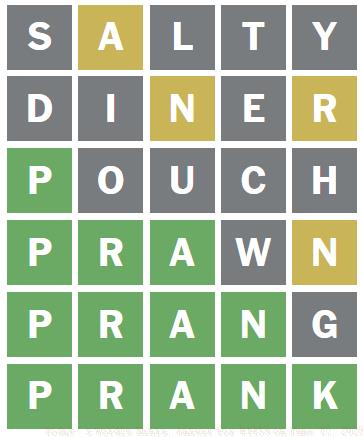
While Wordle’s concept appears simple, achieving consistent success requires strategic thinking beyond basic vocabulary knowledge. Many players underestimate the importance of systematic approaches and fall into predictable traps that reduce their solving efficiency.
Strategic Opening Moves – Your initial word selection dramatically influences your solving trajectory. Optimal starting words incorporate multiple vowels alongside common consonants, providing maximum information about the word’s structure. While personal preferences vary, research-backed choices like AISLE, SALTY, and DINER offer balanced letter distribution and vowel coverage. Avoid starting words with obscure letters or unusual letter combinations that provide limited actionable data.
Color Interpretation Mastery – The yellow, green, and grey color system represents your most valuable analytical tool. Advanced players maintain mental or physical notes about eliminated letters and positional constraints. The most common mistake involves forgetting previously eliminated letters and wasting attempts on already-disqualified characters.
Vowel Isolation Techniques – When standard starting words yield limited results, dedicated vowel-testing words become essential. Words like ADIEU or OUNCE efficiently test multiple vowels in single attempts, rapidly narrowing possibilities.
Double Letter Recognition – Don’t hesitate to test repeated letters, as many Wordle solutions incorporate duplicate characters. Historical data indicates approximately 15-20% of Wordle answers contain repeated letters, making this a crucial strategic consideration.
Analytical Tool Integration – The NYT’s Wordlebot provides sophisticated post-game analysis comparing your solving path against optimal strategies. This tool highlights inefficiencies in your approach and suggests alternative reasoning paths for future puzzles.
For comprehensive strategy development, explore our dedicated Complete Guide to systematic problem-solving approaches that transfer well to Wordle challenges.
We recognize that sometimes you need targeted assistance for particularly challenging daily puzzles. Our hint system provides graduated clues that help without completely revealing the solution, preserving the satisfaction of deduction.
For June 17’s puzzle #1459, consider these strategic insights: The solution contains two vowels positioned in non-adjacent locations. One consonant appears twice, creating a repeating letter pattern that often confuses players. The word has Germanic origins and relates to agricultural concepts, which may help narrow your semantic reasoning.
Avoid the common mistake of fixating on common word endings – today’s solution concludes with an less common letter combination. The middle letters present the greatest challenge, requiring careful consideration of likely letter pairs based on your accumulating color clues.
When constructing your guesses, prioritize testing the positional relationships between the confirmed vowels and any yellow letters from previous attempts. This approach maximizes information gain from each attempt within your six-guess limit.
Beyond basic strategies, elite Wordle players employ advanced techniques that significantly improve their consistency and speed. Understanding these methods can transform your approach from haphazard guessing to systematic deduction.
Pattern Recognition Development – Train yourself to recognize common letter combinations and positional frequencies. English five-letter words often follow predictable patterns that can guide your guessing strategy when combined with color feedback.
Efficiency Optimization – Each guess should test multiple hypotheses simultaneously. Avoid words that only address single aspects of the puzzle unless you’ve narrowed possibilities sufficiently.
Tool Mastery – While purists avoid external aids, utilizing Wordlebot for post-game analysis provides invaluable insights into your strategic weaknesses. The tool compares your solving path against optimal algorithms, highlighting where you diverged from the most efficient approach.
Community Learning – Engage with the Wordle community to discover alternative solving approaches and learn from others’ strategic innovations. For weaponizing your vocabulary approach, check our Weapons Unlock guide for strategic thinking frameworks.
Consistency Building – Maintain a solving journal to track patterns in your mistakes and identify recurring strategic errors. This metacognitive approach accelerates skill development beyond simple repetition.
Wordle’s sustained cultural relevance stems from multiple psychological and design factors that create an ideal user experience. The game masterfully balances challenge and accessibility while fostering community connection.
Cognitive Satisfaction – The puzzle provides the perfect level of difficulty: solvable within minutes yet challenging enough to require genuine thought. This creates what psychologists call ‘flow state’ – complete immersion in an appropriately challenging activity.
Social Connection – The shared daily challenge creates natural conversation starters and friendly competition without the pressure of real-time gameplay. For understanding how class selection impacts strategic approaches, our Class Guide offers parallel insights into specialized problem-solving.
Sustainable Engagement – Unlike games demanding hours of daily commitment, Wordle respects players’ time with its single-puzzle-per-day limitation. This scarcity principle actually increases engagement by creating anticipation for the next day’s challenge.
Skill Development Visibility – Players can tangibly observe their improvement through streak maintenance and reduced solving times, providing ongoing motivation.
Action Checklist
- Select research-backed starting word with balanced vowels and consonants
- Systematically track color feedback and eliminated letters
- Test vowel combinations if initial words provide limited information
- Analyze post-game performance with Wordlebot
- Review previous solutions to identify recurring patterns and letter combinations
No reproduction without permission:Tsp Game Club » Today’s Wordle Hints, Answer for #1459 on June 17, 2025 Master Wordle with expert strategies, daily hints, and actionable tips to improve your word-guessing skills