
TL;DR
- Orbments combine quartz placement and elemental lines to unlock powerful combat arts through strategic slot arrangement
- Each character’s unique line configuration requires tailored quartz setups for optimal spell combinations and stat bonuses
- Sepith management is crucial – prioritize slot unlocks over quartz crafting and sell Sepith Mass for immediate funds
- Central orbment slots count toward multiple lines, making them invaluable for hybrid art combinations and efficiency
- Advanced tactics include pre-battle quartz swapping, elemental weakness exploitation, and character role specialization
Mastering the intricate orbment mechanics in Trails in the Sky transforms your party from novice adventurers into dominant battlefield forces. This comprehensive guide reveals advanced strategies that work effectively across all difficulty levels, including challenging Nightmare mode engagements.
Visualize orbments as sophisticated magical computing devices – the pocket watch-style accessories each character equips that channel elemental energies. Within these complex mechanisms, you strategically position quartz crystals that provide statistical enhancements and unlock devastating magical arts. To synthesize these quartz, you must accumulate sepith crystals obtained from vanquished enemies throughout your journey.

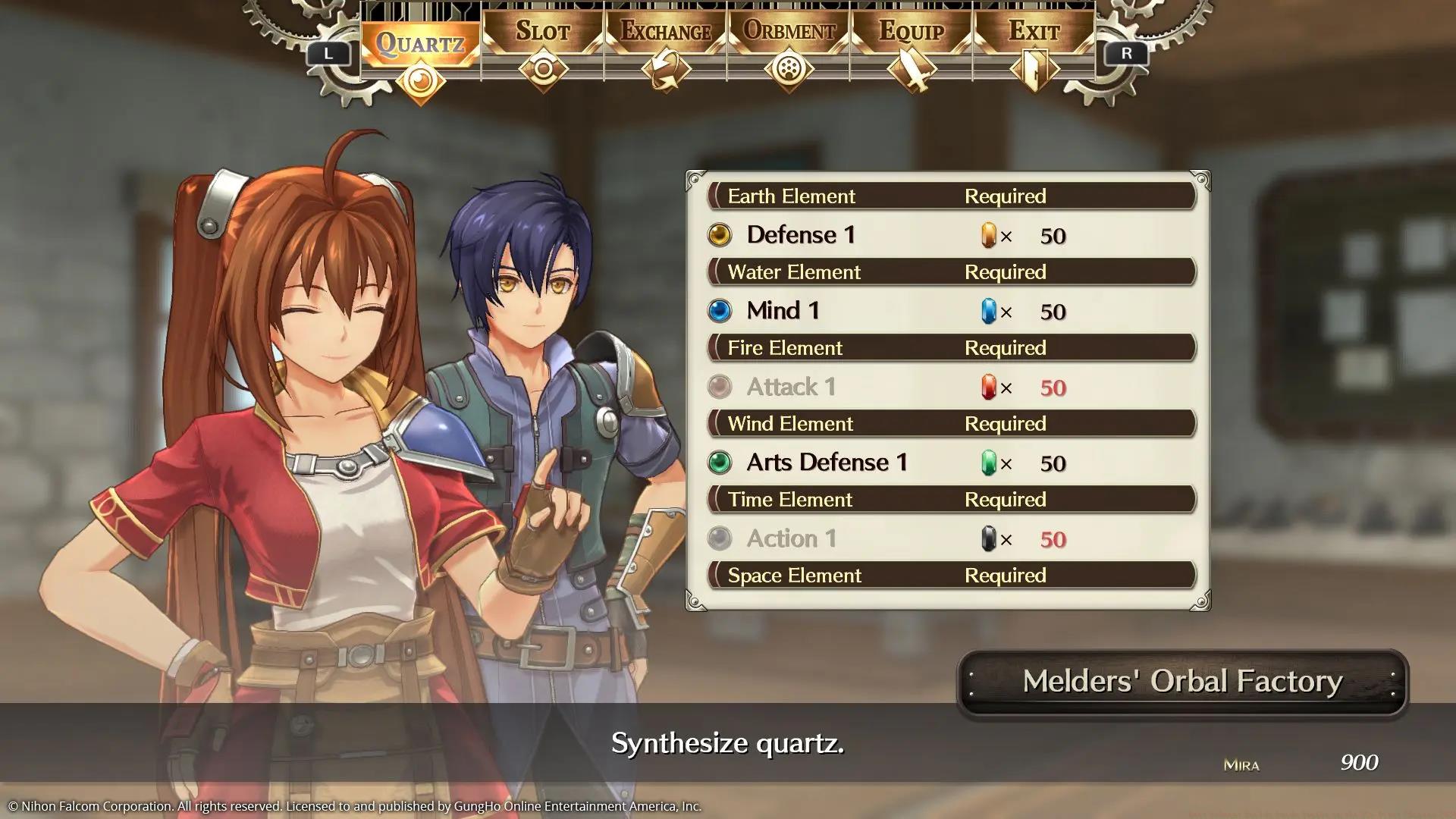
Your accumulated sepith reserves display in the Items interface panel, presenting seven distinct elemental varieties: Earth, Water, Fire, Wind, Time, Space, and Mirage. Additionally, you’ll encounter Sepith Mass – immediately convert these to currency since they serve no functional purpose in quartz fabrication processes.
Consistently monitor your sepith inventory before committing to expenditures. Activating additional orbment slots demands substantial resource investment, and insufficient reserves can severely impede your character progression and combat effectiveness.
Every adventurer’s orbment features interconnected elemental pathways that link specific quartz receptacles. Estelle Bright’s configuration, for instance, incorporates two distinct lines: a blue-aligned pathway (3 receptacles) and an orange-aligned pathway (4 receptacles). The central receptacle contributes to both pathways simultaneously, rendering it exceptionally valuable for crafting sophisticated spell combinations.
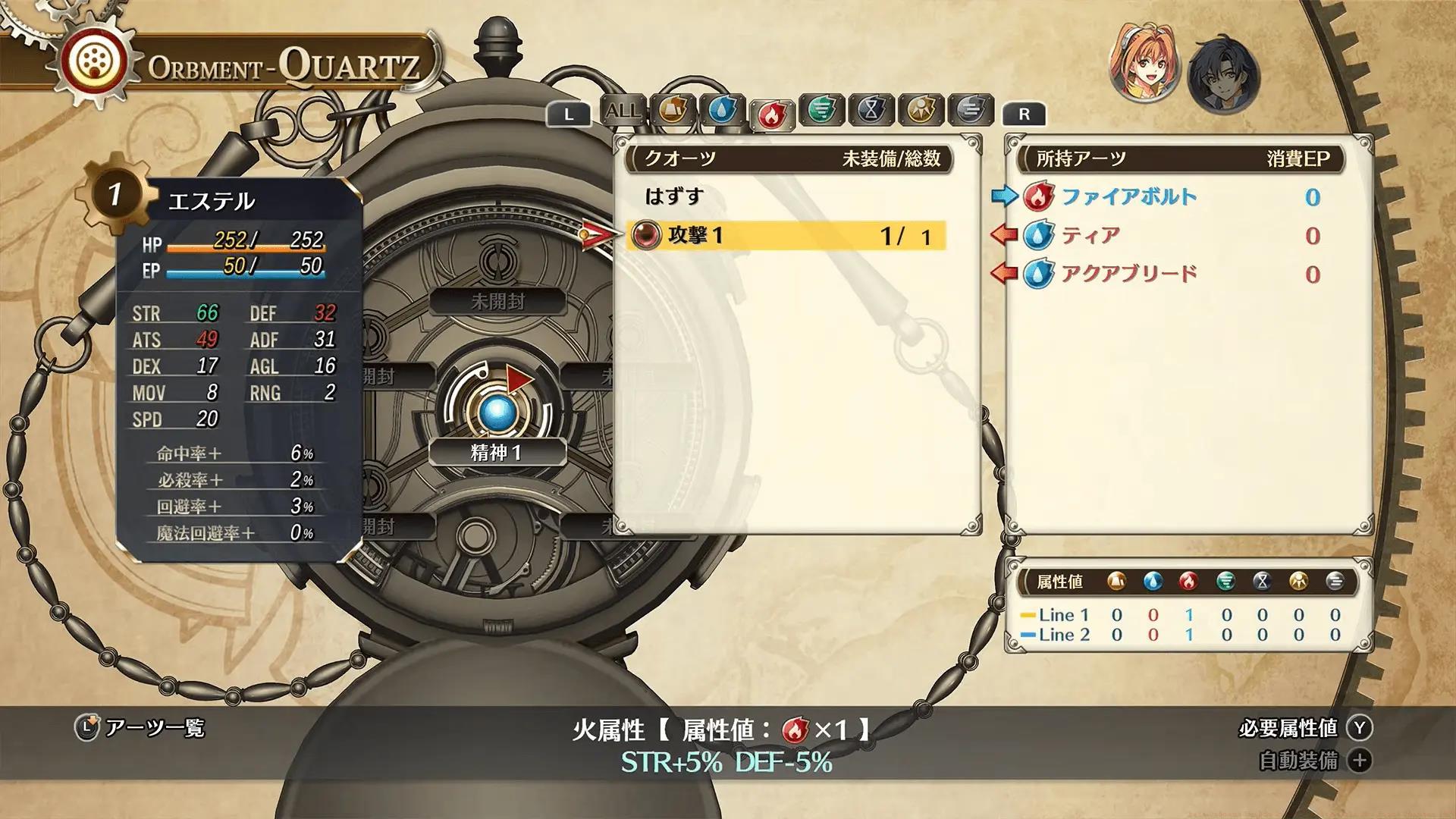
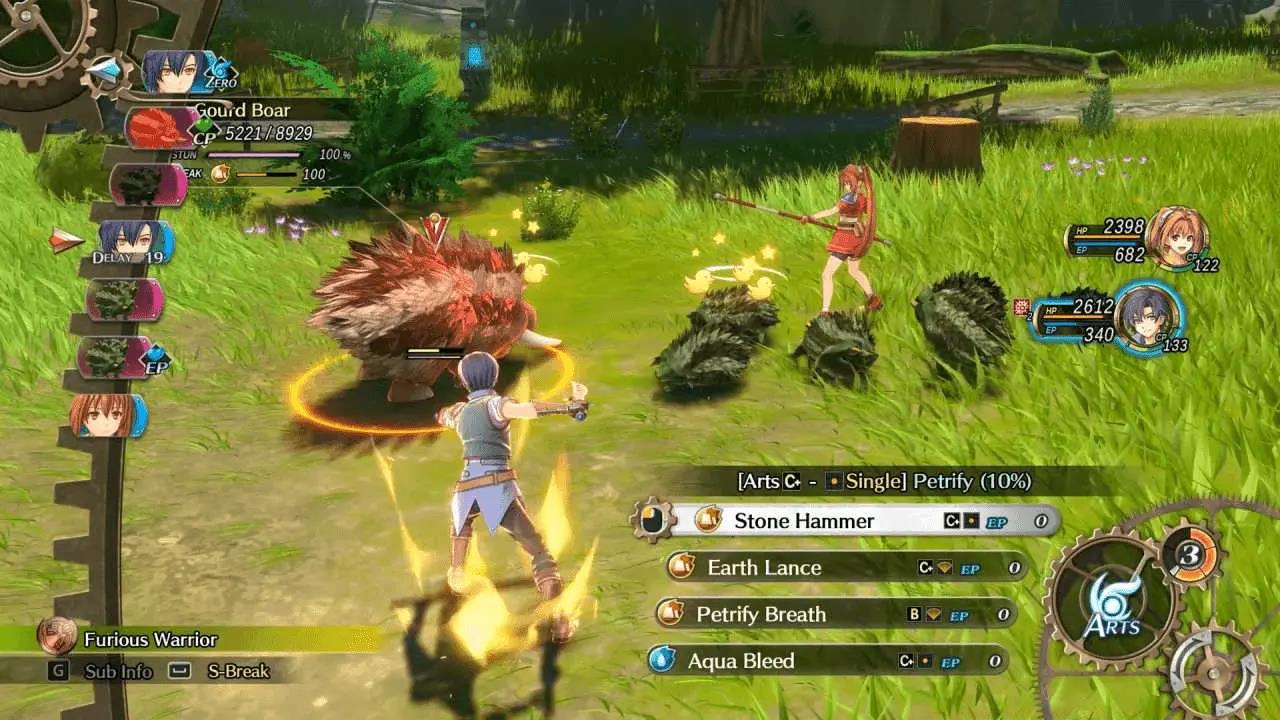
Diverging from conventional JRPG progression systems, spell acquisition occurs not through level advancement but through achieving threshold elemental values within individual orbment lines. For example, installing a single Fire-aligned quartz unlocks the Firebolt art, while deploying two Earth-aligned quartz within the same conduit activates Earth Lance capabilities.
Crucially, elemental value accumulation occurs exclusively within individual lines. Distributing Earth quartz across separate pathways will not combine their values toward art unlocking requirements.
Advanced practitioners should master elemental value thresholds for premium arts. Achieving 8 Space value unlocks the invaluable Chrono Drive speed enhancement, while 12 Time value grants access to the game-changing Crimson Ray offensive spell. Planning quartz placement around these thresholds dramatically improves combat efficiency.
Common mistake: Players frequently underestimate the importance of line-specific value calculation. Remember that the central slot’s dual-line contribution means its elemental value counts toward both lines simultaneously, enabling sophisticated hybrid builds that would otherwise require additional quartz investment.
Pro tip: Create a quartz setup notepad documenting which arts become available at various elemental thresholds. This reference tool helps optimize your configurations for specific boss encounters and situational challenges throughout your adventure.
Effective sepith allocation separates proficient players from struggling adventurers. Prioritize unlocking additional orbment slots before investing heavily in quartz crafting, as expanded slot capacity provides greater long-term strategic flexibility.
Develop a disciplined sepith farming routine: identify enemy types that drop your currently needed elemental sepith and strategically engage them. Areas with high monster density typically provide the most efficient sepith accumulation per time invested.
Warning: Avoid the common pitfall of hoarding sepith excessively. While maintaining reserves for emergency slot unlocks is wise, excess sepith should be converted into quartz that provides immediate combat benefits. The stat bonuses from equipped quartz significantly impact battle outcomes.
Advanced technique: Master the art of quartz swapping between characters before major encounters. Since quartz can be freely rearranged outside of combat, creating specialized loadouts for specific boss fights dramatically improves your success rate without additional sepith expenditure.
Economic strategy: Regularly sell excess Sepith Mass whenever you visit shops. These items exist purely as vendor trash and converting them to mira provides essential funds for equipment upgrades and consumable items that complement your orbment strategies.
Each character’s unique orbment configuration demands tailored approach strategies. Estelle excels with balanced physical and magical configurations, leveraging her central slot to access both healing arts and offensive capabilities simultaneously.
Joshua’s higher speed stat makes him ideal for time-sensitive arts like Clock Up and other support spells. Configure his orbment to maximize Time and Wind values while maintaining sufficient offensive capabilities for his physical attacks.
Support characters like Kloe benefit from focusing heavily on Mirage and Water elemental lines to access the most potent healing and protective arts. Reserve their central slots for quartz that enhance both healing output and defensive capabilities.
Advanced build: Create specialized configurations for specific dungeon types. For areas dominated by magical enemies, prioritize quartz that boost magical defense and arts seal resistance. Against physical-heavy opponents, focus on evasion and physical defense enhancements.
Common optimization error: Avoid spreading elemental values too thinly across multiple characters. Instead, specialize each party member toward specific roles – dedicated healer, magical damage dealer, physical attacker, or support specialist. This role concentration produces more effective results than attempting balanced builds across your entire party.
Progression tip: As you acquire more powerful quartz throughout the game, regularly revisit and optimize your character builds. Early-game configurations become increasingly inefficient as advanced quartz options become available around the mid-game transition point.
Nightmare difficulty demands meticulous orbment optimization. Prioritize arts that provide turn advantage – Chrono Drive, Clock Up, and other speed-modifying abilities become exponentially more valuable as enemy damage output increases dramatically.
Boss battle preparation should include creating specialized quartz configurations that exploit elemental weaknesses. Research boss attributes before major encounters and reconfigure your orbments accordingly to maximize damage output and survivability.
Endgame min-maxing involves calculating exact elemental value thresholds to access the most powerful arts while minimizing quartz investment. Advanced players often use spreadsheet tools to optimize their configurations for accessing multiple high-tier arts simultaneously.
Advanced technique: Master the art of pre-emptive art charging. Before entering boss battles, configure your orbments to have key arts nearly unlocked, then complete the activation with minimal quartz adjustments during the battle preparation phase.
Common advanced mistake: Over-investing in single-element specialization. While focusing on one element provides powerful arts faster, it leaves your characters vulnerable to enemies resistant to that element. Maintain balanced configurations that provide flexibility against diverse enemy types.
Pro optimization: As you progress through the game, identify quartz with dual benefits – those that provide both useful stat bonuses and necessary elemental values. These multi-purpose quartz dramatically improve build efficiency compared to single-function alternatives.
Action Checklist
- Analyze each character’s orbment line structure and identify central slot opportunities
- Create elemental value tracking system for art unlocking thresholds
- Develop sepith allocation priority: slots first, then strategic quartz crafting
- Build character-specific configurations focusing on role specialization
- Implement pre-battle quartz swapping for boss encounters and difficult areas
No reproduction without permission:Tsp Game Club » Best Orbment Builds Guide Trails in the Sky First Chapter 2024 Master Trails in the Sky's orbment system with advanced strategies, character builds, and sepith management techniques