
Master Bravely Default’s innovative combat system and quality-of-life improvements in this definitive Switch 2 HD remaster
Introduction: From 3DS Legacy to Switch 2 Modernization
After a decade confined to the Nintendo 3DS, Bravely Default Flying Fairy HD Remaster makes its triumphant debut on the Nintendo Switch 2, delivering the definitive version of this cult classic. My personal journey with this title dates back to college days, where friends and I would coordinate village development, engineer overpowered character combinations, and immerse ourselves in its emotionally resonant narrative. While the storytelling follows traditional JRPG conventions rather than reinventing the genre, this familiarity provides a comforting foundation that allows the revolutionary gameplay systems to shine.
For players new to the series, understanding the platform transition is crucial. The original 3DS version utilized dual-screen presentation and stereoscopic 3D effects that defined its era. The Switch 2 adaptation smartly reworks these elements for modern hardware, maintaining the game’s soul while enhancing accessibility. The removal of hardware-specific gimmicks actually benefits the experience, creating a more focused and polished adventure that stands strong against contemporary RPG offerings.
Story Overview: Classic JRPG Narrative with Heart
Bravely Default Flying Fairy HD Remaster presents a narrative that honors JRPG traditions while establishing its own identity. Without revealing critical plot developments, the core premise centers on a world facing ecological collapse as the elemental crystals lose their sustaining power. Malevolent forces exploit this vulnerability for personal gain, forcing a diverse party of heroes—including the determined Agnes and resilient Tiz—to embark on a globe-spanning quest to restore balance.
The narrative strength lies not in groundbreaking twists but in character development and world-building consistency. Each party member receives substantial development arcs that evolve throughout the journey, creating emotional investment that enhances the tactical gameplay. The story serves as an effective vehicle for the game’s mechanical depth, providing context and motivation for the extensive customization and progression systems.
New players should approach the narrative expecting classic tropes executed with exceptional polish rather than subversive storytelling. The emotional payoff comes from character interactions and world-saving stakes that complement the strategic combat rather than overshadowing it. This balanced approach ensures the story enhances rather than impedes the game’s primary draw: its deep mechanical systems.
Gameplay Mechanics: Mastering the Brave/Default System
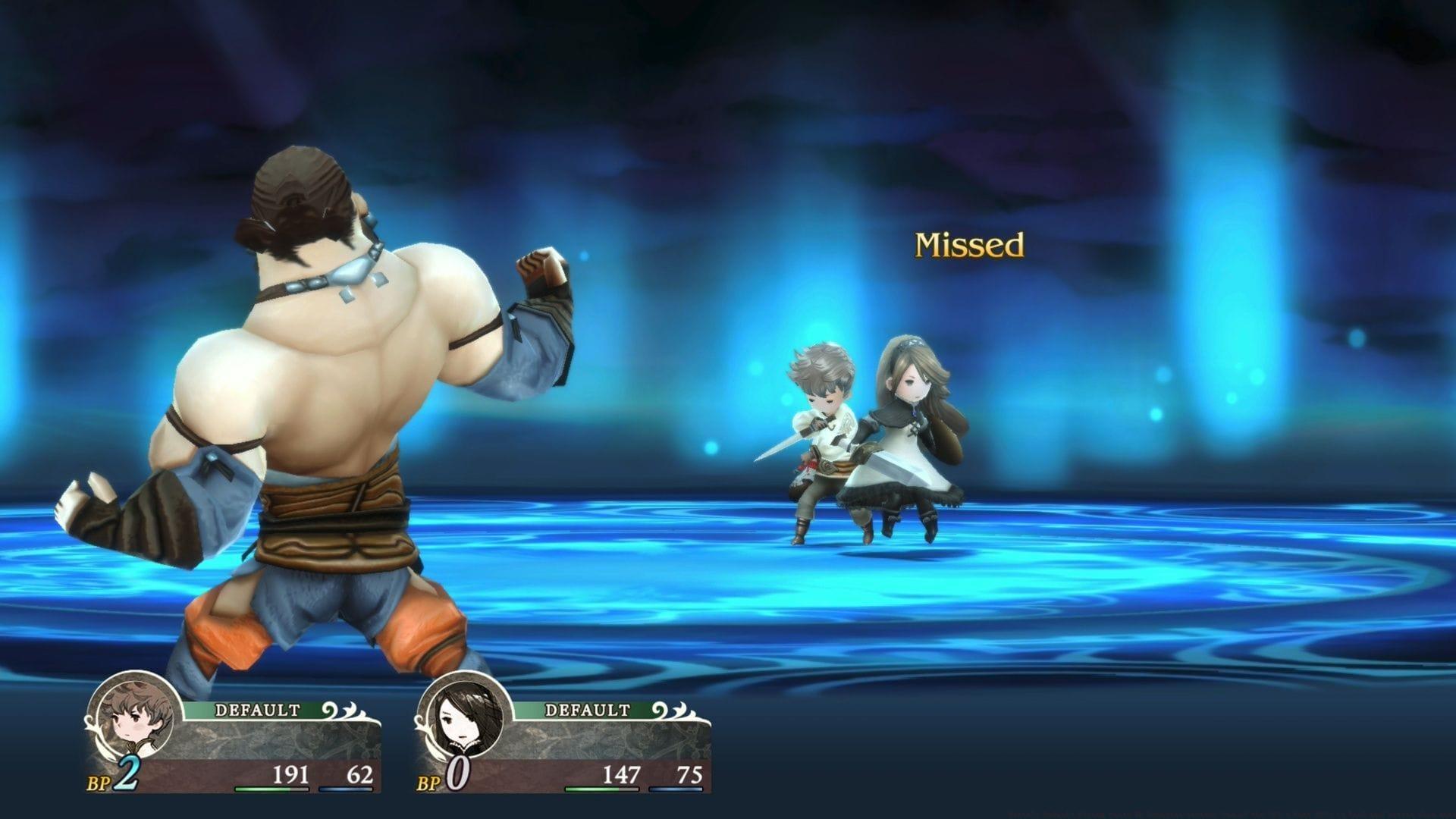
The revolutionary Brave/Default combat system represents the game’s crowning achievement, transforming traditional turn-based RPG mechanics into a dynamic risk-reward experience. During each character’s turn, you face a critical decision: Default to defend and bank Battle Points (BP) for future use, or Brave to expend stored BP for additional actions that turn. This system enables sophisticated tactical planning unavailable in conventional RPGs, allowing players to store up to 3 BP for devastating multi-action turns or risk negative BP status for immediate offensive bursts.
Strategic mastery involves understanding action economy management. Novice players often Brave excessively early, leaving characters incapacitated for multiple turns when BP drops negative. The optimal approach involves Defaulting strategically during enemy offense phases, then unleashing Brave sequences when vulnerabilities appear. This rhythm creates engaging combat puzzles that reward foresight and pattern recognition.
The job system amplifies this complexity with over 20 distinct classes, each offering unique abilities and stat progressions. Advanced customization enables secondary skill sets and passive ability slots, allowing hybrid builds like healing Monks or spellcasting Knights. The Ablink feature expands possibilities further by sharing job access with friends’ characters, creating nearly limitless party configuration options.
Combat automation represents another significant enhancement. Players can create preset command sequences for specific scenarios—grinding, boss encounters, or exploration—that execute automatically upon battle initiation. This feature dramatically streamlines repetitive combat while maintaining strategic depth, as effective automation requires understanding enemy weaknesses and party synergy.
Quality-of-Life Improvements: Modern Conveniences
The HD Remaster introduces transformative quality-of-life features that address the original version’s most significant limitations. The 2x/4x fast-forward option revolutionizes grinding efficiency when combined with combat automation, reducing repetitive battle time without sacrificing experience gains. Encounter rate adjustment between 50% and 200% provides unprecedented control over pacing, allowing players to minimize interruptions during exploration or maximize combat frequency for leveling.
Norende village management receives the most substantial overhaul. The original requirement to maintain the 3DS in sleep mode exclusively for town development has been eliminated entirely. The redesigned system tracks time passage regardless of gameplay status, enabling normal console usage while progression continues. This fundamental improvement removes one of the most criticized aspects of the original release, making town development an integrated rather than intrusive element.
The recruitment system maintains its social elements without hardware restrictions. As you explore online-connected worlds, you’ll encounter visitors who permanently join your settlement. These residents enable construction projects that enhance special attacks and unlock powerful equipment at save point merchants. The streamlined implementation preserves the community-building aspect while eliminating technical barriers.
Interface improvements include redesigned menus optimized for single-screen presentation and controller navigation. The overhaul maintains information density while improving readability and navigation efficiency. These subtle but significant enhancements accumulate throughout the experience, reducing friction and allowing greater focus on strategic decision-making.
Audiovisual Presentation: Art and Sound Evolution
Visual enhancements balance preservation and modernization, maintaining the distinctive art style while leveraging the Switch 2’s capabilities. Character designs retain their charming simplicity, though the transition from dual-screen presentation required thoughtful adaptation. The loss of stereoscopic 3D—a feature many players disabled due to discomfort—proves negligible, as the core aesthetic strength derives from character design and environmental artistry rather than technical effects.
The audio presentation stands as arguably the game’s most exceptional element. Voice acting maintains its high quality across both languages, with character quirks like Edea Lee’s frustrated “mrrgrrgrrgrr” delivering memorable personality moments. The musical score remains breathtaking, complementing emotional beats and environmental atmospheres with orchestral precision that has aged exceptionally well.
Graphical improvements focus on resolution enhancement and performance optimization rather than artistic overhaul. The result honors the original vision while eliminating technical limitations, creating a presentation that feels both nostalgic and contemporary. Players expecting complete visual reinvention may need to adjust expectations, but those valuing artistic consistency will appreciate the respectful treatment of the source material.
The censorship discussion regarding certain character outfits mirrors the original North American 3DS release, with the Japanese version remaining the option for players seeking unaltered designs. This consistency ensures veteran players encounter the same aesthetic presentation they remember, while new players can make informed decisions based on personal preferences.
Player Recommendations and Final Verdict
Bravely Default Flying Fairy HD Remaster represents an essential experience for JRPG enthusiasts seeking deep tactical combat and extensive customization. Newcomers to the franchise will discover one of the most innovative turn-based systems ever designed, while series veterans can revisit the origins of a beloved franchise with modern conveniences that eliminate previous frustrations.
The game particularly shines for players who enjoy theorycrafting party compositions and optimizing combat strategies. The job system’s flexibility encourages experimentation and rewards strategic planning, creating endless replay value through different team configurations. Those preferring narrative-driven experiences may find the traditional story structure less engaging, though character development provides sufficient emotional anchoring.
For players who enjoyed Bravely Default 2, this remaster offers crucial context for the franchise’s mechanical evolution and narrative foundations. The quality-of-life improvements make this the definitive version, removing barriers that might have prevented completion of the original release. The enhanced presentation and streamlined systems create an accessible yet deep RPG experience that stands strong in the modern gaming landscape.
Ultimately, Bravely Default Flying Fairy HD Remaster successfully transitions a handheld classic to modern home consoles while preserving its soul and enhancing its accessibility. The combination of revolutionary combat, extensive customization, and thoughtful improvements creates a package that justifies double-dipping for veterans and provides an ideal entry point for newcomers to this exceptional JRPG franchise.
No reproduction without permission:Tsp Game Club » Bravely Default Flying Fairy HD Remaster review: One of the 3DS’s best RPGs is back and better than ever Master Bravely Default's innovative combat system and quality-of-life improvements in this definitive Switch 2 HD remaster