
Complete guide to Genshin Impact’s Four Shades with lore analysis and gameplay implications
Introduction to the Primordial One’s Four Shades
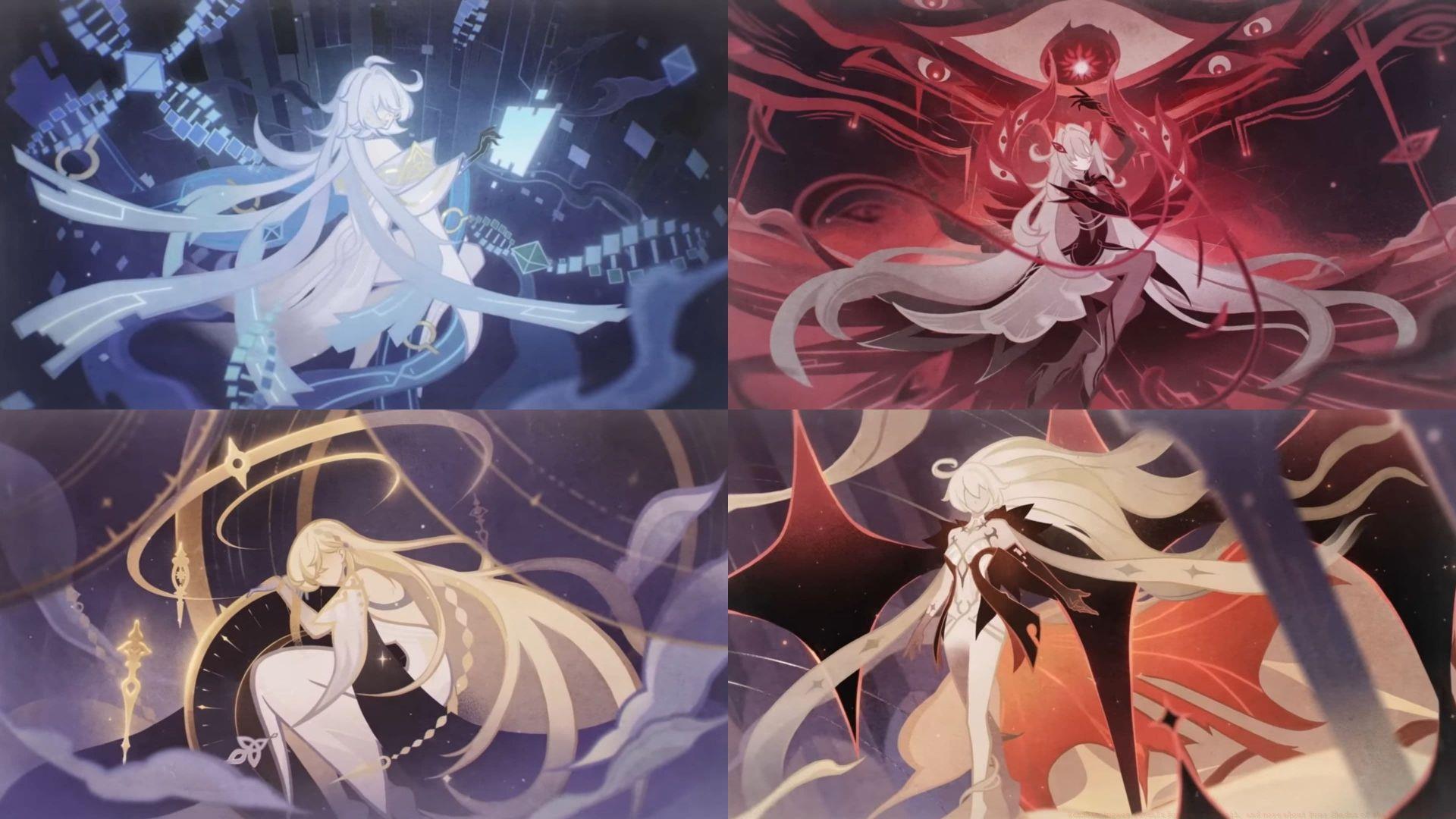
HoYoverse has delivered a monumental lore expansion by officially unveiling the identities of the Primordial One’s Four Shades in Genshin Impact. These cosmic entities, previously only referenced through obscure item descriptions and scattered world quest clues, have finally stepped into the narrative foreground with the Teyvat Chapter Interlude Teaser: The God’s Limits release.
Understanding these divine beings is crucial for players invested in Genshin Impact’s overarching storyline. Each Shade governs a fundamental aspect of reality, and their emerging roles suggest massive implications for future Archon Quests and world events.
Practical Tip: Pay close attention to artifact set descriptions and weapon lore, as these often contain early hints about major lore revelations before they appear in main story content.
Istaroth: The Shade of Time
Known variously as the God of Moments and the Thousand Winds, Istaroth commands authority over temporal forces within Teyvat. Her worship history spans multiple civilizations, having been revered as Tokoyo Ookami/Kairos by the Enkanomiyans during their subterranean exile and later honored in ancient Mondstadt traditions.
In the recent teaser footage, Istaroth presents as solemn and emotionally detached, speaking with measured calmness that suggests centuries of cosmic observation. While her dialogue implies she remains the same benevolent entity who rescued the Enkanomiyans, her current isolation from mortal affairs appears intentional rather than imposed.
Her visual design prominently features chronometric motifs including intricate clock patterns, celestial star arrangements, delicate wind chimes, and the recurring Triquetra symbol that appears across all Shade designs. These elements collectively reinforce her identity as the temporal deity and likely explain her alternative designation as the Goddess of a Thousand Winds.
Common Mistake: Many players assume the Thousand Winds refers only to Barbatos, but Istaroth’s connection suggests she may be the original source of this concept in Teyvat’s mythology.
Ronova: The Shade of Death
Ronova initially appeared during the Natlan Archon Quest climax as an unsettling eldritch entity adorned with multiple luminous eyes, now confirmed as the embodiment of death’s authority. Her most recent demonstration involved dissolving spatial constructs, suggesting Shades can manipulate domains outside their primary jurisdiction.
This action supports emerging community theories about overlapping Shade authorities, indicating these divine beings may temporarily access or command each other’s domains when circumstances require. Ronova additionally functions as the strict enforcer of cosmic hierarchy, vigorously maintaining the structural integrity and responsibilities established by the Primordial One for the Shades.
Notably, her terminology has shifted from referencing the Primordial One directly to acknowledging the Heavenly Principles as her hierarchical superior. This linguistic change potentially indicates either altered leadership dynamics or an evolving interpretation of celestial authority structures over millennia.
Ronova directly addresses the current silence emanating from the Heavenly Principles, asserting that the Shades now bear responsibility for restoring cosmic order. This declaration strongly implies preparatory movements toward more direct governance of Teyvat, particularly if Celestia continues its apparent inactivity.
Lore Detail: The Statue of the Omnipresent God in Inazuma, traditionally associated with Istaroth, actually displays stronger visual resemblance to Ronova’s design elements, suggesting possible misattribution in current player theories.
Naberius/Rhinedottir: The Shade of Life
The Shade of Life presents the most complex narrative development, with confirmation that Naberius has merged completely with Rhinedottir—the infamous Khaenri’ahn alchemist known as “Gold” and creator of the homunculus Albedo. This fusion creates an unprecedented entity combining divine authority with alchemical mastery.
Within the Interlude Teaser, Rhinedottir serves as the vocal and visual presence while clearly wielding life-based authorities previously associated with Naberius. Meanwhile, Naberius interacts with floating interface panels that likely relate to creation and life-manipulation capabilities.
This visual confirmation aligns with Albedo’s revelation during the Paralogism Archon Quest conclusion regarding his master’s merger with the Shade of Life. The situation raises profound questions about Rhinedottir’s future role, particularly given her dual status as both one of Khaenri’ah’s Five Sinners and now a divine Shade.
Advanced Theory: This merger may represent the first instance of a mortal successfully integrating with divine authority, potentially creating a template other characters might attempt to replicate.
Gameplay Impact: This development suggests future story content may explore alchemy-based gameplay mechanics or introduce life-creation systems beyond current crafting options.
Asmoday: The Shade of Space
Although physically absent from the Interlude Teaser, Asmoday’s silhouette and narrative role receive strong confirmation as both the Shade governing spatial authority and the Unknown God who confronted the Traveler siblings during the game’s introductory sequence. This connection, long speculated within the community, now approaches canonical confirmation.
Ronova reveals that Asmoday has been missing for an extended period and potentially serves a different master—a revelation carrying massive lore implications regarding her motivations for preventing the Travelers’ departure from Teyvat. This service to an unknown entity adds compelling complexity to her mysterious characterization.
The uncertainty surrounding Asmoday’s allegiances and current activities hints at broader conflicts unfolding beyond player current knowledge, potentially involving factions or powers yet to be introduced in Genshin Impact’s narrative.
Strategy Tip: Re-watch the game’s opening cinematic with this new context—Asmoday’s actions may carry different implications when understood as a Shade potentially serving alternative interests.
Gameplay Implications and Future Predictions
The definitive revelation of the Four Shades fundamentally alters Teyvat’s power dynamics, bringing previously obscured lore elements into clear focus. With the Heavenly Principles maintaining silence, the Shades appear positioned to assume direct control, establishing narrative groundwork for deeper conflicts in forthcoming Genshin Impact content.
Players should anticipate major questlines exploring the Shades’ individual histories and their relationships with established Archons. The Rhinedottir/Naberius merger particularly suggests future Albedo-focused content that may delve deeper into alchemical creation themes.
Content Prediction: Future updates may introduce:
- World quests exploring each Shade’s domain
- Character banners featuring Shade-inspired playable characters
- New regions connected to Shade authority manifestations
- Artifact sets based on Shade philosophies and powers
Common Pitfall: Avoid assuming the Shades will serve as straightforward antagonists—their complex motivations and overlapping authorities suggest nuanced roles in the evolving narrative.
No reproduction without permission:Tsp Game Club » Genshin Impact reveals Ronova, Istaroth, and more about Four Shades of the Primordial One Complete guide to Genshin Impact's Four Shades with lore analysis and gameplay implications