
TL;DR
- Upgrade Gunsmith and Medical Lab first for immediate combat effectiveness
- The Refiner workbench converts common materials into scarce components for long-term progression
- Focus on Metal Parts, Rubber Parts, and Fabric during early extraction runs
- Defibrillators and Surge Shield Rechargers become essential for squad-based gameplay
- Systematic workbench upgrades through three tiers unlock increasingly powerful gear blueprints
Transform ordinary scrap into elite combat equipment with our comprehensive ARC Raiders crafting manual detailing every workbench, resource type, and enhancement methodology.
Constructing the ideal equipment configuration in ARC Raiders relies on strategic expertise rather than random chance—it demands proficiency in the manufacturing framework that converts each recovered component into battle-altering weaponry. Your Workshop serves as the central nervous system of advancement, where calculated resource allocation distinguishes merely enduring operatives from truly dominant ones. Each triumphant mission completion fuels this sophisticated ecosystem, establishing a rewarding cycle where currently gathered components evolve into future strategic superiority.
The Workshop functions as your individualized technology progression system, containing seven dedicated manufacturing stations that each fulfill specific operational requirements. Contrasting with conventional production systems, immediate creation of superior-tier equipment remains impossible. Rather, you must methodically enhance each workstation across three progressive stages, revealing progressively formidable schematics and fabrication formulas.
Your manufacturing progression adheres to a defined sequence: collect resources during operations, retreat to Speranza (your operational headquarters), allocate resources toward workstation enhancements, then fabricate improved equipment. The framework favors deliberate preparation and foresight over reckless expenditure.
Every manufacturing station concentrates on distinct equipment classifications, demanding particular materials and providing exclusive benefits:
The Refiner warrants particular focus as your extended-term asset. This workstation transforms plentiful materials such as Metal Parts into rare elements like Mechanical Components, sustaining your alternative enhancement trajectories.

Understanding workbench specialization prevents resource misallocation—a common mistake among novice Raiders. The Gunsmith naturally focuses on firearm modifications, while the Medical Lab handles therapeutic provisions. Engineering stations manage defensive equipment, and the Refiner serves as your resource conversion hub. Each requires distinct material combinations, making targeted farming essential for efficient progression.
Advanced players should note that workbench levels directly influence blueprint availability. Level 1 stations provide basic survival tools, Level 2 introduces tactical enhancements, while Level 3 unlocks specialized equipment that can dramatically alter gameplay approaches. Planning your upgrade path around your preferred playstyle—whether stealth, assault, or support—ensures optimal resource utilization.
Your enhancement trajectory dictates how rapidly you achieve combat proficiency. Below lies the ideal advancement methodology:
Initiate with Gunsmith Level 1 (20 Metal Parts, 30 Rubber Parts) to manufacture fundamental firearm accessories. Pursue promptly with Medical Lab Level 1 (50 Fabric, 6 ARC Alloy) for crucial medical provisions.
Enhance your Gunsmith to Level 2 (3 Rusted Tools, 5 Mechanical Components, 8 Wasp Drivers) to reveal sophisticated suppressors and targeting optics. These accessories substantially enhance your covert operations and precision capabilities.
The Medical Lab Level 2 (8 Syringes, 5 Antiseptic, 3 Snitch Scanners) becomes vital for producing Defibrillators—critical for team operations—and Surge Shield Rechargers that immediately replenish 50 shield units.

Many players underestimate the Engineering Bench, but Level 2 unlocks deployable cover and trap systems that can completely alter engagement dynamics. For squad-based players, prioritizing the Medical Lab’s defibrillator capability often proves more valuable than individual weapon enhancements. The optimal sequence typically follows: Gunsmith 1 → Medical 1 → Engineering 1 → Gunsmith 2 → Medical 2 → Refiner 1, though this should adapt to your specific combat requirements.
Time investment for these upgrades varies significantly. Basic Level 1 stations require approximately 2-3 successful extraction runs for material collection, while Level 2 enhancements may demand 4-6 missions depending on your scavenging efficiency and survival rate. Advanced Level 3 workbenches often necessitate dedicated farming sessions spanning multiple gameplay hours.
Resource acquisition forms the foundation of your crafting capabilities. Metal Parts and Rubber Parts represent your most abundant early-game materials, found throughout industrial zones and wreckage sites. Fabric typically appears in medical facilities and civilian structures, while ARC Alloy requires careful exploration of high-risk areas with superior rewards.
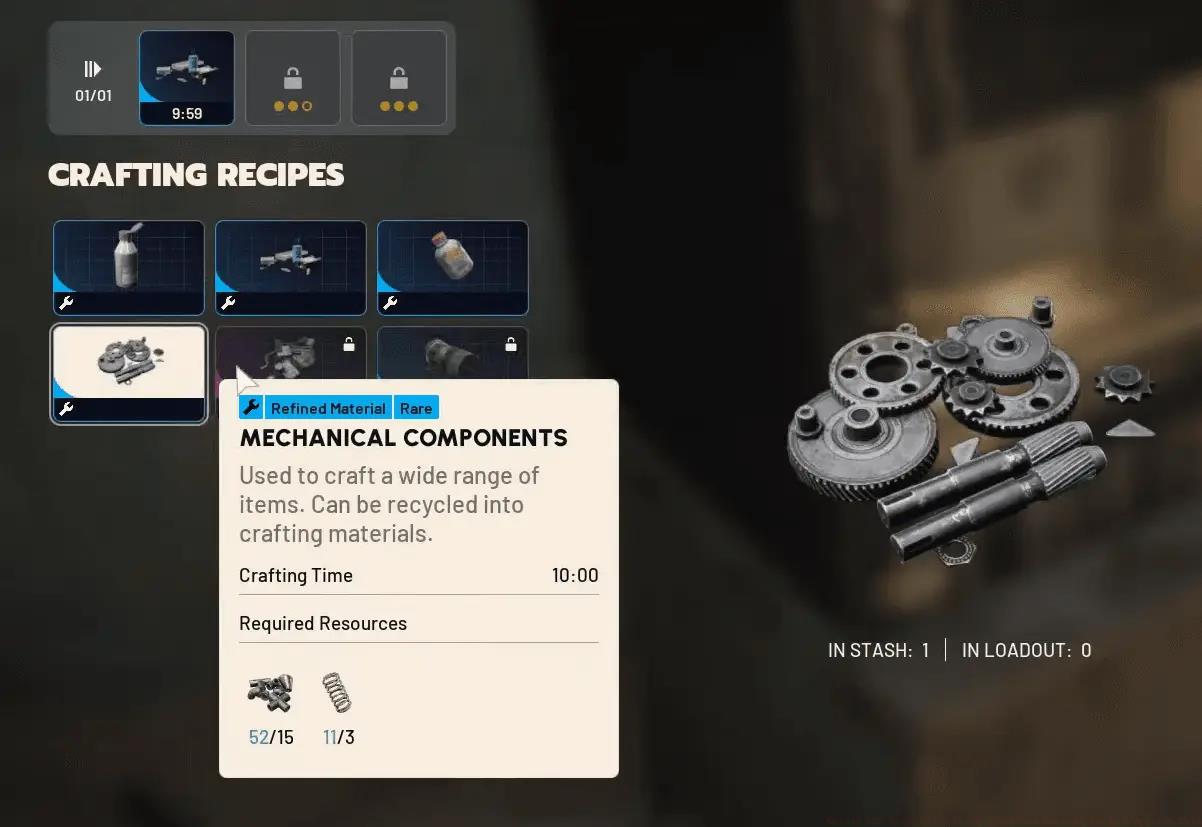
The scarcity hierarchy dictates your farming priorities: Common (Metal Parts, Rubber Parts) → Uncommon (Fabric, Wasp Drivers) → Rare (ARC Alloy, Mechanical Components) → Epic (Snitch Scanners, Rusted Tools). Understanding this classification prevents wasted expeditions targeting unnecessarily rare materials early in your progression.
Mechanical Components deserve particular attention—these represent bottleneck resources that gatekeep multiple upgrade paths. The Refiner workbench becomes essential for converting your surplus Metal Parts into these scarce components, but requires strategic planning to avoid resource deadlocks. Expert players recommend maintaining a 3:1 ratio of common to rare materials in your inventory to ensure smooth progression across all workbench categories.
Avoid the common mistake of immediately extracting upon finding valuable materials. Successful Raiders complete secondary objectives and explore adjacent areas, often increasing their yield by 40-60% per mission. The risk-reward calculation favors thorough exploration unless you’re carrying exceptionally rare components that would represent significant progression loss if eliminated.
Blueprint acquisition revolutionizes your manufacturing possibilities, introducing specialized equipment that can’t be obtained through alternative methods. These schematics typically emerge through high-difficulty missions, boss eliminations, or hidden cache discoveries. Unlike standard recipes, blueprints often incorporate unique modifiers or enhanced statistics that provide tactical advantages in specific scenarios.

The Scrappy enhancement system substantially improves your manufacturing economy through recycling mechanisms and material efficiency. This subsystem allows conversion of obsolete equipment into reusable components, effectively reducing material waste by 25-40%. Advanced implementation involves strategically crafting disposable items specifically for recycling during resource shortages, creating a self-sustaining material loop that minimizes external farming requirements.
Squad-based manufacturing considerations differ significantly from solo play. Coordinated teams should specialize workbench investments across members—one player focuses on medical equipment, another on offensive enhancements, and a third on defensive systems. This division of labor maximizes collective capability while minimizing individual resource investment. The Defibrillators and Surge Shield Rechargers mentioned earlier become exponentially more valuable in coordinated team play, often determining mission success in critical engagements.
End-game crafting involves sophisticated material forecasting and cross-workbench optimization. The most successful Raiders maintain detailed tracking of material requirements across all planned upgrades, preventing surplus accumulation in one category while experiencing shortages in another. This holistic approach to resource management separates elite crafters from merely competent ones, transforming the crafting system from a necessary chore into a strategic advantage.
Action Checklist
- Upgrade Gunsmith to Level 1 for basic attachments (20 Metal Parts, 30 Rubber Parts)
- Establish Medical Lab Level 1 for healing supplies (50 Fabric, 6 ARC Alloy)
- Advance to Gunsmith Level 2 for suppressors and optics (3 Rusted Tools, 5 Mechanical Components, 8 Wasp Drivers)
- Upgrade Medical Lab to Level 2 for Defibrillators and Shield Rechargers (8 Syringes, 5 Antiseptic, 3 Snitch Scanners)
- Develop Refiner workbench to convert common materials into scarce components
- Implement material tracking system to maintain optimal resource ratios across workbenches
No reproduction without permission:Tsp Game Club » Master ARC Raiders Crafting: Complete Looting Guide & Upgrade Path Master ARC Raiders crafting system with optimal workbench upgrades, material farming strategies, and advanced techniques