
TL;DR
- NYT Strands requires connecting letters in a 6×8 grid to find theme-related words and a spanning Spangram
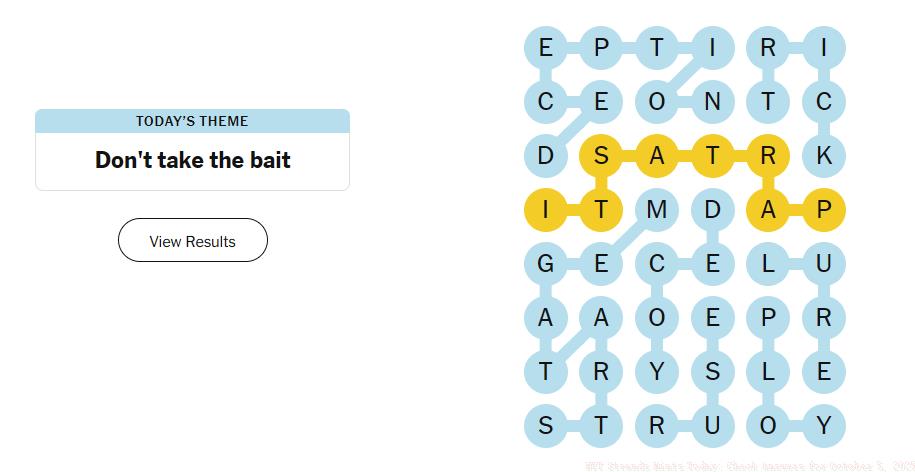
- Today’s theme ‘Don’t take the bait’ suggests deception-related words with horizontal Spangram starting ‘IT’
- Spangram identification is crucial as it connects all theme words and provides puzzle structure
- Progressive hint system helps maintain challenge while preventing frustration
- Strategic grid scanning and pattern recognition significantly improve solving efficiency
When traditional word puzzles like Wordle and Connections start feeling repetitive, NYT Strands offers a refreshingly complex challenge that tests both vocabulary and spatial reasoning. This innovative game from The New York Times Games library presents players with a six-by-eight letter grid where the objective involves connecting adjacent letters to form words that share a unifying theme. Unlike simpler word games, Strands demands multidimensional thinking as you navigate letter connections while deciphering thematic relationships.
The core Strands experience revolves around identifying multiple theme words alongside one critical Spangram—a special word or phrase that literally spans the entire grid vertically, horizontally, or diagonally. This Spangram serves as the foundational element that connects all other thematic elements, making its discovery paramount to puzzle completion. For those seeking to elevate their gameplay, mastering Strands requires developing specialized scanning techniques and thematic interpretation skills.
What sets Strands apart from other word games is its emphasis on both word formation and thematic coherence. Players must not only identify valid words but also understand how these words relate to the daily theme, creating a layered puzzle experience that rewards both linguistic skill and logical deduction. The game’s progressive difficulty and varied themes ensure continuous engagement for word puzzle enthusiasts.
The Spangram represents the most critical element in any Strands puzzle, functioning as both a thematic anchor and structural guide. This special word or phrase must extend from one edge of the grid to another, creating a literal connection that often reveals the puzzle’s overarching concept. Understanding Spangram mechanics separates casual players from Strands experts.
Spangrams can traverse the grid in three primary directions: horizontal (left to right), vertical (top to bottom), or diagonal (corner to corner). Each direction presents unique discovery challenges—horizontal Spangrams often prove easiest to spot during initial scans, while diagonal placements require more sophisticated pattern recognition. The Spangram’s position frequently influences how theme words interconnect, making early identification a significant advantage.
When approaching a new Strands puzzle, seasoned players immediately search for potential Spangram candidates before focusing on individual theme words. This strategic priority stems from the Spangram’s dual role: it confirms the theme while providing structural clues about other word placements. Today’s horizontal Spangram starting with “IT” suggests a word that conceptually ties together the “Don’t take the bait” theme, likely related to deception or trickery.
Advanced Spangram hunting involves scanning for letter sequences that could form meaningful phrases rather than single words, paying particular attention to longer combinations that might span multiple rows or columns. This approach dramatically improves solving efficiency and reduces random guessing.
October 5, 2025 presents Strands players with the intriguing theme Don’t take the bait, which immediately suggests concepts involving deception, traps, or misleading situations. This thematic framework guides word selection toward terms associated with trickery, schemes, or manipulative scenarios.
The primary hint Beware of such things reinforces the cautionary nature of today’s puzzle, indicating that identified words should relate to things one should avoid or approach cautiously. This contextual clue helps narrow potential word candidates significantly when combined with the letter grid.
For those needing additional assistance, today’s progressive hints provide targeted guidance:
These carefully calibrated hints maintain the puzzle’s challenge while preventing excessive frustration. The first hint points toward strategic deception, while the second focuses on verbal or factual distortion—both fitting the overarching “don’t take the bait” concept.
Strategic hint utilization involves using the first hint to establish thematic boundaries, then applying the second hint only when genuinely stuck. This method preserves the satisfaction of independent discovery while providing necessary guidance.
Need a break from Strands? Check out today’s NYT Wordle answer — it’s equally tricky.
Today’s Spangram confirmation reveals a HORIZONTAL placement running from left to right across the grid. This orientation typically makes identification somewhat easier than vertical or diagonal Spangrams, as the human eye naturally scans horizontally when reading.
The additional clue that the Spangram starts with the letters “IT” provides a significant advantage for systematic solvers. This starting point allows players to focus their search on the leftmost columns, scanning for words beginning with “IT” that extend sufficiently to reach the grid’s opposite edge.
Horizontal Spangrams generally follow predictable discovery patterns: they typically occupy a single row entirely, though some may wrap to adjacent rows in longer puzzles. Today’s six-by-eight grid suggests the Spangram likely fills one complete row or possibly extends slightly into neighboring rows if particularly lengthy.
When hunting horizontal Spangrams, employ systematic row-by-row scanning rather than random searching. Begin with the top row, moving left to right while testing potential “IT” beginnings, then proceed systematically through each subsequent row. This method ensures comprehensive coverage while minimizing overlooked possibilities.
Advanced players often combine Spangram hunting with theme word identification, recognizing that discovering one often facilitates finding the other. The interconnected nature of Strands elements means progress in one area frequently unlocks breakthroughs in others.
Mastering NYT Strands requires developing strategic approaches beyond basic word-finding. Begin each puzzle by thoroughly analyzing the theme statement—today’s “Don’t take the bait” should immediately bring to mind words like deception, trap, lure, and manipulation. This thematic priming significantly accelerates initial word discovery.
Pattern Recognition Development: Train yourself to spot common letter combinations that frequently appear in theme-related words. For deception-themed puzzles, watch for sequences like “TRICK,” “SCAM,” “HOAX,” or “GUISE.” These patterns often recur across different Strands puzzles with similar themes.
Grid Navigation Techniques: Instead of random searching, implement structured scanning patterns. The “S-pattern” (top-left to right, then right to left on next row) ensures comprehensive coverage while maintaining orientation.
Common Solving Pitfalls to Avoid: Many players waste time chasing words that fit the letters but don’t connect to the theme. Regularly cross-reference potential finds against the theme statement to avoid this common frustration.
Progressive Difficulty Management: Strands puzzles typically arrange theme words by difficulty, with simpler words placed more obviously and complex words requiring more creative connections.
Time Optimization Strategies: Set personal time limits for initial discovery (5-10 minutes) before consulting hints. This approach balances independent achievement with practical time management.
Advanced Strategy: For particularly challenging puzzles, try working backward from the Spangram once identified. Since the Spangram connects thematically to all other words, it often provides crucial context for remaining discoveries.
For those looking to expand their gaming skills beyond Strands, our Class Guide offers similar strategic thinking development for combat gameplay.
Action Checklist
- Analyze theme statement thoroughly before letter scanning
- Systematically scan for horizontal Spangram starting with ‘IT’
- Identify theme words using progressive hints only when necessary
- Verify all words connect to theme and Spangram relationship
- Apply pattern recognition for common deception-related word structures
No reproduction without permission:Tsp Game Club » NYT Strands Hints Today: Check Answers for October 5, 2025 Master NYT Strands with expert strategies, daily hints, and actionable solving techniques for puzzle success