
TL;DR
- Today’s Strands theme ‘Be my guest’ focuses on hospitality and visitor treatment concepts
- The spangram is primarily horizontal, starting with ‘HO’ – crucial for solving the entire puzzle
- Strategic word-finding involves scanning for thematic connections before individual words
- Avoid common mistakes like overlooking diagonal connections and ignoring the theme context
- Progressive hint system helps maintain challenge while providing necessary guidance
When traditional word puzzles like Wordle and Connections start feeling repetitive, NYT Strands offers a refreshingly complex alternative that challenges your pattern recognition skills. This innovative word game from The New York Times Games collection requires connecting letters across a six-by-eight grid to uncover words sharing a common theme. Unlike simpler word games, Strands demands both vocabulary knowledge and strategic thinking to identify thematic connections.
The core gameplay involves discovering multiple theme words plus one critical Spangram – a special term that spans the entire grid either horizontally, vertically, or diagonally. Mastering Strands requires understanding how theme words interrelate rather than just finding random words. The Spangram serves as your anchor point, often revealing the puzzle’s overarching concept that ties all other words together.
New players often struggle with the transition from straightforward word games to Strands’ multi-layered approach. The key difference lies in recognizing that theme words aren’t just vocabulary items but conceptual elements that support the main theme. This layered complexity makes Strands particularly rewarding for puzzle enthusiasts seeking deeper engagement.
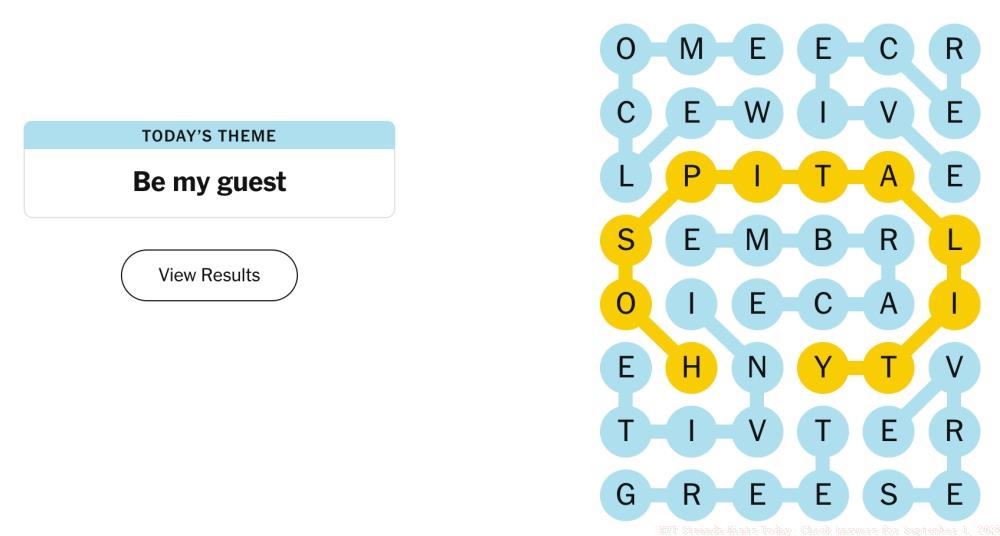
The September 1, 2025 Strands puzzle centers around the theme “Be my guest,” which focuses on concepts related to hospitality, visitor treatment, and hosting etiquette. If you’re finding today’s challenge particularly difficult, start by considering how you typically treat visitors or what actions demonstrate welcoming behavior.
Here’s a strategic approach to today’s puzzle: begin by scanning the grid for words related to hospitality rituals, guest accommodations, or hosting responsibilities. The theme suggests words associated with making visitors feel welcome and comfortable.
For specific word assistance, here are progressive hints designed to maintain the challenge while providing necessary guidance:
- Hint #1: This refers to a circular ornamental headdress traditionally worn by monarchs during formal ceremonies – think royal gatherings and formal receptions.
- Hint #2: This action describes an ungainly descent or sudden collapse – consider awkward moments that might occur when hosting inexperienced guests.
When you need a temporary break from Strands’ complexity, today’s NYT Wordle offers a different type of word challenge that exercises complementary cognitive skills.
The Spangram for September 1, 2025, primarily follows a HORIZONTAL orientation across the grid. It begins with the letter sequence “HO,” providing a crucial starting point for today’s puzzle solution.
Identifying Spangram orientation significantly impacts your solving strategy. Horizontal Spangrams typically allow for easier pattern recognition since they follow natural reading direction, while vertical Spangrams require more deliberate scanning of columns.
When dealing with horizontal Spangrams, employ a left-to-right scanning pattern while watching for thematic connections. The “HO” starting clue suggests potential words related to hosting, home, or hospitality – all aligning perfectly with today’s “Be my guest” theme.
Advanced players should note that Spangrams sometimes incorporate diagonal elements even when primarily horizontal. Always check adjacent rows for potential diagonal extensions that might complete the spanning word or phrase.
A Spangram represents the foundational element in every NYT Strands puzzle – it’s a single word or phrase that spans the entire grid vertically, horizontally, or diagonally. This critical component acts as the thematic anchor that connects all other words in the puzzle.
The Spangram functions differently from theme words in several key aspects. While theme words are typically shorter and more numerous, the Spangram provides the conceptual framework that makes sense of the entire puzzle. Discovering it early can dramatically reduce solving time.
Strategic Spangram identification involves scanning grid perimeters first, as spanning words often touch edges. Then work inward, looking for letter sequences that could form meaningful phrases related to the announced theme.
Common Spangram patterns include: horizontal spans across middle rows, vertical spans along edge columns, or diagonal paths from corner to corner. Recognizing these patterns becomes easier with regular practice and pattern awareness development.
Mastering NYT Strands requires developing systematic approaches beyond basic word-finding. Start each puzzle by thoroughly analyzing the theme statement – today’s “Be my guest” immediately suggests hospitality-related vocabulary. This thematic focus should guide your entire word search strategy.
Avoid these common Strands mistakes: Don’t fixate on finding the Spangram first; sometimes identifying several theme words reveals the Spangram naturally. Also, avoid overlooking diagonal connections, as many players focus exclusively on horizontal and vertical word formations.
Efficiency techniques include scanning for common prefixes and suffixes related to the theme, looking for word roots that might appear in multiple theme words, and periodically reassessing whether discovered words genuinely connect to the announced theme.
For advanced optimization, develop a mental map of the grid, noting areas with high consonant clusters or unusual letter combinations that often indicate theme word locations.
Time management strategies vary by skill level: beginners should allocate 15-25 minutes per puzzle, intermediate players 10-15 minutes, and experts often complete challenges in under 10 minutes through pattern recognition and strategic scanning.
Action Checklist
- Analyze theme statement thoroughly before searching for words
- Scan grid perimeters for Spangram candidates before focusing internally
- Identify 2-3 theme words to establish thematic pattern before Spangram hunt
- Use progressive hint system only after genuine struggle to maintain challenge
- Practice pattern recognition with daily puzzles to build mental mapping skills
No reproduction without permission:Tsp Game Club » NYT Strands Hints Today: Check Answers for September 1, 2025 Master NYT Strands with expert strategies, today's puzzle solutions, and actionable tips for word game success