
Expert analysis of Oblivion Remastered’s visual upgrades, gameplay improvements, and enduring legacy in 2025
Visual Transformation and Technical Analysis
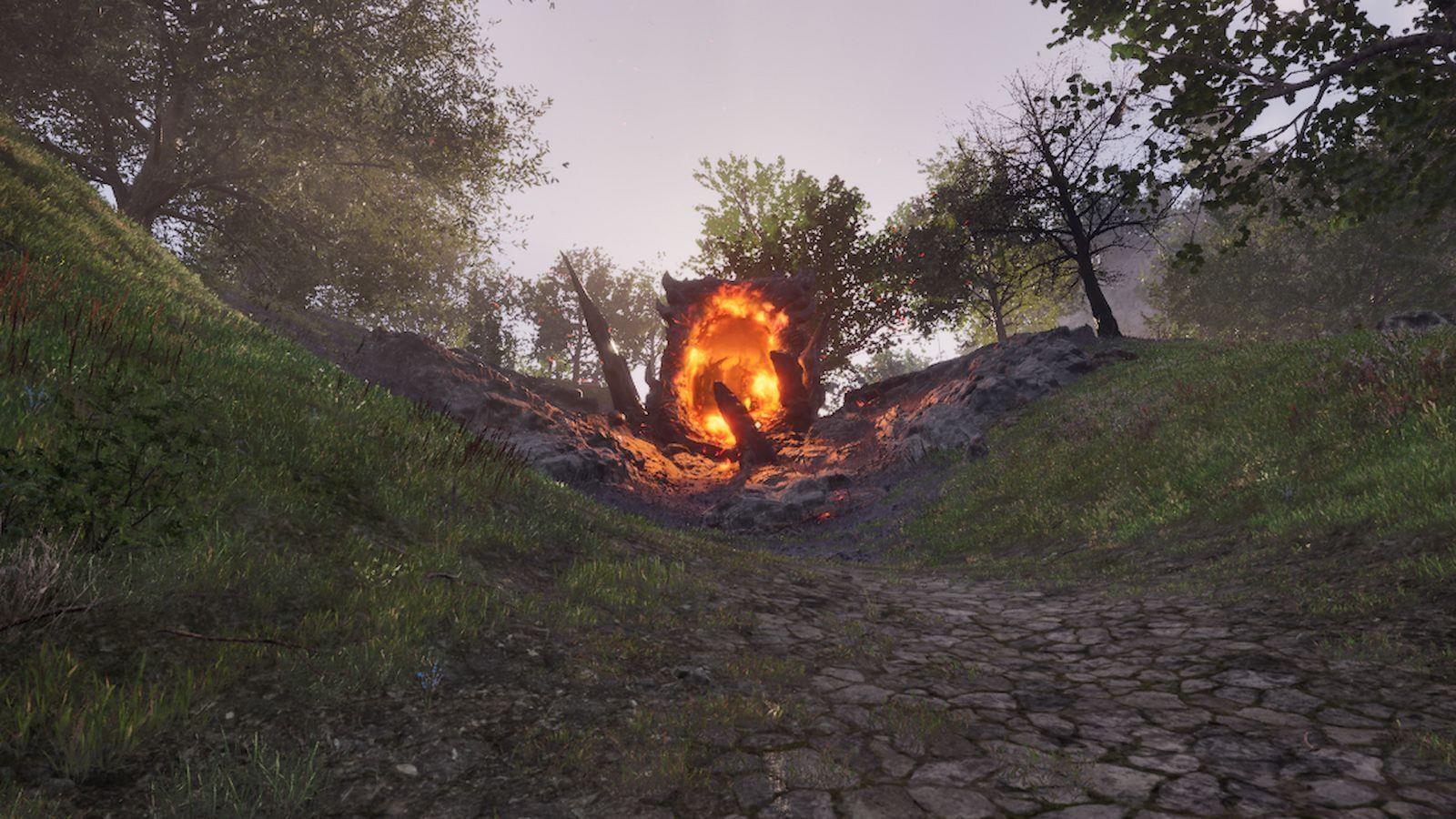
Approaching this remaster two decades after the original’s debut, I harbored significant doubts about modernizing such a time-capsule experience. Bethesda’s ambitious recreation attempts to bridge generational gaps while preserving the core identity that defined early 2000s RPG innovation.
Virtuos Studios has executed a careful balancing act with Oblivion Remastered, applying contemporary visual technology without fundamentally altering the game’s distinctive personality. This approach results in what feels like the same classic experience, now presented through a significantly enhanced visual lens.
The wilderness environments receive competent UE5 treatment with expected features: volumetric lighting, Lumen-powered ray tracing, and atmospheric distance rendering. While impressive for players new to current-gen technology, veterans of recent UE5 titles may find these elements becoming standard industry offerings rather than groundbreaking innovations.
Where the visual overhaul truly excels is in urban environments and architectural details. The meticulous recreation of cities, castles, and interior spaces demonstrates remarkable attention to preservation while leveraging modern rendering capabilities. Every stone texture, wood grain, and architectural flourish receives loving attention that honors the original artistic vision.
However, several visual elements reveal artistic compromises. The color grading shifts toward warmer red tones at the expense of the original’s distinctive blue-green palette. Environmental effects like cloud shadows appear subdued, and foliage animation exhibits unnatural jello-like movements that undermine immersion. These choices represent technological progress sometimes clashing with artistic consistency.
Character models represent the remaster’s crowning achievement. Facial animations achieve unprecedented realism, rivaling titles specifically celebrated for their character work. The preservation of the famously flexible character creator—still capable of producing both masterpieces and monstrosities—demonstrates commitment to maintaining the original’s spirit.
Technical performance presents significant concerns. Testing across multiple GPU configurations revealed consistent frametime instability regardless of sync technology implementation. Optimization appears inconsistent, with performance issues persisting even on recommended hardware specifications.
Gameplay Evolution and System Overhauls
The remaster introduces substantial quality-of-life improvements that modernize the core gameplay experience without compromising the original’s distinctive feel. Animation systems receive comprehensive updates, with weapon handling and combat feedback feeling significantly more responsive than the 2006 original.
First-person combat benefits tremendously from these enhancements, with archery mechanics that arguably surpass even Skyrim’s polished implementation. The visceral impact of successful strikes and improved hit detection creates satisfying feedback loops that were absent in the original release.
Most significantly, Oblivion Remastered addresses the infamous leveling system that previously required spreadsheet-level planning to avoid character progression sabotage. The revised system provides transparent attribute allocation—12 points per level distributed across three chosen attributes—while both major and minor skills contribute to level progression.
This overhaul eliminates the obsessive min-maxing that characterized original playthroughs, though strategic planning remains important. Players can now focus on roleplaying rather than mathematical optimization, representing a substantial quality-of-life improvement for modern audiences.
Practical Tip: When allocating attribute points, prioritize endurance early for maximum health gains and consider willpower for magic users needing sustained spellcasting capability. Strength remains crucial for melee builds despite the revised system.
Common Mistake: Avoid spreading attribute points too thinly across multiple categories. Specializing in 2-3 core attributes typically produces more effective character builds than attempting balanced development across all seven attributes.
The animation modernization extends beyond combat to general movement and interaction systems. Third-person movement retains some characteristic jankiness, but first-person navigation feels remarkably polished. These improvements make exploration and combat more accessible while preserving the original’s distinctive movement feel.
Optimization Strategy: For players struggling with the revised leveling system, focus on developing one combat skill (Blade, Blunt, or Destruction) alongside complementary support skills. This approach prevents the character progression dead-ends that can occur with overly specialized non-combat builds.
Enduring Design Challenges
Despite visual and systemic improvements, Oblivion Remastered faithfully preserves several design elements that feel increasingly dated by modern standards. The open world structure, while revolutionary in 2006, reveals significant limitations when examined through contemporary lenses.
The game’s heavy reliance on fast-travel systems highlights fundamental world design issues. Unlike later Bethesda titles that encourage organic exploration through visual storytelling and environmental cues, Oblivion frequently directs players to bypass wilderness content entirely. This design choice underscores the relatively sparse points of interest between major settlements.
Dungeon design represents another area where fidelity to the original creates modern accessibility challenges. The remaster preserves the notoriously repetitive cave, ruin, and fort layouts with minimal variation. While visually enhanced through photogrammetry techniques, the fundamental layout homogeneity quickly becomes apparent during extended play sessions.
The infamous Oblivion gates—central to the main narrative—suffer particularly from this repetition. Despite stunning visual upgrades to the infernal realms, the limited architectural templates and identical puzzle mechanics transform what should be climactic set pieces into tedious obligations.
Enemy scaling remains the most problematic carryover from the original design. While the remaster implements Skyrim-inspired refinements, the core issue of world-level mirroring persists. Bandits inexplicably acquiring elite armor and weapons as the player levels undermines narrative consistency and world immersion.
Practical Tip: Complete the Arena questline early in your playthrough. Delaying this content results in anticlimactic battles where early-round opponents outgear the final champion due to scaling discrepancies.
Common Mistake: Avoid postponing main quest Oblivion gates beyond level 20. The escalating enemy strength can overwhelm under-equipped city guards, creating nearly impossible defense scenarios in key story moments.
Several secondary systems feel particularly outdated. Horseback travel remains inefficient for character development since mounted movement doesn’t contribute to Athletics skill. Lockpicking mechanics offer little engagement compared to subsequent Bethesda titles, encouraging players to bypass the system entirely through magical or item-based solutions.
Optimization Strategy: For players frustrated by scaling issues, consider installing community mods that address enemy level progression while waiting for official patches. The PC version particularly benefits from these community-driven balance adjustments.
Oblivion’s Unique Identity and Legacy
Oblivion’s enduring appeal stems from distinctive qualities that remain remarkably unique nearly two decades later. The radiant AI system represents a technological ambition rarely attempted in subsequent open-world RPGs, creating emergent storytelling opportunities unmatched by more scripted contemporary titles.
NPCs operate on complex daily, weekly, and monthly schedules that generate authentically unpredictable world interactions. This system produces both genuinely lifelike behavior and famously absurd encounters that have become integral to Oblivion’s cultural legacy. The spontaneous conversations between citizens range from believably mundane to hilariously nonsensical, creating a world that feels simultaneously coherent and delightfully unpredictable.
The writing tone consciously embraces a mock-Arthurian theatricality that distinguishes it from both Morrowind’s alien seriousness and Skyrim’s Nordic grit. This stylistic choice creates a campy, almost Shakespearean atmosphere that ages remarkably well as a deliberate artistic decision rather than dated awkwardness.
Quest design frequently subverts expectations in ways that remain refreshing compared to more formulaic modern RPGs. The Fighter’s Guild rat extermination mission that transforms into an investigation of disappearing rodents exemplifies the narrative creativity that makes side content consistently engaging.
The Dark Brotherhood assassination mission set in a secluded manor stands as a masterclass in emergent gameplay possibilities. The multiple approaches—including a rare pacifist resolution—demonstrate design philosophy years ahead of its time, anticipating immersive sim concepts that would become celebrated in later generations.
Practical Tip: Spend time observing NPC routines in major cities. The radiant AI creates unexpected narrative moments and reveals hidden character relationships that enrich the roleplaying experience.
Common Mistake: Don’t rush through faction questlines. The best narrative payoffs and emergent moments occur when you engage with the world naturally rather than treating quests as checklist objectives.
Oblivion occupies a unique cultural position between Morrowind’s hardcore RPG foundations and Skyrim’s mass-market accessibility. This middle ground creates an experience that balances depth with approachability, explaining its enduring cult status among Elder Scrolls enthusiasts.
Final Verdict and Recommendations
Oblivion Remastered succeeds as both preservation project and visual modernization. The package includes Knights of the Nine and Shivering Isles expansions, representing exceptional value for returning players seeking to revisit Cyrodiil with contemporary visual fidelity.
For series veterans, this version definitively replaces the original as the preferred experience. The visual enhancements, quality-of-life improvements, and preserved expansion content create the most complete and accessible version of this classic RPG. Performance issues represent the primary compromise, though these may be addressed through post-launch patches.
Newcomers approaching Oblivion for the first time should temper expectations regarding certain design conventions. The game demonstrates its age through repetitive dungeon design, inconsistent difficulty scaling, and heavy fast-travel reliance. However, these limitations are balanced by unparalleled emergent storytelling, inventive quest design, and character development depth that remains engaging despite dated elements.
The radiant AI system continues to distinguish Oblivion from virtually all contemporary RPGs, creating spontaneous memorable moments that feel uniquely personal to each playthrough. This technological ambition, combined with the distinctive theatrical writing and comprehensive faction content, ensures the experience remains compelling despite visible aging in certain design aspects.
Reviewed On: PC (Key provided by Bethesda Softworks)
Platforms: PC, Xbox Series X/S
Developer: Virtuos, Bethesda Game Studios
Publisher: Bethesda Softworks
Release Date: April 22, 2025
No reproduction without permission:Tsp Game Club » Oblivion Remastered: The re-review Expert analysis of Oblivion Remastered's visual upgrades, gameplay improvements, and enduring legacy in 2025