
A comprehensive guide to mastering Shadow Labyrinth’s challenging combat, movement, and progression systems
Introduction and Game Overview
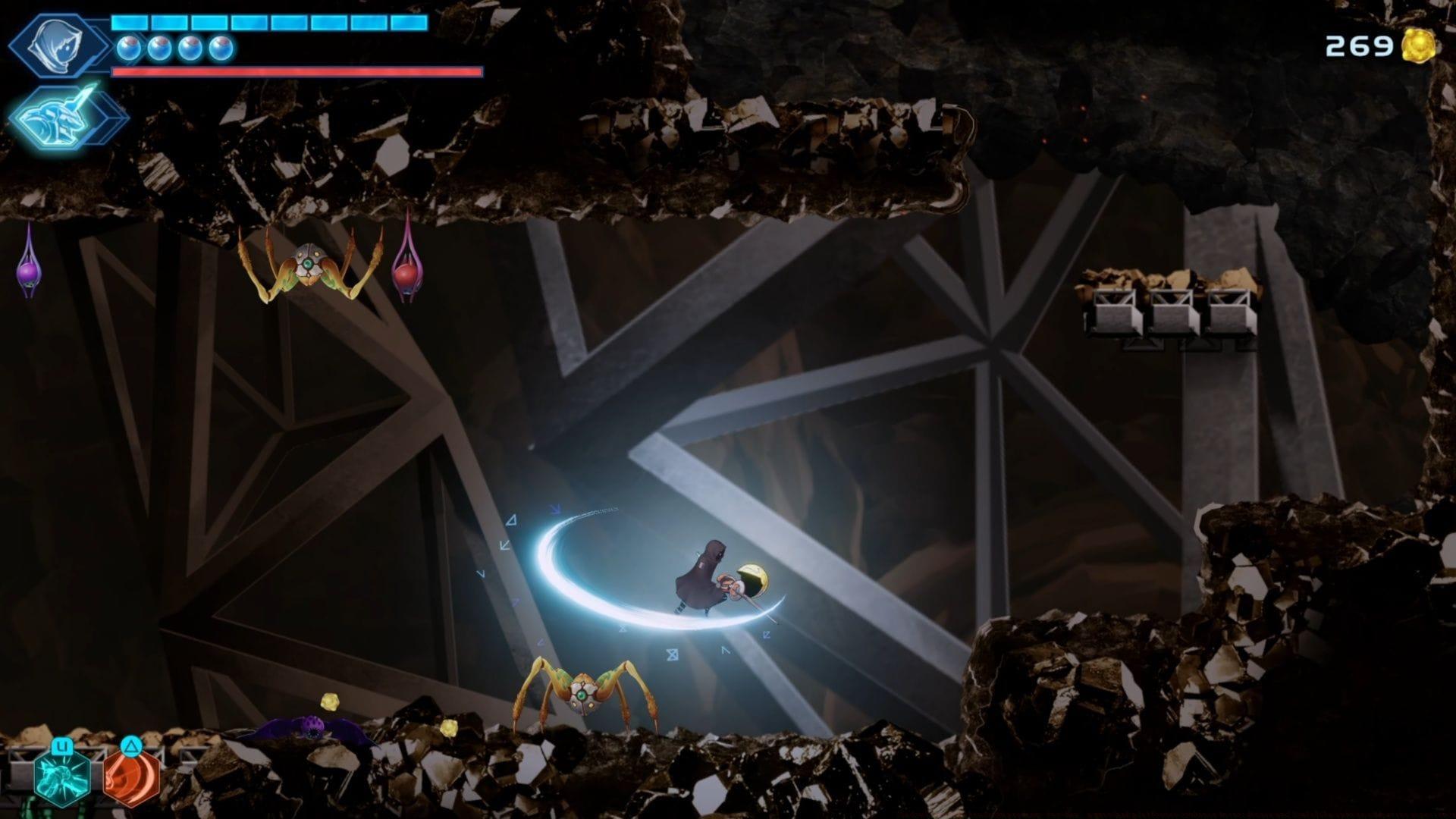
Initially, I approached Shadow Labyrinth with considerable skepticism about this dark reimagining of Pac-Man as a 2D action platformer. The concept might sound unconventional at first glance, but those familiar with the exceptional Pac-Man Secret Level episode “Circle” will recognize this as its direct narrative successor.
Looking for Crossword hints & solutions? Check out latest NYT Mini Crossword Answers, LA Times Crossword Answers, and Atlantic Crossword Answers
Bandai Namco’s Shadow Labyrinth transports Pac-Man’s established mythology into a bleak, dystopian future setting. Gamers assume control of the Swordsman, an enigmatic figure draped in tattered black robes, though he’s far from solitary in his journey.
The protagonist collaborates with his trusted blade, an arsenal of unlockable abilities, and his companion Puck to overcome adversaries and accomplish their overarching objective.
Without revealing specific plot details, the narrative construction and its seamless connection to the “Circle” episode impressed me significantly. The notion of a violent Pac-Man adaptation seemed unnecessary until 2025 arrived with this surprisingly compelling iteration.
While Bandai Namco officially categorizes it as a “2D Action Exploration & Combat Platformer” (or simply “2D Action Platformer”), the experience fundamentally operates as a Metroidvania at its core.
The game incorporates beloved Metroidvania staples: extensive environmental exploration, fluid movement mechanics, and strategic backtracking using newly acquired abilities to access previously unreachable items like health upgrades.
Core Gameplay Mechanics
Success demands mastery of every available tool, as Shadow Labyrinth presents substantial challenges without compromise.
The platforming mechanics provide smooth traversal with intentional momentum physics. When executing running jumps between platforms, your character maintains slight sliding momentum upon landing, whereas stationary jumps followed by movement result in more controlled landings. This physical behavior requires strategic adjustment during navigation. The dodge roll maneuver offers precise platform placement and appears to include invincibility frames typical of Soulslike games.
Shadow Labyrinth incorporates distinct Soulslike combat mechanics where proficiency in parrying, evading, and dashing becomes essential for survival. The combat system features nuanced elements that enhance strategic depth.
One particularly effective technique is the downward thrust attack executed during jumps. Successful landings rebound your character upward similar to Scrooge McDuck’s pogo bounce from DuckTales, enabling efficient traversal through enemy clusters.
The Devour ability allows consumption of defeated foes, harvesting resources for an integrated crafting system that provides additional tactical options.
Combined with equippable passive and active abilities, these systems offer extensive customization for navigating Shadow Labyrinth’s challenges. Despite these advantages, the game maintains considerable difficulty, though expanded health pools and additional tools significantly improve manageability.
A crucial early-game realization involves the healing items (functionally similar to Elden Ring’s Estus Flasks). Utilizing these restorative items from the initial stages would have dramatically accelerated progress through combat sequences.
Combat operates at high intensity with demanding challenge levels, making healing accessibility vital while developing parrying and evasion skills. Distinct visual cues indicate appropriate responses: red flashes signal parry opportunities, while blue indicators necessitate dodging maneuvers.
Strategic management of the ESP Gauge proves critical for success. Performing dash maneuvers and special attacks depletes this resource, which regenerates gradually. Complete exhaustion leaves you dangerously vulnerable, a lesson learned during initial boss encounters.
Advanced Combat Strategies
While appreciating other Pac-Man platformers like Pac-Man World Re-Pac, Shadow Labyrinth’s 2D platforming delivers superior fluidity compared to previous three-dimensional iterations.
Progression through Shadow Labyrinth involves completing various trials to obtain essential keys. Environmental puzzles requiring boulder manipulation to navigate maze-like areas provided enjoyable combat respites with manageable difficulty levels.
The trial variety includes enemy gauntlets, traditional mazes, and particularly demanding precision challenges that evoked mixed reactions due to their excellent design contrasting with personal performance struggles. One trial incorporates mini-Puck (a diminutive Pac-Man analogue) navigating energy conduits called D-Lines.
This mechanic allows temporary halting by holding a button, though continuous movement otherwise persists. Limited jumping capability enables brief aerial evasion or transfer between adjacent D-Lines, with reasonably generous timing constraints.
Movement precision remains absolutely paramount throughout Shadow Labyrinth. Attempting D-Line transfers for rapid advancement requires exact directional input, as minor stick miscalculations result in collisions with buzzsaw enemies or damaging energy barriers that reset challenge progress.
This specific trial consumed more time than other challenges combined, serving as an effective gameplay variation despite its steep learning curve and nostalgic connection to classic Pac-Man mechanics.
The demo’s concluding boss encounter delivered one of the most memorable experiences, blending Splatterhouse aesthetics with Pac-Man inspiration. Preparation for significant boss battles reduced completion time compared to the precision trials.
Through experimentation, I discovered effective corner-trapping tactics against bosses, utilizing three-hit sword combinations followed by strategic repositioning. However, combat requires constant vigilance rather than simple hack-and-slash approaches, with numerous attacks demanding precise parrying or evasion.
Environmental awareness proves crucial as bosses deploy ceiling-based hazards. Strategic deployment of the massive GAIA mech provides temporary invulnerability while dealing substantial damage and building stun meters.
Optimal activation during the final combat phase allowed near-instant victory upon mech expiration. An additional boss battle directly references Pinky from original Pac-Man ghost designs, creating delightful fan service moments.
Challenges and Progression
Shadow Labyrinth presents an intriguing concept that rapidly captured my engagement, though frustration and tension naturally accompany the learning process for its movement and combat systems.
While contemporary gaming’s Soulslike proliferation sometimes feels excessive, certain implementations like this and Clair Obscur demonstrate the formula’s effective application. Not every gaming experience should deliver soul-crushing difficulty, naturally.
Throughout several hours of gameplay, tangible skill development became evident, generating anticipation for further exploration, ability acquisition, and personal playstyle refinement.
This title should particularly resonate with Metroidvania enthusiasts seeking elevated challenge levels beyond genre standards. Additionally, the integration within Bandai Namco’s United Galaxy Space Force (UGSF) timeline connects various franchises including Galaxian, Star Luster, StarBlade, Ridge Racer, and now Pac-Man through Shadow Labyrinth.
Common Beginner Mistakes to Avoid:
New players frequently underestimate the momentum-based platforming, leading to unnecessary falls. Practice stationary jumps for precision landings and running jumps only when necessary for distance.
Many beginners conserve healing items excessively during early encounters. Use them proactively during learning phases rather than hoarding for ideal situations.
ESP Gauge management often gets overlooked in intense combat. Develop the habit of monitoring this resource and disengaging when depletion nears critical levels.
Advanced Optimization Strategies:
Master the pogo bounce technique not just for combat but also for traversal. This movement can bypass certain environmental hazards and reach hidden areas.
Experiment with ability combinations rather than relying on default loadouts. Certain passive abilities synergize unexpectedly with specific combat scenarios.
Learn enemy attack patterns during initial encounters rather than immediately attacking. Observation pays dividends in subsequent attempts.
Final Assessment and Tips
Shadow Labyrinth successfully reimagines Pac-Man through a dark, challenging lens that respects franchise heritage while introducing innovative mechanics. The fusion of Metroidvania exploration with Soulslike combat creates a distinctive experience that demands but rewards player investment.
Recommended Learning Approach:
Focus initially on movement mastery before advancing to complex combat techniques. The platforming precision required throughout the game makes this foundational skill essential.
Embrace the trial-and-error nature rather than becoming discouraged by failures. Each attempt builds muscle memory and pattern recognition that gradually transforms overwhelming challenges into manageable encounters.
Experiment extensively with the crafting system and ability combinations. The Devour mechanic provides resources for customization that can significantly alter gameplay dynamics based on personal preferences.
Shadow Labyrinth represents a bold direction for Pac-Man that demonstrates how established franchises can successfully explore new genres while maintaining core identity. The satisfying progression from struggling novice to competent adventurer provides the type of rewarding experience that defines memorable gaming journeys.
No reproduction without permission:Tsp Game Club » Shadow Labyrinth hands-on preview: Pac-Man’s grimdark platformer combines Metroidvania and Soulslike into an addictive experience A comprehensive guide to mastering Shadow Labyrinth's challenging combat, movement, and progression systems