
TL;DR
- Class selection determines combat style but isn’t permanent – respec options allow experimentation
- Assassin excels at burst damage but requires precise timing and positioning
- Ruler focuses on tactical control with shadow minions and area denial
- Optimal class switching saves resources and accelerates progression
- Weapon proficiency and attribute scaling directly impact class effectiveness
Mastering Solo Leveling: ARISE OVERDRIVE begins with understanding its innovative class system that adapts to your evolving playstyle. Unlike traditional RPGs that lock you into early decisions, this game encourages experimentation through flexible respec mechanics.
The action RPG brings Sung Jinwoo’s journey to life through dynamic combat where your class choice directly shapes engagement strategies against dungeons, elite bosses, and endgame content. Strategic class selection early on establishes your foundation for tackling increasingly complex challenges.
This comprehensive guide delves into all four specializations with detailed ability breakdowns, optimal builds, and advanced tactics to maximize your combat effectiveness regardless of preferred playstyle.
In Solo Leveling: ARISE OVERDRIVE, your chosen specialization dictates combat approach, weapon mastery progression, and skill development paths. The system stands apart from conventional RPGs by allowing complete class flexibility – you’re never permanently committed to initial choices. Skill point redistribution enables continuous build experimentation as you advance through content tiers.
Each specialization prioritizes distinct core attributes, optimal engagement ranges, and complexity levels that directly influence Sung Jinwoo’s capabilities and build efficiency. Understanding these foundational elements is crucial for optimizing performance. Here’s the strategic breakdown of class archetypes and their defining characteristics:
Every class revolves around specific stat priorities that govern your power progression and scaling potential:
Your attribute allocation automatically activates corresponding specializations, enabling risk-free testing of different combat approaches without long-term consequences.
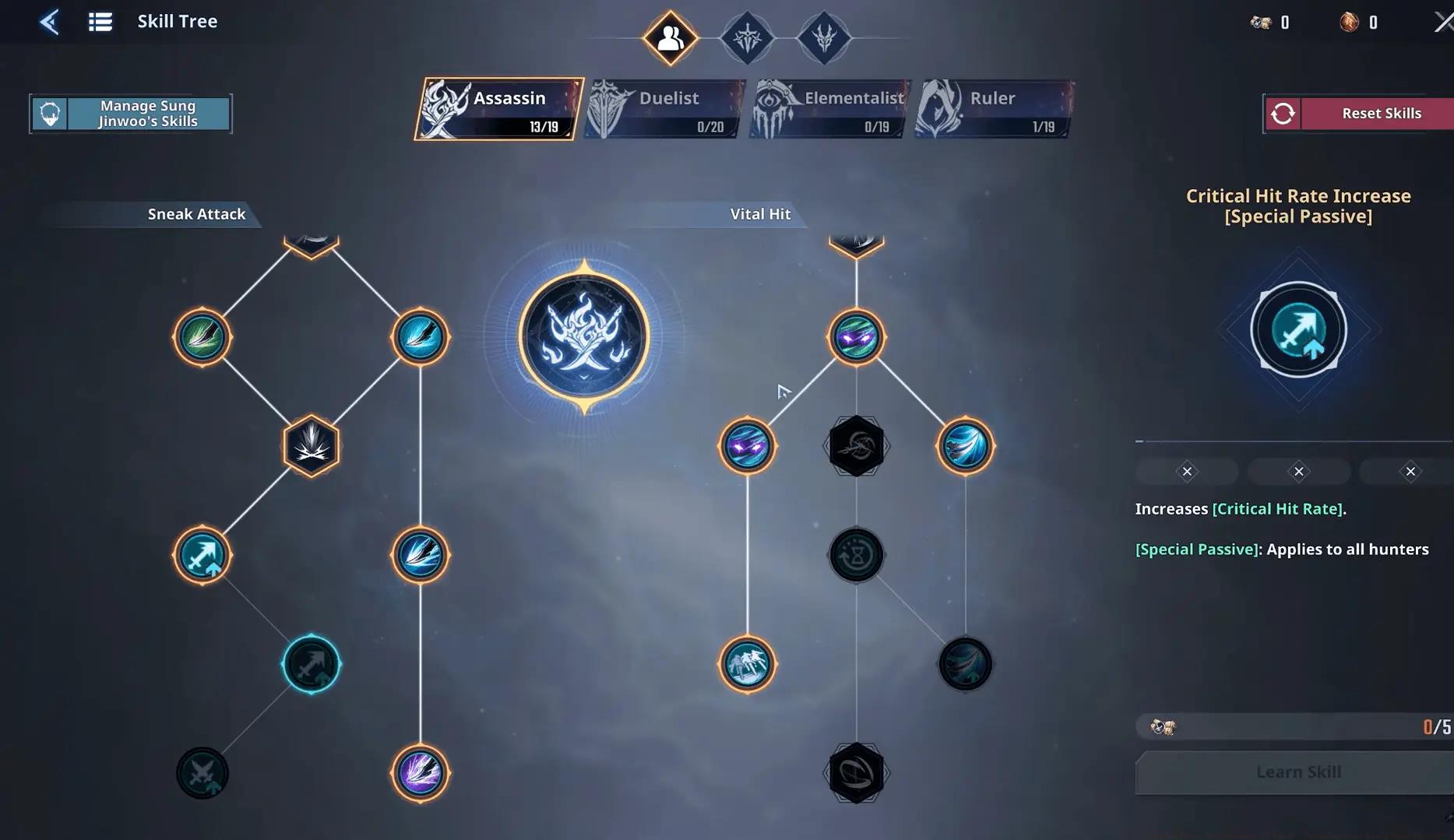
The Assassin specialization caters to players seeking high-skill ceiling gameplay with explosive damage potential. This class transforms Sung Jinwoo into an agile precision striker specializing in surgical eliminations. Perfect for veterans who enjoy calculated risk-taking and mechanical mastery.
This high-difficulty archetype dominates in burst damage scenarios and critical strike opportunities but severely punishes positioning errors and mistimed engagements. Success requires exceptional situational awareness and combo execution under pressure.

Advanced Assassin Techniques:
- Master animation canceling to maximize damage windows during boss vulnerability phases
- Utilize environmental positioning to control engagement timing and escape routes
- Coordinate skill rotations around critical damage amplifiers and debuff applications
- Practice dodge-canceling recovery frames to maintain offensive pressure
Common Beginner Mistakes:
- Overcommitting to extended combos without escape options
- Ignoring defensive cooldowns while focusing solely on damage output
- Poor resource management leading to empty skill bars during crucial moments
- Failing to adapt rotation based on enemy attack patterns and movement
The Ruler archetype embodies tactical supremacy through shadow manipulation and battlefield control. This specialization focuses on strategic positioning and resource management rather than direct confrontation, perfect for methodical players who prefer outmaneuvering opponents.
Ruler gameplay revolves around summoning shadow minions, establishing area denial zones, and controlling engagement pace. While less burst-oriented than Assassin, this class provides consistent pressure and survival utility through intelligent ability sequencing.
Tactical Advantages:
- Summoned shadows act as distractions and additional damage sources
- Area control abilities limit enemy movement and create safe zones
- Sustainable damage output without resource exhaustion concerns
- Strong team utility through crowd control and defensive support
Optimal Play Patterns:
- Pre-position shadows before engaging high-threat targets
- Rotate control abilities to maintain constant battlefield pressure
- Use minions to test enemy patterns and absorb dangerous attacks
- Coordinate with team members’ crowd control for maximum effectiveness
Mastering class transitions represents a crucial skill for optimizing your progression in Solo Leveling: ARISE OVERDRIVE. Strategic respec timing can dramatically accelerate your power growth and resource efficiency throughout different game phases.
The flexible specialization system enables adapting to specific content requirements without permanent commitment penalties. Learning when and how to redistribute skill points separates average players from elite performers.
Optimal Respec Timing:
- Before major boss encounters requiring specific counter strategies
- When acquiring powerful new weapons that synergize with different specializations
- During progression plateaus where current build reaches diminishing returns
- When joining group content requiring specific role compositions
Build Experimentation Guidelines:
- Test new specializations in lower-difficulty content before committing to hard modes
- Focus on one primary attribute cluster when experimenting to maintain effectiveness
- Keep backup equipment sets for different specialization approaches
- Document successful skill combinations for future reference and refinement
Resource Management Tips:
- Plan respec costs as part of your overall progression budget
- Time major specialization changes around resource-generating events
- Maintain core gear that functions across multiple class approaches
- Use training areas to practice new rotations before live implementation
Selecting your ideal specialization requires honest self-assessment of playstyle preferences, mechanical strengths, and progression goals. The optimal choice varies significantly based on whether you prioritize speedrunning, completionist approaches, or group content performance.
Understanding how each class scales into endgame content prevents early missteps that could slow your advancement. Consider both immediate enjoyment and long-term viability when making your selection.
Playstyle Assessment Questions:
- Do you prefer reactive combat or pre-planned engagements?
- Are you comfortable with high-risk/high-reward gameplay or consistent performance?
- Do you enjoy managing multiple resources or focusing on execution mechanics?
- What’s your tolerance for complex rotations versus straightforward ability usage?
Progression Planning Considerations:
- Early-game specializations that accelerate initial progression
- Mid-game transitions that maintain momentum through difficulty spikes
- Endgame specializations with highest performance ceilings
- Group content roles and desired team contribution styles
Weapon Proficiency Alignment:
- Match preferred weapon types with compatible specializations
- Consider acquisition difficulty for best-in-class weapons for each archetype
- Evaluate how weapon mechanics synergize with class abilities
- Plan upgrade material requirements for multiple weapon categories
Action Checklist
- Test all four specializations in training area to identify preferred playstyle
- Master basic rotation for your chosen class before attempting advanced content
- Practice animation canceling and dodge mechanics for your specialization
- Experiment with skill point distributions to optimize your build
- Create backup equipment sets for alternative specializations
No reproduction without permission:Tsp Game Club » Solo Leveling: ARISE OVERDRIVE Guide: All Classes Explained Master all four Solo Leveling Arise Overdrive classes with expert builds, strategies, and optimization tips for maximum performance