
TL;DR
- SparkBall combines MOBA tactics with sports gameplay in fast-paced 4v4 arena matches
- Master hero roles and team composition for effective ball control and scoring
- Advanced movement and ability timing are crucial for competitive play
- Strategic item purchases and gold management determine late-game effectiveness
- Team coordination around objectives wins rounds more than individual skill
This comprehensive guide provides everything required to excel at SparkBall, the innovative competitive arena experience.
SparkBall represents a dynamic 4v4 competitive arena where teams engage in intense brawling, precise passing, and strategic scoring across rapid-fire rounds. The core objective extends beyond simply defeating opponents—it demands controlling the spherical projectile and successfully landing it in the enemy goal. Competitive matches utilize a best-of-three format, with each round maintaining identical setup parameters: dismantle the opposing tower, eliminate their captain, then precisely deliver the ball into their scoring zone to claim victory. With its recent transition to the Somnia blockchain infrastructure, SparkBall establishes itself as a pioneering title within the web3 competitive esports landscape.
The gameplay experience merges strategic elements from MOBAs, combat mechanics from brawlers, and objective-based dynamics from sports titles. Veterans of League of Legends, Rocket League, or Omega Strikers will recognize familiar concepts, though SparkBall introduces its own distinctive pacing and rhythm. Team engagements unfold rapidly, character navigation utilizes WASD controls, and every ball possession carries significant strategic weight.
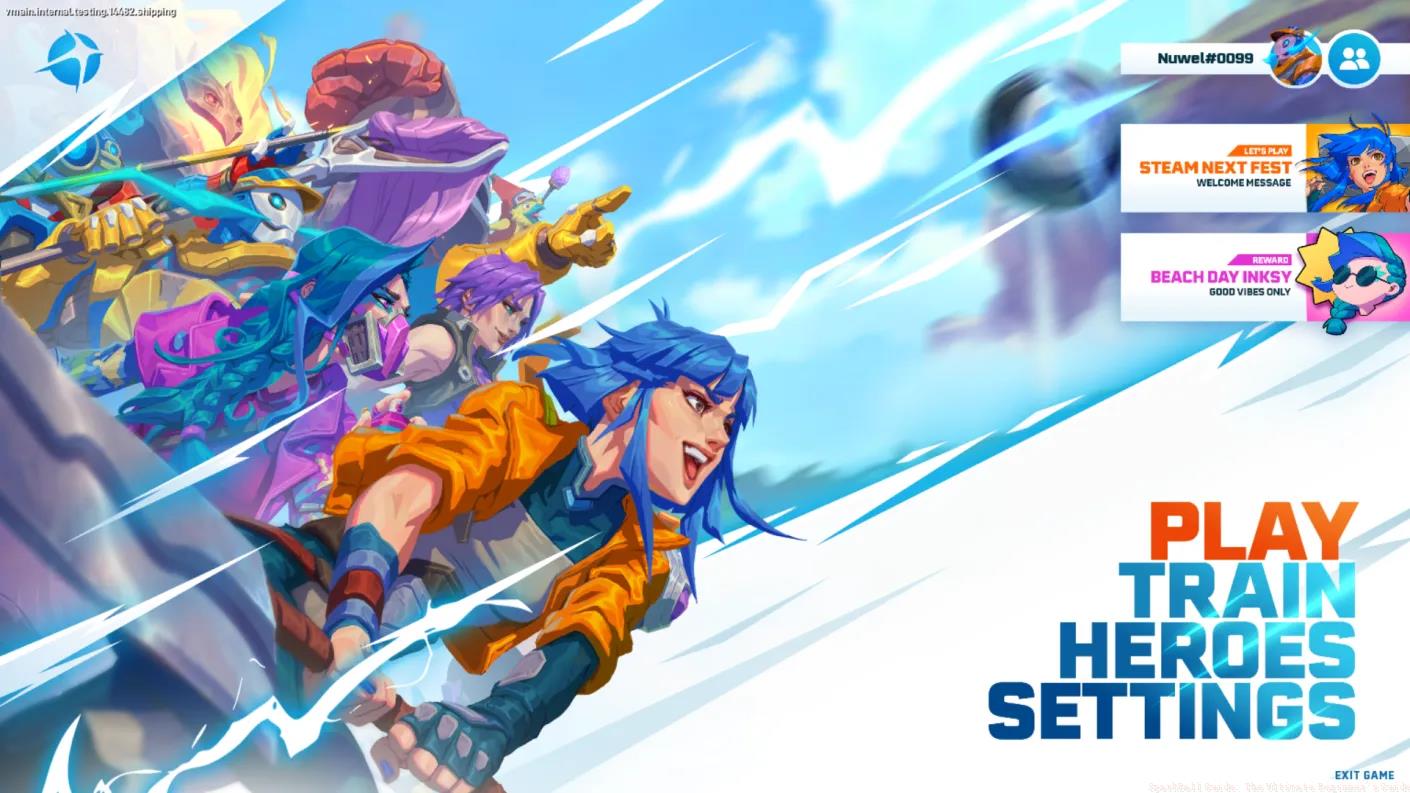
Begin your SparkBall journey by acquiring the game through Steam’s digital distribution platform. When initializing the application, the system may request authentication via a Sparkadia account. Adhere to the displayed instructions and employ the provided authorization code to complete the login procedure. Following successful authentication, you’ll access the primary interface screen. Navigate to the Play section from this hub to commence your first match.
SparkBall incorporates a sophisticated matchmaking framework comparable to mainstream MOBA titles, enabling queue participation for standard competitive encounters. The platform additionally features custom match functionality for private sessions with associates, tactical experimentation, or organized tournament play. New players should prioritize understanding basic mechanics before advancing to ranked competition—this foundational knowledge dramatically improves early performance and team contribution.
Similar to established MOBAs like Dota 2 or League of Legends, SparkBall’s competitive framework centers around an eclectic roster of distinctive characters—ranging from wildly imaginative to intimidatingly powerful designs. These heroes form your avatars as you contest ball control, disable defensive structures, and execute scoring maneuvers directly against opposition defenses.

SparkBall’s playable avatars officially classify as “Heroes.” Veterans of team-based competitive games will immediately recognize familiar archetypal roles. The roster includes resilient tanks and bruisers for establishing frontline dominance, control mages for area denial and spatial manipulation, high-damage carries for eliminating vulnerable targets, agile assassins for disrupting backline formations, and versatile support specialists for enhancing team sustainability. Each hero introduces unique gameplay patterns, making character selection that complements both team strategy and personal preference essential for skill development. For detailed examination of SparkBall’s current hero catalog, including ability breakdowns, role specifications, and character spotlights, consult the official documentation portal.
Advanced Team Composition Strategy: Successful teams typically balance their roster with at least one frontline specialist, one control character, one damage dealer, and one support hero. Avoid stacking multiple heroes with identical roles, as this creates vulnerability to counter-strategies. The most effective compositions feature complementary abilities that create synergistic combinations during team engagements.
Common Selection Mistakes: New players frequently prioritize favorite characters over team needs, resulting in unbalanced compositions. Another prevalent error involves neglecting the enemy team’s composition during selection—always consider how your hero choice counters or gets countered by opposing picks. Remember that hero mastery requires approximately 10-15 matches to develop basic competency and 30+ matches for advanced technique execution.
Upon entering the battlefield, SparkBall’s core mechanics become fully operational. Character navigation utilizes the WASD key configuration, while targeting and camera orientation respond to mouse input. Standard attacks trigger via left-click, primary abilities activate through right-click and Q keys, and the spacebar executes your evasion dash. Ultimate abilities, initiated with R, accumulate charge through combat participation or gathering energy orbs distributed throughout the arena. Precise dash timing proves critical whether evading threats, pursuing targets, or repositioning during engagements. Each hero possesses distinctive movement characteristics, with varied distributions of mobility options, crowd control capabilities, and damage potential.
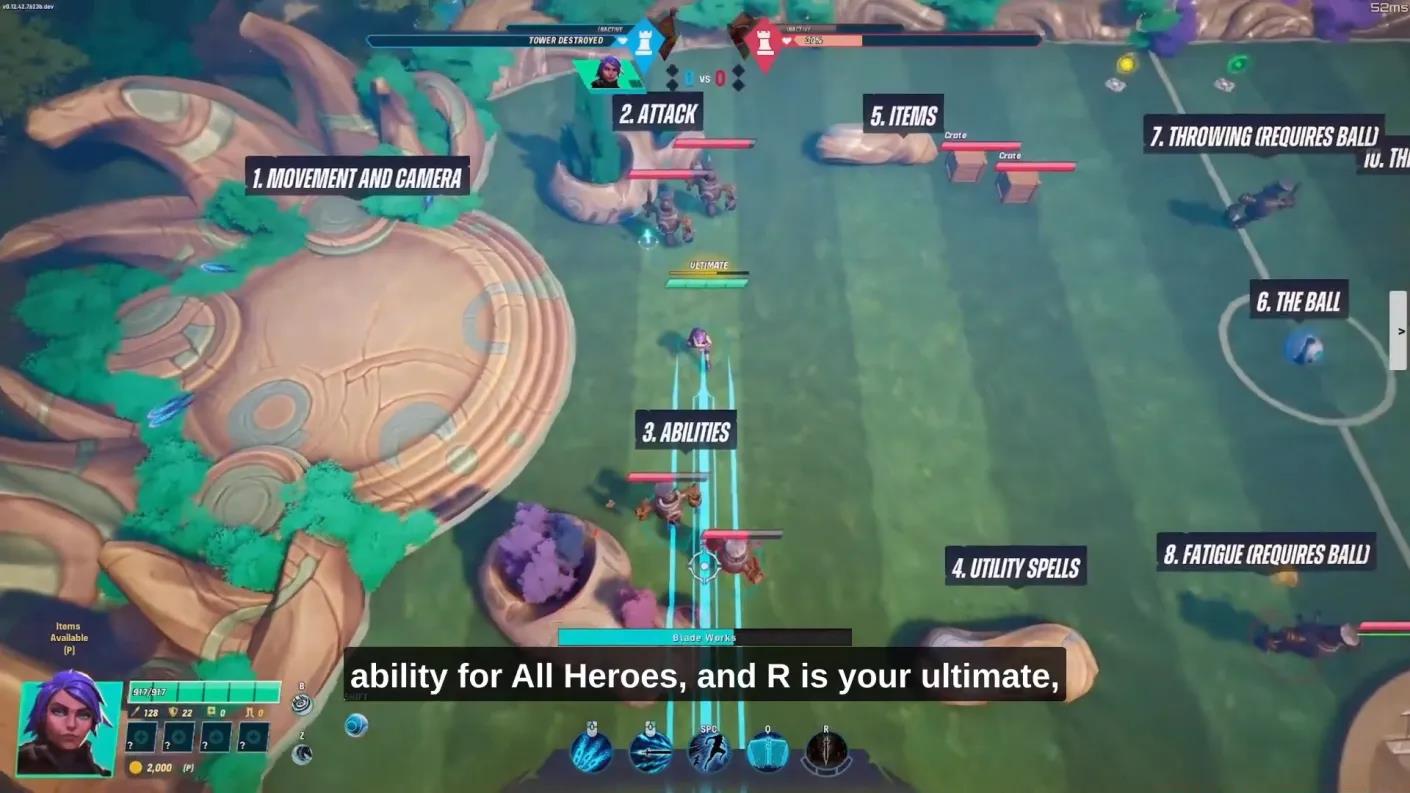
Activate mount functionality with Z for accelerated movement during non-combat situations, and press B to initiate recall sequences for complete health restoration. The perspective remains fixed on your hero, making intelligent positioning and movement decisions fundamentally important.
Advanced Movement Techniques: Master the ‘stutter-step’ technique by alternating between movement and attacks to maintain optimal positioning. Learn to conserve your dash for critical moments rather than using it for general mobility—having this ability available during enemy engagements often determines survival. Practice ‘animation canceling’ by using movement commands immediately after ability activation to minimize vulnerability windows.
Camera Management: Despite the locked camera perspective, skilled players continuously monitor mini-map information and develop ‘peripheral awareness’ of battlefield developments. Regularly scan for enemy positioning, ball location, and objective status even while focusing on immediate combat. This situational awareness separates competent players from exceptional ones.
When matches commence, priority focuses squarely on sphere control and objective completion. Most significant conflicts occur around high-value locations including projectile cannons, resource crates, and restorative zones. The gameplay loop represents a continuous cycle of area contestation, precise passing, tactical resets, and coordinated advancement.
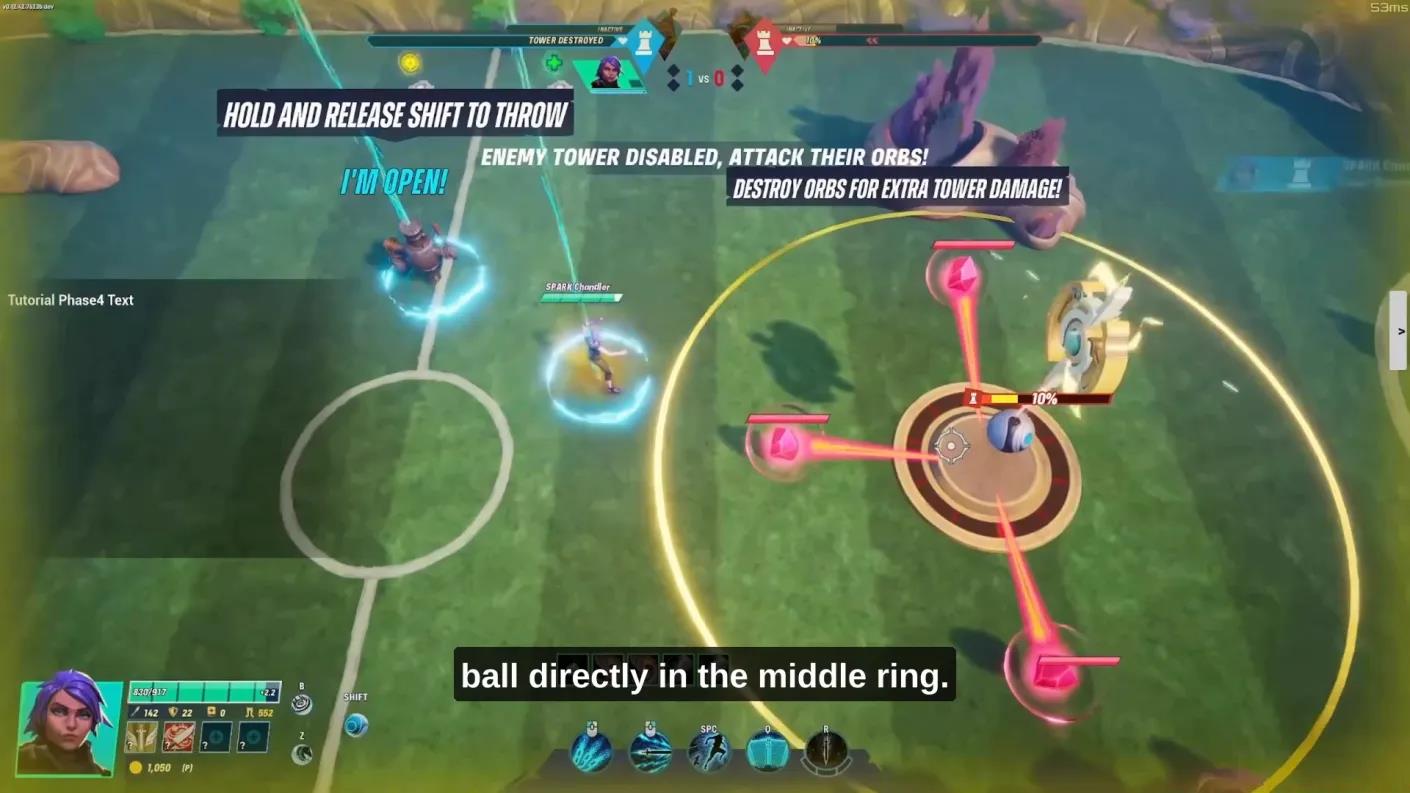
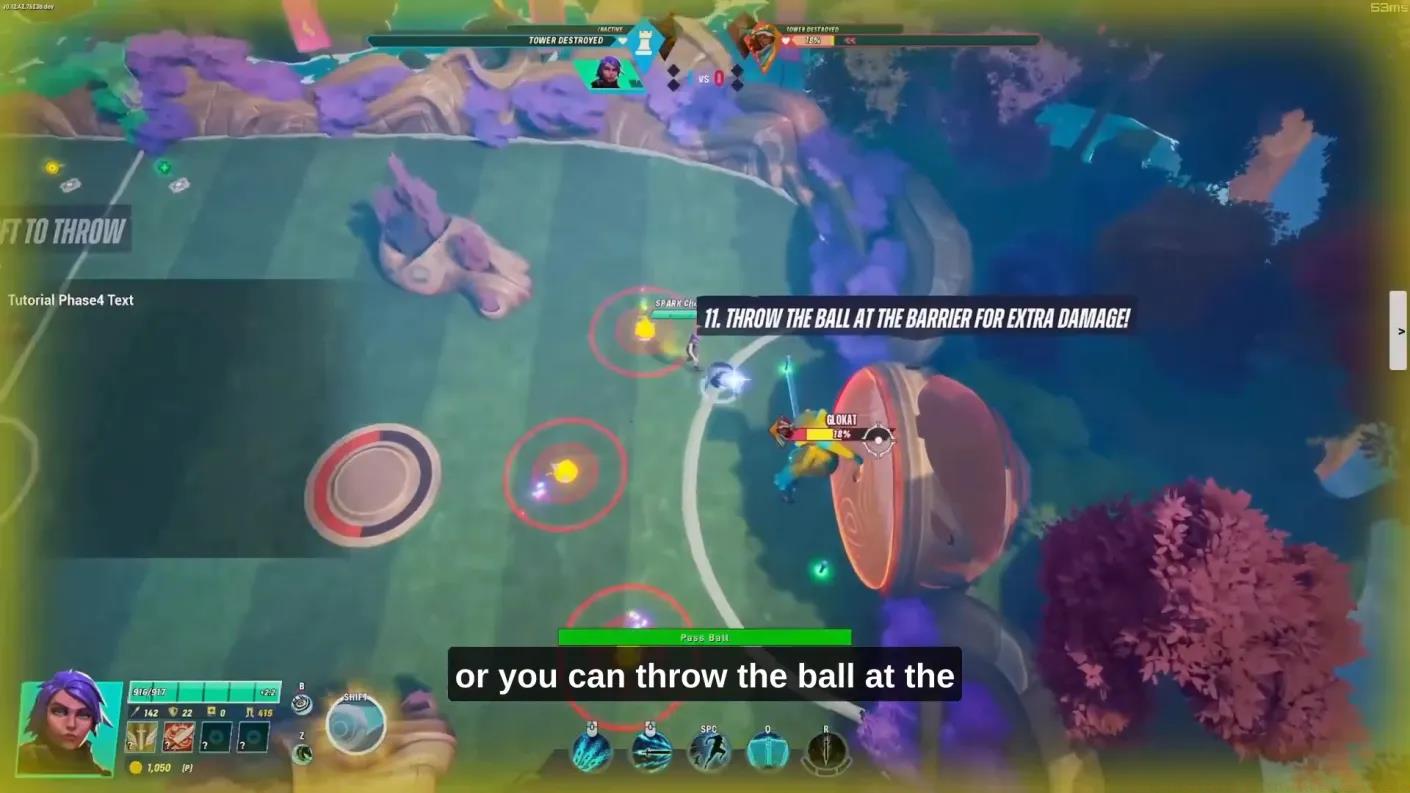
Round Victory Conditions: Success requires methodical progression through three primary objectives: First, disable the enemy tower to remove their primary defensive structure. Second, eliminate the opposing captain to create scoring opportunities. Third, transport the ball into the opponent’s goal zone while their defenses are compromised. Teams that attempt to score without completing the first two objectives typically face heavily defended goals and wasted opportunities.
Strategic Priority System: During early game phases (first 2 minutes), prioritize tower destruction over aggressive hero elimination. Mid-game (minutes 2-4) should focus on captain targeting when the enemy team is respawning or distracted. Late-game (final minute) becomes all-ball focused with coordinated pushes toward the goal. Understanding these phase priorities prevents wasted effort and misallocated resources.
Team Coordination Essentials: Designate one player as primary shot-caller to coordinate objective focus. Establish clear communication protocols for ball passing—verbal calls or quick-chat commands prevent miscommunication during critical moments. Develop predetermined strategies for common scenarios like overtime situations or last-second scoring attempts.
SparkBall incorporates sophisticated ball physics that influence passing accuracy, shooting trajectories, and interception timing. The spherical projectile maintains momentum based on passing force and character positioning, requiring players to anticipate movement patterns rather than simply reacting. Additionally, the fatigue system imposes strategic limitations on continuous ability usage, preventing spam tactics and encouraging thoughtful engagement timing.
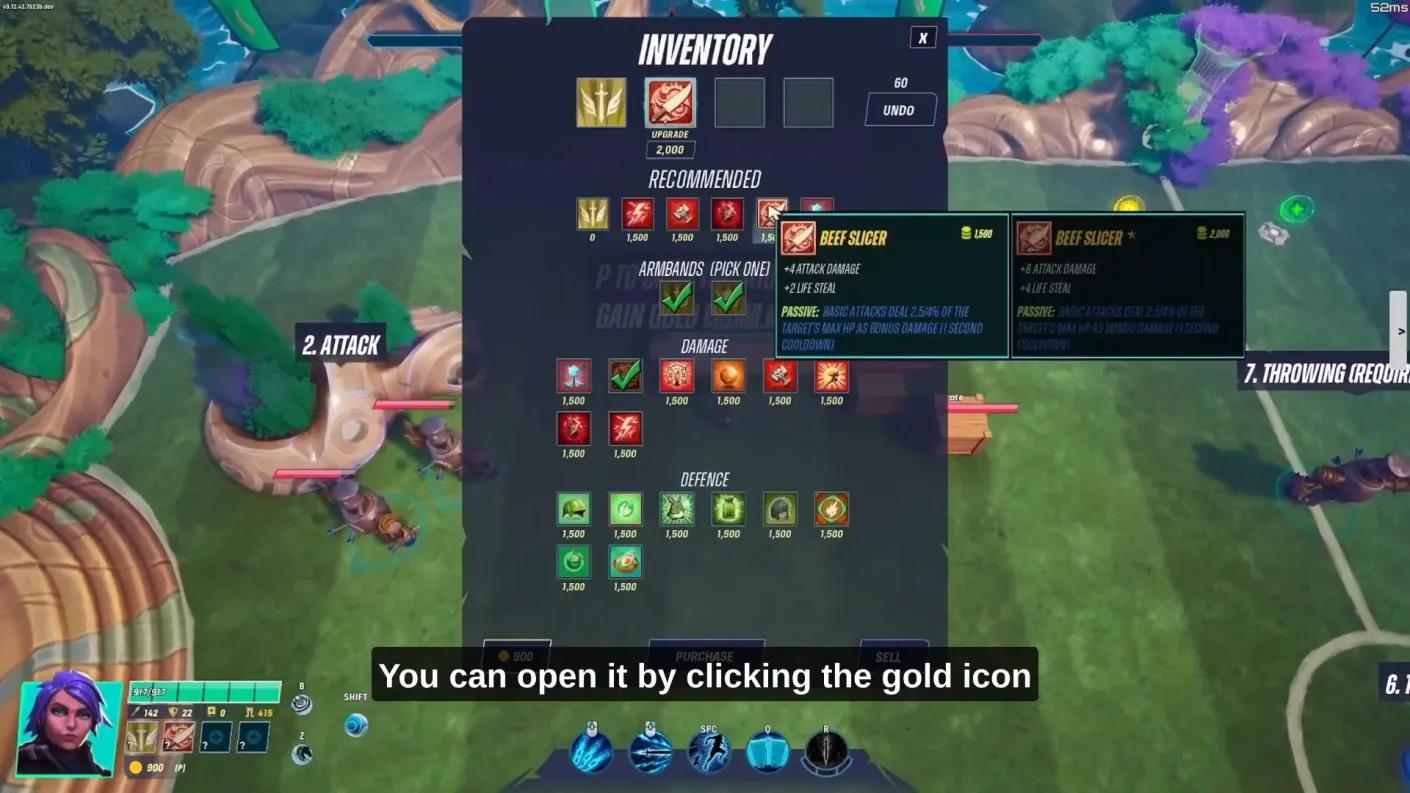
The economic framework revolves around gold acquisition through eliminations, objective completion, and passive generation. This currency enables item purchases that enhance hero capabilities throughout match progression.
Advanced Ball Control Techniques: Master the ‘lead passing’ technique by aiming ahead of moving teammates rather than at their current position. Practice ‘bank shots’ using arena geometry to create unexpected passing angles. Develop ‘fake passing’ maneuvers by initiating pass animations then canceling them to deceive opponents. These techniques require 15-20 hours of dedicated practice but dramatically improve ball control capabilities.
Fatigue Management: The fatigue mechanic introduces cooldown extensions and reduced effectiveness when abilities are used repeatedly within short timeframes. Strategic players alternate between basic attacks and abilities to manage fatigue accumulation. High-skill competitors utilize fatigue windows to engage opponents who have exhausted their resources.
Gold Allocation Strategy: Prioritize items that complement your hero’s primary role rather than diversifying into multiple functions. Frontline heroes should invest in durability items first, while damage dealers focus on offensive enhancements. Support characters typically benefit from utility items that enhance team capabilities. Avoid ‘greedy’ purchases that don’t address immediate team needs—coordinated itemization wins more games than individual power spikes.
Elevating your SparkBall performance requires moving beyond basic mechanics to incorporate advanced strategic concepts and tactical awareness.
Common Beginner Mistakes and Solutions:
• Ball Hogging: New players often retain ball possession too long, becoming predictable targets. Solution: Practice the ‘three-second rule’—either pass or shoot within three seconds of gaining control.
• Overchasing: Pursuing eliminated enemies beyond strategic positions. Solution: Establish ‘chase limits’ based on objective status and teammate positioning.
• Ability Mismanagement: Using ultimate abilities at inopportune moments. Solution: Reserve ultimates for objective-taking scenarios rather than individual eliminations.
Advanced Team Strategies:
• Zone Control: Designate players to control specific arena sections rather than clustering around the ball. This creates passing lanes and defensive coverage.
• Staggered Engagement: Coordinate attacks in waves rather than simultaneous all-in assaults. This maintains constant pressure and prevents team wipe scenarios.
• Resource Denial: Systematically control energy orb spawn locations to limit enemy ultimate charge rates while accelerating your team’s capabilities.
Overtime Considerations: During overtime scenarios, conventional strategies shift dramatically. The scoring requirement typically simplifies to direct goal completion without prerequisite objectives. Teams should immediately transition to all-ball focus, with designated defenders preventing enemy scoring while offensive specialists create scoring opportunities. Overtime matches often conclude within 30-45 seconds, requiring rapid decision-making and precise execution.
Continuous Improvement Framework: Record and review match replays to identify decision-making errors. Focus on one specific skill improvement per gaming session rather than attempting comprehensive overhaul. Participate in custom matches with advanced players to accelerate learning curves through observation and direct feedback.
Action Checklist
- Complete tutorial and 5 practice matches to understand basic mechanics
- Master 2-3 heroes in different roles to ensure team flexibility
- Practice advanced ball control techniques in custom matches
- Develop communication protocols and team coordination strategies
- Analyze match replays to identify strategic improvement areas
No reproduction without permission:Tsp Game Club » SparkBall Guide: The Ultimate Beginner’s Guide Master SparkBall's competitive 4v4 arena gameplay with advanced strategies and expert tips