
TL;DR
- Each class offers unique playstyles: Trooper for combat, Mentat for strategy, Swordmaster for melee, Bene Gesserit for control, and Planetologist for survival
- Prioritize mobility skills for Trooper, stealth abilities for Mentat, and environmental mastery for Planetologist
- Skill synergy matters more than individual abilities – build complementary skill combinations
- Unlocking advanced skills requires completing specific faction missions and level progression
- Avoid common mistakes like neglecting cooldown management and poor resource allocation
Dune Awakening presents players with five distinct character classes, each offering specialized skill trees that dramatically impact gameplay approaches. These classes aren’t just cosmetic choices – they fundamentally shape how you interact with Arrakis’s harsh environment, engage in combat, and contribute to faction objectives. Understanding the strategic implications of each class’s abilities is crucial for maximizing your effectiveness in both PvE and PvP scenarios.
The skill system in Dune Awakening requires careful planning, as each ability choice can create synergies or limitations in your overall build. Unlike many survival games where skills are incremental upgrades, Dune’s abilities often represent dramatic shifts in playstyle capabilities. This guide breaks down the most impactful skills for each class while providing strategic insights to help you avoid common pitfalls that can waste valuable progression time.
The Trooper stands as Dune Awakening’s most accessible combat class, designed for players who prefer direct confrontation and technological superiority. This military-focused archetype excels at controlling engagements through superior firepower and tactical mobility. For beginners, the Trooper provides a forgiving learning curve while offering depth for advanced players through skill combinations.
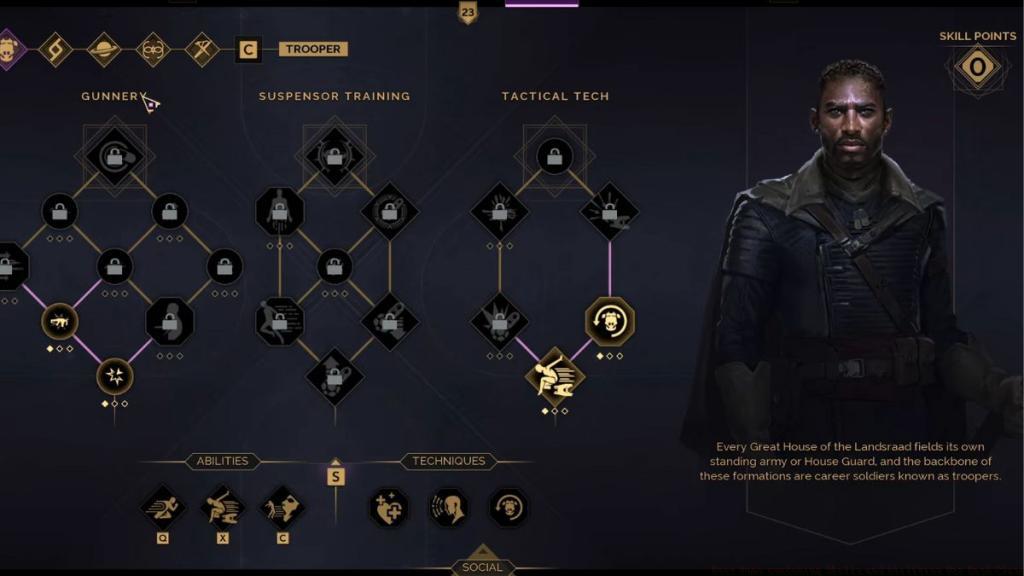
Shigawire Claw: This wrist-mounted grappling apparatus revolutionizes mobility across Arrakis’s treacherous terrain. Beyond simple vertical movement, advanced users employ the claw for rapid repositioning during firefights, escaping dangerous situations, or initiating ambushes from unexpected angles. The 12-second cooldown requires strategic timing decisions.
Energy Capsule: Consuming neurostimulant capsules provides a 25% ranged damage boost for 8 seconds, making it essential for bursting down high-value targets. The timing window creates strategic decision points about when to commit to engagements.
Suspendor Dash: Mid-air propulsion technology that extends jump duration by approximately 40%. This skill proves invaluable for navigating canyon networks and evading enemy fire patterns.
Explosive Grenade: Area denial becomes possible with this throwable explosive, which excels at clearing entrenched positions or controlling choke points. The 20-second cooldown demands careful resource management.
Advanced Trooper Tactics: Combine Shigawire Claw with Suspendor Dash for unparalleled vertical mobility – scale cliffs, then dash to previously inaccessible ledges. Use Energy Capsule immediately before grenade throws to maximize burst damage potential against grouped enemies.
Common Mistakes: New Troopers often waste the Energy Capsule buff on trivial encounters or use the Shigawire Claw without planning their escape route. Always have an exit strategy before engaging.
Mentats represent the pinnacle of strategic thinking in Dune Awakening, favoring calculated precision over brute force. This class rewards players who enjoy setting traps, manipulating enemy movements, and exploiting vulnerabilities through careful observation and planning.
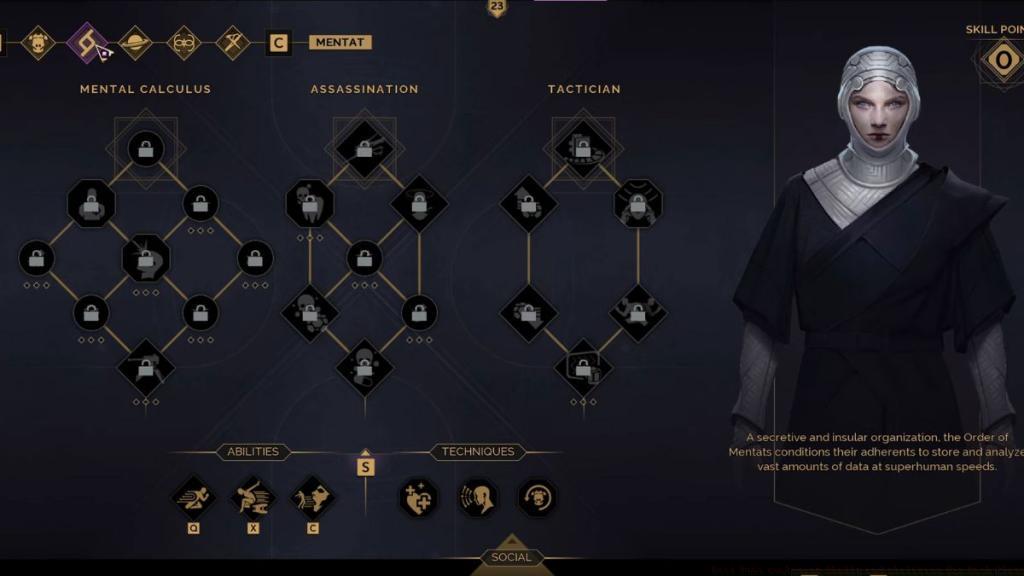
The Sentinel: This automated defense system projects a 180-degree field of detection, firing sedative darts at any movement within its 15-meter range. The passive damage boost it provides makes it essential for area control strategies.
Exploit Weakness: Creating vulnerable points on targets transforms Mentats into force multipliers for their teams. The weak point remains active for 5 seconds and increases damage from all sources by 35%, making coordinated strikes devastatingly effective.
Stunner: The hidden dart dispenser provides crucial crowd control, immobilizing priority targets for 3 seconds – enough time for decisive action or tactical repositioning.
Advanced Mentat Strategies: Place Sentinels at corridor intersections or resource nodes to control high-traffic areas. Use Exploit Weakness on heavily armored enemies before your allies focus fire. Stunner works best when targeting enemy healers or high-damage dealers to disrupt their formations.
Team Synergy: Mentats dramatically enhance group effectiveness by designating priority targets and controlling engagement pacing. Their abilities create windows of opportunity that skilled teammates can exploit.
Common Mistakes: Poor Sentinel placement wastes its potential, while using Exploit Weakness on already-dying targets squanders the cooldown. Always prioritize high-health, dangerous enemies for your debuffs.
Swordmasters embrace the ancient martial traditions of the Imperium, specializing in close-quarters combat with bladed weapons. This high-risk, high-reward class demands precise timing, spatial awareness, and understanding of engagement distances to maximize effectiveness.
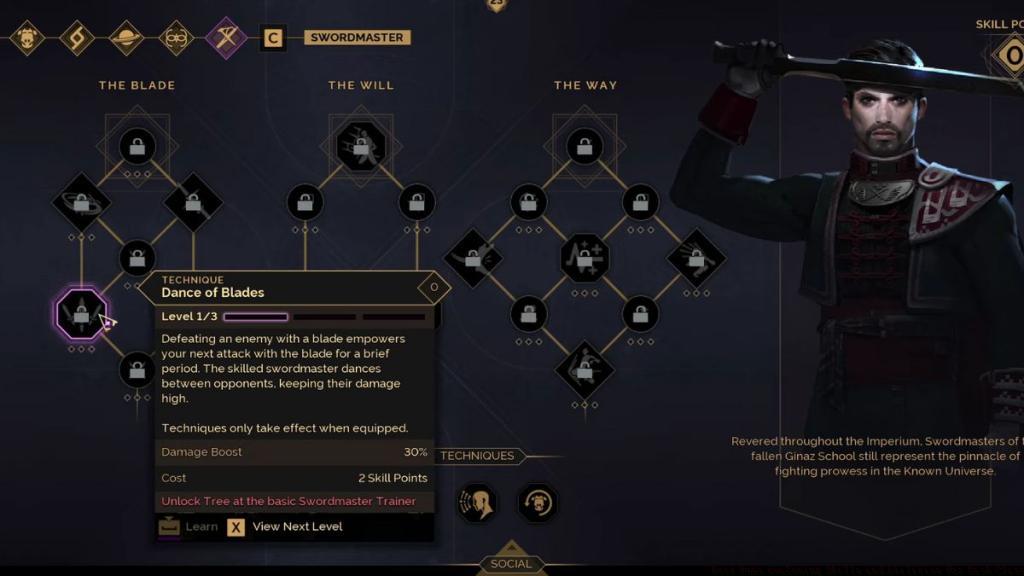
Blade Dance: This flowing combat technique increases attack speed by 30% for 6 seconds while reducing incoming melee damage by 15%. The dual benefit makes it essential for sustained engagements.
Precision Strike: Channeling energy into a single devastating blow, this ability ignores 50% of enemy armor and deals bonus damage based on the target’s missing health.
Deflective Parry: Mastering this defensive maneuver allows Swordmasters to deflect incoming projectile attacks for 3 seconds, creating brief windows to close distance against ranged opponents.
Advanced Swordmaster Tactics: Use Blade Dance when engaging multiple opponents to maximize damage output while reducing incoming harm. Precision Strike works best as an execution tool against enemies below 40% health.
Positioning Mastery: Successful Swordmasters understand terrain advantages – use narrow corridors to limit enemy mobility and force favorable engagements.
Common Mistakes: Aggressive players often initiate Blade Dance too early in fights, wasting its duration before reaching optimal positioning. Others misuse Deflective Parry against melee attacks where it provides no benefit.
The Bene Gesserit sisterhood brings psychological warfare and subtle manipulation to Dune Awakening’s combat landscape. This class excels at controlling enemy behavior, disrupting formations, and creating opportunities through non-conventional means.
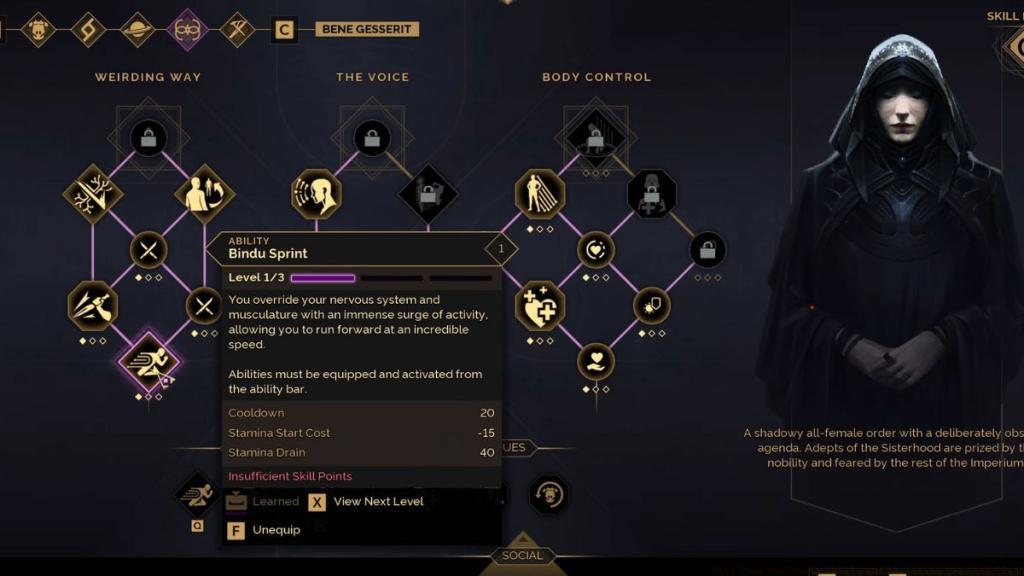
Voice Command: This auditory domination technique can force single enemies to perform specific actions against their will for 4 seconds. The cooldown scales with the target’s level and resistance attributes.
Truthsaying: The Bene Gesserit ability to detect falsehood becomes a combat tool that reveals enemy intentions and temporarily lowers their defensive stats.
Weirding Way: Tapping into this combat methodology dramatically increases movement speed and evasion for 5 seconds, allowing rapid repositioning or escape.
Advanced Gesserit Strategies: Use Voice Command to isolate high-threat targets from their support or force enemies into environmental hazards.
Psychological Warfare: Bene Gesserit players thrive on creating uncertainty and hesitation in their opponents. Use your abilities to break enemy coordination and create openings.
Resource Management: Gesserit abilities often consume special resources or have longer cooldowns, requiring careful decision-making about when to commit your most powerful tools.
Common Mistakes: Novice players frequently waste high-cooldown abilities on low-priority targets or underestimate the importance of positioning for effective ability use.
Planetologists represent the scientific approach to survival on Arrakis, mastering the planet’s ecology to gain advantages that other classes cannot replicate. This support-focused class excels at resource gathering, base building, and environmental manipulation.
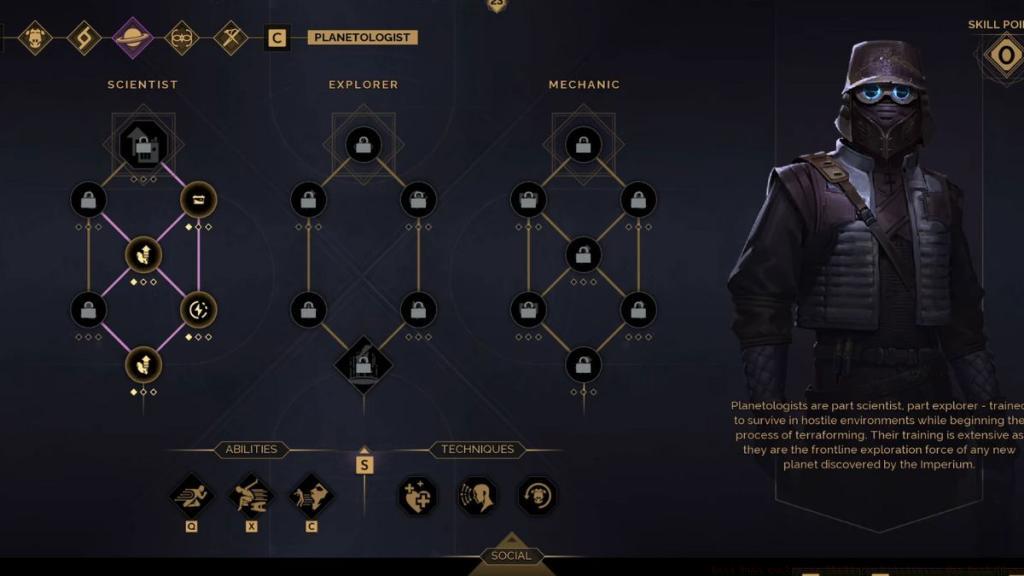
Environmental Analysis: This scanning ability reveals resource nodes, enemy positions, and environmental hazards within a 25-meter radius for 8 seconds.
Moisture Control: Advanced atmospheric manipulation allows Planetologists to extract 50% more water from the environment, a crucial survival resource on Arrakis.
Sandworm Lure: This dangerous but rewarding ability creates vibrations that attract the planet’s most fearsome predators – potentially turning them against your enemies.
Advanced Planetologist Tactics: Use Environmental Analysis before entering unknown territories to avoid ambushes and locate valuable resources efficiently.
Survival Optimization: Planetologists can identify the most efficient routes between resource nodes and safe zones, dramatically reducing travel time and risk exposure.
Economic Advantages: The enhanced resource gathering capabilities provide significant economic benefits for your faction, making Planetologists valuable in both small and large groups.
Common Mistakes: Many players underestimate the combat applications of Planetologist abilities or fail to communicate their findings effectively to teammates.
Dune Awakening’s skill progression system combines traditional leveling with faction-specific mission completion requirements. Understanding this dual-track system is essential for efficient character development and avoiding progression bottlenecks.
Progression Mechanics: Skills unlock through a combination of character level milestones and reputation gains with your chosen faction. This design encourages engagement with the game’s narrative and faction warfare systems.
Optimization Strategies: Focus on completing faction assignments that align with your desired skill path, as these provide reputation bonuses that accelerate unlocking advanced abilities.
Time Investment Guide: Basic skills typically require 2-4 hours of gameplay, while elite abilities may demand 15-20 hours of focused progression.
Strategic Planning: Map out your desired end-game build early and work backward to identify the most efficient unlock path. This prevents wasted effort on skills that don’t contribute to your overall strategy.
Common Pitfalls: Players often spread their reputation gains too thinly across multiple factions, delaying access to high-tier skills. Specialization typically yields better results than generalization in Dune Awakening’s progression system.
For players looking to master multiple classes, our Class Guide provides additional insights into efficient multi-class progression strategies that can save dozens of hours.
Action Checklist
- Analyze your preferred playstyle and select the class that best aligns with it
- Complete initial faction assignments to build reputation for skill unlocks
- Practice skill combinations in safe zones before deploying them in combat
- Coordinate with teammates to maximize class synergy effects
- Review our Weapons Unlock guide to align your weapon progression with class skills
- Optimize your build by focusing on complementary skills rather than isolated powerful abilities
No reproduction without permission:Tsp Game Club » Best Dune Awakening Skills and Abilities for Each Class Master Dune Awakening's five classes with optimal skill builds, strategic insights, and advanced gameplay tactics