
TL;DR
- Master progressive braking techniques and smooth cornering for consistent lap times
- Configure optimal camera views for each track type to maximize visibility and racing lines
- Adapt driving style to each era’s unique characteristics and mechanical limitations
- Practice pit stop sequences in custom races to build muscle memory for championship events
- Start on Easy difficulty to learn the unique physics model before advancing
Transform your Formula Legends experience with this comprehensive guide covering every racing era, track technique, and advanced strategy for this captivating arcade Formula 1 adventure.
Formula Legends offers an immersive journey through motorsport history that balances accessibility with remarkable depth. Developed by 3DClouds, this engaging arcade racing title transports players from the perilous 1960s circuits to contemporary hybrid-powered machines, featuring 16 distinct seasons spanning multiple decades of racing evolution. Whether you’re navigating Monaco’s challenging corners or working to unlock specific historical periods, this guide will elevate your performance from backmarker to consistent podium finisher.
Game Overview
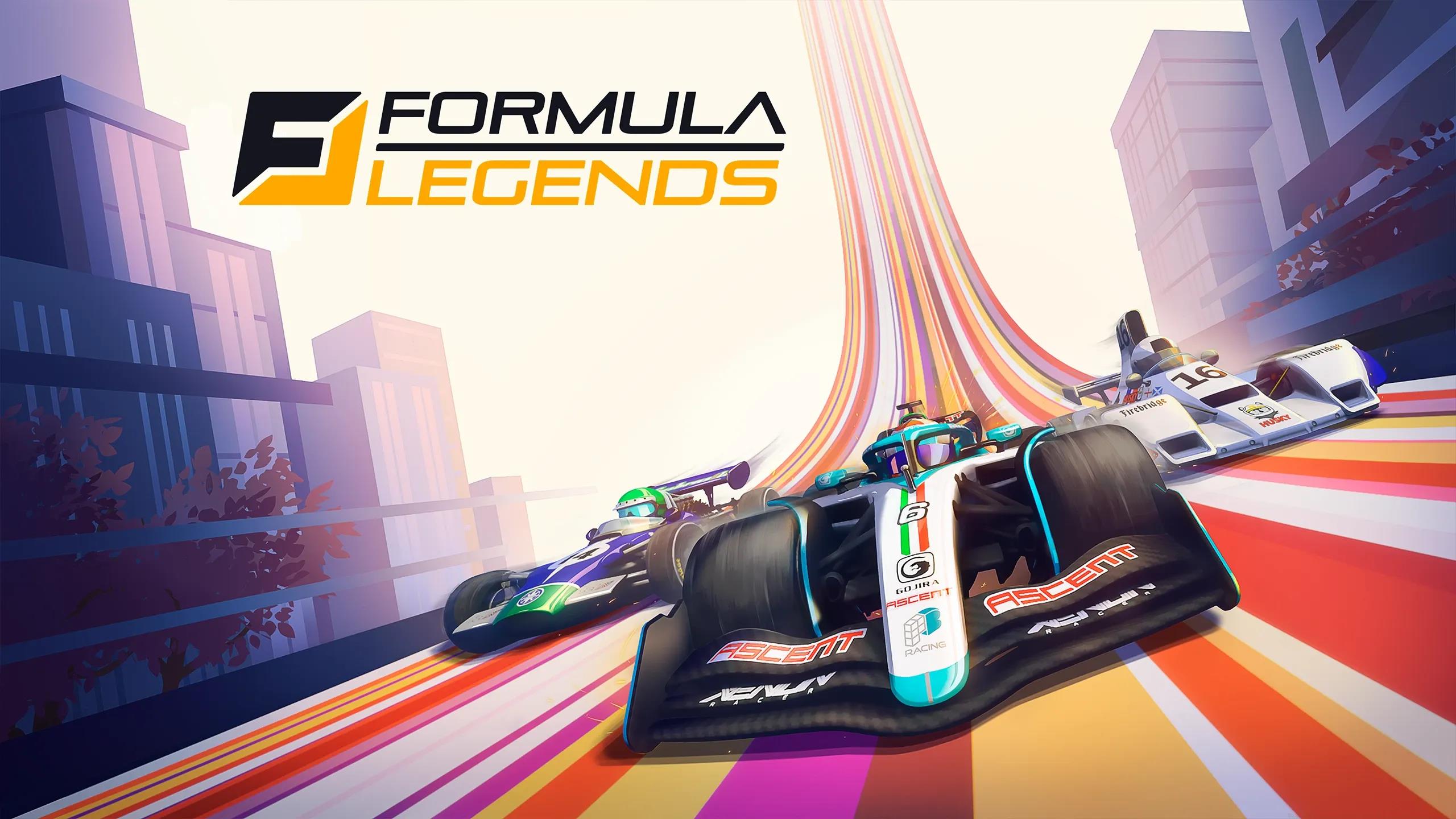
Formula Legends distinguishes itself from conventional arcade racers by integrating authentic racing mechanics within its vibrant cartoon aesthetic. Players encounter realistic tire degradation, strategic fuel management, and dynamic weather systems while enjoying accessible controller-focused gameplay. The game presents recognizable teams and drivers through creative pseudonyms – Christian Moon (representing Ferrari heritage) and Jake Egg (honoring Jackie Stewart’s legacy).

Steam Community :: Formula Legends
Visual Design Excellence
The artistic presentation masterfully captures each era’s distinctive characteristics. 1960s vehicles showcase elongated cigar-shaped bodies inspired by the legendary Lotus 49, while 1980s machines display prominent high airboxes and turbo-era styling cues. Each generation maintains authentic visual differentiation, though handling characteristics remain surprisingly uniform across different periods.
Camera Configuration Mastery
Your selected camera perspective significantly influences racing performance. While the default chase camera functions adequately for general situations, these specialized views offer competitive advantages:
- Medium elevation view: Optimal for track familiarization and racing line visualization
- Cockpit perspective: Maximum immersion with enhanced speed perception
- Elevated chase view: Superior for traffic management and overtaking positioning
tip
Transition to the heightened chase camera during new track learning sessions – you’ll identify braking reference points and corner exit trajectories significantly earlier.
Controller Setup Strategies
Begin with these racing assists activated until you develop fundamental mastery:
Advanced players should gradually disable assists in this sequence: first traction control, then ABS, finally racing line. This progressive approach builds skill without overwhelming newcomers. Consider adjusting controller dead zones to 5-10% for more precise steering inputs, particularly important for navigating Monaco’s tight sections.
Input Techniques
Master throttle modulation for optimal corner exits – partial throttle application maintains traction better than full acceleration in lower-speed corners. For modern era cars, practice manual ERS deployment to maximize straight-line speed while conserving energy for crucial overtaking opportunities.
Braking Methodology
Formula Legends requires progressive braking application rather than simulation-style trail braking. Apply brakes decisively but release progressively as you approach corner apexes. Vehicles demonstrate pronounced understeer characteristics, making entry speed control critically important.
Essential braking reference points:
- Initiate braking earlier than instinct suggests
- Utilize 100m distance boards as consistent markers
- Separate braking and turning inputs completely
- For wet conditions, increase braking distances by 30-40%
Cornering Philosophy
Prioritize momentum conservation over aggressive late-braking maneuvers. The physics engine rewards fluid, continuous lines that maintain velocity through corner complexes. The classic racing line principle – wide entry, tight apex, wide exit – remains fundamentally effective.
important
Unlike simulation titles, these vehicles feel exceptionally stable with rail-like cornering behavior. You won’t be correcting dramatic slides – instead, concentrate on maintaining maximum speed through each turn sequence.
Speed Management
Learn to recognize auditory cues for optimal shift points – engine sound changes indicate approaching rev limits. For 1980s turbo cars, manage boost buildup by maintaining minimum 20% throttle through corners to prevent turbo lag on exit. In modern hybrid cars, deploy ERS strategically on corner exits rather than mid-straight for maximum acceleration benefit.
1960s Pioneers
- Fuel consumption: Active system – carefully plan pit stop windows
- Tire strategy: Single compound availability only
- Primary challenge: Hazardous tracks with minimal safety provisions
- Handling characteristics: Most responsive steering with lowest grip levels
- Additional consideration: These cars require smoother steering inputs due to higher sensitivity
1980s Turbo Monsters
- Power delivery: Explosive acceleration exiting corners
- Strategic focus: Managing tire degradation during extended stints
- Track evolution: Introduction of chicanes and safety enhancements
- Turbo management: Maintain minimum revs to prevent lag, particularly through medium-speed corners
Modern Era (2010s-2020s)
- Tire compounds: Selection from Soft, Medium, and Hard options
- ERS system: Manual activation using X button
- DRS zones: Automatic engagement in designated sections
- Strategic complexity: Multiple pit stop races with compound limitations
- Hybrid deployment: Save ERS for overtaking rather than lap time consistency
Formula Legends On The ROG Ally
Each era demands distinct driving styles – the 1960s reward precision and conservation, the 1980s require aggressive power application, and modern cars benefit from strategic energy management. Practice transitioning between these styles to maintain competitive performance across championship seasons.
Monaco (Riviera Streets GP)
The ultimate precision driving examination. Achieving success here demands:
- Extremely conservative approach through chicane complexes
- Perfect positioning for the legendary hairpin corner
- Strategic patience – overtaking possibilities are severely restricted
- Focus on clean exits from slow corners to maximize subsequent straight speed
Spa (Arden GP)
Your initial major challenge featuring the iconic Eau Rouge/Radillon sequence:
- Navigate Eau Rouge at full throttle in contemporary vehicles
- Utilize complete track width through sweeping sections
- DRS activation critical along the extended Kemmel Straight
- Brake 50m later than usual for Les Combes chicane for optimal lap time
Monza (Temple of Speed GP)
- Slipstream battles dictate race strategy
- Courageous late braking into chicanes rewards skilled drivers
- Low downforce approach (though not configurable within the game)
- Utilize curbing aggressively through Ascari chicane for time gains
- Focus on minimal lift-off through Parabolica for maximum straight speed

What Is The Parabolica At Monza? | F1 …
Track-specific mastery requires understanding each circuit’s unique rhythm. Monaco emphasizes rhythm and precision, Spa rewards courage and commitment, while Monza tests straight-line bravery and chicane navigation. Practice each track in time trial mode to build consistent reference points before championship events.
Pit Stop Execution
Formula Legends incorporates engaging pit stop mini-games that directly influence race outcomes:
- Tire selection occurs during pit lane entry
- Button sequence timing determines pit stop velocity
- Fuel management and repairs utilize trigger inputs
- Flawless execution can secure 2-3 second advantages over imperfect stops
- Practice the specific sequence: A, X, B, Y for fastest stops

Pro Tip: Practice the button sequences in custom races – muscle memory makes the difference during championship battles.
Weather Strategy
Dynamic weather conditions introduce strategic complexity:
- Early intermediate tire calls can dramatically improve track position
- Track surface conditions significantly impact grip levels
- Visibility becomes a major consideration during heavy precipitation
- Tire temperature management becomes critically important
- Monitor radar for approaching weather systems to anticipate strategy changes
Overtaking Techniques
Master the art of strategic overtaking by studying AI driver behavior patterns. Most AI opponents have consistent weaknesses at specific corners – identify these through observation during practice sessions. For modern cars, deploy ERS strategically during overtaking attempts rather than using it for lap time consistency. In slipstream battles, maintain following distance through high-speed sections to maximize DRS effectiveness when available.
Story Mode Advancement
The Story Mode functions as your primary content unlocking mechanism:
- Complete races to unlock circuits for additional game modes
- Championship points acquisition unlocks new vehicles and liveries
- Team-specific objectives provide supplementary unlocks
- Perfect race starts and podium finishes accelerate progression
- Complete era-specific challenges to unlock historical content faster

Steam Community :: Formula Legends
Efficient Point Farming
Maximize your progression speed by focusing on these strategies. Complete bonus objectives during races for additional points – these often include achieving specific lap times, executing perfect pit stops, or maintaining consistent lap speeds. For quick point accumulation, focus on shorter race distances with higher difficulty settings once you’ve mastered basic techniques. Replay earlier seasons with different teams to accumulate additional championship points while practicing advanced techniques.
Team Objectives
Each team presents unique challenges and reward structures. Research team characteristics before commitment – some teams have easier objective requirements while others offer more valuable unlocks. Balance your team selections between immediate progression needs and long-term collection goals. Complete all team objectives within an era before advancing to maximize your unlock efficiency.
Track Limit Management
You receive three warnings before incurring time penalties. Each subsequent violation adds 1 second to your final race time. Consistently exceeding track limits indicates fundamental issues with your racing line – focus on hitting apexes precisely rather than using excessive track width.
AI Difficulty Settings
Begin on Easy difficulty regardless of previous racing game experience. The AI demonstrates unpredictable aggression patterns, and mastering the distinctive physics model requires time investment. Gradually increase difficulty by 10-15% increments once you consistently achieve podium finishes. For championship events, practice against AI set one difficulty level higher than your current setting to build confidence.
Strategic Errors
In contemporary eras, remember the compound limitation – you can only utilize each tire type once per race event. Plan your strategy accordingly, considering track evolution and potential weather changes. Avoid the common mistake of using your fastest compound too early – save soft tires for qualifying and final race stints when track conditions are optimal.
warning
Avoid attempting close wheel-to-wheel racing until you’re completely comfortable with the handling model. AI drivers remain unforgiving regarding contact incidents.
Additional strategic consideration: Don’t underestimate fuel consumption in longer races. Practice fuel-saving techniques during practice sessions by lifting early and coasting into braking zones, particularly useful for 1960s era cars with active fuel consumption.
Visual Configuration
- Era filters can be deactivated for improved visibility
- Mini-map zoom level influences situational awareness
- Gamma adjustment assists with track visibility
- Disable motion blur for clearer corner reference points
- Reduce shadow quality for consistent performance across all devices
Audio Balance
Proper audio mixing enhances racing performance:
- Engine sounds provide gear shift and revolution limit indicators
- Music volume – consider reduction during intense racing battles
- Sound effects help identify tire lock-up and contact incidents
- Increase tire sound effects to better detect grip limits
- Balance commentary volume to maintain focus during critical sections
Gameplay Settings
Optimize your experience with these configuration adjustments. Enable the extended HUD to display additional telemetry including tire temperatures and fuel levels. Adjust the racing line assist to corners only once you’ve learned basic track layouts. For competitive play, disable all driving assists except ABS until you’ve mastered car control in various conditions.
Formula Legends rewards patience and consistency over pure aggression. Master the fundamentals of smooth control inputs and optimal racing line execution, and you’ll progress from backmarker to championship contender across every era of this delightful motorsport celebration. For additional racing game mastery, explore our Complete Guide to other competitive gaming experiences.
Action Checklist
- Configure optimal camera view for each track type (high chase for learning, cockpit for immersion)
- Practice progressive braking techniques in time trial mode at three different circuits
- Master pit stop button sequences (A, X, B, Y) in custom race sessions
- Complete era-specific challenges in Story Mode to efficiently unlock content
- Gradually disable driving assists in sequence: traction control, ABS, racing line
No reproduction without permission:Tsp Game Club » Formula Legends Guide: The Ultimate Beginner’s Guide Master Formula Legends with expert strategies for all racing eras, track mastery, and advanced techniques