
TL;DR
- Gaming analytics transform subjective performance into measurable, improvable metrics
- Hardware, gameplay, and behavioral data create complete performance profiles
- Pattern recognition identifies specific weaknesses and optimization opportunities
- LORGAR PLATFORM provides real-time correlation between equipment usage and in-game results
- Start with 1-2 key metrics and systematically expand your analytical approach
Every competitive gamer eventually hits that stubborn performance wall where hours of practice yield minimal returns. You grind daily, study professional gameplay, yet your rank and statistics remain frustratingly stagnant. The breakthrough solution lies not in additional practice time, but in strategic, data-informed training methodologies that target your specific improvement areas.
Performance analytics have fundamentally changed how serious players approach skill development. Similar to how elite athletes leverage biometric data to optimize training regimens, gamers can now harness sophisticated analytics to systematically enhance their gameplay mechanics. Whether you’re battling ranking stagnation in competitive titles or wrestling with inconsistent K/D ratios in Counter-Strike, gaming metrics provide your hidden competitive edge—provided you master their interpretation and application.
The domain of performance metrics and statistical analysis can appear intimidating for newcomers to gaming analytics. This comprehensive guide demonstrates how to elevate your gaming capabilities through methodical data examination, featuring immediately applicable strategies across multiple gaming genres.
Contemporary gaming analytics platforms deliver rich, multidimensional datasets, with each collected metric contributing to your comprehensive performance portrait. Effective statistical tracking extends beyond basic elimination ratios to encompass every aspect of your gaming experience—from system hardware capabilities and software optimization through to cognitive behavioral patterns.
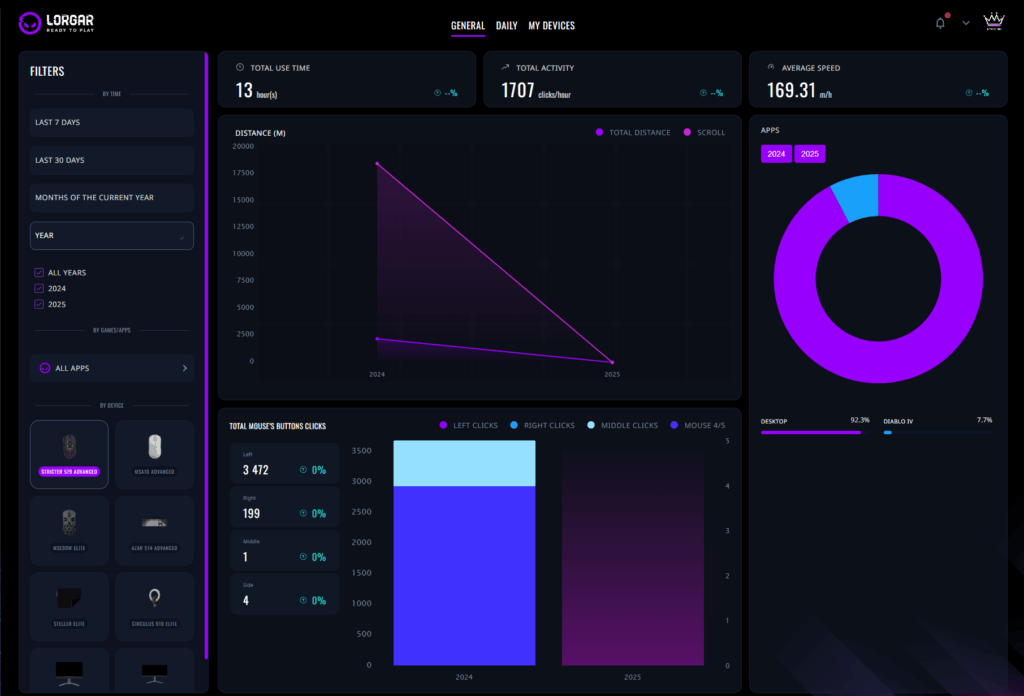
Hardware performance monitoring represents a critical analytics dimension. The system tracks your mouse DPI configurations and actual utilization patterns, revealing whether you’re maximizing your equipment’s capabilities. It records keyboard responsiveness and identifies your most frequently activated keys, enabling strategic keybind adjustments that align with your natural motor patterns. Each mouse interaction registers for both precision and velocity; movement trajectories are mapped to visualize accuracy distribution across different screen regions. Crucially, reaction times across varied scenarios are captured with intuitive visualizations—delivering concrete performance benchmarks that both novice and expert players can leverage for targeted improvement.
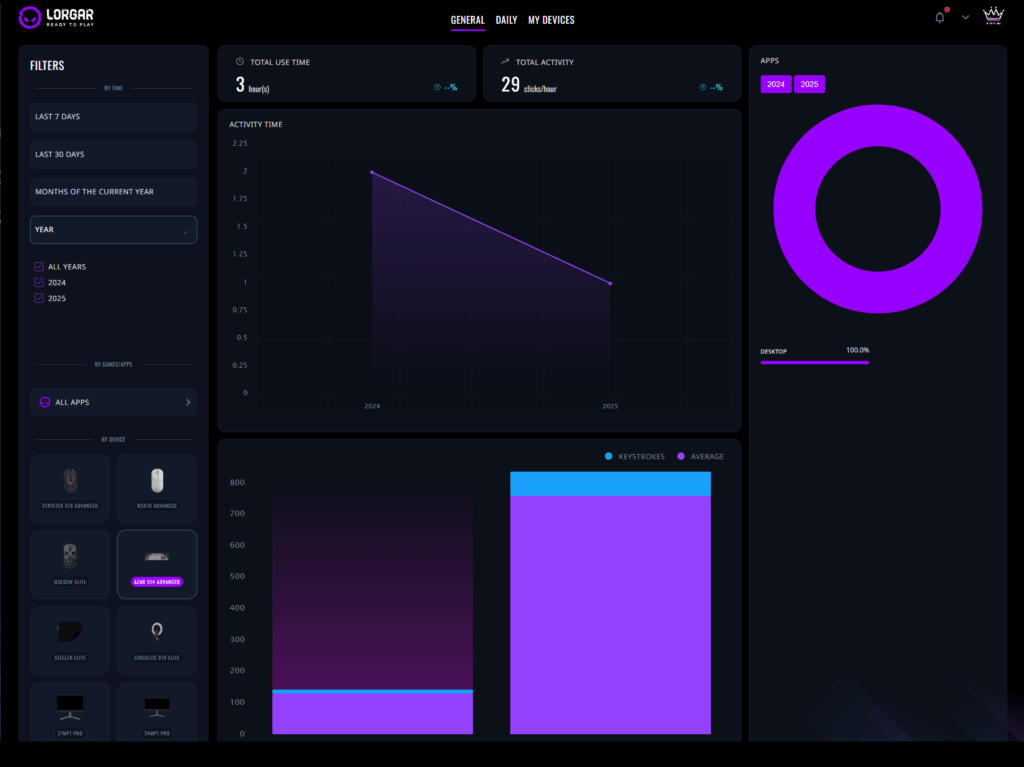
Gameplay performance statistics encompass comprehensive in-game metrics that vary by title. Session duration and frequency patterns help identify your optimal performance windows. Win/loss ratios deliver macro-level progression insights. In Counter-Strike specifically, this includes granular round-by-round analysis pinpointing exact match turning points. Analytical systems generate positioning heat maps that frequently uncover strategic vulnerabilities players otherwise miss. Economic efficiency monitoring reveals whether poor purchasing decisions undermine round outcomes. Ability utilization patterns and cooldown management data facilitate tactical optimization.
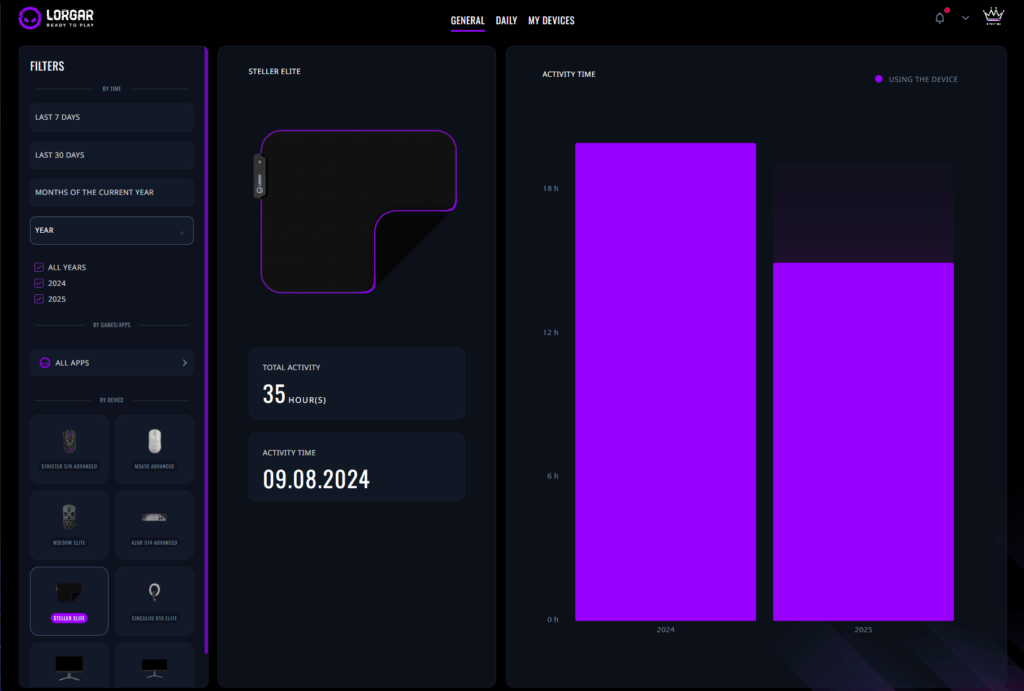
Behavioral pattern translation into performance metrics offers particularly valuable insights. The system identifies your natural performance peaks and optimal gaming intervals. Fatigue indicators based on performance degradation signal when to conclude sessions before developing counterproductive habits. Consistency measurement across gaming sessions indicates whether you’re demonstrating steady improvement or experiencing performance volatility. These diverse datasets combine to illustrate improvement trajectories over time, often enhanced through comparative analysis against population averages.
Transparency matters—the PLATFORM requires specific information to deliver its analytical magic. It collects fundamental details like your gaming alias and geographical region (essential for localized ranking comparisons). Your equipment configuration specifics are recorded—which LORGAR mouse model you utilize, installed game titles, and mouse movement velocity characteristics.
Technical operational data includes your network identifier and active applications—ensuring platform compatibility with your system configuration and preventing inappropriate game-specific recommendations. Usage pattern tracking for the PLATFORM itself enables continuous feature enhancement and user experience optimization.
The crucial reassurance? The system maintains strict boundaries around personal information. No inquiries regarding political views, medical history, or personal lifestyle details. Exclusively gaming-performance data designed to enhance your mechanical skills. Consider it your performance journal that actively contributes to improvement rather than simply documenting gameplay history.
Mastering in-game analytics unlocks substantial skill development opportunities, essentially providing an always-available personal coaching resource. The genuine value materializes when raw statistical information converts into practical gameplay modifications.
Pattern identification represents analytics’ most powerful capability. You might uncover that your targeting precision decreases by 15% following extended two-hour sessions, indicating the need for more frequent restorative breaks. Perhaps metrics reveal consistent duel losses when defending particular angles on specific maps, suggesting positional adjustment requirements. Economic management deficiencies frequently remain invisible until statistics demonstrate excessive forced purchasing patterns that sacrifice critical rounds. Map-specific performance analysis could reveal exceptional win rates on Mirage contrasted with struggles on Inferno, directing focused practice allocation.
Data-informed goal setting replaces vague improvement objectives. Rather than simply aspiring to “enhance aiming capability,” you can establish specific targets like elevating headshot accuracy from 35% to 45%. If entry fragging constitutes your primary role, concentrate on reducing average engagement-to-damage timing from 1.2 to 0.9 seconds. Performance consistency enhancement becomes achievable through systematic session analysis and adjustment.
The advantage of metrics-based progression lies in objective advancement monitoring. Following each training interval, quantifiable outcomes precisely indicate win rate improvement strategies through game data utilization. Effective training methodologies produce identifiable weekly performance trends. Historical versus current statistical comparisons provide unambiguous evidence of improvement areas alongside clear directional guidance for continued development.
💡 Practical Application Examples
For CS Players:
- Positioning heat maps indicate excessive T-side peeking? Modify aggressive tendencies
- Inadequate utility damage output? Master grenade trajectory setups
- Suboptimal trade statistics? Enhance team synchronization
- Erratic spray control? Implement recoil management exercises
For MOBA Players:
- Low creep score per minute? Focus last-hit precision training
- Elevated mid-game mortality rates? Strengthen situational awareness
- Poor objective control percentages? Prioritize strategic macro gameplay
For Battle Royale Players:
- Short survival durations? Evaluate landing zone selection strategies
- Deficient end-game performance? Examine positional decision data
- Inconsistent equipment loadouts? Refine loot path optimization
LORGAR PLATFORM’s statistical dashboard represents the operational center for performance analysts. Accessing the statistics interface presents what resembles a mission control environment for competitive gaming optimization.
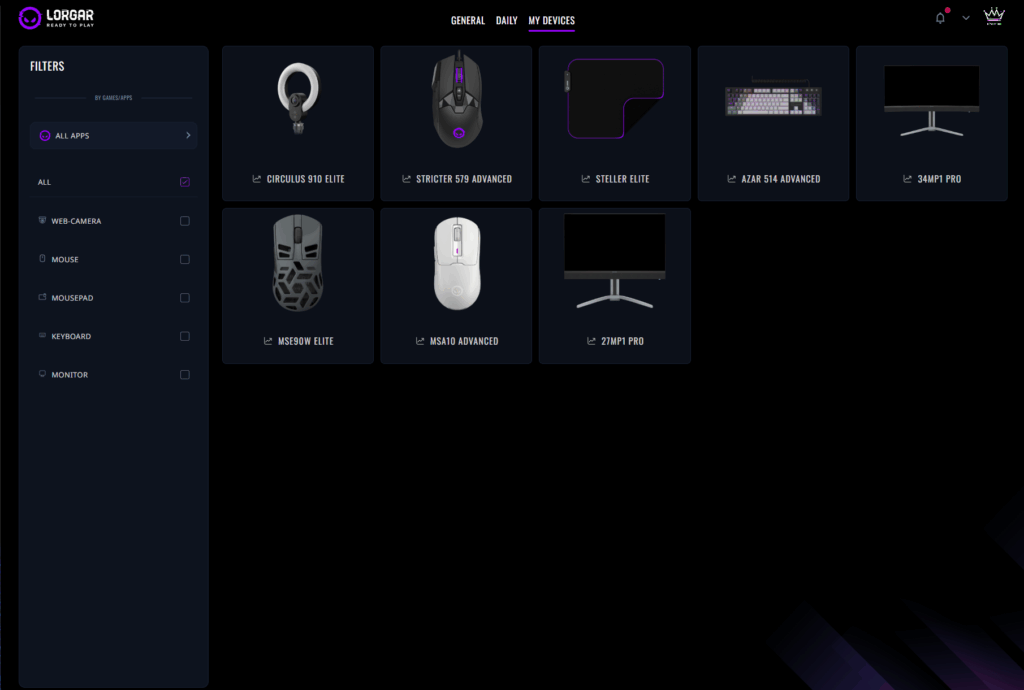
Analytical capabilities extend beyond single connected peripherals. Your mouse, keyboard, and even gaming surface each maintain detailed performance profiles with comprehensive datasets. Do you demonstrate superior effectiveness with specific equipment configurations? Which particular hardware components contribute most significantly to your overall metrics? The insights await immediate access.
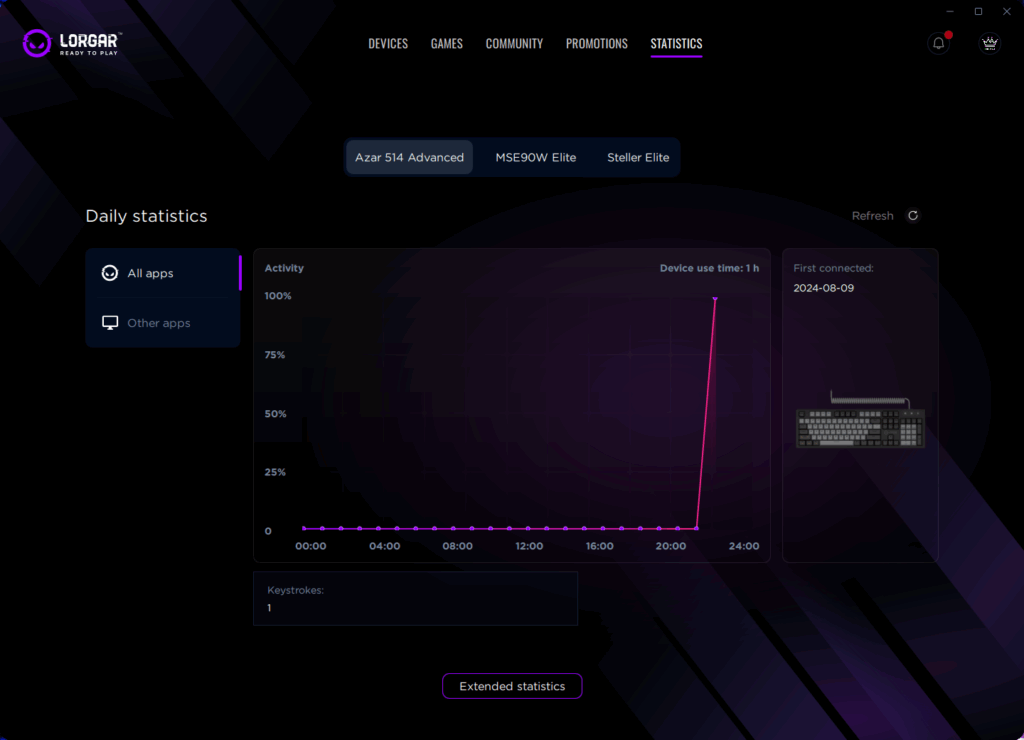
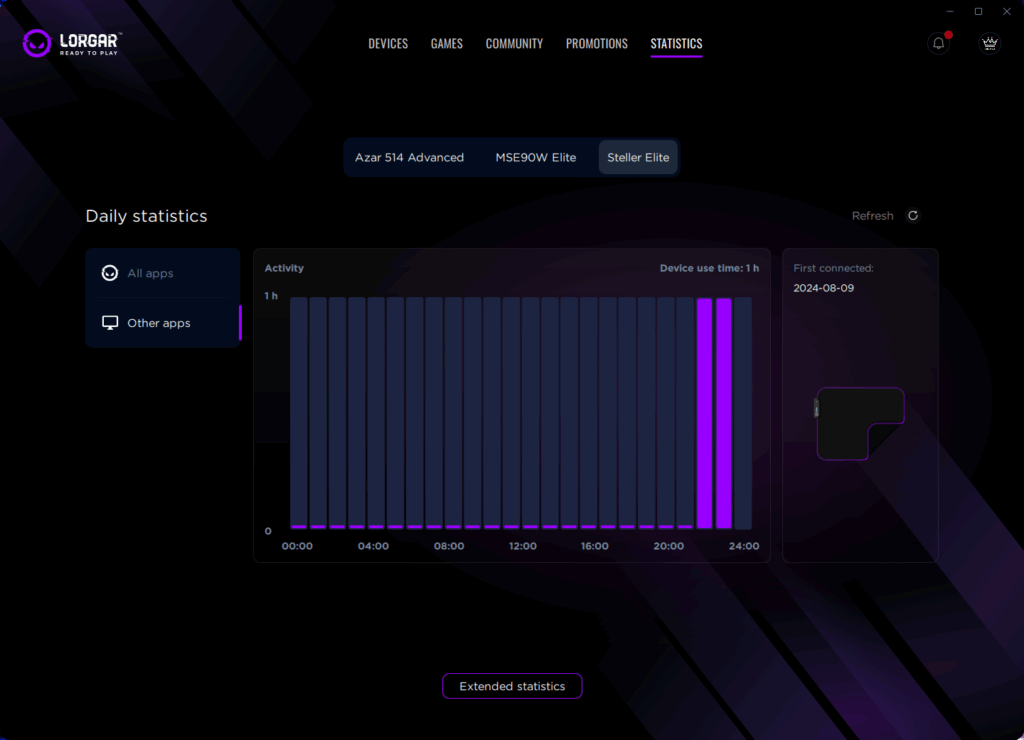
Daily Statistics visualization delivers immediate macro-level performance overview. Time-based activity indicators precisely display your gaming intervals versus other computer usage. That performance surge between 10 p.m. and midnight might indicate your natural competitive peak. The proportion analysis between gaming applications and other software reveals your actual productive technology utilization patterns.
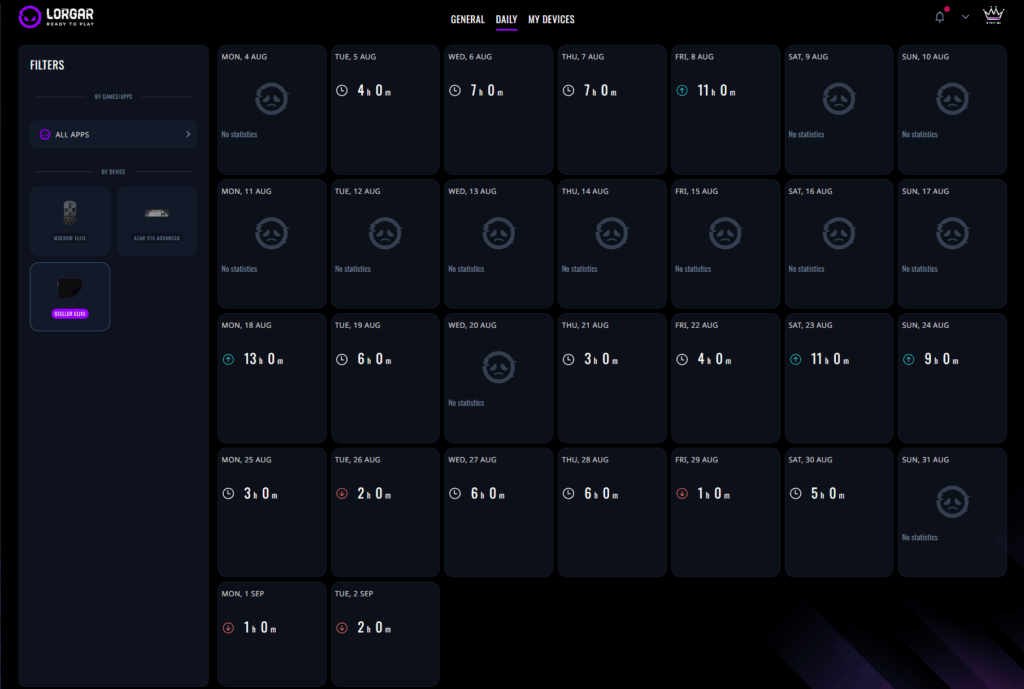
Extended Statistics (browser interface) represents the platform’s analytical evolution from basic tracking to sophisticated gaming optimization tools. Longitudinal comparisons illustrate your improvement journey. Monthly calendar patterns reveal behavioral tendencies—consistent daily sessions versus concentrated weekend gaming marathons. Input distribution visualizations indicate whether you’re maximizing hardware functionality or predominantly utilizing basic controls.
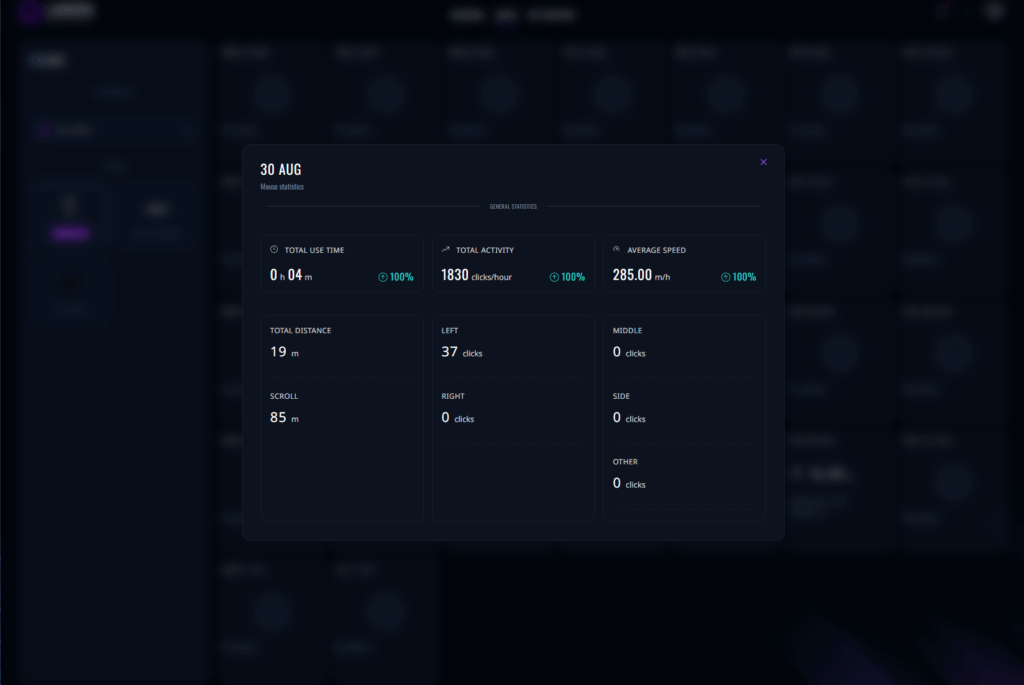
Peripheral-specific analytics provide granular performance insights. For mice, examine complete button activation distribution, scrolling distance, and movement velocity trends. Keyboards display keystroke volume and session intensity metrics. LORGAR PLATFORM even monitors LORGAR gaming surface and display usage patterns.
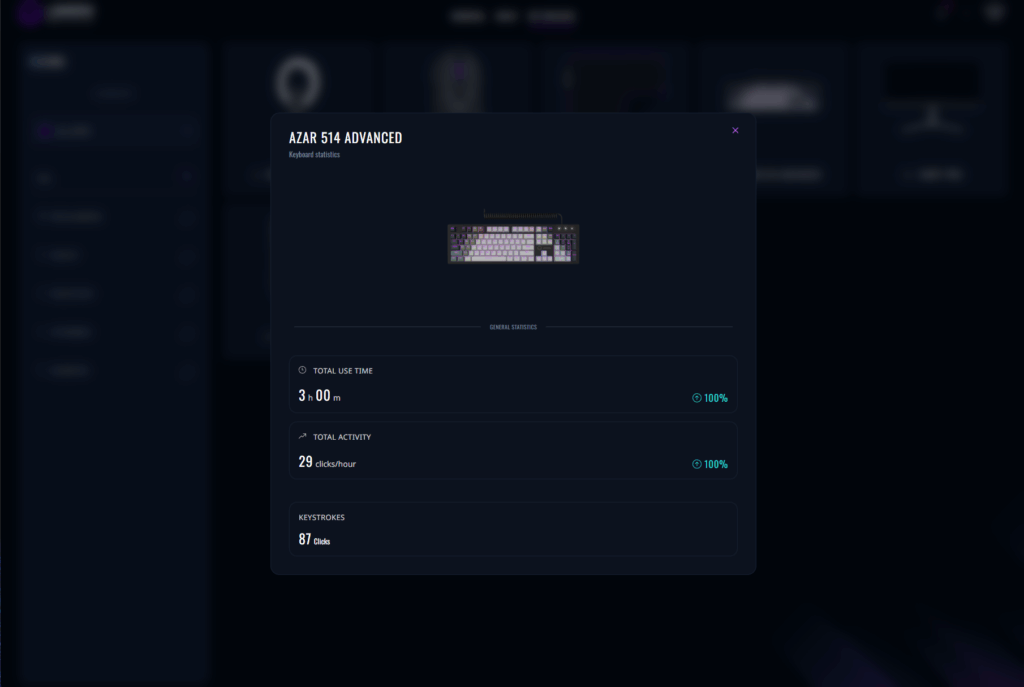
LORGAR’s distinctive advantage emerges through correlation analysis capabilities. Observing performance decline in your game statistics? Cross-reference the corresponding PLATFORM data for that identical timeframe. Perhaps your average movement velocity decreased indicating fatigue symptoms. Or targeting precision diminished, suggesting sensitivity adjustment requirements. This cross-comparison between hardware performance indicators and gaming analytics produces insights otherwise unattainable.
LORGAR PLATFORM delivers real-time updates, enabling mid-session performance assessment. Discovering your targeting feels inconsistent today? Rapid statistical examination might reveal your activation frequency measures 30% below baseline, indicating necessary warm-up procedures. Alternatively, movement distance metrics might demonstrate significant increase—clearly indicating overcompensation that requires calibration.
The performance gap between recreational and competitive gaming continues to narrow, with performance analytics representing a primary contributing factor. Professional competitors have historically accessed detailed statistical analysis and coaching resources, but now these advanced tools become universally accessible. Through metrics-driven development, every player can accelerate skill progression and achieve superior results. The solution to “How to enhance performance in CS?” simplifies to one concept—analytics.
Initiating your analytical journey doesn’t necessitate comprehensive metric adoption. Select one or two fundamental statistics aligned with your current objectives. If mechanical aiming represents your priority, concentrate on precision metrics and headshot percentages. Should strategic awareness take precedence, investigate positioning heat maps and elimination location data. As your data interpretation and adaptation capabilities mature, progressively expand analytical scope to encompass additional gameplay dimensions.
Consistent tracking and reflective analysis prove substantially more valuable than attempting comprehensive immediate implementation. Weekly dedicate time to examine your performance metrics, identify trends, and adjust training approaches accordingly. Initial improvements might appear incremental, but they systematically accumulate into substantial skill enhancement over time.
The skill development pathway no longer remains mysterious. Advanced technological solutions like the LORGAR PLATFORM simplify performance comprehension through detailed gaming analytics. You possess all necessary resources for longitudinal gameplay tracking, alongside concrete evidence and systematic improvement frameworks. Leverage data like professional competitors, because now you possess equivalent capabilities. Your subsequent victory sequence originates from understanding the numerical foundations of your gameplay, and the transition from casual to competitive begins with that initial statistical examination.
Every serious gamer eventually hits that frustrating performance ceiling where traditional practice methods stop yielding results. You dedicate hours to training, study professional gameplay, yet your competitive rankings remain stagnant. What if the breakthrough requires shifting from brute force repetition to intelligent, data-informed training methodologies?
Performance analytics has fundamentally changed how competitive players approach skill development. Similar to elite athletes who leverage biometric data to optimize training regimens, gamers can now utilize sophisticated analytics platforms to completely transform their approach to improvement. Whether you’re battling to advance in ranked ladders or struggling with consistency in Counter-Strike, gaming metrics become your strategic advantage when properly interpreted and applied.
The landscape of performance metrics and statistical analysis can appear daunting for newcomers to gaming analytics. This comprehensive guide demonstrates systematic approaches to analyzing your gameplay data, featuring immediately applicable strategies across multiple gaming genres.
Contemporary gaming analytics platforms capture an extensive spectrum of performance indicators, with each data point contributing to your complete gaming profile. Effective statistical tracking extends beyond basic performance ratios to encompass every dimension of your gaming experience – from technical performance across your entire setup to the psychological patterns influencing your decision-making.
Hardware performance monitoring covers your mouse sensitivity configurations and actual in-use patterns, revealing whether you’re maximizing your equipment’s capabilities. The system records keyboard actuation speeds and identifies your most frequently utilized keys, enabling strategic keybind optimization aligned with your natural playstyle. Every mouse input is captured for both precision and response timing; movement trajectories are mapped to identify accuracy variations across different engagement scenarios. Crucially, reaction times under various conditions are measured with clear numerical values – providing concrete evidence for improvement focus areas.
Regarding in-game performance statistics, the platform gathers exhaustive gameplay measurements that vary by title. Session duration and frequency patterns help identify your natural performance peaks. Victory/defeat ratios offer macro-level progression tracking. In Counter-Strike specifically, this includes per-round breakdowns detailing exactly where matches were decided. Analytical systems produce thermal mapping of your positioning tendencies, frequently uncovering strategic vulnerabilities that remain invisible through conventional review methods. Economic efficiency analysis identifies whether suboptimal purchasing decisions are limiting your advancement. And tactical ability utilization patterns with cooldown optimization data enhance utility deployment effectiveness.
The most compelling aspect involves how behavioral rhythms translate into competitive performance. The system identifies your optimal gaming intervals, showing when you naturally perform at your highest level. Fatigue indicators based on performance degradation metrics signal optimal break points before negative habits develop. Consistency measurement across multiple sessions demonstrates whether you’re making steady progress or experiencing performance volatility. All these metrics integrate to display improvement trajectories over extended periods, occasionally incorporating comparisons between average player benchmarks and your personal metrics for enhanced context.
Mastering in-game analytics creates unprecedented improvement opportunities, essentially providing an always-available personal coaching system. The genuine value emerges when converting unprocessed data into practical gameplay adjustments.
Pattern identification represents the core strength of analytical systems. You might uncover that your precision decreases by 18% following extended gaming periods, indicating requirement for structured break schedules. Perhaps analytics demonstrate you consistently lose aim duels when covering particular sightlines on specific maps, highlighting positioning refinement needs. Economic management problems frequently remain hidden until statistics demonstrate you’re making premature full purchases too regularly, sacrificing critical rounds. Map-specific performance information could reveal your exceptional Dust II performance while struggling significantly on Nuke, directing targeted practice allocation.
Rather than establishing vague improvement targets, gameplay activity metrics enable specific, quantifiable objectives. Instead of simply aspiring to “enhance your targeting,” you can specifically aim to elevate your critical hit percentage from 32% to 42%. If aggressive entry roles define your playstyle, concentrate on decreasing your average engagement initiation timing from 1.3 to 0.8 seconds. Performance consistency across matches improves through maintaining effectiveness during prolonged sessions.
The advantage of metrics-based advancement involves impartial progression measurement. Following each training block, concrete outcomes indicate precisely how to enhance victory rates using performance data. When your practice methodology proves successful, weekly performance patterns will demonstrate measurable gains. Contrasting current statistics with historical baselines provides definitive evidence of improvement while highlighting areas requiring additional attention. Comparing present metrics to your foundation enables strategic focus allocation toward high-impact areas rather than following subjective feelings or random community suggestions.
💡 Practical Application Examples
For FPS Specialists:
- Thermal mapping indicates excessive T-side exposure? Modify engagement aggression levels
- Inadequate tactical equipment effectiveness? Master utility deployment sequences
- Suboptimal trade execution statistics? Enhance team synchronization protocols
- Variable weapon control patterns? Concentrate on recoil management exercises
For MOBA Competitors:
- Insufficient creep score per minute? Refine last-hit timing mechanics
- Elevated elimination counts during mid-phase? Strengthen minimap awareness discipline
- Poor objective capture efficiency? Emphasize macro-strategic decision-making
For Battle Royale Participants:
- Short survival durations? Evaluate landing zone selection strategies
- Subpar end-phase performance? Analyze tactical positioning intelligence
- Inconsistent equipment loadouts? Streamline loot acquisition pathways
LORGAR PLATFORM’s statistical interface represents the operational headquarters for performance analysts. Accessing the analytics panel reveals what resembles mission control for competitive gaming advancement.
Performance tracking extends beyond individual peripheral devices. Your mouse, keyboard and gaming surface each maintain comprehensive performance profiles with complete datasets. Do you achieve superior results with specific hardware configurations compared to alternatives? Which particular equipment components contribute most significantly to your overall performance metrics? The solutions await immediate discovery.
Daily Statistics overview delivers immediate big-picture comprehension. Time-based activity visualization precisely displays when you’re actively gaming versus navigating other applications. That distinctive performance surge between 22:00 and midnight might represent your optimal performance window. You can additionally observe the ratio between dedicated gaming activity and “secondary applications” – revealing efficiency gaps in our technological utilization patterns.
The genuine capability emerges through Extended Statistics (browser interface). This transforms LORGAR PLATFORM from basic tracking to advanced gaming analytical instrumentation. Historical performance comparisons illustrate your development trajectory. Monthly calendar displays uncover behavioral rhythms – consistent daily training blocks or intensive weekend sessions. Peripheral usage distribution charts indicate whether you’re leveraging your equipment comprehensively or predominantly utilizing primary inputs.
Equipment-specific analytics provide granular performance insights. For pointing devices, examine complete button activation distribution, scrolling distance and movement velocity tendencies. Keyboards display keystroke volume and per-session intensity metrics. LORGAR PLATFORM additionally monitors LORGAR gaming surface or display utilization patterns.
LORGAR’s distinctive advantage involves correlation analysis functionality. Notice performance deterioration in your gaming statistics? Locate the PLATFORM metrics for that identical timeframe. Perhaps your average movement velocity decreased indicating emerging fatigue. Or targeting precision diminished, suggesting sensitivity adjustment requirements. This cross-referencing between hardware performance indicators and gameplay data analytics produces insights unavailable through alternative methods.
LORGAR PLATFORM provides live updates, enabling performance assessment during active sessions. Discover your targeting feels inconsistent today (beyond subjective perception)? Rapid statistical verification might demonstrate your activation frequency registers 35% below baseline, signaling warm-up necessity. Or perhaps movement amplitude increased significantly – demonstrating clear overcorrection requiring calibration adjustment.
The distinction between recreational and competitive gaming continues to diminish, with performance analytics representing a crucial contributing factor. Professional competitors have historically accessed sophisticated analytical systems and coaching resources, but these powerful tools now become available universally. Through metrics-informed development, every participant can accelerate skill progression and achieve enhanced outcomes. The solution to your inquiry, “How to enhance performance in tactical shooters?”, can be summarized in one term – analytics.
Initiating your journey with analytical tools doesn’t necessitate comprehensive metric adoption. Choose one or two fundamental measurements aligned with your current priorities. If precision development represents your focus, concentrate on accuracy metrics and critical hit ratios. If strategic awareness takes precedence, explore positioning thermal maps and elimination location data. As your capacity to interpret analytics and implement adjustments grows, progressively expand statistical examination to encompass additional aspects of your gameplay methodology.
Maintaining consistent tracking and reflective analysis of your gaming statistics proves substantially more valuable than attempting universal implementation immediately. Weekly dedicate specific intervals to review your performance information, identify patterns and modify training approaches accordingly. Initially improvements might appear incremental across various domains, yet eventually they accumulate into substantial skill enhancements.
The pathway to advancement no longer remains enigmatic. Advanced technological solutions like the LORGAR PLATFORM simplify performance comprehension through detailed gaming analytics. You possess all necessary components for monitoring your gameplay evolution, plus concrete evidence and framework for systematic improvement. Leverage data like elite competitors, as these capabilities now become accessible universally. Your subsequent victory sequence commences with comprehending the numerical foundations underlying your gameplay, and the transition from casual to competitive initiates with that initial examination of your statistics.
Action Checklist
- Identify 2-3 core performance metrics aligned with your current improvement goals
- Establish baseline measurements for selected metrics across 5 gaming sessions
- Analyze performance patterns to identify specific weaknesses requiring targeted training
- Implement specific adjustments based on analytical insights
- Schedule weekly analytical review sessions to track progress and adjust strategies
- Gradually expand analytical scope as interpretation skills develop
- Identify 2-3 core performance metrics aligned with your primary improvement goals
- Establish baseline measurements for your selected metrics across 5-7 gaming sessions
- Schedule weekly 20-minute analytical review sessions to track progress patterns
- Implement one data-informed adjustment to your gameplay or training routine
- Cross-reference hardware performance data with in-game results during performance dips
- Gradually expand your analytical framework by adding one new metric every 2-3 weeks
No reproduction without permission:Tsp Game Club » Gaming statistics – how to improve your gaming skills with in-game analytics Transform gaming data into measurable skills and dominate the competition.