
TL;DR
- Gambit serves dual roles as Strategist healer and Duelist damage dealer
- His kinetic-charged cards determine healing or damage output based on suit drawn
- Shielded and mobile heroes counter Gambit effectively due to his projectile reliance
- Master card management and positioning to maximize both healing and damage potential
- Season 5’s narrative focuses on Gambit and Rogue’s honeymoon threatened by The Grandmaster
Marvel Rivals welcomes its 44th hero with Gambit’s debut in the Season 5 update, marking a significant addition to the growing roster. The charismatic X-Men member joins during a season narrative centered around his honeymoon with Rogue, now jeopardized by the cosmic threat of The Grandmaster. This timing creates perfect synergy between gameplay introduction and storyline progression.
Officially classified as a Strategist within the game’s hero taxonomy, Gambit demonstrates remarkable versatility that transcends his designated role. Through extensive playtesting, we’ve discovered he effectively operates as a hybrid character, seamlessly transitioning between support functions and offensive pressure. His kinetic energy manipulation allows him to fulfill multiple team needs simultaneously, making him an exceptionally flexible pick for various compositions.
The Strategist designation typically indicates primary healing responsibilities in optimal Season 5 team setups. However, Gambit’s unique mechanics enable him to double as a potent Duelist when circumstances demand aggressive play. His charged playing cards deliver substantial damage output against enemy targets while maintaining healing capabilities for allies.

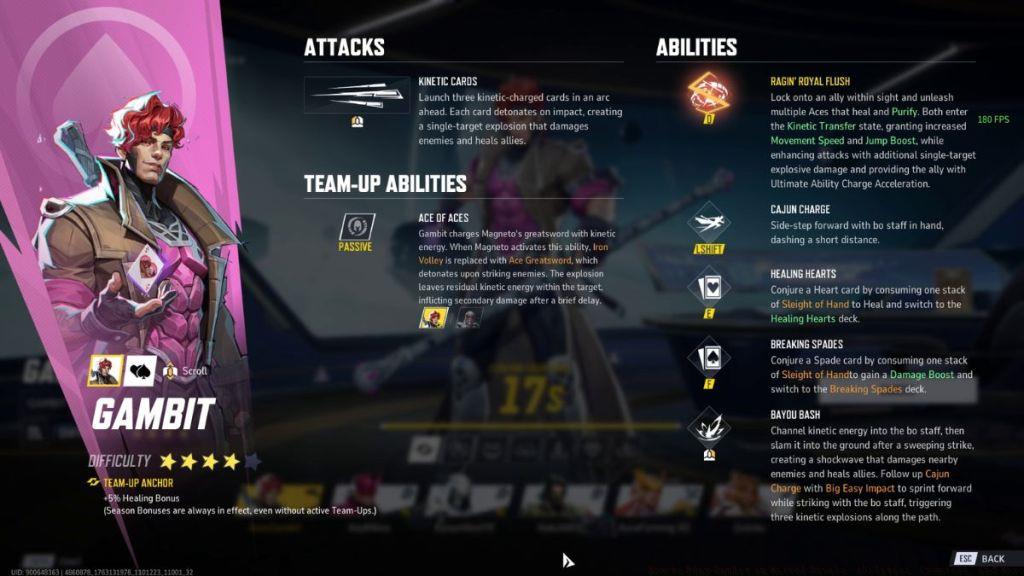

Gambit’s entire ability kit revolves around his signature kinetic-charged playing cards, creating a dynamic gameplay system where each draw determines strategic options. The card suit mechanics introduce an element of controlled randomness that skilled players can leverage for maximum impact. Understanding the probability distribution of card draws becomes crucial for advanced play.
When Gambit activates his card draw, he accesses two primary functions based on the suit selected. Drawing an Ace unleashes devastating kinetic damage against enemies or provides purification effects to cleanse allies of debilitating status conditions. The Heart card generates substantial area-of-effect healing that can simultaneously restore multiple teammates, making it exceptionally valuable during team fights or when regrouping after skirmishes.
Mastering card management separates novice Gambit players from experts. Optimal play involves tracking card draw cooldowns, anticipating team needs, and positioning yourself to maximize either offensive or defensive value from each activation. Advanced techniques include banking specific cards for critical moments and combining card effects with ultimate abilities for fight-winning combinations.
Gambit’s effectiveness varies significantly based on team composition and enemy matchups. While he brings exceptional versatility, certain hero types naturally counter his kit and playstyle. Understanding these dynamics is essential for both playing as Gambit and playing against him.
Shielded heroes present particular challenges for Gambit due to their ability to absorb his kinetic card damage. These tank-style characters can neutralize his offensive pressure while creating space for their own team to operate. Similarly, fast-paced mobile heroes can outmaneuver his projectile-based attacks, making direct engagements difficult without proper setup.
For players aiming to master Gambit, focus on developing spatial awareness and card economy. Position yourself at medium range to maintain both healing reach and damage potential. Track enemy cooldowns to time your card throws during vulnerability windows. Practice alternating between healing and damage roles based on immediate team needs rather than committing exclusively to one function.
Common mistakes include overcommitting to damage when teammates need healing, wasting card draws on full-health targets, and poor positioning that leaves you vulnerable to flankers. Avoid these pitfalls by maintaining constant communication with your team and developing game sense for when to transition between roles.
Purification represents one of Gambit’s most valuable support capabilities, enabling him to instantly remove stun effects from teammates and restore their combat effectiveness. This mechanic becomes particularly crucial when facing heroes like Emma Frost, whose psychic immobilization can disable key team members, or Doctor Strange, whose temporal manipulation abilities create devastating crowd control scenarios. The Thing’s seismic attacks also fall into this category, making Gambit’s purification timing essential for maintaining team momentum during intense firefights.
Strategic purification requires anticipating enemy cooldowns and recognizing visual cues that indicate incoming stun abilities. Experienced Gambit players monitor enemy ultimate charge indicators and position themselves to counter predictable stun combinations. The purification effect occurs instantly with no cast time, allowing for reactive plays when teammates get caught in area-of-effect disables.
Gambit’s Breaking Spades configuration transforms him into a formidable damage dealer with specialized tools for different combat situations. His Explosive Trick ability unleashes a concentrated volley of charged cards that detonate upon impact, applying both immediate damage and a lingering damage-over-time effect. This makes it particularly effective against aerial targets and support heroes who rely on sustained healing, as the ability also imposes a healing reduction debuff on affected enemies.
Conversely, Bidding Barrage creates a substantial area-of-effect explosion perfect for controlling objective points and disrupting clustered enemy formations. The key distinction lies in target selection: Explosive Trick excels against single high-value targets, while Bidding Barrage provides superior zone denial and crowd control. Understanding when to switch between these damage profiles separates novice Gambit players from masters.
Optimal card management involves conserving charges for critical moments rather than spamming abilities on cooldown. Each card volley consumes resources that regenerate over time, so wasteful usage can leave Gambit vulnerable during pivotal engagements.
Gambit’s ultimate ability, Ragin’ Royal Flush, represents his peak team utility moment, simultaneously purifying nearby allies and granting them the Kinetic Transfer buff. This state provides multiple combat enhancements including significantly improved mobility through increased movement speed and jump height, allowing teammates to reposition more effectively during fights.
The Kinetic Transfer effect also amplifies attack damage with explosive properties and dramatically accelerates ultimate charge generation for the entire affected team. This creates a powerful snowball effect where successful ultimates lead to more frequent ultimate usage across your squad. Additionally, Gambit himself benefits from accelerated card charge regeneration during this period, enabling more frequent ability usage with enhanced damage output.
Optimal ultimate timing involves coordinating with your team’s engagement rhythm rather than using it reactively. The area-of-effect purification makes it ideal for countering enemy team-wide crowd control attempts or initiating coordinated pushes on contested objectives.
Mastering Gambit requires understanding both his strengths and limitations within the current meta. While he can single-handedly swing team fights with well-timed purification and ultimate usage, his relatively low health pool and lack of defensive cooldowns make positioning paramount. Skilled Gambit players utilize high ground and environmental cover to maximize their effectiveness while minimizing exposure to counter-attacks.
Several heroes present particularly difficult matchups for Gambit that may warrant switching to alternative picks. Long-range snipers can eliminate him before he enters effective range, while mobile flankers can bypass his damage and target him directly. Area denial specialists also limit his mobility and force unfavorable engagements.
When facing counter picks, consider switching to heroes with better survivability or different utility profiles. The Class Guide provides excellent alternatives for adapting to unfavorable matchups. Understanding these dynamics ensures you’re never caught in a losing battle where Gambit’s toolkit becomes ineffective.
Common mistakes include overextending for purification saves, mismanaging card resources during extended fights, and using ultimate abilities without team follow-up. Each of these errors can turn Gambit from an asset into a liability within seconds.
Action Checklist
- Practice card draw timing in training mode to understand cooldown management
- Master medium-range positioning to balance healing and damage effectiveness
- Learn to identify when to prioritize healing versus damage based on team composition
- Study counter pick matchups and develop strategies against shielded and mobile heroes
- Practice purification timing against common stun abilities in training mode
- Master card resource management by tracking charge regeneration rates
- Learn optimal ultimate positioning to maximize team buff coverage
- Study counter pick matchups and develop alternative hero selections
No reproduction without permission:Tsp Game Club » How to Play Gambit in Marvel Rivals: Abilities, Counters, and More