
TL;DR
- Attack downed teammates to deplete their purple death gauge before the 15-second timer expires
- Revival difficulty increases with each collapse – requiring more gauge segments to be cleared
- Visit Sites of Grace to reset death gauge progression and restore revival efficiency
- Revenant class players can use Immortal March ultimate for instant area revival
- Prioritize positioning and weapon choice to maximize revival speed during combat
Elden Ring Nightreign represents FromSoftware’s inaugural venture into multiplayer-centric gaming design. While the experience accommodates solitary adventurers, the core mechanics heavily favor cooperative play with two fellow Nightfarers. As you navigate the treacherous landscapes of Limveld alongside your companions, encountering formidable bosses will inevitably lead to teammates succumbing to overwhelming pressure. Understanding the revival system becomes crucial for maintaining expedition momentum and achieving success in this challenging roguelike adventure.
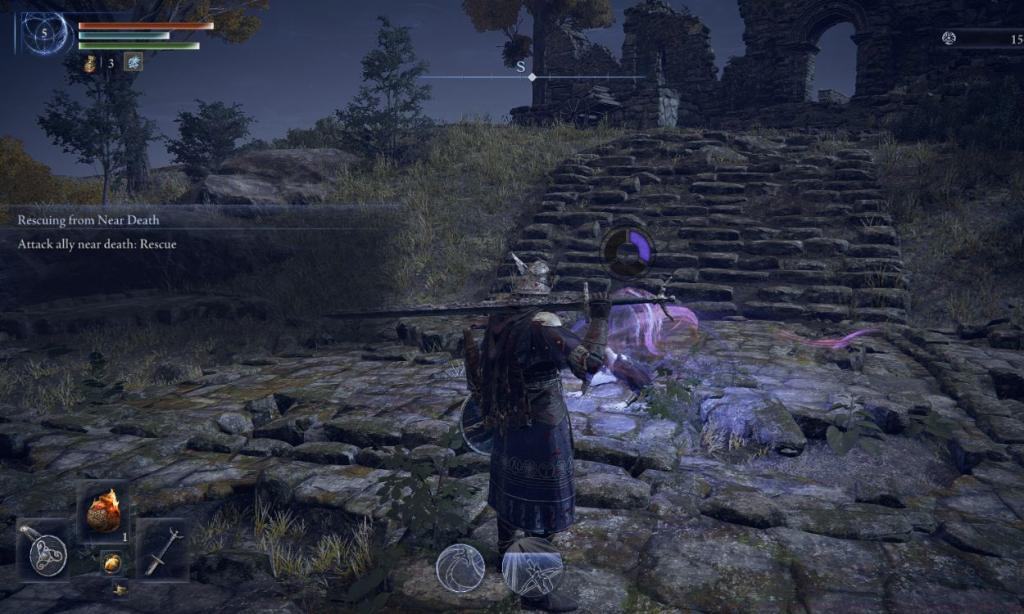
When a Nightfarer’s health reaches zero, they transition into a critical near-death condition. This vulnerable state manifests as the character crawling across the terrain while a distinctive purple gauge materializes overhead. The gauge features three distinct segments that visually indicate how frequently your ally has been incapacitated. A peripheral countdown timer initiates from 15 seconds, creating urgency for timely intervention.
The revival window provides limited opportunity for rescue operations. You must complete the revival process within this brief timeframe to prevent permanent loss of your companion. Strategic awareness of this mechanic separates successful teams from those who repeatedly fail their expeditions.
Executing successful revivals in Elden Ring Nightreign requires precise action and situational awareness. To rescue your teammates, you must direct attacks toward their incapacitated forms until the purple death gauge completely empties. Each strike diminishes the gauge’s progression, and upon full depletion, your ally returns to combat with 50% of their maximum health capacity. Speed remains paramount throughout this process, as the countdown continues relentlessly toward potential permanent demise.
The gauge’s segmented nature introduces progressive difficulty to revival attempts. Initial collapses demand depletion of merely one segment for successful revival. However, subsequent incapacitations require clearing two gauge bars, significantly increasing the time investment. A third collapse presents the most challenging scenario, necessitating the elimination of all three segments forming a complete circular gauge.
Fortunately, the death gauge’s progression resets completely upon visiting any Site of Grace. This mechanic encourages strategic retreats and checkpoint utilization to maintain revival efficiency. Unrevived Nightfarers automatically respawn at their most recently activated Site of Grace, though this typically results in lost progress and potentially failed objectives.
Beyond the fundamental revival mechanics, Elden Ring Nightreign offers specialized approaches for experienced players. Those selecting the Revenant class gain access to Immortal March, an ultimate ability that instantly revives all nearby incapacitated teammates within its effective radius. This powerful team-saving tool requires careful timing and positioning to maximize its impact during critical combat situations.
Additionally, adventurers carrying the Wending Grace item possess a limited self-preservation option. This consumable functions more as an emergency self-revival mechanism rather than a consistent team-resurrection method, making it suitable for specific build strategies and playstyles.
Successful teams develop coordinated revival protocols, assigning specific roles during combat encounters. Designating a primary reviver while others maintain aggro distribution creates efficient team dynamics. Understanding enemy attack patterns allows strategic positioning that facilitates safer revival attempts without compromising overall combat effectiveness.
Weapon selection significantly influences revival efficiency. Fast-attacking weapons like daggers or straight swords typically outperform slower alternatives because they allow more rapid gauge depletion. Area-of-effect abilities can sometimes simultaneously damage multiple downed allies, though this requires precise positioning and awareness.
A common tactical error involves prioritizing revival over immediate threats. Before attempting rescue, ensure you’ve created adequate space by eliminating or distracting nearby enemies. Another frequent mistake is neglecting to communicate revival status, leading to multiple teammates simultaneously attempting the same revival while ignoring other combat priorities.
Advanced players should master the art of staggered revival timing. Rather than immediately reviving upon collapse, sometimes delaying slightly to handle pressing threats results in more successful long-term outcomes. Always maintain awareness of your own health and positioning during revival attempts to avoid creating additional casualties.
That concludes our comprehensive guide on teammate revival in Elden Ring Nightreign. Are you tackling the challenges through solitary play or embracing the cooperative matchmaking system? Share your experiences and strategies in the comments section below.
Action Checklist
- Identify downed teammate and assess the purple gauge segment count
- Clear immediate threats before attempting revival to prevent chain collapses
- Use fast-attacking weapons to rapidly deplete death gauge before timer expires
- Coordinate with team to assign revival roles during intense combat sequences
- Reset death gauge progression by visiting Sites of Grace after multiple revivals
No reproduction without permission:Tsp Game Club » How to Revive Teammates in Elden Ring Nightreign Master the revival mechanics in Elden Ring Nightreign to keep your team alive through challenging expeditions