
TL;DR
- Night Lords appear on Day 3 of expeditions and require specialized strategies for each encounter
- Maris demands ranged combat and sleep resistance, while Gladius tests fundamental combat skills
- Team coordination becomes crucial for bosses like Gnoster with complex phase transitions
- Environmental awareness is essential against Caligo’s map-wide AoE attacks
- Proper preparation with specific items and builds dramatically reduces difficulty
The core appeal of Soulsborne games extends beyond mere difficulty to encompass meticulously crafted boss encounters that balance challenge with fairness and spectacular design. As a veteran player with extensive experience across FromSoftware’s catalog, I approached Elden Ring Nightreign with high expectations for its Night Lords system. These eight unique adversaries emerge consistently on the third day of each expedition run, presenting distinct combat mechanics and visual designs that showcase the developers’ mastery of boss creation. While most deliver exceptional experiences, a few encounters may test players’ patience with repetitive mechanics.
Night Lords represent the pinnacle of Nightreign’s challenge curve, each requiring specific approaches and countermeasures. Their appearances are tied to the expedition progression system, ensuring players encounter them at consistent power thresholds. Understanding their patterns, weaknesses, and the optimal strategies for each fight can transform frustrating encounters into satisfying victories.
This comprehensive guide ranks all Night Lords based on both difficulty and design quality, providing actionable strategies to overcome each encounter while appreciating their artistic merits.
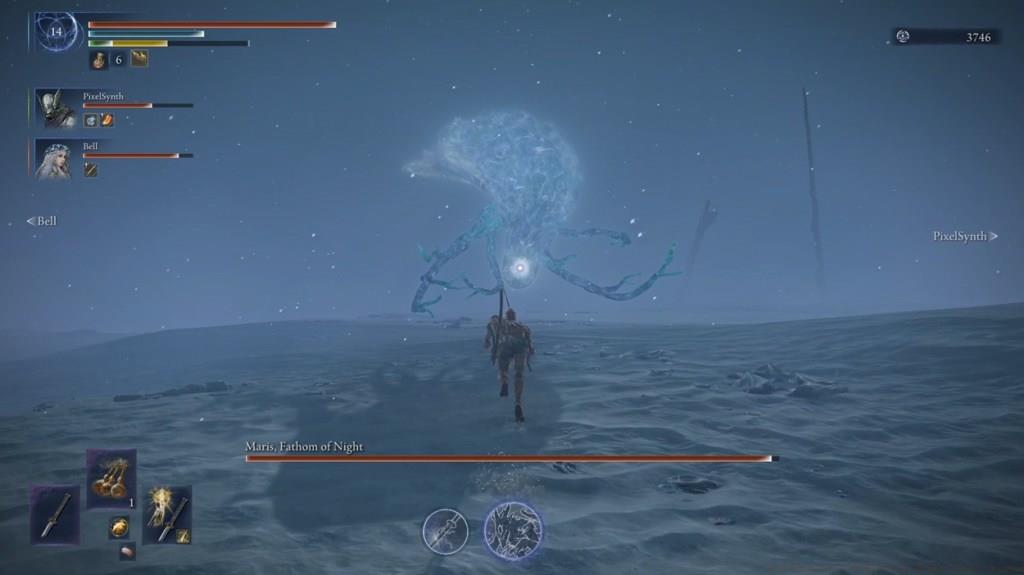
Maris, Fathom of Night stands as the most mechanically frustrating Night Lord in Elden Ring Nightreign, primarily due to its evasive combat style. This entity shares visual and behavioral similarities with the Elden Beast, particularly in its tendency to maintain distance from melee combatants. However, unlike the Elden Beast which permits some close-quarters engagement, Maris becomes virtually impossible to defeat without reliable ranged capabilities.
The boss consistently retreats from close-range attackers while deploying area-of-effect Freeze attacks to punish aggressive positioning. Its signature mechanic involves a sleep-inducing assault that affects all characters across the battlefield unless they possess substantial resistance to the sleep status effect. This sleep attack not only incapacitates players but also inflicts direct damage, creating potential for immediate team elimination with a single poorly-timed maneuver. Additionally, Maris launches massive crystalline projectiles that detonate upon impact, dealing catastrophic area damage within their blast radius.
Strategic preparation transforms this encounter dramatically. Maris becomes the most manageable Night Lord when utilizing Iron Eye equipment, enabling consistent damage application from safe distances. The ultimate ability proves particularly effective for interrupting Maris during its sleep attack charge sequence. Proper timing allows players to neutralize the most dangerous phase of the encounter entirely.
Advanced players should prioritize sleep resistance gear and ranged damage optimization. The Silver Talisman and Dreamcatcher Shield provide substantial protection against the sleep mechanic, while magic staves or bows with frost resistance modifications offer sustained damage output. Team compositions should include at least two dedicated ranged specialists to maintain pressure while melee characters focus on evasion and revival support.
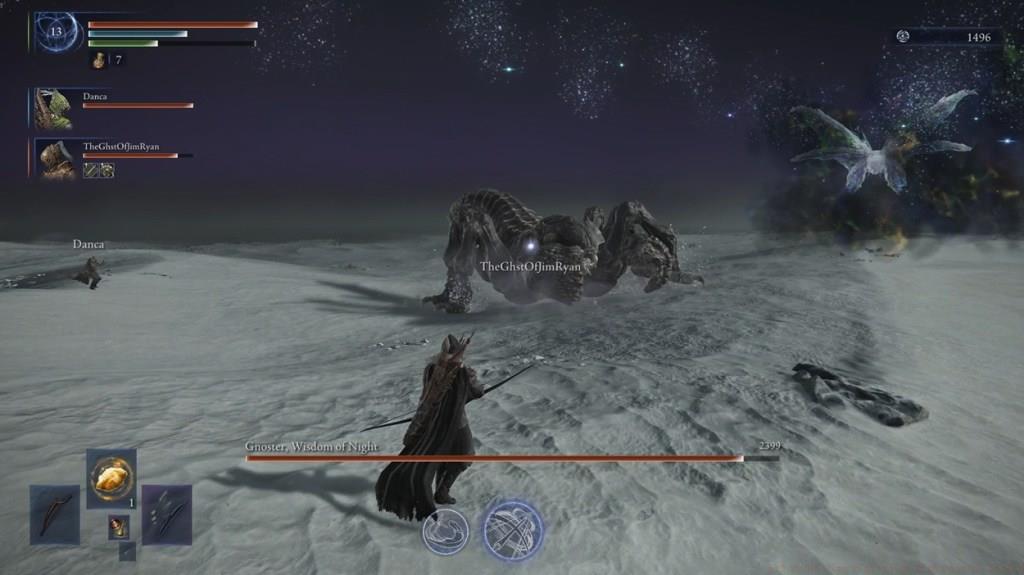
Gnoster, Wisdom of Night presents a unique dual-entity encounter featuring simultaneous combat against scorpion and butterfly manifestations. These complementary entities must be engaged concurrently, each possessing distinct strengths and vulnerabilities that create strategic complexity. The encounter intensifies significantly during the phase transition at approximately 50% health, when the scorpion and butterfly forms merge into a single enhanced combatant.
The merged entity showcases remarkable design coherence, with visual elements that clearly communicate the retained abilities of both component creatures. The primary challenge emerges in this second phase, where the combined boss aggressively pursues players while unleashing volleys of magical projectiles. One particularly dangerous attack summons luminous barriers around fallen allies, severely complicating revival attempts by restricting access to incapacitated teammates.
Successful navigation of this encounter requires careful target prioritization and spatial awareness. Players should assign dedicated roles for each component during the first phase, then consolidate for focused damage during the merged phase. The scorpion typically favors ground-based assaults with poison effects, while the butterfly employs aerial magic attacks that require different evasion patterns.
Common mistakes include over-committing to one entity while neglecting the other, or failing to reposition before the merge transition. Advanced strategies involve baiting the entities apart to create damage windows and using terrain to block projectile attacks. Teams should coordinate stun rotations to create safe revival opportunities during the second phase’s most aggressive sequences.
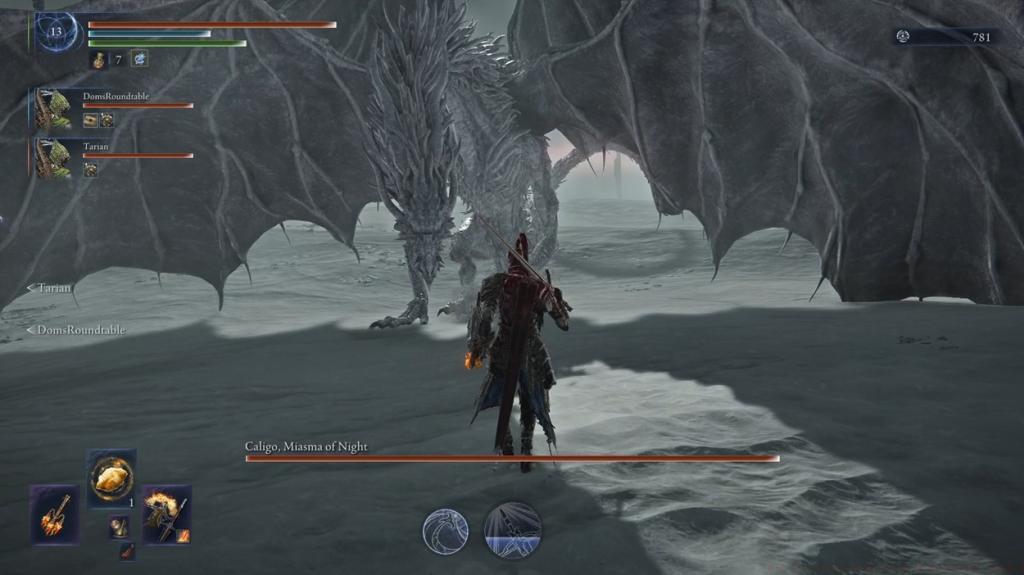
Caligo, Miasma of Night currently represents the exclusive dragon-class Night Lord available in Elden Ring Nightreign, encountered during Fissure in the Fog expeditions on the third day. This frost dragon employs continuous ice breath attacks that rapidly accumulate Frost status on exposed players. Its assault patterns generate persistent ice spike formations that maintain frost buildup through contact, preventing traditional positioning strategies beneath the creature.
The encounter’s most dangerous element is Caligo’s cataclysmic area-of-effect blast covering the entire battlefield. This devastating attack typically results in instant elimination for characters without substantial health investment or specific countermeasures. Survival depends entirely on locating ice spike formations for cover or successfully interrupting the boss during its lengthy charge animation.
While Caligo delivers an aesthetically impressive dragon battle, its mechanical difficulty remains moderate compared to other Night Lords. The Mountain Top event’s frost dragon presents significantly greater challenge than Caligo, justifying its placement lower in the difficulty ranking. However, underestimating the map-wide attack proves fatal for unprepared groups.
Optimization strategies include equipping frost resistance gear, pre-positioning near potential cover locations, and designating players with high-damage abilities for interruption duties. The Emberheart Amulet provides exceptional protection against frost buildup, while weapons with fire augmentation deal increased damage to the icy creature. Teams should spread out to minimize multiple casualties from the same AoE attack and communicate constantly about cover availability.
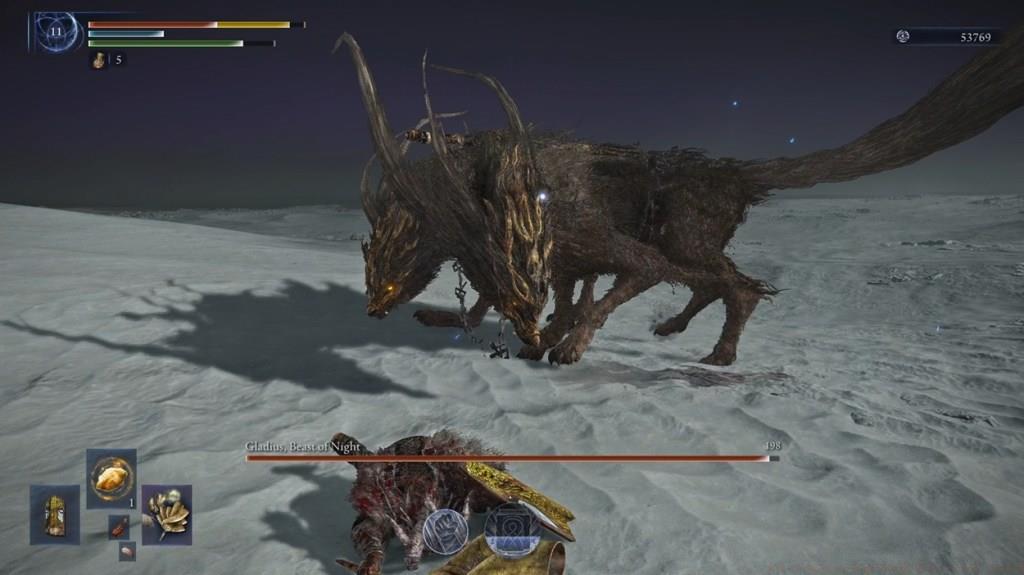
Gladius, Beast of Night serves as the introductory Night Lord encounter, presenting a mandatory challenge that gates access to Nightreign’s core content. Progression through much of the expansion remains inaccessible until players conquer this three-headed wolf adversary. Despite its position as an early-game obstacle, Gladius delivers one of the most punishing experiences in Elden Ring Nightreign, particularly for solo practitioners.
However, this initial encounter should not be underestimated, as the tripartite canine exhibits exceptional aggression with diverse attack patterns that challenge prediction and reaction skills.
The encounter’s complexity escalates during the phase transition when Gladius separates into three distinct wolves, each inheriting portions of the original entity’s abilities. This division creates chaotic combat scenarios where the separated entities may individually target players or coordinate assaults on single targets. This fragmentation mechanic creates particular hardship for solo players who must manage multiple aggressive opponents simultaneously.
Advanced combat strategies involve learning the specific tells for each attack variant and developing efficient dodging patterns. The middle head typically telegraphs the most dangerous attacks, while the side heads provide supporting pressure. During the separation phase, prioritizing the elimination of the magic-capable wolf first typically reduces incoming damage significantly.
Common mistakes include attempting to damage all three wolves equally rather than focusing elimination, or misreading the attack telegraphs that differ between the separated entities. Teams should communicate target focus and coordinate crowd control abilities to manage the separated wolves effectively.
Mastering Night Lords requires understanding fundamental combat principles that apply across multiple encounters. Proper loadout selection dramatically impacts success rates, with specific weapons and items providing crucial advantages against particular bosses. The Iron Eye proves indispensable against Maris, while fire-enchanted weapons offer superior performance against Caligo’s frost-based attacks.
Team coordination becomes increasingly vital for later Night Lords with complex mechanics. Designating roles such as primary damage dealer, support specialist, and crowd control expert ensures comprehensive coverage of encounter requirements. Communication about ability cooldowns, resource management, and positioning forms the foundation of successful group play.
For players struggling with specific encounters, our Weapons Unlock guide provides detailed information on acquiring optimal equipment for these challenges.
Resource management extends beyond healing items to include stamina conservation, spell usage optimization, and equipment durability monitoring. Many Night Lords encounters become substantially more difficult if players exhaust resources prematurely or fail to pace their aggression appropriately.
Understanding the expedition system’s timing is crucial for preparation. Since Night Lords always appear on the third day, players can strategically conserve powerful abilities and items specifically for these encounters. This foresight separates successful expeditions from failed attempts.
Advanced players should consult our comprehensive Complete Guide for comprehensive strategies covering all aspects of Elden Ring Nightreign. Additionally, our Class Guide offers insights into optimal character builds for tackling the Night Lords roster efficiently.
Action Checklist
- Acquire Iron Eye and sleep resistance gear before facing Maris
- Practice phase transition timing for Gnoster’s merge mechanic
- Coordinate team roles and communication protocols
- Memorize Caligo’s ice spike cover locations
- Study Gladius’ attack telegraphs and separation patterns
No reproduction without permission:Tsp Game Club » All Elden Ring Nightreign Night Lords, Ranked Complete guide to Elden Ring Nightreign's eight Night Lords with expert strategies and difficulty rankings