
Uncovering Nibelung’s full story in Genshin Impact: Lore analysis, quest guides, and strategic insights
Introduction: The Enigmatic Dragon King of Ancient Teyvat
Genshin Impact’s expansive lore operates on multiple layers, with critical historical narratives often concealed within environmental storytelling, artifact descriptions, and character backstories. Among these hidden tales, the saga of Nibelung stands as one of the most pivotal yet least understood. As the original Dragon Sovereign who predated human civilization in Teyvat, his decisions fundamentally shaped the world’s current state and ongoing conflicts.
Unlike main storyline characters whose narratives unfold linearly, Nibelung’s history requires players to become archeologists of Teyvat’s past. His story emerges in fragments: through cryptic murals in Natlan’s ancient ruins, descriptive texts on late-game artifact sets, weapon ascension domain lore, and passing references in dragon sovereign character stories. This distributed narrative structure presents both a challenge and opportunity for dedicated lore enthusiasts.
Nibelung’s Physical Transformation: From Radiant Sovereign to Abyssal Corruption
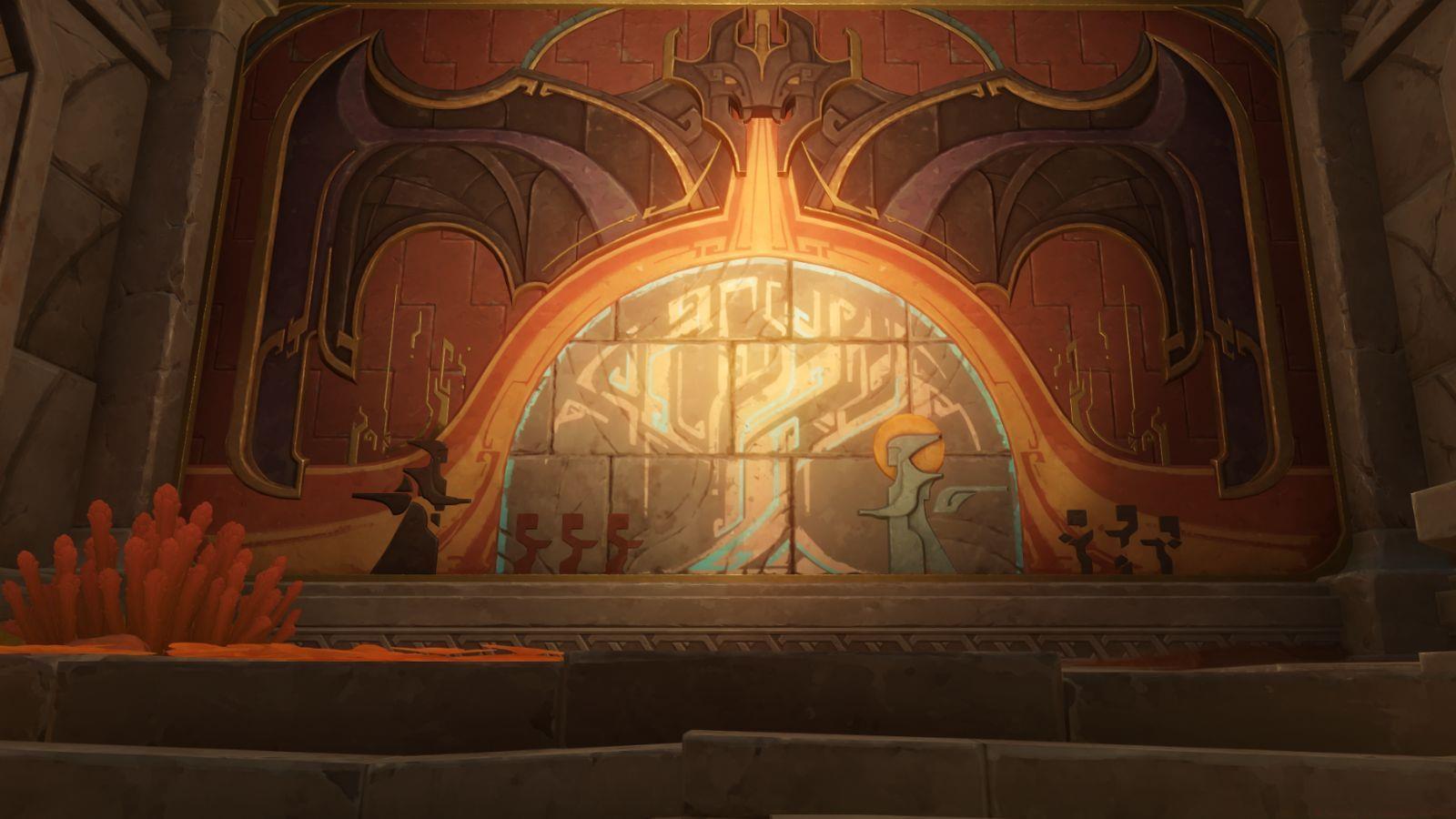
Visual representations of Nibelung reveal a dramatic physical transformation that mirrors his moral and spiritual descent. Early depictions in Ochkanatlan’s murals show him as a majestic white dragon soaring above Teyvat’s three moons—a symbol of his original purity and celestial authority. This radiant form represents Nibelung before his encounter with the Abyss, when he ruled as an enlightened monarch over dragonkind.
The Revelations from the Past World Quest in Natlan presents a starkly different vision. Here, murals depict Nibelung as gargantuan with wings darkened by Abyssal energy. This visual corruption aligns with Dendro Dragon Apep’s testimony in Nahida’s Story Quest, where he recalls Nibelung’s scales once shining brightly before succumbing to darkness. The transformation isn’t merely aesthetic—it symbolizes how Abyssal power fundamentally alters both physical form and essential nature.
Strategic Insight: When examining Nibelung’s murals, pay attention to environmental context. The Ochkanatlan mural appears in a preserved temple setting, suggesting it represents “official” history. The corrupted mural appears in a more hidden, possibly forbidden location, indicating these images weren’t meant for public viewing. This spatial storytelling reinforces the taboo nature of Nibelung’s later actions.
Chronological Timeline: Nibelung’s Rise, Fall, and Legacy
Nibelung’s timeline spans Teyvat’s entire ancient history. Born alongside the world itself according to the Finale of the Deep Galleries artifact set, he witnessed reality’s foundation. His reign represented the Dragon Sovereign era—a time when elemental dragons governed the planet without human interference. This period ended with his fateful encounter with the mysterious Voyager, a dimension-hopping scribe who warned of Teyvat’s impending destruction.
The Voyager’s warning presented Nibelung with a moral dilemma: escape with her to safety or remain with his dragon brethren. His decision to stay and empower his people led to the development of advanced spacefaring technology mentioned in artifact lore—a testament to draconic civilization’s sophistication before the Heavenly Principles’ arrival.
During the Great War of Vengeance (also called the Cataclysm in some translations), Nibelung made his most consequential decision: he temporarily abandoned Teyvat to seek forbidden knowledge from the Abyss. Believing this power could ensure victory against the Heavenly Principles, he instead unleashed forces that devastated the world. The Heavenly Principles ultimately killed him, but his legacy of Abyssal corruption persists.
Common Lore Hunter Mistake: Many players assume Nibelung’s story concludes with his death. In reality, his influence continues through the Ancient Watchtower domain structures he built (now ruins), through Neuvillette’s character development, and through the ongoing dragon-human conflict. His choices established patterns that current characters must navigate.
Gameplay Integration: Where to Find Nibelung Lore and Why It Matters
For players seeking to understand Nibelung’s full narrative, systematic exploration is essential. Begin with Natlan’s World Quests, particularly those involving mural interpretation. The Revelations from the Past quest not only shows his corrupted form but contextualizes why certain knowledge was hidden. Next, examine the Finale of the Deep Galleries artifact set descriptions—these provide crucial biographical details about his birth and early reign.
The Ancient Watchtower weapon ascension domain offers architectural and historical context. While farming materials, read the domain description carefully; it explains how Nibelung’s structures once dotted Teyvat’s landscape. Finally, synthesize this information with character story insights: Nahida’s Story Quest Part 2 (through Apep’s testimony) and Neuvillette’s Character Story 5 provide contemporary dragon perspectives on Nibelung’s legacy.
Practical Strategy: Create a dedicated “Lore Journal” in-game or externally to connect these disparate elements. Note each reference’s location (region, quest, domain), the source’s reliability (firsthand account vs. historical record), and how pieces connect. This method transforms random lore fragments into a coherent narrative that enhances main storyline comprehension.
Also read: Genshin Impact Age Verification: Everything you need to know
Philosophical and Narrative Significance: Beyond Basic Lore Collection
Nibelung’s story transcends simple historical curiosity—it embodies Genshin Impact’s central themes about power, corruption, and unintended consequences. His initial nobility (staying with his people rather than escaping destruction) contrasts with his later recklessness (employing Abyssal power despite the risks). This complexity makes him more than a villain; he’s a tragic figure whose good intentions paved a road to catastrophe.
Neuvillette’s critical perspective in Character Story 5 reveals how contemporary dragons view Nibelung’s legacy. As the current Hydro Sovereign, Neuvillette believes Nibelung erred in facing the Abyss alone rather than forging dragon-human alliances. This viewpoint isn’t merely historical commentary—it foreshadows potential future story developments where cooperation between species becomes essential against greater threats.
The Abyssal corruption Nibelung introduced represents a recurring motif: power that transforms both user and world. This theme connects to the Abyss Order’s current activities, the Fatui’s questionable methods, and even the Traveler’s growing abilities. Understanding Nibelung means understanding the fundamental forces shaping Teyvat’s conflicts.
Also read: Genshin Impact Whirling Waltz event guide
Advanced Insights: Connecting Nibelung to Current Game Meta and Future Speculation
Beyond narrative significance, Nibelung’s lore offers practical gameplay insights. The Ancient Watchtower structures he created often correlate with current domain locations, suggesting game developers placed end-game content in historically significant locations. Recognizing these patterns can help players anticipate future domain additions in regions with similar architectural ruins.
The spacefaring technology mentioned in artifact lore—developed by dragons under Nibelung’s encouragement—may foreshadow future game mechanics or regions. Just as the Chasm revealed underground civilizations and Sumeru introduced desert ruins, space exploration could become a literal gameplay element in later versions, with Nibelung’s technological legacy enabling such expansion.
For team-building enthusiasts, understanding Nibelung’s relationship with elemental dragons enhances character appreciation. Dragons like Apep, Dvalin, and Azhdaha represent different responses to Nibelung’s legacy: Apep carries bitterness about the past, Dvalin sought human partnership, Azhdaha endured corruption. This historical context adds depth to using these characters’ powers in your party.
Optimization Tip: When new artifact sets or weapon domains release, immediately examine their lore descriptions. Developers often use these items to expand on historical narratives like Nibelung’s before introducing related story content. Early recognition of these connections gives you narrative foresight that enhances story quest enjoyment.
No reproduction without permission:Tsp Game Club » Who is Nibelung in Genshin Impact? Uncovering Nibelung's full story in Genshin Impact: Lore analysis, quest guides, and strategic insights