
Master the Brazilian GP with this optimized F1 25 car setup guide for Interlagos circuit challenges
Understanding Interlagos Circuit Challenges
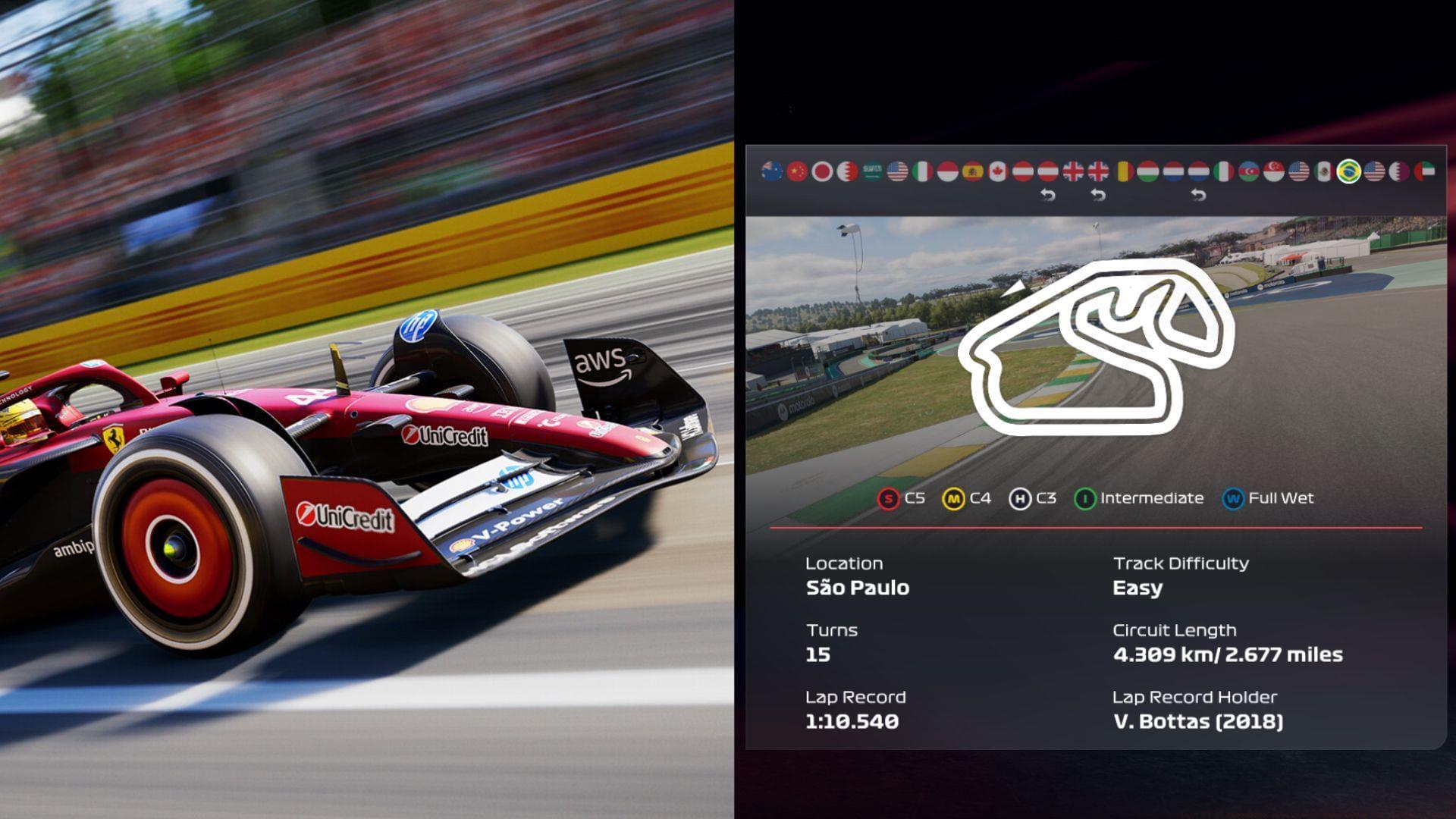
The Autódromo José Carlos Pace, universally recognized as Interlagos, presents one of Formula 1’s most demanding technical puzzles in F1 25. Situated in São Paulo’s vibrant landscape, this legendary circuit combines dramatic elevation shifts with a flowing yet punishing layout that tests every aspect of car performance. The track’s notorious elevation changes exceed 40 meters, creating unique aerodynamic challenges as cars navigate the crests and dips.
Navigating Interlagos successfully requires understanding its three distinct sectors: the high-speed Senna S complex demands precise braking and turn-in, the technical middle section challenges mechanical grip with tight corner combinations, while the final sector’s long straight rewards power unit performance and slipstream tactics. Each sector presents contrasting requirements that demand a carefully balanced setup compromise.
Many drivers struggle with the circuit’s bumpy surface and aggressive curbs, particularly through the Descida do Lago and Junção corners where maintaining stability while utilizing the track limits becomes critical. The high altitude of São Paulo also affects engine performance and cooling efficiency, adding another strategic layer to your setup decisions.
Optimized Car Setup Specifications
After extensive testing and telemetry analysis, we’ve developed this comprehensive setup that balances Interlagos’ conflicting demands:
- Differential Adjustment On Throttle: 100% – Maximizes traction out of slow corners while maintaining stability
- Differential Adjustment Off Throttle: 15% – Provides precise rotation into corners without inducing snap oversteer
- Front Anti-Roll Bar: 15 – Balances responsiveness with compliance over Interlagos’ bumpy surface
- Rear Anti-Roll Bar: 21 – Enhances rear stability during high-speed direction changes
- Front Right Tyre Pressure: 29.5 psi – Optimizes temperature for right-hand dominant corners
- Front Left Tyre Pressure: 29.5 psi – Maintains consistent front axle behavior
- Rear Right Tyre Pressure: 21 psi – Maximizes traction out of acceleration zones
- Rear Left Tyre Pressure: 21 psi – Balances rear axle stability
This carefully calibrated configuration delivers exceptional performance through Interlagos’ diverse challenges. The differential settings create a car that rotates willingly into corners while providing explosive traction on exit, crucial for the circuit’s multiple acceleration zones from low speeds. The anti-roll bar combination strikes the perfect balance between aggressive curb attack and high-speed stability.
The asymmetric tyre pressure strategy accounts for Interlagos’ right-hand corner bias while ensuring consistent temperature management across the race distance. Lower rear pressures enhance mechanical grip through the technical middle sector, while the higher front pressures maintain responsiveness through the Senna S and Ferradura complexes.
Advanced Setup Strategies and Adjustments
Beyond the base setup, several strategic adjustments can optimize performance for specific conditions. For qualifying sessions, consider reducing front tyre pressures by 0.5 psi to enhance turn-in response, particularly through the technical Sector 2. However, be cautious as this may increase tyre wear during longer race stints.
Weather Adaptations: When rain affects the Brazilian GP, increase both front and rear tyre pressures by 1.0-1.5 psi to improve aquaplaning resistance. Reduce differential on-throttle to 85% to prevent wheelspin in wet conditions, and consider softening both anti-roll bars by 2-3 clicks to enhance mechanical grip.
Common Setup Mistakes to Avoid: Many players incorrectly stiffen their suspension to combat Interlagos’ bumps, which actually reduces mechanical grip and makes the car more unpredictable. Another frequent error involves running too much front wing, which creates understeer through the middle sector and reduces straight-line speed. Instead, focus on mechanical balance through anti-roll bars and differential settings.
Race Strategy Integration: This setup works exceptionally well with a two-stop strategy using medium compound tyres. The balanced nature preserves tyre life while maintaining competitive lap times. For one-stop strategies, consider increasing rear tyre pressures by 0.5 psi to reduce rear tyre degradation, a common issue at Interlagos.
Whether you’re chasing pole position in qualifying or managing tyre wear during changing conditions, this comprehensive setup provides the foundation for success at one of F1 25’s most challenging circuits.
Also Read: F1 25 review: A Formula One game that knows where it’s going
Read more F1 25-related articles below:
- F1 25 Driver Icons are no longer limited to your MyTeam
- F1 25 features Brad Pitt’s APXGP: Movie crossover content and live service features
- Best F1 25 graphics settings for RTX 5070 and RTX 5070 Ti
No reproduction without permission:Tsp Game Club » Best F1 25 Autodromo Jose Carlos Pace Setup for the Brazilian GP Master the Brazilian GP with this optimized F1 25 car setup guide for Interlagos circuit challenges