
Master the Miami GP with optimal car setup, driving techniques, and race strategy for F1 25 dominance
Miami International Autodrome Circuit Analysis
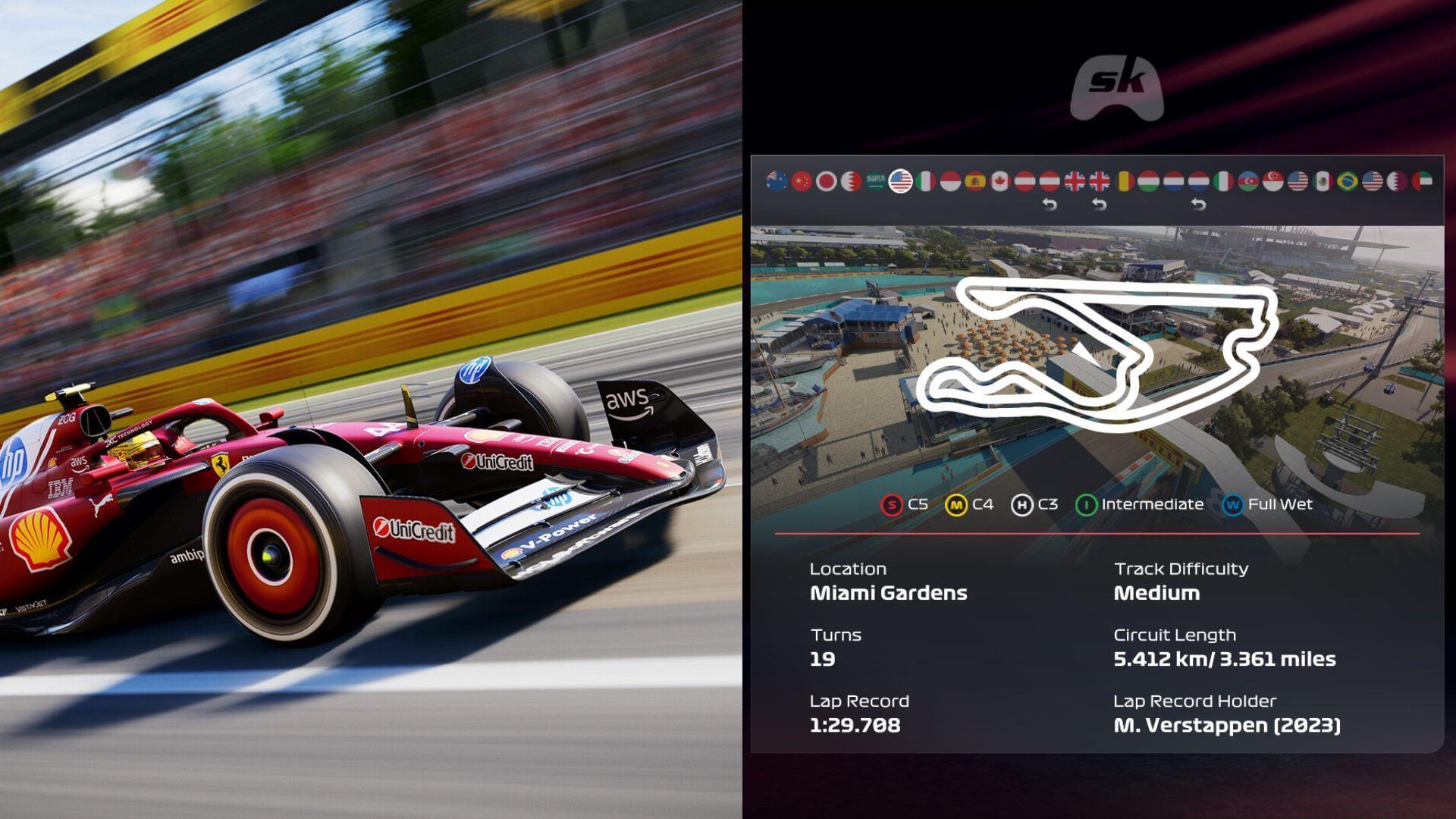
The Miami International Autodrome presents drivers with a demanding blend of high-speed straights and technically complex corners that test car balance and driver precision. Wrapping around the iconic Hard Rock Stadium, this temporary street circuit combines wide racing lines with punishing consequences for minor errors, requiring both aggressive pace and meticulous control.
Key Challenge Zones: The circuit’s second sector demands particular attention, featuring the awkward chicane at Turns 14 and 15 where many drivers lose crucial lap time. The long back straight preceding this section allows for high-speed drafting opportunities, but the subsequent heavy braking zone punishes late braking with compromised corner exit speeds.
Optimal Racing Line: Focus on carrying maximum speed through Turns 7-11, a flowing sequence where maintaining momentum is critical. The camber changes and elevation variations throughout the lap require precise throttle modulation and steering inputs to avoid unsettling the car’s balance.
Complete Car Setup Configuration
This comprehensive Miami GP setup balances aggressive performance with drivability, creating a platform that responds predictably while maximizing straight-line speed and cornering stability.
- Differential Adjustment On Throttle: 100%
- Differential Adjustment Off Throttle: 50%
- Front Anti-Roll Bar: 10
- Rear Anti-Roll Bar: 10
- Front Right Tyre Pressure: 24.2 psi
- Front Left Tyre Pressure: 24.2 psi
- Rear Right Tyre Pressure: 21.3 psi
- Rear Left Tyre Pressure: 21.3 psi
Differential Strategy: The 100% on-throttle differential configuration ensures maximum power application exiting slow corners like the hairpin at Turn 17, where traction is paramount. The 50% off-throttle setting promotes stable rotation through medium-speed corners while preventing snap oversteer during trail braking.
Suspension Tuning: Firm front suspension provides immediate steering response for quick direction changes, while the slightly softer rear setup absorbs curb impacts in the technical sections. The balanced anti-roll bar settings (10 front and rear) create neutral handling characteristics that suit Miami’s mixed corner types.
Tyre Pressure Optimization: The asymmetric pressure distribution (24.2 psi front, 21.3 psi rear) accounts for the circuit’s front tyre loading during heavy braking zones. These pressures maintain optimal contact patch while preventing overheating during Florida’s typically warm race conditions.
Advanced Driving Techniques
Mastering Miami’s unique challenges requires specific driving techniques that leverage your car’s setup advantages while minimizing weaknesses.
Cornering Strategy: Use the balanced aerodynamic platform to carry extra speed through Turns 4-6, a high-speed left-right-left sequence where maintaining momentum is crucial. The symmetrical downforce settings allow later braking while preserving cornering stability.
Braking Points: For the critical Turn 17 hairpin, brake approximately 85 meters from the corner apex, gradually releasing pressure as you turn in. The firm front suspension provides confidence under heavy braking, while the rear setup prevents instability during weight transfer.
Overtaking Opportunities: The main overtaking zone is the approach to Turn 11, using DRS on the back straight. Set up passes by getting a better exit from Turn 9, carrying momentum through the sweeping Turn 10 to maximize straight-line speed. Alternative passing opportunities exist at Turn 1 with late braking maneuvers.
Common Mistakes to Avoid: Many drivers overdrive the Turn 14-15 chicane, sacrificing exit speed for minimal entry gains. Focus on clean exits rather than aggressive entries, as the following straight rewards momentum conservation. Avoid running too wide at Turn 16 exit, where track limits are strictly enforced.
Race Strategy and Pit Stop Planning
Miami’s abrasive surface and warm climate create unique strategic considerations that can determine race outcomes.
Tyre Management: The symmetrical tyre pressure setup promotes even wear across contact patches, but Miami’s surface is particularly harsh on front-left tyres. Manage degradation by avoiding aggressive curb riding in Turns 2-3 and the final corner complex.
Fuel Strategy: The circuit’s stop-start nature increases fuel consumption compared to permanent tracks. Plan for approximately 2.5kg per lap in clean air, increasing to 2.8kg when following closely in dirty air. The efficient aerodynamic settings help reduce drag-related fuel consumption on the long straights.
Weather Considerations: Florida’s humid conditions can affect engine cooling and brake temperatures. Monitor brake wear closely, particularly after safety car periods when systems cool then face sudden high-demand scenarios.
Pit Stop Windows: The optimal one-stop strategy typically pits between laps 18-22 for medium to hard compound transitions. Two-stop strategies work better in higher degradation scenarios, with stops around laps 12 and 28. Track position is particularly valuable at Miami, so prioritize in-lap performance to minimize position loss.
This comprehensive Miami GP approach provides a competitive foundation that adapts well to changing race conditions while maximizing your car’s potential through every sector.
No reproduction without permission:Tsp Game Club » Best F1 25 Miami International Autodrome setup for the Miami GP Master the Miami GP with optimal car setup, driving techniques, and race strategy for F1 25 dominance