
TL;DR
- Static target practice builds essential muscle memory for consistent headshots
- Master AK-47 and M4 spray patterns through dedicated recoil training
- Combine in-game drills with third-party trainers for maximum improvement
- Consistent 15-30 minute daily sessions yield significant competitive advantages
- Proper crosshair placement reduces aiming distance by up to 80% in common engagements
To truly elevate your CS2 gameplay, integrating structured static target practice into your routine delivers foundational precision that translates directly into match performance. When you’re beginning your aim development journey, stationary target exercises provide the perfect entry point by eliminating distractions from movement and complex mechanics. The objective remains crystal clear: develop reliable muscle memory while dramatically improving your shot-to-shot consistency.
Static shooting exercises focus exclusively on aiming at non-moving targets. These typically involve bots within workshop environments such as Aim Botz, or utilize targets in external training platforms like Aim Lab. The core principle centers on dedicating complete focus to your crosshair control development, guaranteeing you strike targets near their center with remarkable regularity.
Initiate your practice by maintaining complete stillness while concentrating exclusively on head-level accuracy. Resist the temptation to accelerate prematurely. During initial development phases, precision consistently outweighs speed considerations. Position your crosshair directly on the bot’s head, execute your shot, reset your targeting position, then repeat the sequence. As your proficiency naturally increases, you can systematically increment your pace.
Here are crucial considerations to remember during static targeting sessions:
- Avoid spray patterns—prioritize single-tap firing or carefully managed burst sequences.
- Concentrate on crosshair positioning, not rapid flick motions (those come later).
- Maintain relaxed arm and wrist positioning to minimize overcompensation movements.
- Practice both leftward and rightward angles to establish balanced muscular memory development.
An excellent training regimen would be:
100 precisely placed headshots on stationary bots daily across a two-week timeframe. You’ll observe substantial improvements in how instinctively your crosshair settles on opponent heads during competitive matches.
This training methodology appears straightforward yet produces extraordinary results. Every elite CS2 competitor, from s1mple to NiKo, has invested hundreds of hours perfecting static shot execution to construct an unshakeable mechanical base.
Let’s address reality—securing that initial bullet feels incredible, but during actual matches, you’ll frequently need to eliminate multiple adversaries consecutively. This is where spray mastery becomes essential. Every CS2 firearm features distinctive recoil characteristics, and developing command over these patterns can exponentially increase your elimination count, particularly during high-pressure clutch scenarios.
The weapons you’ll most commonly employ include the AK-47 or M4A4/M4A1-S, both notorious for their challenging spray behaviors. Without proper control methodologies, your projectiles scatter unpredictably. However, once you comprehend the underlying patterns and train your muscle memory appropriately, you’ll achieve laser-like accuracy against opponents across various distances.
Here’s the systematic approach to developing spray control proficiency:
- Utilize dedicated recoil training environments like “Recoil Master – Spray Training.”
- Choose your preferred firearm and discharge an entire magazine while carefully observing the bullet dispersion pattern.
- Subsequently, attempt to replicate the inverse movement using your mouse to “manage” the spray pattern.
- Execute 10 complete spray sequences consecutively, reset your position, then repeat the cycle.
The challenge extends beyond simple downward mouse pulling. Each weapon’s spray incorporates horizontal deviations requiring corresponding adjustments. For instance, the AK-47’s pattern veers rightward after several rounds—thus your counter-movement should incorporate downward-left-right combinations.
Drill these movements into your muscle memory through repetition. The sensations may feel unnatural initially, but within several focused sessions, you’ll begin witnessing cleaner multi-elimination sequences, especially during close-to-medium range combat engagements.
Advanced technique: spray transition represents a more sophisticated iteration of this exercise. After neutralizing one target, immediately transition your aim to another proximate adversary while maintaining your spray continuation. This proves vital during 1v2 clutch moments or when defending bomb site positions.
Choosing between dynamic and static crosshair configurations represents one of the most critical visual decisions CS2 players face. This choice fundamentally shapes how you process aiming information during high-pressure situations.
- Static crosshairs maintain constant size and position regardless of player movement or weapon firing. This stability provides unwavering reference points that professional gamers consistently prefer for their reliability and precision.
- Dynamic crosshairs provide visual feedback by expanding during movement and contracting when stationary. While helpful for beginners learning movement mechanics, they create visual noise that can distract from target acquisition.
Strategic recommendation for competitive players: Commit to static configurations. This approach builds aiming discipline by forcing you to internalize accuracy timing rather than relying on visual indicators. Static crosshairs also preserve valuable screen space, minimizing visual clutter during intense firefights.
- Color selection: Prioritize high-visibility hues like electric cyan, vibrant green, or hot pink that contrast against diverse environmental backdrops.
- Thickness and spacing: Balance precision with visibility—sufficiently compact for headshot accuracy while remaining clearly visible during rapid screen movements.
- Center dot indicator: Personal preference determines effectiveness; some players find it invaluable for AWP scoping while others consider it obstructive.
Ultimately, select a crosshair configuration that feels intuitive, non-distracting, and practically effective. Once you establish your preferred visual setup—maintain consistency. Frequent crosshair modifications severely undermine muscle memory development.
Why experiment endlessly when you can leverage proven professional configurations? CS2’s crosshair import system enables immediate testing of elite-level visual setups without tedious manual adjustments.
Here are several battle-tested crosshair codes from top-tier competitors:
- NiKo (G2 Esports)
CSGO-oYVHK-i3GJQ-KLHNf-22XD5-tnQzD - s1mple (NAVI)
CSGO-LH0KL-0HHHP-8Z26V-2C5AG-KfFZP - ZywOo (Vitality)
CSGO-iTtPx-3pQke-RpDQo-Aoeie-HbLNF - ropz (FaZe Clan)
CSGO-UwBfq-JcUVP-HCCuN-Ff2bX-t9kpE
Implementation process:
- Navigate to CS2 settings > Game > Crosshair.
- Select “Share or Import”.
- Insert the professional code and confirm application.
Test each configuration in deathmatch or training environments. Focus on tactile response, not merely aesthetic appearance. If a particular setup enhances target clarity or aiming assurance—adopt it permanently.
Utilizing professional crosshair templates doesn’t instantly transform you into an elite player, but provides a reliable, competitively validated foundation for further personalization.
For players seeking customized optimization, follow this systematic approach to craft your ideal visual interface:
- Color optimization: Select shades that stand out against common map color palettes.
- Dimensional proportions: Medium-sized crosshairs optimize rifle performance; compact configurations benefit precision tapping.
- Line thickness: Avoid extremes—neither too slender (visibility issues) nor excessively thick (vision obstruction).
- Center gap adjustment: Calibrate to prevent crosshair overlap on enemy head hitboxes.
- Central dot inclusion: Optional feature—experiment with both enabled and disabled states.
Leverage the crosshair generator workshop map for real-time visual experimentation. You can even test spray pattern visibility by firing at walls with various crosshair configurations.
Once you identify your optimal configuration, maintain long-term consistency. Regular crosshair alterations compromise neuromuscular adaptation and degrade aiming reliability.
Static Target Precision Development
For players initiating their CS2 aiming improvement journey, stationary target practice establishes the fundamental starting point. Why? Because it cultivates baseline accuracy without introducing the complexity of dynamic target scenarios. The objective remains straightforward: establish neuromuscular memory and enhance shot-to-shot reliability.
Static aiming exercises involve engaging targets that remain motionless. These typically include bots in workshop environments like Aim Botz, or stationary targets in external trainers like Aim Lab. The concept centers on complete crosshair command, guaranteeing consistent center-mass targeting—every single engagement.
Begin with stationary positioning and concentrate on headshot accuracy. Avoid hastiness. Precision outweighs velocity during initial development phases. Position your crosshair on bot craniums, discharge, reset targeting, and repeat. As assurance develops, progressively increase your tempo methodically.
Critical considerations during static target sessions:
- Avoid sustained automatic fire—employ single-shot or regulated burst patterns.
- Emphasize crosshair positioning, not reactive flicking (covered subsequently).
- Maintain relaxed forearm and wrist positioning to prevent excessive correction movements.
- Practice both leftward and rightward perspectives to equilibrate motor learning.
An effective regimen involves:
Daily 100 cranial impacts on immobile bots across a fortnight. You’ll observe substantial enhancement in how instinctively your crosshair aligns with opponent heads during competitive matches.This training methodology appears deceptively elementary yet proves extraordinarily potent. Every premier-tier CS2 marksman, from s1mple to NiKo, has invested innumerable hours practicing stationary shots to construct an unshakable foundation.
Spray Pattern Domination Drills
Realistically—securing that initial projectile impact feels exceptional, but during actual gameplay you’ll frequently require sustained automatic fire against multiple adversaries. This necessitates spray control proficiency. Each firearm in CS2 possesses distinctive recoil characteristics, and mastering these patterns can exponentially increase your elimination statistics, particularly during critical round situations.
The predominant armaments you’ll utilize include the AK-47 or M4A4/M4A1-S, both featuring notoriously challenging recoil behaviors. Without systematic control, your projectiles scatter unpredictably. However, once you comprehend the patterns and train your neuromuscular system, you’ll achieve laser-like precision against enemies across map distances.
Systematic spray control development:
- Employ dedicated recoil training environments like “Recoil Master – Spray Training.”
- Choose your weapon system and discharge complete magazines while observing projectile dispersion.
- Subsequently, attempt to reproduce counter-movements with your input device to “manage” the spray dispersion.
- Practice 10 consecutive full-automatic discharges, reset, and reiterate.
The methodology extends beyond simple downward mouse traction. Each firearm’s automatic fire incorporates lateral deviations requiring compensatory adjustments. For instance, the AK-47’s pattern veers rightward after several rounds—necessitating downward-left-right compensatory sequences.
Ingrain this process into your motor memory. Initial sessions will feel unnatural, but within several practice periods, you’ll begin observing cleaner multi-eliminations, especially during intermediate-distance combat.
Advanced technique: spray transition represents a sophisticated variation of this exercise. After neutralizing one target, immediately redirect your aim toward adjacent threats and continue the automatic fire sequence. This proves vital during 1-versus-2 clutch scenarios or bombsite defensive operations.
Reflex and Flick Shot Development
Flick shooting constitutes those spectacular, gratifying motions where you instantaneously snap your crosshair onto opponents and eliminate them immediately. This proves particularly valuable for sniper rifle operation, but equally essential with assault rifles during tight-angle peeking or responding to unexpected enemy appearances.
Reflex conditioning represents how you hone your flick capabilities—and it revolves entirely around velocity and exactitude.
A foundational protocol utilizing the Fast Aim/Reflex Training environment:
- Configure bot velocity to moderate levels.
- Maintain stationary positioning and permit bots to approach from randomized directions.
- Upon target acquisition, execute flick motion and discharge toward cranial region.
- Conduct 5-minute practice intervals with brief recovery periods.
The essential principle involves avoiding excessive flicking. Flick motions should demonstrate rapidity, but never sloppiness. Precision continues to supersede speed, particularly during motion pattern establishment.
For players utilizing Kovaak’s or Aim Lab, experiment with these training modules:
- Tile Frenzy (targeting precision flick development)
- Reflex Shot (developing rapid response timing)
- 1wall5targets_pasu (developing target switching proficiency)
Ensure you monitor your impact percentage and response latency. Over sustained practice, you should observe both metrics enhancing through consistent training application.
This category of aiming practice develops your neurological-manual coordination and facilitates ocular and manual synchronization—precisely what you require during those high-tension 1v1 confrontations.
15-Minute Pre-Match Activation Protocol
Before engaging in ranked or scrimmage matches, proper preparatory activation proves indispensable. Similar to athletic warm-up routines, CS2 competitors must “activate” their reflexes, coordination, and tracking capabilities before entering high-stakes competitive environments.
Presented below: a concise yet potent 15-minute activation sequence executable daily:
Minutes 0-5: Stationary Aim Practice (Aim Botz)
- Concentrate on single-shot or controlled burst firing.
- Target 100 cranial impacts on bots without time pressure.
- Focus on technique execution and crosshair positioning discipline.
Minutes 5-10: Tracking & Flick Development (Yprac or Fast Aim Environment)
- Utilize training environments featuring mobile robotic targets.
- Maintain focus on keeping your crosshair precisely on target continuously.
- Incorporate rapid flick motions to simulate opponent peeking behaviors.
Minutes 10-15: Movement Integration and Spray Management (Recoil Master or Deathmatch)
- Practice sustained automatic fire against mobile targets.
- Integrate counter-strafing mechanics while engaging targets.
- When feasible, conclude with a 5-minute headshot-exclusive DM engagement.
This compact regimen stimulates every muscular and neurological pathway involved in aiming mechanics. Even during periods lacking extended practice availability, consistent execution yields observable enhancement.
Comprehensive 60-Minute Training Framework
For competitors pursuing substantial skill elevation—whether progressing through FACEIT, ESEA, or simply desiring improvement—presented below: a thorough 60-minute practice structure employed by semi-professional and high-ranking participants:
0–15 minutes: Aim Botz (Stationary Aim + Spray Control)
- Execute 100 cranial impacts.
- Discharge 50 complete magazines, concentrating on perfect pattern management.
- Practice spray transitions (2–3 targets).
15–30 minutes: Yprac Environments (Peek, Response, Tracking)
- Peek training simulations for Mirage, Inferno, or Dust2.
- Response timing practice with bots emerging from corners.
- Tracking exercises with strafing robotic targets.
30–45 minutes: Kovaak’s or Aim Lab
- 3 distinct tracking simulation environments.
- 2 precision flicking scenarios.
- 1 velocity/target switching routine.
45–60 minutes: Deathmatch or Headshot-Exclusive DM
- Connect to elevated-latency DM servers (to replicate competitive stress conditions).
- Maintain focus on crosshair positioning, not movement spam.
- Target consistent top-10 positioning by session conclusion.
Consistency represents the foundational principle. You needn’t implement this daily, but 3–4 weekly sessions will substantially elevate your aiming capability, strategic awareness, and clutch performance potential.
Performance Monitoring and Analytical Assessment
Among the most neglected aspects of aiming development involves systematic progress documentation. Most participants practice indiscriminately—but measurable metrics enable accelerated improvement.
Effective progress tracking methodology:
- Leverage Aim Lab or Kovaak’s analytical capabilities to record response timing, accuracy percentages, and eliminations per practice session.
- Maintain training documentation or spreadsheet tracking. Log metrics including:
- Kill/Death ratios in deathmatch environments.
- Spray control performance ratings (calculated from impact percentage).
- Response latency measurements (milliseconds).
- Record video segments or comprehensive match replays to analyze aiming behavioral patterns.
You’ll identify behavioral trends over time:
- Do your flick motions consistently deviate toward specific directions?
- Do you experience performance anxiety during high-pressure situations?
- Does your tracking demonstrate improved fluidity across weekly comparisons?
This analytical insight enables targeted practice refinement. Perhaps you excel at flick shooting but struggle with angle maintenance. This indicates intensified tracking and passive crosshair positioning practice requirements.
Implementing systematic analysis transforms your practice from repetitive execution to strategic enhancement, and this represents the pathway from intermediate to elite competitive levels.
In CS2, mechanical precision separates elite performers from average players. While strategic knowledge and positioning matter tremendously, your ability to execute shots with consistency ultimately determines round outcomes. Aim training builds the neural pathways that transform conscious effort into subconscious execution.
Consider this reality: perfect positioning becomes meaningless if you cannot convert opportunities into eliminations. CS2 operates on razor-thin timing margins—a 50ms delay or minor flick miscalculation can shift victory to defeat. Systematic practice eliminates these inconsistencies by developing what pros call “mechanical autopilot”—the ability to perform complex aiming tasks without conscious thought.
The confidence dividend cannot be overstated. When your aim feels reliable, you’ll confidently take duels, make aggressive peeks, and control match tempo. Strong mechanical skills grant initiative rather than forcing reactive gameplay.
Whether you’re advancing through competitive ranks or refining existing skills, consistent aim training provides the edge in a game where milliseconds determine outcomes.
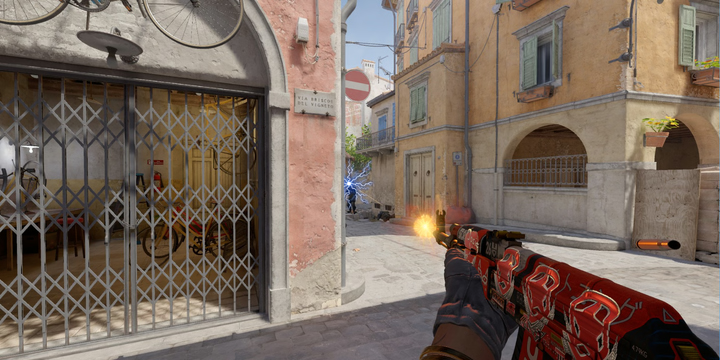
Raw Aim vs Game Sense: What’s the Difference?
Progressive rank advancement in CS2 demands both raw mechanical skill and tactical intelligence—but understanding their distinct roles enables more effective training. Raw aim represents your physical capability: precision flicking, target tracking, and shot accuracy. This develops through repetitive drills in aim trainers and deathmatch servers. Game sense encompasses your strategic understanding: anticipating enemy movements, timing engagements strategically, and knowing when to retreat.
Here’s where players frequently misunderstand: dominating aim training scenarios doesn’t guarantee match performance. Often this indicates excellent mechanics hampered by poor decision-making. Conversely, brilliant tactical plays can fail due to inadequate shooting fundamentals.
Elite competitors synergize both domains. They pre-aim intelligently based on opponent tendencies (game sense) then execute with crisp accuracy (raw aim). While this guide emphasizes aiming techniques, remember that intelligent play amplifies mechanical advantages.
The Science Behind Flicks, Tracking, and Precision
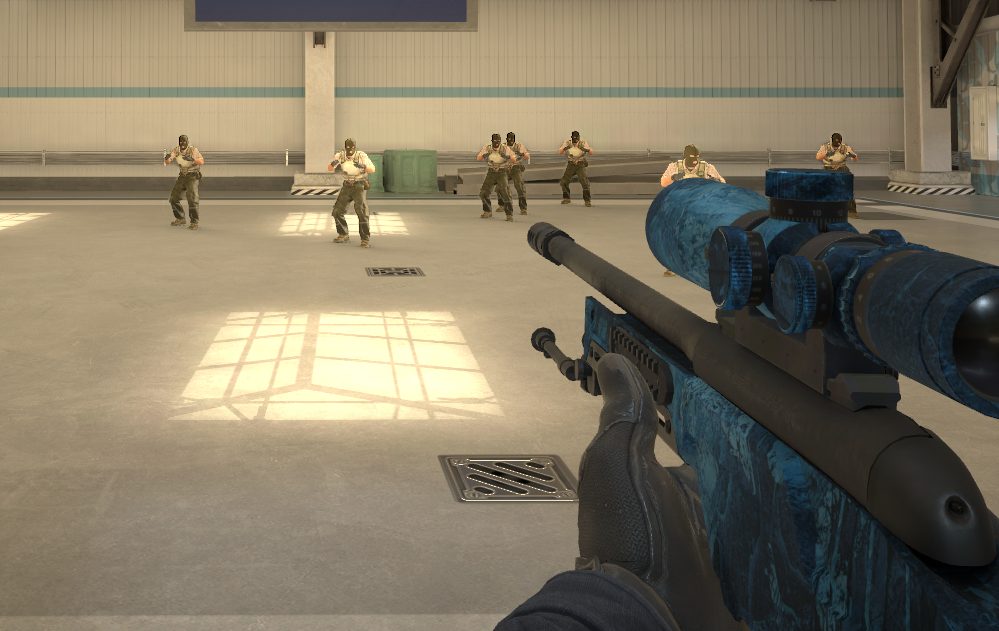
Let’s analyze systematically: every shot in CS2 falls into three distinct aiming categories—flicking, tracking, or precision.
- Flicking involves rapidly snapping your crosshair onto targets and firing immediately. This proves essential against sudden enemy appearances, like opponents peeking from concealment.
- Tracking requires maintaining crosshair position on moving opponents, ideal for extended engagements or strafing battles.
- Precision focuses on pixel-perfect micro-adjustments for headshot elimination, particularly effective when holding narrow angles.
Comprehending these distinctions informs efficient training approaches. For flicks, prioritize quick, accurate movements with minimal overshooting. For tracking, emphasize smooth, controlled motion—this is where DPI and sensitivity configurations matter most. And for precision, concentrate on those minute corrections that determine clutch round outcomes.
Mastering all three aiming types provides comprehensive capability advantages over specialists. Consider aiming skills as an expandable toolkit—more capabilities enable handling diverse combat situations effectively.
The CS2 workshop ecosystem offers exceptional aiming development resources, with several standout maps providing free, highly effective training environments. Integrating these into daily practice routines accelerates skill acquisition dramatically.
Top recommended maps:
- Aim Botz – Training
Arguably the most recognized aim development map in CS2. It provides comprehensive 360-degree training arenas populated with configurable bot targets. Need headshot emphasis? Configured. Flick practice? Simple. You can even modify bot mobility and velocity parameters. - Yprac Aim Arena
Delivers complete training facilities with multiple exercise types including peek training, reaction timing development, and additional modules. The standout feature? Progress tracking capabilities enable visualizing improvement across sessions. - Fast Aim/Reflex Training Map
Ideal for flick and reaction conditioning. Bot waves approach systematically, facilitating rapid reflex-based shooting development. - Training Center 1.5c
Comprehensive training environment featuring recoil control exercises, mobile targets, crosshair placement guidance, and more. Excellent for players across skill spectrums.
Ensure subscription activation through Steam Workshop and implement regular usage. Merely 15–30 minutes daily generates substantial performance improvements.
Third-Party Aim Trainers (Kovaak’s, Aim Lab, etc.)
While CS2’s integrated training maps excel, occasionally specialized environments prove necessary—that’s where external aim trainers like Kovaak’s and Aim Lab provide solutions. These applications employ scientifically-designed methodologies to enhance muscle memory development, reflex sharpening, and target acquisition speed.
Kovaak’s FPS Aim Trainer receives professional endorsement for customization flexibility. You can personalize every parameter: target dimensions, movement velocity, field of view specifications—down to individual pixel adjustments. It also supports CS2 sensitivity configuration imports for training consistency.
Aim Lab, conversely, incorporates gamification elements. It monitors accuracy percentages, reaction timing metrics, target switching velocity, and provides comprehensive analytics post-session. The advantage? Complimentary access with CS2-specific training playlists.
For accelerated aiming development, combine these tools with in-game practice. Utilize Kovaak’s or Aim Lab to isolate raw mechanical development, then transition to CS2 for contextual application. This represents optimal integrated training methodology.
Static Target Shooting
If initiating your CS2 aiming development journey, static target shooting provides the optimal starting point. Why? Because it establishes fundamental accuracy without introducing complex moving elements or advanced mechanics. The objective remains straightforward: develop muscle memory and enhance shot reliability.
Static shooting exercises involve aiming at stationary targets. These might include bots in workshop environments like Aim Botz, or targets in external trainers like Aim Lab. The concept focuses exclusively on crosshair control, ensuring consistent center-mass targeting—every engagement.
Initiate by maintaining stationary positioning and concentrating on headshots. Avoid rushing. Precision outweighs velocity during foundational development. Position crosshair on bot craniums, discharge, reset aim positioning, and repeat. As confidence increases, progressively accelerate tempo.
Key considerations during static target practice:
- Don’t spray—implement single-tap or regulated burst firing.
- Concentrate on crosshair alignment, not flicks (covered subsequently).
- Maintain arm and wrist relaxation to prevent excessive flicking.
- Practice both directional angles to equilibrate muscle memory development.
An effective regimen involves:
100 daily headshots on stationary bots across fourteen days. You’ll observe significant improvement in how naturally your crosshair positions on opponent heads during matches.This training approach appears deceptively elementary yet demonstrates extraordinary effectiveness. Every premier CS2 marksman, from s1mple to NiKo, has invested extensive hours practicing static targeting to construct unshakeable foundations.
Spray Control Drills
Realistically—securing initial projectile impact feels exceptional, but actual match scenarios frequently demand spraying multiple adversaries. That’s where spray control becomes essential. Every CS2 firearm possesses distinctive recoil characteristics, and mastering these patterns can exponentially increase elimination counts, particularly during critical situations.
The most frequently utilized weapons include the AK-47 or M4A4/M4A1-S, and they feature notoriously complex spray behaviors. Without control methodologies, your projectiles distribute randomly. But once you comprehend patterns and train muscle memory, you’ll effectively engage opponents across map distances.
Spray control development methodology:
- Utilize recoil trainer environments like “Recoil Master – Spray Training.”
- Select your armament and discharge complete magazines while observing spray distribution.
- Then, attempt to replicate counter-movements with your pointing device to “regulate” the spray.
- Practice 10 comprehensive sprays consecutively, reset, and repeat.
This extends beyond simple downward mouse traction. Each firearm’s spray exhibits horizontal deviations requiring compensation. For instance, the AK’s projectile distribution veers rightward after several rounds—thus your counter-strafe should incorporate descending-left-right combinations.
Internalize this through muscle memory development. Initial sessions feel uncomfortable, but within several practice periods, you’ll begin observing cleaner multiple eliminations, especially during close-to-medium range engagements.
Advanced technique: spray transfer represents an evolved version of this exercise. Following single target elimination, immediately transition aim to adjacent opponents and continue spray sequences. This proves critical during 1v2 clutch scenarios or bombsite defensive positioning.
Reflex and Flick Drills
Flicking embodies that spectacular, gratifying movement where you instantaneously align crosshair onto enemies and eliminate immediately. This proves particularly valuable for AWP specialists, but also essential for rifle users during tight angle peeking or sudden opponent appearance reactions.
Reflex conditioning sharpens your flick capabilities—and emphasizes velocity and precision synchronization. Here’s a novice-accessible regimen employing the Fast Aim/Reflex Training environment:
- Configure bot velocity to moderate levels.
- Maintain stationary positioning and permit bots to advance toward you from randomized directions.
- Upon visual acquisition, flick and discharge toward cranial regions.
- Implement 5-minute practice intervals with brief recovery periods.
The critical element: avoid overflicking. Flicks should demonstrate rapidity without sacrificing accuracy. Precision maintains priority over speed, particularly during motion development phases.
- Tile Frenzy (for precision flick development)
- Reflex Shot (for accelerated reaction timing)
- 1wall5targets (for target transition practice)
- Implement pre-aiming techniques rather than relying exclusively on raw flicks during site penetration.
- Apply counter-strafing methodologies during jiggle peeking or shoulder deception maneuvers.
- Utilize tracking to maintain angle control and penalize jiggle peek attempts.
- Poor Crosshair Placement
Aiming excessively low or directed toward flooring—this results in torso impacts or missed confrontations. - Moving While Shooting
Counter-strafing omission causes projectile distribution randomness. - Overflicking or Underflicking
Attributable to inadequate mouse control or suboptimal sensitivity configurations. - Peeking Multiple Angles
Competitors expose themselves to 2–3 sightlines simultaneously instead of sequential clearance. - Rushing Duels Without Crosshair Preparation
You investigate an angle with crosshair positioned mid-display—unprepared for engagement. - Changing Sensitivity Too Frequently
Muscle memory degradation occurs when you modify configurations persistently. - No Warm-Up
Entering ranked matches without preparation leads to missed projectiles and confidence deterioration. - Complete 100 static headshot drills daily using Aim Botz or similar training maps
- Practice 10 full spray control sequences with AK-47 or M4 variants
- Integrate 5-minute tracking exercises using Yprac maps or deathmatch servers
- Configure static crosshair using professional codes like NiKo or s1mple configurations
- Execute 15-minute daily warm-up combining static, tracking, and spray control exercises
- Practice 100 daily headshots on stationary bots for foundational accuracy
- Implement spray control drills with pattern recognition and transfer techniques
- Track performance metrics weekly to identify specific improvement areas
- Analyze match replays to identify crosshair placement errors
- Implement 15-minute daily warm-up: 5min static, 5min tracking, 5min movement integration
- Track weekly metrics: K/D ratios, headshot percentages, and reaction time measurements
- Practice angle clearing using ‘slice the pie’ methodology
- Analyze training patterns to identify weaknesses for targeted improvement
- Review match demos to identify crosshair placement errors
If utilizing Kovaak’s or Aim Lab, experiment with these scenarios:
Ensure monitoring of impact percentage and reaction timing metrics. Across extended periods, you should observe both parameters improving with consistent training implementation.
This aiming development category enhances your neural-motor coordination and facilitates ocular-manual synchronization—precisely what tense 1v1 confrontations demand.
Translating Aim Drills into Real Matches
You might demonstrate exceptional capability in aim training environments, but if your match performance doesn’t correlate, a disconnection exists. The resolution? Strategic application of your training methodologies during actual gameplay.
Implementation strategies:
Additionally, circumvent the “overtraining paradox.” Players frequently become excessively mechanical—flicking when unnecessary. During matches, minimalism proves optimal. Intelligent competitors permit opponents to enter their crosshair zones. That represents the core principle of effective crosshair positioning: minimized movement, maximized effectiveness.
During competitive engagements, consciously evaluate:
“Can I pre-aim this position rather than reacting to it?”
Training develops habitual responses. Actual matches test execution of these patterns under stressful conditions. Connect that division through deliberate gameplay.
Common Mistakes Players Make During Matches
Despite comprehensive training, players frequently commit aiming-related errors that cost round victories. Let’s examine the most prevalent:
Circumventing these errors demands conscious corrective action and systematic training. The objective involves making effective aiming habits feel instinctive—where conscious thought becomes unnecessary during domination.
Action Checklist
No reproduction without permission:Tsp Game Club » CS2 Aim Training Drills and Crosshair Placement Routines