
TL;DR
- Entry fraggers must commit without hesitation to create entry opportunities
- Trade kills should occur within 2-3 seconds to maintain offensive pressure
- Stalled pushes require immediate audibles and utility refreshment
- Proper spacing prevents multi-kills while ensuring rapid refrag capability
- Mid-round adjustments separate competent teams from championship contenders
In tactical shooter engagements, the entry fragger position demands the highest level of courage and tactical awareness on any squad. This player spearheads the assault, typically confronting multiple defenders simultaneously while securing the initial elimination or generating sufficient disruption for follow-up players. The psychological pressure on this role cannot be overstated—they face the initial crossfire while creating pathways for teammates.
Exceptional entry fraggers demonstrate these non-negotiable characteristics:
- Executes systematic corner clearing with military precision
- Engages disadvantageous firefights with unwavering resolve
- Generates territorial advantage for supporting players to exploit
- Maintains forward momentum without second-guessing engagements
While mechanical aiming skill provides the foundation, strategic intuition and fearless decision-making separate adequate performers from game-changing entry specialists. Teams cannot afford hesitant or delayed entry attempts—such timidity typically results in catastrophic round losses. When the point player advances, all supporting members must immediately capitalize on created opportunities to prevent isolated eliminations.
Trading eliminations represents arguably the most vital component of successful site executions. This strategic concept extends beyond simple revenge kills to encompass rapid positional exploitation before defenders can reset their formation. The critical window for effective trades measures mere seconds—delayed responses grant opponents precious time to reorganize defensive setups.
Implement these proven trading methodologies to elevate your team’s performance:
- Maintain Optimal Engagement Distance
Establish “refrag proximity”—sufficiently near to immediately respond to teammate deaths, while maintaining enough separation to avoid simultaneous casualties from area-denial weaponry. - Coordinate Angle Clearing in Structured Formations
Systematically approach contested zones in coordinated pairs or trios. When the lead player falls, the secondary attacker should already have crosshair placement anticipating the threat location. - Communicate Elimination Details with Precision
Fallen entry specialists must instantly relay critical intelligence: “Opponent close left!” or “Behind default container!” These precise callouts enable instant retaliation kills. - Integrate Pre-aimed Sightlines and Supporting Utility
Trade participants should pre-aim common defensive positions while utilizing flash devices and incendiary equipment to assist the initial entry.
Strategic momentum compounds through effective trading sequences. Initial eliminations create cascading advantages as defenders experience coordination breakdowns under pressure. Inadequate trade execution risks complete offensive collapse during critical mid-round phases.
Every experienced squad encounters this frustrating scenario. Your team deploys smoke screens, the entry player gets eliminated, and suddenly remaining members hesitate outside the objective area. These momentum breakdowns represent coordination catastrophes that typically result in round losses once tempo advantage disappears.
Implement these recovery protocols when offensive initiatives lose momentum:
- Eliminate Indecision Immediately – If the tactical blueprint specified advancement post-utility deployment, maintain commitment despite casualties. Postponing the assault only enables defensive repositioning.
- Refresh Obscurement and Disorientation Tools – When initial utility expires, deploy secondary equipment to re-establish offensive initiative.
- Reposition and Regroup Strategically – Withdraw several meters, reassess the situation, and contemplate deception maneuvers or site transitions.
- Execute Rapid Tactical Audibles – Your strategic commander (or any assuming leadership) must deliver decisive instructions: “Maintain position for five seconds, then re-engage” or “Execute rapid transition to alternate objective.
Mid-round decision cycles prioritize velocity and certainty. Even suboptimal commands executed with conviction outperform paralyzing indecision during critical engagement windows.
When your team successfully plants the spike, the tactical landscape shifts dramatically. This is where many squads lose hard-earned advantages through poor defensive setups. The post-plant phase requires transitioning from aggressive execution to calculated area denial.
Strategic Crossfire Positioning
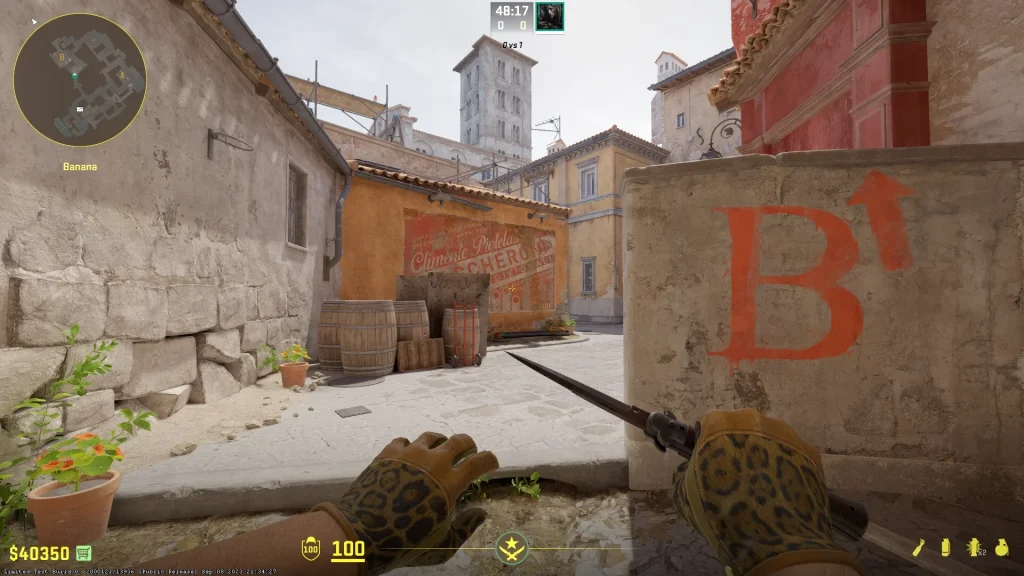
The critical error most teams make post-plant is clustering in predictable positions. Instead, establish overlapping fields of fire where defenders must expose themselves to multiple angles simultaneously. Position teammates where they can cover complementary sightlines—for example, one watching from Heaven while another holds from Default box. This creates situations where eliminating one defender automatically exposes them to your teammate’s crosshair placement.
Strategic crossfire positioning forces opponents into impossible decisions. They either commit to defusing while vulnerable to multiple angles, or attempt to clear positions sequentially, burning precious seconds. The key principle: never allow defenders to isolate your team members in 1v1 engagements.
When you’ve planted for a specific tactical advantage—such as Long plant positions—ensure designated coverage of that critical angle. The worst scenario involves your entire squad expiring within the bombsite without maintaining visual contact on the planted spike.
Utility Timing for Defuse Denial
Post-plant utility management separates elite teams from average performers. You’ve conserved resources through the execution phase—now deploy them systematically to maximize time pressure.
- Incendiary devices and nanoswarms applied directly to the spike create 5-7 second defuse denial windows
- Blinding equipment disorients would-be defusers and supporting peekers
- Smoke canisters obscure visual confirmation and induce hesitation
- Explosive projectiles and fragmentation devices compel defenders to abandon defuse attempts
Temporal resource allocation becomes paramount in this phase. Avoid dumping your entire utility arsenal simultaneously. Instead, implement phased deployment strategies:
- Initial utility deployment: Immediately following plant completion (prevents aggressive retake rushes)
- Secondary wave: When approximately 10-15 seconds remain on the detonation timer
- Final countermeasures: Triggered immediately upon detecting defuse initiation sounds
A single strategically timed incendiary can secure round victory, even when facing numerical disadvantages.
Advanced teams coordinate utility usage based on sound cues rather than visual confirmation. The distinctive defuse sound provides a reliable trigger for coordinated denial efforts.
Power Position Control
Control of elevated and protected positions dramatically increases post-plant success rates. These strategic vantage points include:
- Overhead platforms (providing cross-angle coverage)
- Default container positions (enabling surprise engagements)
- Primary entry control points (dominating approach vectors)
- Rear-site overview locations (maintaining comprehensive situational awareness)
The objective centers on optimizing defensive coverage while preventing defuse completion without compromising your team’s defensive integrity.
Flawless communication represents the foundation of professional-level bombsite execution. During high-intensity pushes, teams frequently descend into communication chaos—overlapping transmissions or providing ambiguous directional information. To achieve consistent round victories, your team communications must demonstrate surgical precision.
Here’s how to elevate your team’s communication framework:
- Implement Precision Geographic Callouts
Every competitive map features standardized location designations—such as “Heaven,” “CT spawn,” or “U-Haul.” Consistently employing these standardized terms ensures universal understanding of threat locations. - Communicate Comprehensive Player Status
Provide detailed situational reports:- “One CT operator with sniper, health reduced 50%”
- “Two defenders overhead platform, one temporarily visually impaired”
- “Close proximity left flank, undamaged health pool”
- Maintain Communication Discipline
Avoid transmitting multiple conflicting instructions simultaneously. Maintain brevity and clarity. Upon elimination, immediately report: elimination location, weapon employed, and inflicted damage percentage. - Establish Urgency Prioritization Protocols
“Rapid flanking maneuver detected” supersedes “Possible auditory cue detection mid-map” in communication priority.
When communication systems operate with precision, your team responds faster and makes superior tactical decisions. You eliminate surprise elements, and your trade execution efficiency increases exponentially.
Team Status Reporting
Beyond basic callouts, implement structured status reporting that provides actionable intelligence. This includes enemy equipment loadouts, health status, positional data, and movement patterns.
Professional teams develop communication shorthand that conveys maximum information with minimal verbal overhead. This efficiency becomes critical during the final seconds when simultaneous actions determine round outcomes.
Trust and Synergy Development
Coordinated site execution becomes impossible without foundational trust between teammates. Hesitation born from uncertainty about support execution destroys coordinated push timing.
Team cohesion and predictive synergy develop through:
- Systematic training regimens – Regular squad practice sessions rehearsing role assignments and strategic executions.
- Collaborative replay analysis – Joint review sessions identifying successful elements and failure points.
- Transparent communication channels – When tactical errors occur (misplaced smokes, premature entries), address them constructively without toxic communication patterns.
Elite team chemistry often serves as the decisive advantage separating top-tier squads. You begin to anticipate teammate actions intuitively, resulting in cleaner trade executions, more effective push coordination, and increased round victory frequency.
Successfully attacking bombsites against economically disadvantaged opponents requires completely different tactical approaches than standard gun rounds. Many teams mistakenly apply identical execution patterns regardless of enemy financial situations, but economic considerations fundamentally alter defensive behavior patterns and engagement preferences.
Eco Round Adaptation
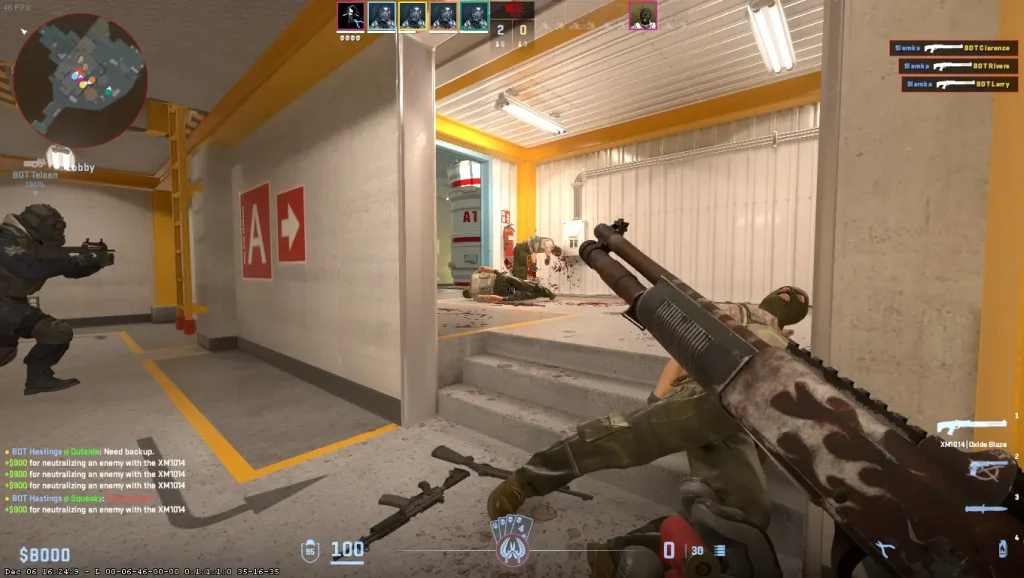
Versus economic disadvantage rounds:
- Anticipate close-quarters defensive clustering or ambush positioning in confined areas.
- Employ incendiary devices and explosive ordnance to eliminate close-angle hiding positions.
- Maintain cohesive advance patterns—avoid providing isolated engagement opportunities.
Force Buy Countermeasures
Against forced purchase situations:
- Expect high-caliber sidearms, close-range specialty weapons, or rapid-firing submachine guns concealed in unconventional angles.
- Tactical equipment assumes critical importance—single tactical errors can result in instant elimination.
- Adopt deliberate pacing strategies compelling opponents to expend their limited utility resources or reveal positional data.
You must dynamically adjust your execution methodology based on anticipated defensive armament and economic constraints. Never assume automatic round victory regardless of apparent financial disparities.
Common Pitfall Avoidance
Economic disadvantage rounds frequently punish teams maintaining poor tactical habits. Critical errors to eliminate:
- Maintain unit cohesion – Fragmenting your assault force creates vulnerable 1v1 scenarios favoring pistol-wielding defenders.
- Never bypass utility deployment – Even against economically constrained opponents, lazy angle clearance invites punishment.
- Avoid excessive risk-taking behavior – Resist pursuit of elimination statistics or fragmentation farming. Adhere to the established tactical plan.
Approach every round with the strategic discipline of full-investment engagements, and you’ll prevent embarrassing defeats that shift match momentum toward your opposition.
Action Checklist
- Practice entry fragging with timed utility coordination drills
- Establish team trade protocols with 2-3 second response standards
- Develop mid-round audible call library for stalled push scenarios
- Establish complementary crossfire positions covering spike from multiple angles
- Time post-plant utility in three phases: immediate denial, mid-timer pressure, and audio-triggered response
- Implement precision callout system with standardized map locations
- Adapt execution style based on enemy economy assessment
No reproduction without permission:Tsp Game Club » Executing a Bombsite: How to Coordinate Pushes