
TL;DR
- Strategic positioning after bomb plant shifts the game from aggression to tactical defense
- Map control through choke points like Inferno’s banana creates impenetrable post-plant setups
- Crossfire coordination between teammates makes retakes nearly impossible
- Utility timing and sound cue awareness separate average from elite players
- Role-specific positioning maximizes each player’s strengths during post-plant defense
When the bomb gets planted in Counter-Strike 2, the entire dynamic of the round transforms instantly. You’re no longer pushing for control—you’re defending territory you’ve already captured. This phase demands a complete mental gear change from aggressive site taking to calculated area denial. The Terrorists’ objective becomes protecting their investment while Counter-Terrorists face mounting pressure with every passing second.
The transition isn’t just about finding cover—it’s about establishing defensive networks that force CTs into unfavorable engagements. Every decision from this point forward carries exponential weight toward the round outcome.
CS2’s upgraded Source 2 engine introduces subtle but critical changes to post-plant play. The more responsive tick system means movement and shooting mechanics feel more precise, while improved lighting and audio create both opportunities and risks. Shadows cast differently, footsteps carry with more clarity, and utility behaves more predictably in specific areas.
Effective post-plant positioning revolves around four core tactical principles:
- Maximize defensive coverage while minimizing exposure angles
- Establish crossfire positions that guarantee trade kills if compromised
- Maintain bomb visibility or audibility from your defensive angle
- Create time pressure through deliberate delay tactics and positioning
- Preserve numerical advantage by avoiding unnecessary individual engagements
Mastering this transition separates consistent performers from occasional highlight makers. It’s what transforms potential round losses into secured victories through intelligent spatial control.
Each CS2 map presents unique post-plant challenges and opportunities based on bombsite layouts, rotation paths, and common retake approaches.
Inferno’s Choke Point Domination
- Banana Control – This isn’t just a position; it’s a strategic asset. Controlling banana post-plant allows you to see the entire B site from long range while using utility to deny multiple entry points simultaneously.
- Coffins Positioning – While common, its effectiveness comes from how you utilize surrounding angles. Combine with dark oranges for unexpected crossfire setups.
- Pit Dominance – Arguably the most influential post-plant position across all competitive maps.
Advanced Inferno Tactics:
- Spread teammates across multiple angles rather than stacking predictable positions
- Coordinate molotov usage to cover both lane and short rush attempts
- Ensure at least one player maintains molotov capability for defuse denial
- Avoid the new box double-stack trap that experienced CTs easily punish
Mirage’s Crossfire Networks
- Palace Advantage – Provides safe bomb visibility when planted specifically for this angle, making it ideal for AWPers managing clutch scenarios.
Overpass’s Layered Defense System
- Bathrooms Control – Perfect for delaying rotations while maintaining long-range engagement capability.
- Bank Positioning – Offers extended sightlines perfect for sniper rifles and calculated utility deployment.
Understanding these map-specific geometries allows you to anticipate enemy movements and counter their retake strategies before they develop.
Your in-game role determines not just how you take sites but how you defend them. Each position requires different post-plant decision-making and positioning strategies.
Lurker Timing Mechanics
The lurker’s value multiplies exponentially during post-plant scenarios. Their positioning isn’t about holding angles—it’s about controlling timing and creating chaos in enemy formations.
- Flank Patience – Premature flank exposure alerts CTs to your position, eliminating the surprise element that makes lurkers effective.
- Rotation Reading – Advanced lurkers don’t just listen for footsteps; they interpret enemy movement patterns and strike when CTs are most vulnerable during retake attempts.
- Information Warfare – Use sound cues and radar intelligence to strike during CT commitment phases.
Entry Fragger Repositioning
Entry players often make critical mistakes by maintaining aggressive positioning after plant completion.
- Strategic Withdrawal – Move from initial entry points to calculated defensive positions that maintain site control.
Pro-Level Execution Tips:
- Establish position before enemy can organize retake
- Reposition after securing kills to maintain unpredictability
- Space Transformation – Shift mentaliy from territory acquisition to territory preservation.
The most effective post-plant AWPers understand they’re area denial specialists, not frag hunters.
Post-plant success hinges on coordinated team movement and communication, not individual heroics.
Crossfire Setup Protocols
Crossfires represent the pinnacle of team-based post-plant defense. When properly executed, they force CTs into mathematically unfavorable engagements regardless of their skill level.
Communication Frameworks
- Position Synchronization – Teammates must position themselves to cover complementary angles while maintaining mutual protection capabilities.
Utility Timing Coordination
- Coordinate smoke and molotov deployment to create overlapping denial zones
- Establish clear utility responsibility assignments before plant execution
- Layer defensive utility usage based on bomb timer progression and enemy behavior patterns.
Advanced Team Protocols:
- Early phase (0-15s): Repositioning and information gathering
- Mid phase (15-30s): Active retake denial through calculated engagement
- Final phase (30-40s): Aggressive pressure application through coordinated peeks and utility deployment.
The most successful teams treat post-plant as a choreographed sequence rather than a chaotic scramble.
Post-plant scenarios generate intense psychological pressure that often causes more round losses than mechanical mistakes.
Pressure Management Techniques
- Breath Control – Professional players utilize controlled breathing techniques to maintain physiological calm during high-stress situations.
Decision Making Under Stress
- Implement systematic decision trees rather than emotional reactions
- Develop pre-planned response protocols for common retake patterns
- Pattern Recognition – Elite players don’t just react to enemy movements; they anticipate patterns based on map flow and previous round behaviors.
Clutch Scenario Execution
- Track enemy utility usage patterns and rotation timing tendencies
The greatest clutch players understand that post-plant success comes from making opponents doubt their own strategies.
Strategic utility deployment transforms post-plant scenarios from coin flips into calculated victories. In Counter-Strike 2 (CS2), proper grenade timing creates impenetrable defensive formations that exploit the 40-second bomb timer as your primary weapon against CT retakes.
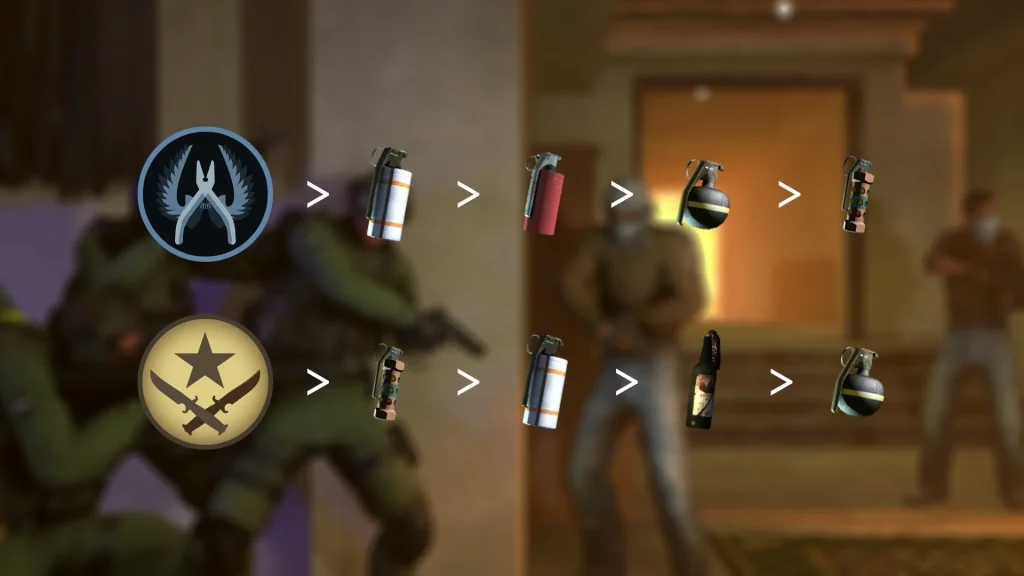
Strategic Flashbang Applications
Flashbangs serve multiple tactical functions beyond simple blinding. When deployed with precision timing, they become psychological weapons that force CTs into predictable patterns.
- Zone clearance: Deploy flashes to force opponents out of entrenched defensive positions, creating vulnerable targets for your crossfire setups.
- Defensive area denial: As counter-terrorists attempt site entry, well-placed flashes create safe peek opportunities while draining precious seconds from their retake window.
- Retake disruption: During clutch recovery situations where you’re reclaiming bombsite control, flash deployment enables safe re-entry and angle reclamation.
- Deception tactics: Execute fake flash throws followed by immediate repositioning—this forces enemies to waste valuable time turning away from expected engagement points.
Molotov and Smoke Deployment Timing
Molotovs represent your most reliable defuse denial tool, while smokes function as visual barriers that isolate CTs from critical information.
- Strategic incendiary placement: Target bomb defuse points particularly during the 25-35 second window—even if CTs secure eliminations, they must still wait for flames to dissipate.
- Layered obstruction: Deploy secondary smokes around the 20-second mark to compound time pressure on approaching defenders.
- Chokepoint saturation: Utilize molotovs to block rotation paths through areas like banana corridors, connector hallways, or elevated heaven positions.
Advanced Utility Timing Framework:
- Early phase (0-15s): Conserve all utility while establishing defensive formations and gathering intelligence on enemy movements.
- Mid-phase deployment (15-30s): This window typically triggers retake initiations—maintain crossfire readiness and deploy delay utility.
- Late phase execution (30-40s): Apply maximum pressure through coordinated grenade combinations that force CTs into blind engagements.
Advanced Delay Tactics for Clock Management
Time manipulation becomes your victory condition in post-plant engagements. The objective shifts from elimination to temporal domination.
Remember this critical distinction: securing frags represents optional objectives while time expiration guarantees round victories regardless of survival status.
CS2’s enhanced audio engine provides unprecedented situational awareness when leveraged correctly. Mastering sound interpretation transforms post-plant defense from reactive guessing into proactive counterplay.
Key Auditory Intelligence Markers:
- Defuse initiation signals: The moment you detect the characteristic defuse sound, execute immediate response protocols—either incendiary deployment on bomb site, flashbang saturation, or tactical peeking when positioning permits.
- Movement pattern detection: Each map features distinctive acoustic signatures. Identify sprinting ascent on staircases, descent from elevated positions, or aquatic movement through water zones.
- Equipment auditory tells: Scoped AWP activation in heaven or silencer attachment procedures can reveal opponent locations.
Critical Audio Cues Recognition
Weapon transitions and optical device engagements generate identifiable audio patterns that experienced players can exploit for positional advantages.
- Headphone imperative: While seemingly obvious, stereo audio implementation enables enemy location triangulation with near-magical precision.
Radar and Deathcam Information
Beyond acoustic intelligence, your radar functions as the primary visual information system during post-plant scenarios. It displays teammate death locations, enemy last known positions, and exposed area vulnerabilities.
Advanced Radar Interpretation Methods:
- Strategic gap identification: Monitor for unobserved territory—if nobody monitors mid-lane, presume flanking maneuvers are in progress.
- Teammate perspective monitoring: Even brief observation of ally viewpoints during spectator mode provides intelligence like “last visual contact jungle” or “dual push banana.”
- Bomb icon surveillance: Track which players maintain visual contact with planted explosive and who lacks observation capability.
- Lurker temporal flanking: Position in unconventional areas behind enemy formations, monitoring rotation routes that site-based teammates cannot secure.
Advanced Lurker Tactics:
- Delayed engagement timing: Avoid premature flank exposure that alerts CTs to your positional advantage.
- Rotation pattern surveillance: If counter-terrorists approach from specific directions, adjust your temporal calculations to ensure strikes occur during enemy distraction or exposure windows.
Adaptive Enemy Counterplay
Every opposing team demonstrates distinctive behavioral patterns. Some assault directly with flashbang support while others employ cautious advancement with utility baiting strategies.
Pattern Recognition Framework:
- Aggressive CT countermeasures: Against forceful retake teams, implement early fallback protocols to avoid initial trade scenarios.
Counter-Strategy Implementation:
- Strategic withdrawal: Permit aggressive pushes then collapse formations using crossfire setups or strategic utility deployment.
- Distance engagement preference: Confrontational teams seek close-quarters combat—deny them preferred engagement ranges through long-angle defensive posturing.
Pro-Level Training Methods
Advancing your post-plant capabilities requires deliberate practice methodologies beyond standard match participation.
Advanced Training Protocols:
- Workshop map specialization: The Yprac map series provides comprehensive post-plant training environments with situational scenario simulations.
Efficient Practice Framework:
- Common scenario simulation: Configure situations where explosive is planted and practice defensive maneuvers from optimized positional locations.
- Progressive bot difficulty implementation: Incrementally increase pressure thresholds by engaging automated opponents that execute rapid retake procedures.
- Custom retake lobby creation: Establish 2v2 or 3v3 practice environments with allies that replicate ranked or competitive post-plant situations.
Professional Demo Analysis Techniques:
- Strategic viewpoint analysis: Concentrate on bombsite control maintenance following explosive deployment.
- Role behavior observation: Examine how lurker specialists, AWP specialists, and support role players conduct themselves during post-plant phases.
Post-plant positioning in Counter-Strike 2 represents the critical transition phase where tactical defense replaces aggressive site execution. After securing the bomb plant, Terrorists must protect their objective while Counter-Terrorists race against the 40-second countdown. Your positioning decisions during this window directly determine round outcomes and match momentum.
Strategic positioning extends beyond simple cover usage—it involves deliberate choices informed by angle control, audio intelligence, timing calculations, and coordinated team play. Each decision about movement, engagement timing, and positioning carries round-winning consequences.
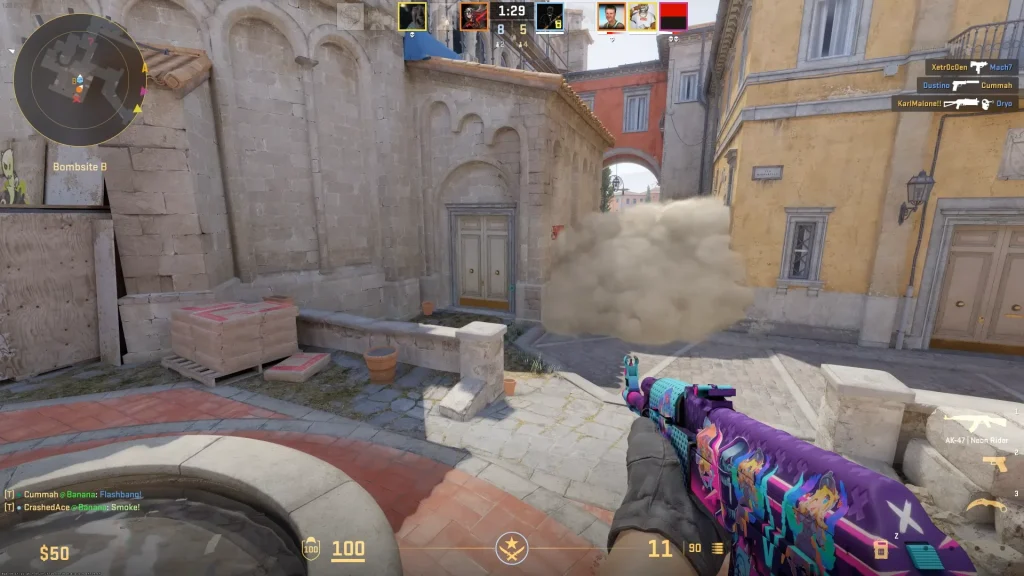
CS2’s enhanced Source 2 engine introduces more responsive movement systems and refined audio physics, making every positioning choice more impactful. Players must account for how their positioning exposes sound cues to new angles or how utility behaves in different site configurations.
Optimal post-plant positioning delivers three critical advantages:
- Maximizes bomb defense success rates through optimal angle selection
- Reduces early elimination risks while maintaining defensive pressure
- Leverages sightline control and cover utilization for maximum effectiveness
- Enables rapid rotation or tactical withdrawal when necessary
Mastering this tactical phase separates competent players from elite competitors. It transforms potential round losses into highlight-reel clutches and establishes match dominance through intelligent preparation.
Effective post-plant execution demands specialized positioning based on team roles and responsibilities. Each position requires distinct tactical approaches and timing considerations.
Lurker Flank Execution
Lurkers transform into round-winning assets during post-plant scenarios. Their strategic value extends beyond initial site execution into decisive flank timing and rotation disruption.
Professional lurkers don’t randomly position themselves—they calculate engagement timing based on sound intelligence, radar monitoring, and opponent movement patterns. Their positioning typically involves unconventional locations behind enemy territory or monitoring flank routes that on-site teammates cannot adequately cover.
Advanced Lurker Positioning Techniques:
- Delay flank commitment: Premature exposure alerts CTs to your presence. Allow them to engage your teammates first, then strike from their exposed positions.
- Monitor rotation patterns: Adjust timing based on CT movement directions to maximize distraction and exposure exploitation.
- Strategic communication: Report enemy movement observations and coordinate strike timing to enable team crossfire setups.
Legendary lurkers like Xyp9x built careers on mastering post-plant positioning from unexpected angles. They understood the fundamental principle: tactical surprise creates decisive advantage.
Entry Fragger Transition Strategy
Entry fraggers complete the initial site penetration—but their post-plant positioning remains critically important. Why? Because they typically establish deep territorial control and can configure powerful defensive angles.
After bomb deployment, entry fraggers should avoid maintaining exposed positions or holding aggressive angles unless part of coordinated team execution.
Entry Fragger Post-Plant Positioning Principles:
- Tactical repositioning: Don’t remain static at your initial engagement location. Transition to fresh angles that can surprise approaching CTs.
Many aggressive players mistakenly believe continuous engagement is necessary. However, in post-plant scenarios, disciplined patience becomes your primary weapon. You’ve established tempo control—now maintain it through intelligent positioning.
AWP Anchor Discipline
AWPers excel in post-plant situations when deployed strategically. Sniper rifles in skilled hands can lockdown long sightlines, deny site entry attempts, and eliminate defusers with precision execution.
CS2’s updated engine introduces additional AWP positioning considerations, particularly regarding close-range engagements and unconventional angles.
AWP Post-Plant Positioning Protocols:
- Maintain distance control: Avoid positioning too close to entry points unless circumstances dictate. Instead, anchor from positions like A ramp on Mirage or B long on Dust2 where you can dominate space control.
Professional AWPers demonstrate that proper execution transforms snipers into immovable defensive forces during post-plant phases. However, this requires calm decision-making, exceptional crosshair placement, and effective team communication. You function as the anchor, not the primary aggressor.
Developing elite post-plant skills requires deliberate practice methodologies beyond standard match participation. CS2 offers comprehensive training infrastructure specifically designed for post-plant scenario development.
Workshop Map Training Systems
Essential Workshop Maps for Post-Plant Mastery:
- Yprac Map Series: Provides detailed post-plant training modules with situational scenarios. These maps enable simulation of bomb plants across various sites and testing defense strategies from multiple positioning angles.
Advanced Training Methodology:
- Scenario Simulation Training: Configure specific post-plant situations and practice defensive positioning from your preferred locations.
Pro-Level Practice Routine:
- Establish common post-plant scenarios relevant to your map pool
- Bot Difficulty Progression: Gradually increase pressure by practicing against bots configured for aggressive retake behavior.
Advanced Self-Analysis Technique: Record your gameplay sessions and review positioning decisions afterward. Did you engage unnecessarily? Were you holding optimal angles? Was your positioning overly exposed? This analytical approach elevates your gameplay to professional standards.
Post-plant practice extends beyond mechanical aim development—it cultivates strategic decision-making capabilities. These specialized training environments allow you to refine decision-making processes in controlled settings before implementing strategies in high-stakes competitive environments.
Professional Demo Analysis Framework
To accelerate post-plant improvement, study the world’s elite competitors. Observing professional demos provides masterclass education in patience development, coordination execution, and positional discipline maintenance.
Effective Demo Study Protocol:
- Site Control Analysis: How do professionals position themselves? Where do they establish holds? How frequently do they engage?
Premium Demo Analysis Resources:
- HLTV.org Professional Database: Access tournament demos from recent competitive events.
Studying professional gameplay resembles observing chess grandmasters. You may not immediately comprehend every strategic move, but over time, you’ll internalize the cognitive processes behind exceptional performance.
Post-plant moments frequently represent the most psychologically intense phases within rounds. The bomb countdown creates tension. Physical reactions intensify. Cardiac rhythm accelerates. This pressure environment causes most positioning errors—not due to skill deficiencies, but psychological pressure responses.
1vX Situation Isolation Tactics
When you become the final surviving team member with the bomb planted, the tactical requirements shift—yet victory opportunities remain achievable. In 1vX scenarios, the objective transforms into fight isolation, timing delay, and tactical outplay.
Clutch Victory Methodology:
- Sequential engagement forcing: Prevent enemy trade execution. Engage individually, reposition strategically, then engage again.
Your objective becomes forcing opponents to hunt phantom threats while the bomb timer advances. Make them question every tactical decision. Well-executed 1vX clutch post-plant scenarios combine psychological warfare with mechanical execution.
Bomb Sound Baiting and Counter-Play Recognition
Fake defuse attempts represent CTs’ primary baiting strategy against final players. Elite clutch performers develop instinctive recognition capabilities distinguishing genuine defuse attempts from tactical baits.
Bait Recognition Framework:
- Excessive time availability: Typically indicates tactical baiting rather than genuine defuse initiation.
You can leverage bomb audio cues as engagement triggers. Wait for auditory confirmation, respond appropriately, and allow CTs to initiate movement first. As the countdown progresses, your positional advantage strengthens.
Professional Execution Pattern Analysis
CS2’s competitive history already features numerous iconic clutch post-plant scenarios demonstrating positioning beauty and timing precision.
Iconic Professional Examples:
- s1mple’s Overpass Triple Clutch: Utilizing utility for rotation deception, maintaining heaven control with AWP precision, and executing defuser elimination immediately before detonation.
These competitive moments transcend flashy highlights—they provide instructional value. You learn how spacing control, utility timing, and patience application transform post-plant scenarios into tactical masterpieces.
Professional Positioning Insights:
- Positioning priority over aim: Professionals frequently achieve victory through superior positioning rather than mechanical out-aiming.
Analyze professional gameplay. Adapt their strategic approaches. Customize them for your competitive matches.
Post-plant positioning in CS2 combines scientific precision, artistic expression, and psychological combat. This phase determines round outcomes and match momentum.
Elite post-plant performers don’t depend solely on mechanical aim—they master timing calculation, information processing, communication coordination, and map knowledge application. They comprehend when aggression becomes necessary, when defensive holding proves optimal, and when allowing the timer to secure victory represents the smartest play.
Therefore, when you hear the bomb plant confirmation, avoid simple hiding. Analyze strategically. Coordinate effectively. Position intelligently. And achieve victory consistently.
Action Checklist
- Establish crossfire positions with teammates covering complementary angles before plant completion
- Coordinate utility responsibility assignments and timing protocols with your team
- Practice role-specific positioning on workshop maps focusing on your specialist role execution
- Establish crossfire formations with teammates covering complementary angles
- Practice utility timing in custom servers using 20-30 second deployment windows
- Analyze professional demos focusing on site control maintenance strategies
- Master sound cue recognition through dedicated headphone training sessions
- Implement delay tactics during 25-35 second bomb timer phase
- Develop enemy pattern recognition through systematic match review procedures
- Establish pre-plant positioning assignments based on bomb location strategy and team role responsibilities
- Practice three phase timer positioning: 0-15s (setup), 15-30s (engagement), 30-40s (pressure application)
- Study one professional demo weekly focusing specifically on post-plant positioning decisions and communication patterns
- Implement crossfire setups on two maps from your competitive pool
- Positioning priority over aim: Professionals frequently achieve victory through superior positioning rather than mechanical out-aiming.
- s1mple’s Overpass Triple Clutch: Utilizing utility for rotation deception, maintaining heaven control with AWP precision, and executing defuser elimination immediately before detonation.
- Excessive time availability: Typically indicates tactical baiting rather than genuine defuse initiation.
- Sequential engagement forcing: Prevent enemy trade execution. Engage individually, reposition strategically, then engage again.
- HLTV.org Professional Database: Access tournament demos from recent competitive events.
- Scenario Simulation Training: Configure specific post-plant situations and practice defensive positioning from your preferred locations.
- Yprac Map Series: Provides detailed post-plant training modules with situational scenarios. These maps enable simulation of bomb plants across various sites and testing defense strategies from multiple positioning angles.
- Maintain distance control: Avoid positioning too close to entry points unless circumstances dictate. Instead, anchor from positions like A ramp on Mirage or B long on Dust2 where you can dominate space control.
Studying professional gameplay recordings provides masterclass education in patience maintenance, coordination execution, and positional discipline application.
Advanced Learning Resources:
- Aggressive CT countermeasures: Against forceful retake teams, implement early fallback protocols to avoid initial trade scenarios.
Professional Sound Utilization Techniques:
CS2’s interface enhancements facilitate information acquisition more effectively than previous iterations—yet success still depends on player diligence.
Integrating acoustic intelligence with radar surveillance creates comprehensive battlefield awareness comparable to possessing sensory capabilities in every map sector.
Elite post-plant execution requires sophisticated adaptation to enemy tactics, disciplined role execution, and systematic practice methodologies.
Role-Specific Positioning
Different in-game responsibilities demand specialized post-plant positioning strategies that maximize individual effectiveness while contributing to collective defensive integrity.
Specialized Positioning Frameworks:
AWP Anchor Strategies
No reproduction without permission:Tsp Game Club » Post-Plant Positioning in CS2