
TL;DR
- Identify true wonderkids through comprehensive scouting beyond just star ratings
- Prioritize players with high determination and professional personalities for faster development
- Implement structured mentoring programs to accelerate attribute growth and mental development
- Balance immediate playing time with long-term development through loan strategies
- Focus on tactical system compatibility rather than just raw potential ability
Mastering Football Manager 2026 begins with identifying elite young talents who can transform your squad’s future. These exceptional prospects offer tremendous value through their rapid development curves and affordable acquisition costs compared to established stars.
The foundation of successful wonderkid recruitment lies in understanding what separates true potential from overhyped prospects. While five-star potential ratings provide initial guidance, savvy managers dig deeper into player personalities, hidden attributes, and development ceilings. The most successful acquisitions combine high potential ability with professional mental attributes that ensure consistent growth.
Strategic budget allocation becomes crucial when building through youth development. Unlike big-money signings, wonderkids allow you to spread resources across multiple positions while building long-term squad depth. This approach proves particularly valuable for clubs operating with financial constraints or those implementing sustainable growth models.
Advanced FM26 Wonderkid Identification Strategies
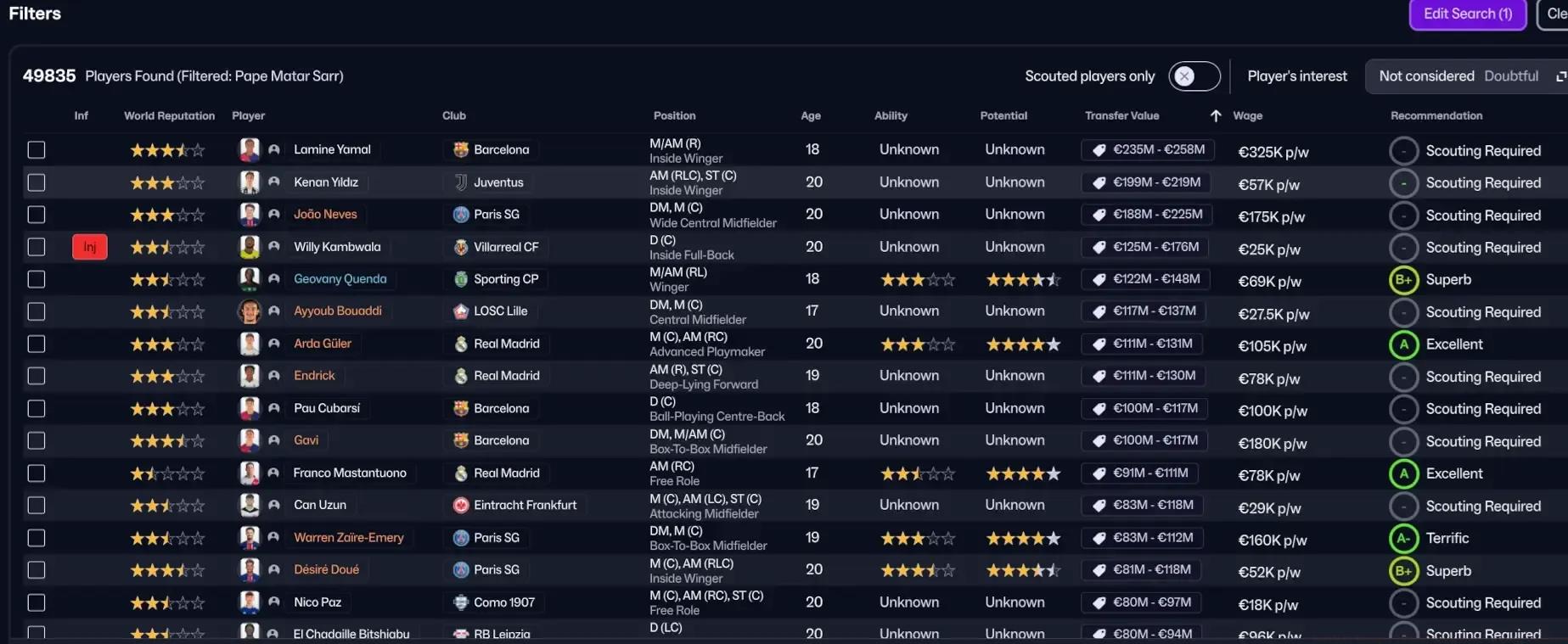
Common Scouting Mistakes to Avoid:
- Over-relying on star ratings without checking scout judgment attributes
- Ignoring personality types that hinder development (low determination, controversial)
- Failing to consider how players fit your specific tactical system
- Neglecting to verify work permit requirements before making offers
Developing elite goalkeeping talent requires identifying prospects with both technical excellence and mental fortitude. Young shot-stoppers represent long-term investments that can secure your defensive line for a decade or more when properly developed.
Modern goalkeeping demands have evolved beyond traditional shot-stopping to include ball-playing capabilities, command of area, and distribution skills. The most promising prospects demonstrate balanced attribute development across these key areas while showing room for growth in specialized training programs.
Elite Goalkeeping Prospects Analysis:
- Rome-Jayden Owusu-Oduro (21, AZ Alkmaar) – Combines Eredivisie experience with exceptional reflexes and commanding presence. His advanced development makes him ready for immediate first-team challenges.
- Tommaso Martinelli (19, Fiorentina) – Italian technical excellence shines through his distribution and positioning. Requires tactical discipline training but offers tremendous upside.
- Mike Penders (19, Chelsea) – Premier League development pathway provides excellent training facilities exposure. Needs consistent playing time to reach full potential.
- Dennis Seimen (19, VfB Stuttgart) – Bundesliga pedigree demonstrates in his aggressive sweeping and modern goalkeeping style. Ideal for high-line defensive systems.
Goalkeeper Development Strategy: Implement specialized training focused on weaknesses while ensuring match experience through cup competitions or strategic loans. Balance attribute development with mental growth through mentoring from experienced professionals.
Building a championship-winning squad starts with a solid defensive foundation, and elite young center-backs provide the cornerstone for long-term success. Modern defending requires complete defenders capable of both traditional defensive duties and ball-playing responsibilities.
The evolution of tactical systems demands center-backs who excel in multiple areas: aerial dominance, tactical intelligence, passing range, and recovery speed. Identifying prospects who balance these attributes while maintaining development potential separates average recruits from future stars.
Key Center-Back Attributes to Prioritize:
- Jumping Reach and Heading – Essential for aerial dominance in both defensive and offensive set pieces
- Positioning and Anticipation – Critical for reading opposition attacks and intercepting dangerous passes
- Passing and Technique – Modern systems require defenders who can initiate attacks from deep positions
- Pace and Acceleration – Recovery speed becomes crucial when playing higher defensive lines
Development Pathway: Young center-backs benefit from partnerships with experienced defenders who can provide mentoring and on-field guidance. Implement focused training on weaker attributes while ensuring they gain experience in various tactical systems to develop tactical flexibility.

The full-back position has undergone dramatic evolution in modern football, transforming from purely defensive roles to crucial attacking outlets. Identifying wonderkids who excel in both phases of the game provides tremendous tactical flexibility and offensive threat.
Successful full-back prospects demonstrate exceptional stamina, crossing ability, defensive positioning, and technical skills. The most valuable recruits offer versatility to operate in various tactical systems, from traditional overlapping roles to inverted full-back positions.
Full-Back Role Specialization:
- Attacking Full-Backs – Prioritize crossing, dribbling, and offensive positioning while maintaining adequate defensive awareness
- Defensive Specialists – Focus on tackling, positioning, and concentration for teams prioritizing defensive solidity
- Complete Full-Backs – Balanced development across all key attributes for maximum tactical flexibility
- Inverted Full-Backs – Technical ability, passing range, and tactical intelligence for central midfield contributions
Training Focus: Develop young full-backs through position-specific training modules that enhance their natural strengths while addressing weaknesses. Implement match preparation that emphasizes their specific role within your tactical system.
Midfield wonderkids represent the heartbeat of your team, controlling tempo, dictating play, and linking defensive and offensive phases. Identifying the right mix of midfield talents ensures tactical balance and long-term control of matches.
The modern midfield requires diverse skill sets across different roles, from deep-lying playmakers who orchestrate from deep positions to box-to-box dynamos who influence both penalty areas. Understanding how these roles complement each other is crucial for building a cohesive midfield unit.
Midfield Role Analysis:
- Deep-Lying Playmakers – Vision, passing range, and composure under pressure to control game tempo
- Box-to-Box Midfielders – Exceptional stamina, work rate, and all-around technical ability for complete midfield coverage
- Defensive Midfield Anchors – Positioning, tackling, and tactical discipline to shield the defense
- Advanced Playmakers – Creativity, technical flair, and goal-scoring threat in final third operations
Development Strategy: Young midfielders benefit from rotational playing time across different midfield roles to develop tactical understanding. Implement mentoring programs with experienced professionals to accelerate mental attribute development and professional habits.

Attacking midfield wonderkids provide the creative spark that transforms organized defenses into scoring opportunities. These technical specialists combine vision, technique, and intelligence to unlock stubborn defensive structures.
The most valuable attacking midfield prospects demonstrate exceptional technical attributes combined with high football intelligence and creativity. Their ability to read defensive setups and exploit spaces makes them crucial for breaking down organized opposition.
Creative Role Specialization:
- Classic Number 10s – Operating between opposition lines with exceptional vision and passing ability
- Advanced Playmakers – Creative hubs who dictate attacking play from advanced midfield positions
- Attacking Midfield Scorers – Goal-threatening midfielders who make late runs into scoring positions
- Creative Wingers – Wide playmakers who cut inside to create from central areas
Development Considerations: Young attacking midfielders require careful management of expectations and playing time. Balance their development between technical training and tactical education to ensure they understand their defensive responsibilities while maximizing creative output.
Wide attacking wonderkids provide the explosive pace and technical ability that stretches defenses and creates scoring opportunities. Modern wide players have evolved beyond traditional wingers to include inverted forwards and complete wide attackers.
Identifying the right type of wide player for your tactical system is crucial for maximizing their impact. Traditional wingers prioritize crossing and pace, while inverted forwards cut inside to shoot and create from central areas.
Wide Player Profiles:
- Traditional Wingers – Exceptional pace, crossing ability, and dribbling skills for beating defenders wide
- Inverted Forwards – Cutting inside onto stronger foot for shooting opportunities and creative passing
- Wide Playmakers – Creative technicians who operate in wide areas but influence central play
- Complete Wide Players – Versatile attackers capable of performing multiple wide roles effectively
Training Optimization: Develop wide players through role-specific training that enhances their natural tendencies. Traditional wingers benefit from crossing and dribbling focus, while inverted forwards require finishing and creative passing development.
Elite striking wonderkids represent the most coveted and expensive young talents in Football Manager 2026. Their ability to consistently convert chances into goals makes them invaluable assets for any ambitious club.
Modern striking roles have diversified beyond traditional center-forwards to include complete forwards, poachers, false nines, and target men. Understanding which profile fits your tactical system ensures maximum return on investment.
Striker Role Analysis:
- Complete Forwards – All-around attacking threats capable of scoring and creating in equal measure
- Advanced Forwards – Mobile strikers who lead the line with pace, movement, and clinical finishing
- Poachers – Penalty box specialists with exceptional anticipation and finishing skills
- Target Men – Physical presences who hold up play and bring teammates into attacking moves
Development Pathway: Young strikers require consistent playing time to develop confidence and finishing ability. Implement finishing drills in training while ensuring they receive service from creative teammates in match situations. Mentoring from experienced strikers accelerates their understanding of movement and positioning.
Successful wonderkid development extends beyond initial acquisition to comprehensive long-term planning and strategic management. Implementing structured development pathways ensures maximum return on your youth investment.
Comprehensive Development Framework:
- Structured Training Programs – Individual training focus tailored to each player’s development needs and positional requirements
- Strategic Loan Management – Carefully selected loan spells that provide appropriate challenge levels and playing time guarantees
- Mentoring Systems – Pairing young talents with experienced professionals to accelerate mental attribute development
- Progressive Playing Time – Gradual introduction to first-team football through cup competitions and substitute appearances
Common Development Mistakes to Avoid:
- Rushing prospects into first-team action before they’re mentally ready
- Neglecting personality compatibility when building mentoring groups
- Failing to adjust training focus as players develop and weaknesses change
- Overlooking the importance of tutoring in developing professional habits
Long-Term Planning: Develop five-year development pathways for key wonderkids, outlining expected progression milestones and first-team integration timelines. Regularly review development progress and adjust strategies based on actual growth rates and performance.
Action Checklist
- Conduct comprehensive scouting beyond star ratings, focusing on personality and hidden attributes
- Establish mentoring groups pairing wonderkids with experienced professionals with strong mental attributes
- Implement individual training programs targeting specific attribute weaknesses for each wonderkid
- Develop strategic loan plans ensuring appropriate challenge levels and guaranteed playing time
- Create progressive integration pathways balancing development needs with first-team requirements
No reproduction without permission:Tsp Game Club » Football Manager 26 Best Wonderkids in Every Position Master FM26 wonderkid recruitment with expert scouting strategies and development tactics for championship success