
TL;DR
- FM26’s new engine makes potential ability development more realistic and crucial for striker success
- Top-tier wonderkids like Camarda and Obi-Martin offer immediate impact plus long-term world-class potential
- Hidden gems from smaller leagues provide exceptional value with proper scouting and development planning
- Strategic training regimens and game time management are essential for maximizing player growth
- Budget-friendly acquisitions can deliver 50x return on investment within five seasons
Identifying and developing elite young strikers represents one of the most rewarding challenges in Football Manager 26. While established veterans command premium transfer fees exceeding £80 million, strategic managers recognize that teenage prospects offer both immediate contributions and exponential long-term value.
The transition to Unity engine technology has fundamentally transformed youth development mechanics in FM26. Potential ability now interacts with training facilities, coaching staff quality, and match experience in more nuanced ways. These sophisticated development algorithms mean proper management can transform a £2 million investment into a £100 million asset within five seasons.
Successful striker development requires understanding three critical phases: initial acclimation period, accelerated growth window, and peak performance optimization. Each phase demands specific training focus, appropriate competition level, and careful management of player morale and development plans.
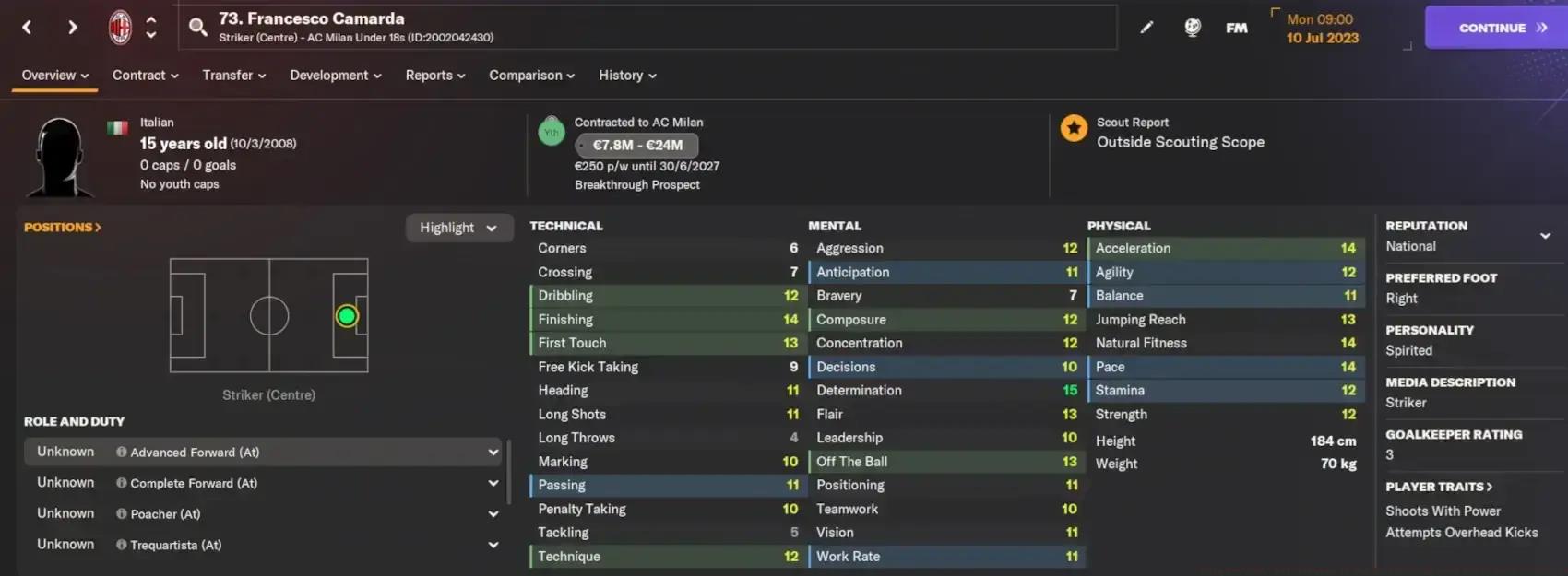
Francesco Camarda stands as the undisputed crown jewel of FM26’s striker prospects. The AC Milan phenomenon shattered Serie A records by debuting at just 15 years and 260 days, demonstrating unprecedented readiness for senior football. His productive loan spell at Lecce showcased not just goal-scoring prowess but remarkable tactical intelligence for his age.
Chido Obi-Martin embodies the modern complete forward with his blend of physical dominance and clinical finishing. The Manchester United prospect gained worldwide attention by netting ten goals in a single U16 match against Liverpool. His Premier League debut at 17 years and 156 days confirmed his readiness for top-level competition, offering managers both immediate impact and long-term superstar potential.
Harry Gray continues his family’s Leeds United legacy as the fifth generation to represent the club. His senior debut at 16 demonstrated exceptional composure under pressure, while his match-winning goal in the U21 National League Cup final revealed a proven big-game mentality that belies his youth.

Amara Diouf brings electrifying pace and positional versatility that modern tactical systems demand. The Fenerbahce attacker made history as Senegal’s youngest international at 15 years and 94 days. His Golden Boot performance at the 2023 U17 Africa Cup of Nations, where he netted five goals, has drawn legitimate comparisons to Sadio Mané in playing style and development trajectory.
Toni Fernandez offers Barcelona’s signature technical excellence combined with tactical flexibility. Becoming the club’s second-youngest debutant this century at 16 years and 173 days (trailing only Lamine Yamal), his left-footed precision and ability to operate effectively both centrally and in wide areas provides managers with multiple tactical options.
Savvy managers understand that elite talent exists beyond Europe’s top five leagues. Systematic scouting of secondary competitions can uncover exceptional value opportunities with significantly lower acquisition costs.
Mason Melia revolutionized Irish football by becoming the League of Ireland’s youngest ever scorer at just 15 years old. His remarkable 20-goal league campaign for St Patrick’s Athletic demonstrated finishing ability beyond his years. The confirmed January 2026 transfer to Tottenham validates his elite potential and provides a clear development pathway template for managers to study.
Patrik Kristal made Estonian football history with his Levadia Tallinn debut at 14 years and 11 months. Now developing at FC Köln, he combines creative playmaking with clinical finishing in a package that represents one of FM26’s best value acquisitions. His €500,000-€1.5 million transfer range offers minimal financial risk with massive potential upside.
Effective secondary league scouting requires focusing on three key metrics: minutes-per-goal ratio against professional opponents, physical attribute development curves, and psychological attributes like determination and professionalism that indicate development potential.
Maximizing wonderkid potential requires sophisticated development strategies beyond simple game time allocation. The FM26 engine places increased importance on specialized training regimens, mentorship programs, and carefully managed exposure to first-team football.
Implement a phased development approach: Begin with 6-12 months in your youth system focusing on physical and technical fundamentals, followed by a carefully selected loan spell at a club guaranteeing starter minutes, then integration into your first-team rotation with specific performance benchmarks for full promotion.
Avoid common development mistakes: Overexposing teenagers to high-pressure situations before they’re mentally ready, neglecting specific attribute training based on player weaknesses, and failing to provide appropriate veteran mentorship can all stunt growth potential. The new personality dynamics in FM26 make player temperament and learning speed crucial development factors.
Training focus should prioritize attributes based on player role: Advanced forwards need acceleration, finishing, and off-the-ball movement; complete forwards require strength, technique, and composure; pressing forwards demand stamina, aggression, and work rate. Customized individual training plans yield 25-40% faster attribute development than generic programs.
Building a world-class strike force doesn’t require £100 million transfer budgets. Strategic managers can identify and acquire future stars through precise timing, negotiation tactics, and understanding contract dynamics.
Target players in the final 12-18 months of their contracts for significant transfer discounts. Utilize the pre-contract approach for players over 23, but for wonderkids, focus on negotiated transfers before they sign professional terms. Eastern European, Scandinavian, and South American leagues offer exceptional value with acquisition costs typically 60-80% lower than comparable talents in major leagues.
Implement a tiered scouting system: Tier 1 (immediate purchases under £5 million), Tier 2 (monitor and approach before contract extensions), and Tier 3 (long-term tracking for future opportunities). This structured approach ensures continuous talent pipeline development while managing budget constraints effectively.
Choosing the right striker wonderkid requires assessing multiple dimensions beyond simple attribute ratings. Team tactical system compatibility, personality fit with squad dynamics, and development pathway feasibility all determine long-term success.
Evaluate how each prospect’s playing style integrates with your tactical philosophy. Possession-based systems benefit from technically gifted forwards like Fernandez, while counter-attacking setups thrive with pacey threats like Diouf. Consider your existing squad structure—adding a similar profile to your current star striker creates unnecessary competition, while complementary skillsets enable tactical flexibility.
Ultimately, successful wonderkid investment balances immediate needs with long-term vision. The most expensive option isn’t necessarily the best fit, while overlooked gems often provide the greatest satisfaction and performance return when developed properly within your tactical system.
Action Checklist
- Scout secondary leagues for players with professional minutes before age 16
- Implement phased development plan: youth training → controlled loan → first-team integration
- Create customized attribute training focused on role-specific weaknesses
- Negotiate acquisitions during final contract year for 40-60% cost reduction
- Assign veteran mentors to develop determination, professionalism, and pressure handling
No reproduction without permission:Tsp Game Club » Best FM26 Strikers to Sign: Young Striker Wonderkids Master Football Manager 26's top striker wonderkids with expert scouting strategies and development tactics