
TL;DR
- Master the new Recruitment Hub interface for centralized talent discovery and squad planning
- Prioritize scouts with Outstanding JPA/JPP ratings and comprehensive regional knowledge
- Implement targeted assignments that align with your tactical system and budget constraints
- Avoid common mistakes like over-scouting regions and ignoring staff specialization
- Build sustainable scouting networks that adapt to your club’s evolving needs
Constructing a dominant scouting infrastructure represents the cornerstone of sustainable achievement in Football Manager 26. Whether steering a financial powerhouse or operating with limited resources, elite scouts can revolutionize your acquisition strategy and identify emerging talent months before competitors become aware.
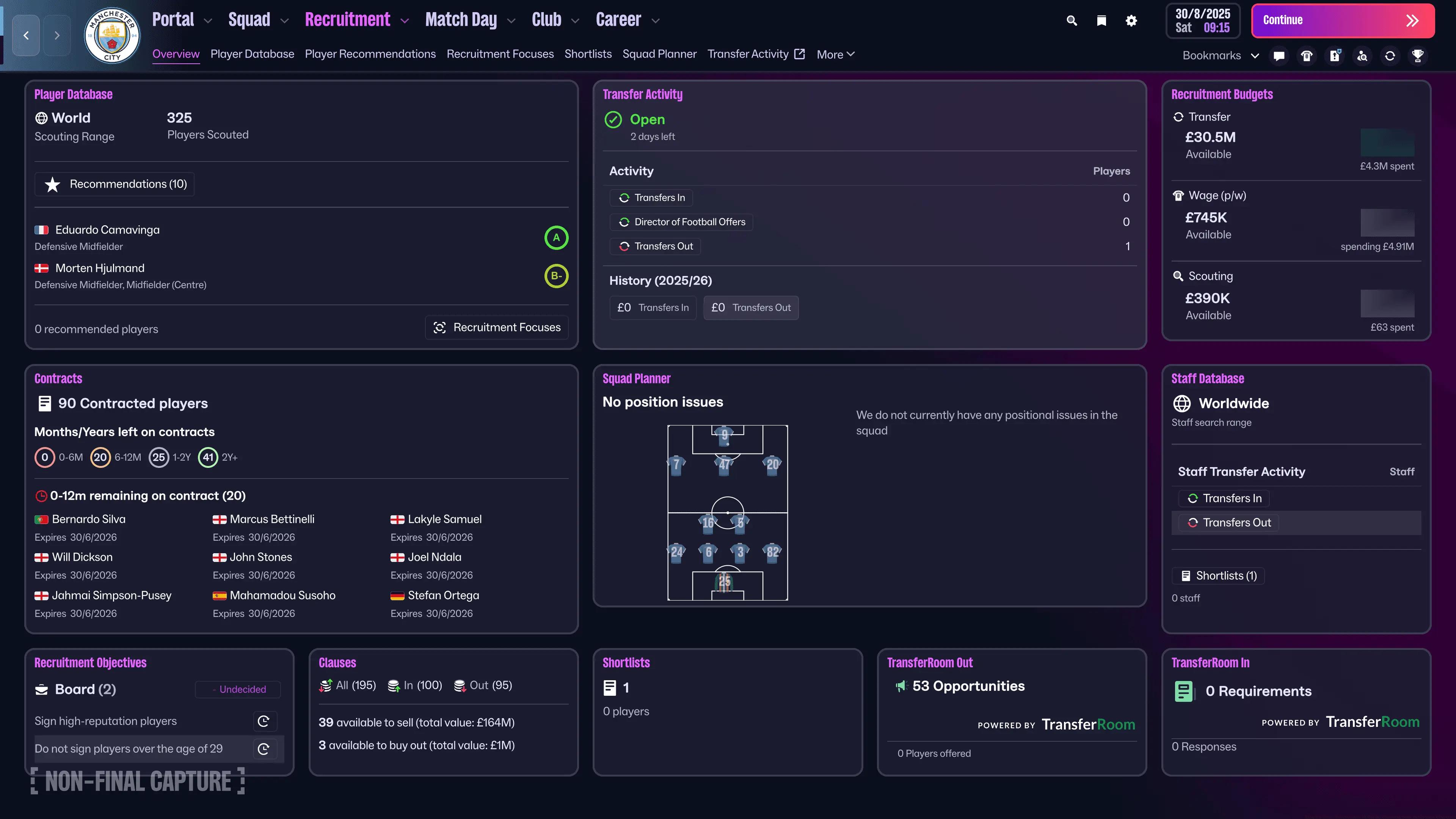
The revolutionary Recruitment Hub has fundamentally transformed talent identification processes. This consolidated platform merges transfer operations, squad development planning, and scouting activities into a single comprehensive dashboard. You’ll encounter Recruitment Objectives synchronized with board requirements, Contract tiles emphasizing players approaching free agency, and the integrated Squad Planner that pinpoints roster deficiencies requiring attention.
However, what distinguishes top-tier managers from average performers is recognizing that scouting transcends mere player discovery. It involves establishing systematic methodologies that support your tactical philosophy while optimizing every financial resource at your disposal. Successful clubs build scouting networks that consistently deliver players fitting their specific playing style and financial parameters.
In FM26’s revamped attribute system, scout capabilities utilize descriptive terminology instead of numerical values. Target Outstanding evaluations in these fundamental competency areas:
Judging Player Ability (JPA) governs how precisely your scout assesses current performance levels. This critical skill enables accurate determination of where potential acquisitions fit within your squad’s competitive hierarchy, preventing expensive misjudgments of ready-now talent.
Judging Player Potential (JPP) demonstrates a scout’s proficiency in forecasting future development trajectories. This becomes indispensable when committing resources to younger prospects who may require multiple seasons to achieve their maximum capabilities. Scouts with exceptional JPP can identify players whose value may increase tenfold within two to three seasons.
Scouting Knowledge reflects regional expertise and connections. A scout possessing comprehensive understanding of South American football markets will uncover promising talents significantly faster than colleagues unfamiliar with the territory. This knowledge directly impacts both discovery speed and assessment accuracy within specific geographical regions.
Practical Tip: Combine scouts with complementary knowledge regions to create comprehensive global coverage. Pair a South American specialist with a European expert to maximize discovery efficiency across multiple continents simultaneously.
Access Recruitment > Scouting > Assignments to establish targeted scouting operations. Here’s how to optimize your network’s productivity and effectiveness:
Configure ongoing global assignments for financially robust clubs with expansive budgets. This approach guarantees continuous talent identification without requiring constant manual intervention, allowing your staff to work autonomously while you focus on match preparation and tactical development.
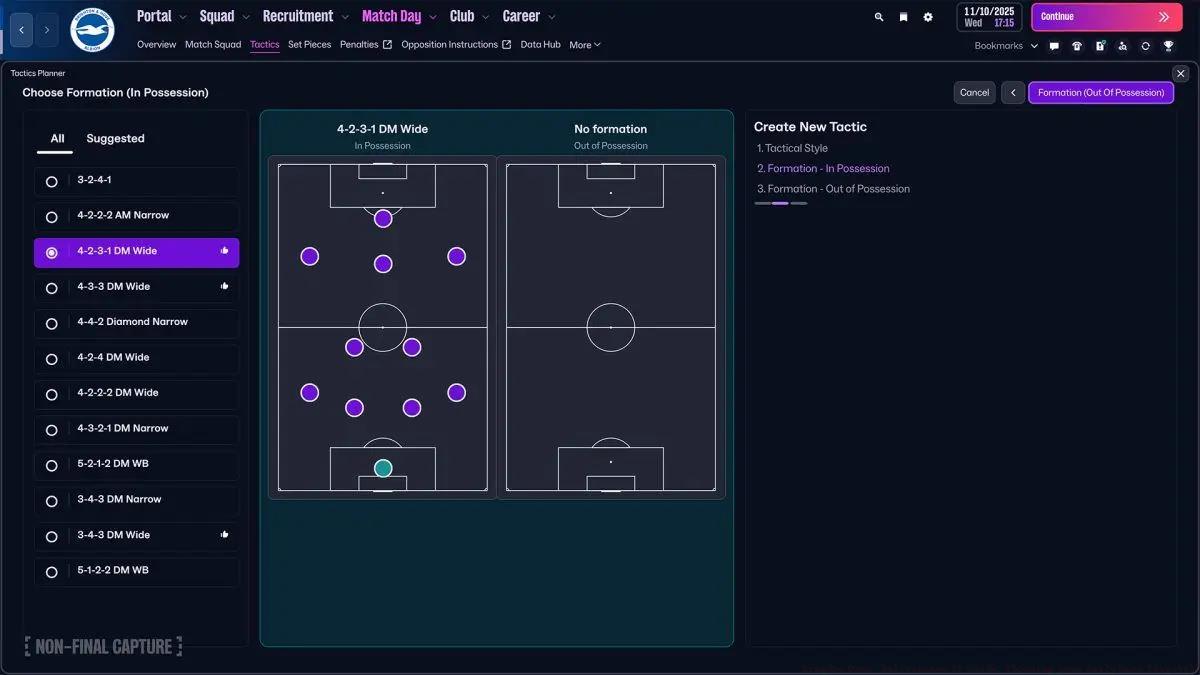
Advanced Strategy: Create specialized assignments targeting specific player profiles that complement your tactical system. If employing a high-pressing strategy, prioritize scouts searching for players with exceptional stamina, work rate, and aggression attributes. This profile-specific approach yields more relevant recommendations than generic talent searches.
For clubs operating with constrained resources, implement targeted short-term assignments in regions where your scouts possess established knowledge networks. A three-month focused assignment in a scout’s home nation typically produces higher-quality reports than a twelve-month global search conducted by an unfamiliar scout.
Budget Allocation Tip: Allocate approximately 60% of your scouting budget to ongoing assignments in key regions, 25% to specific player profile searches, and retain 15% for opportunistic scouting of unexpected talent discoveries or pre-contract opportunities.
Identifying and acquiring top scouting talent requires strategic approach similar to player recruitment. Target scouts with minimum Outstanding ratings in both JPA and JPP, complemented by extensive knowledge in multiple high-yield regions like Brazil, Argentina, France, or Germany.
Contract Negotiation Strategy: Offer performance-based contracts with appearance bonuses tied to successful player discoveries. This incentivizes scouts to prioritize quality over quantity in their reporting and aligns their compensation with your club’s recruitment success.
Network Development Tip: Gradually expand your scouting network by hiring specialists for underrepresented regions. Instead of immediately pursuing global coverage, focus on establishing dominance in 2-3 key markets before expanding to secondary regions. This phased approach prevents budget overextension while building specialized expertise.
Consider recruiting former players with extensive professional networks—they often possess invaluable connections and intuitive understanding of player development trajectories that traditional scouts might overlook.
Beyond basic assignment setup, elite managers implement sophisticated scouting methodologies that leverage data analysis and tactical alignment. Develop a player profile matrix that scores potential signings across multiple dimensions including technical ability, mental attributes, physical characteristics, and personality traits.
Hidden Gem Discovery: Focus scouting efforts on nations with undervalued talent markets like Serbia, Croatia, Uruguay, or Colombia. These regions frequently produce players with technical quality exceeding their transfer valuation, providing exceptional value for budget-conscious clubs.
Integrate youth development planning with senior squad scouting by creating assignments specifically targeting players aged 16-19 who fit your club’s long-term tactical vision. This proactive approach ensures a continuous pipeline of homegrown talent while reducing future transfer expenditures.
Data Cross-Reference Technique: Combine scout reports with statistical analysis using the built-in data hub. Players receiving strong recommendations from both traditional scouting and statistical metrics typically represent safer investments than those identified through单一 methodology.
Maximizing scouting network productivity requires strategic workload management and communication protocols. Implement a tiered reporting system where junior scouts handle initial identification while senior scouts conduct final assessments of priority targets.
Workload Balance: Monitor scout assignment loads in the staff workload screen—overworked scouts produce lower-quality reports and may miss crucial details about potential signings. Ideally, limit each scout to 2-3 active assignments simultaneously.
Establish standardized report templates that emphasize the attributes most critical to your tactical system. This ensures consistency across your scouting network and facilitates direct comparison between multiple potential signings for the same position.
Communication Protocol: Schedule monthly scouting meetings to review ongoing assignments, assess report quality, and adjust focus based on emerging squad needs or tactical evolution. These regular checkpoints prevent wasted resources on irrelevant player profiles.
Financial constraints needn’t prevent effective scouting—they simply require more strategic resource allocation. Prioritize domestic scouting initially, as familiar territories typically yield faster, more accurate assessments with lower travel expenses.
Leverage the free agent market by creating assignments specifically targeting players with expiring contracts. These assignments typically require fewer scouting resources while potentially uncovering valuable acquisitions without transfer fees.
Loan Market Exploitation: Use short-term loan assignments to assess players before committing permanent transfer funds. A three-month loan assignment provides live performance data that surpasses traditional scouting reports in reliability and tactical fit assessment.
Implement part-time scouts in secondary regions rather than full-time employees. This reduces fixed costs while maintaining basic coverage in potentially valuable talent markets that don’t justify full-time scouting presence.
Many managers undermine their scouting effectiveness through preventable errors. Avoid over-scouting familiar regions—while comfort with domestic markets is valuable, over-concentration limits discovery of potentially superior international talent.
Attribute Weighting Errors: Don’t overvalue visible technical attributes while undervaluing mental characteristics like determination, professionalism, and adaptability. These hidden attributes significantly impact development trajectory and squad integration success.
Budget Mismanagement: Resist allocating excessive resources to scouting superstar players beyond your realistic acquisition capacity. Focus instead on identifying attainable targets who represent genuine improvements to your current squad.
Staff Specialization Neglect: Avoid assigning scouts to regions where they lack knowledge networks. The temporary cost savings of using available staff rather than hiring specialists typically results in inferior player recommendations and missed opportunities.
For comprehensive team management strategies beyond scouting, consult our Complete Guide to overall club development.
Sustainable scouting excellence requires evolving strategies that adapt to your club’s development stage and competitive ambitions. Establish a progressive scouting framework that expands geographically as your club’s reputation and financial resources grow.
Develop succession planning protocols for both playing squad and scouting staff. Identify and nurture junior scouts with potential to assume senior roles, ensuring institutional knowledge retention despite staff turnover.
Create adaptable assignment structures that can quickly pivot based on emerging tactical needs, unexpected player departures, or board directive changes. Flexible scouting networks outperform rigid systems in dynamic football environments.
Integrate your scouting findings with broader club strategy by regularly reviewing how discovered players align with your tactical evolution, financial planning, and youth development objectives. This holistic approach ensures scouting activities directly contribute to long-term club success.
For specialized guidance on optimizing individual player roles within your tactical system, explore our Class Guide for position-specific development strategies.
Action Checklist
- Analyze current squad using Squad Planner to identify priority recruitment needs
- Audit existing scouting staff attributes and regional knowledge coverage
- Establish 2-3 ongoing assignments aligned with tactical requirements
- Create player profile matrix defining your ideal signing characteristics
- Implement monthly scouting review meetings to adjust assignments
- For weapon-specific tactical considerations, reference our Weapons Unlock guide for complementary strategies
No reproduction without permission:Tsp Game Club » Best Football Manager 26 Scouts: How to Set Up Scouting Network Master Football Manager 26 scouting with expert strategies, advanced tactics, and budget optimization techniques