
TL;DR
- Gaming chairs offer aggressive styling and extensive recline options ideal for mixed gaming/work use
- Office chairs provide sophisticated integrated ergonomic systems optimized for productivity tasks
- Material choices significantly impact temperature regulation and long-term comfort
- Adjustability features differ dramatically between chair types and use cases
- Proper spinal support and posture maintenance are critical for long-term health
When navigating the modern seating landscape, you’ll encounter two dominant archetypes: the flamboyant gaming chair and the subdued office chair. While both aim to deliver comfort during extended desk sessions, the fundamental design approaches diverge significantly beyond mere visual presentation. The core distinction in the gaming chair versus office chair discussion centers on ergonomic implementation strategies. Ergonomics represents the scientific discipline of adapting products to human anatomical needs to minimize physical stress and enhance sustained comfort.
Understanding the Design Philosophy
Let’s address the most apparent differentiator first: gaming chairs present a radically different visual language compared to conventional office seating, and this divergence stems from deliberate design choices. Gaming chair producers draw inspiration from high-performance automotive seating, accounting for the elevated backrests, prominent lateral bolsters, and frequently vibrant color palettes. Consider them the supercars of the seating universe – assertive, visually striking, and crafted to command attention.
Office chairs, conversely, embrace a more restrained methodology. Their architectural approach emphasizes seamless integration into corporate environments while concentrating on biomechanical support systems. It’s analogous to contrasting a refined executive sedan with a track-focused race car – both transport you effectively, but they communicate vastly different narratives during the journey.
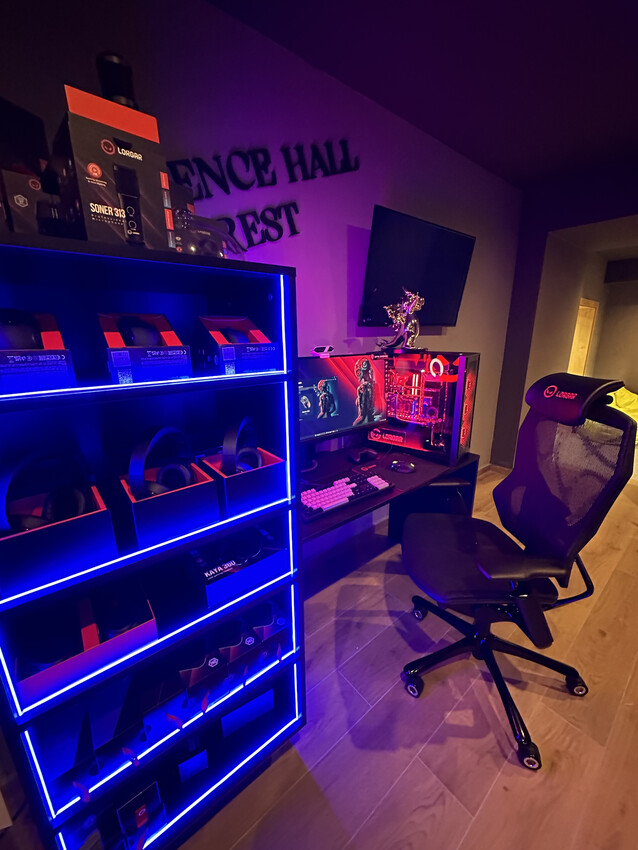
Can gaming chairs effectively serve office work requirements? This represents one of the most frequent inquiries, and the response proves more nuanced than anticipated. Gaming chairs demonstrate exceptional capability in accommodating diverse seated postures, making them perfect for extended gaming marathons where you might transition between attentive upright positioning and laid-back reclining. Numerous models incorporate adjustable backrest angles reaching 180 degrees – excellent for brief intermissions between competitive sessions.
Office chairs adopt an alternative comfort strategy. They’re specifically engineered for task-oriented work, highlighting correct spinal alignment during keyboard operation and computer interaction. The support mechanisms they deliver tend toward subtlety yet frequently incorporate more advanced engineering, with integrated lumbar technologies that respond to your positional changes throughout the workday.
Breaking Down the Key Features
This exhaustive evaluation of gaming chairs versus office chairs scrutinizes every dimension—from ergonomic architecture and material composition to industry patterns and holistic comfort—to assist your determination regarding whether to purchase a gaming chair or office chair matching your specific requirements.
Materials and Construction
Office chairs generally utilize aluminum or premium reinforced polymer bases, substances selected for their equilibrium of structural integrity and mass efficiency. High-end versions frequently incorporate die-cast aluminum foundations supporting capacities up to 400 pounds, featuring a central post containing a class 4 pneumatic lift for accurate elevation modification.
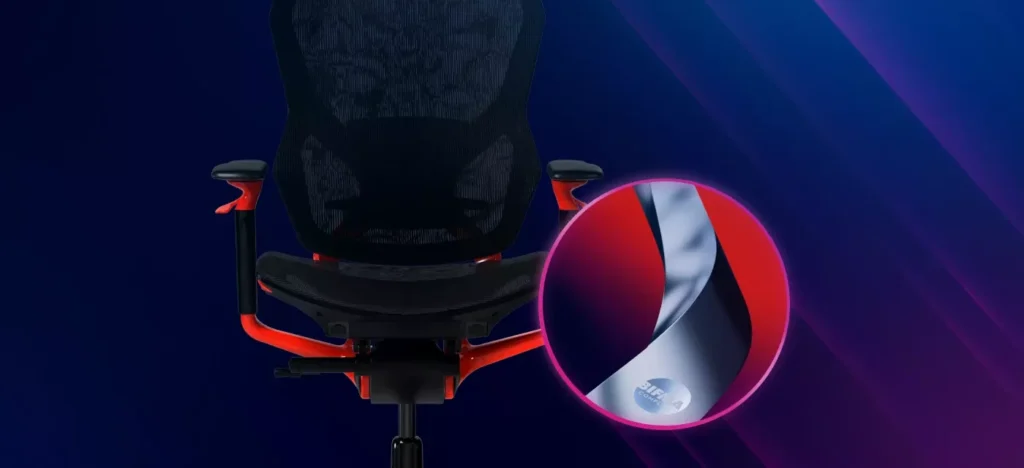
Covering material selections profoundly influence both immediate comfort and product longevity. Office chairs commonly provide mesh, textile, or leather alternatives, each delivering distinct advantages for thermal management and anatomical support.
- Mesh: Delivers exceptional air circulation and adapts to bodily contours, perfect for warmer climates
- Fabric: Presents a compromise between breathability and cushioning, with differing quality tiers of resilience
- Leather/Synthetic Leather: Conveys upscale appearance but may encounter thermal regulation difficulties
Gaming chairs customarily showcase polyurethane leather or fabric coverings, with select premium editions providing authentic leather. The cushioning generally comprises high-density foam, with density measurements spanning from 45 to 60 kg/m³. This generates a more rigid seating sensation that preserves its configuration over extended periods but could feel excessively firm for certain individuals.
Seat Cushions
The seating surface design fundamentally determines your comfort levels during prolonged desk occupation. Gaming chairs typically present a bucket-style seat with dense cushioning and elevated perimeter edges – excellent for maintaining centered positioning during high-intensity gaming intervals but possibly confining for those preferring frequent posture variations.
Office chairs ordinarily offer a more level, conventional seating surface design with assorted padding intensities. The forward edge customarily incorporates what industry professionals term a “waterfall” contour, which assists in diminishing pressure on posterior thigh regions during extended sitting periods. It’s a nuanced distinction you may not perceive instantly but will value following multiple hours.
Lumbar Support Systems
Office chairs have trailblazed multiple methodologies for lumbar reinforcement. Premium models frequently incorporate dynamic lumbar technologies that respond to your motion, employing either mechanical spring systems or flexible compounds. Certain designs integrate modifiable depth and elevation controls, enabling users to concentrate on particular zones of their lower spinal region.
Gaming chairs customarily depend on external cushioning for lumbar assistance. While these provide extensive customization – you can reposition them vertically, remove them completely – they don’t deliver the equivalent type of responsive support available in high-end office chairs. Nevertheless, they do supply enhanced personalization possibilities for consumers who understand precisely where they require reinforcement.
Neck and Head Support
Both seating categories address cranial and cervical support through different approaches. Office chairs often include adjustable headrests that can be calibrated for height and inclination. Select premium versions contain articulating headrests that travel with you as you recline or lean backward.
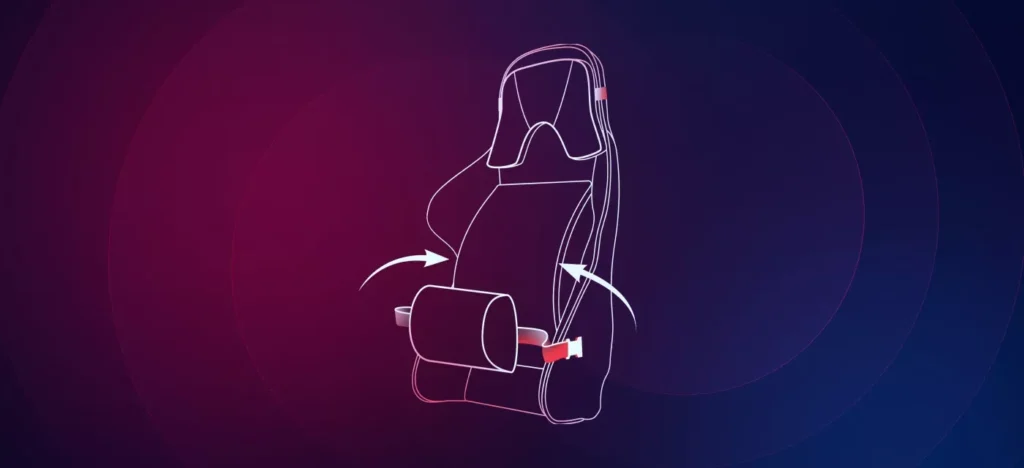
Gaming chairs typically unify the headrest within their tall-back architecture, supplemented by a detachable cervical pillow. This methodology supplies consistent support but might not accommodate all physiques equally effectively. The capacity to detach or modify the neck cushion does present certain customization opportunities.
Height Adjustment and Base Stability
Both chair classifications employ pneumatic lift cylinders for elevation modification, but their execution varies. Office chairs generally emphasize fluid, exact adjustments within a conventional span of 40-55 cm from flooring to seating surface. Gaming chairs frequently provide marginally greater maximum elevations to suit taller individuals or varied workstation arrangements.
Foundation steadiness proves vital for both varieties but is accomplished through different means:
- Office chairs customarily utilize five-spoke bases with 50 mm rollers
- Gaming chairs often showcase more substantial foundations with 60-75 mm casters for improved weight dispersion
Recline Options
Contemporary studies indicate that seated positioning at a mild recline (approximately 135 degrees) might prove superior for vertebral health compared to the traditional 90-degree upright posture. Gaming chairs perform exceptionally well in this aspect, typically presenting more comprehensive reclining alternatives that benefit users during intermissions. However, for active occupational and gaming periods, preserving correct spinal alignment stays critically important.
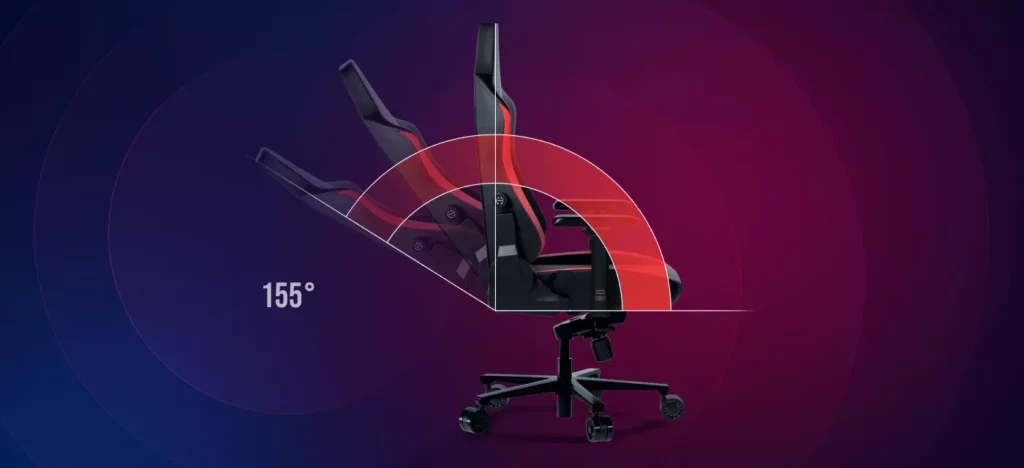
The tilt mechanism constitutes one of the most substantial operational distinctions between these chair classifications. Office chairs typically incorporate:
- Synchronized tilt: The seating surface and backrest travel in a predetermined proportion
- Weight-responsive recline: Resistance modifies automatically according to user mass
- Multi-angle tilt lock: Permits securing at various positions
Gaming chairs ordinarily provide:
- Independent backrest recline: Frequently up to 180 degrees
- Tilt tension modification: Manual regulation over recline resistance
- Rock and secure functionality: Capacity to sway freely or fix in place
Armrests
Don’t undervalue the significance of proper armrest engineering – they perform an essential function in decreasing shoulder and cervical tension. Gaming chairs frequently include what’s designated as 3D or 4D armrests, meaning they can modify in multiple orientations:
- Height modification
- Width adjustment
- Depth adjustment
- Pivot modification
This adaptability can prove excellent for discovering the ideal configuration for different undertakings, from gaming to data entry.
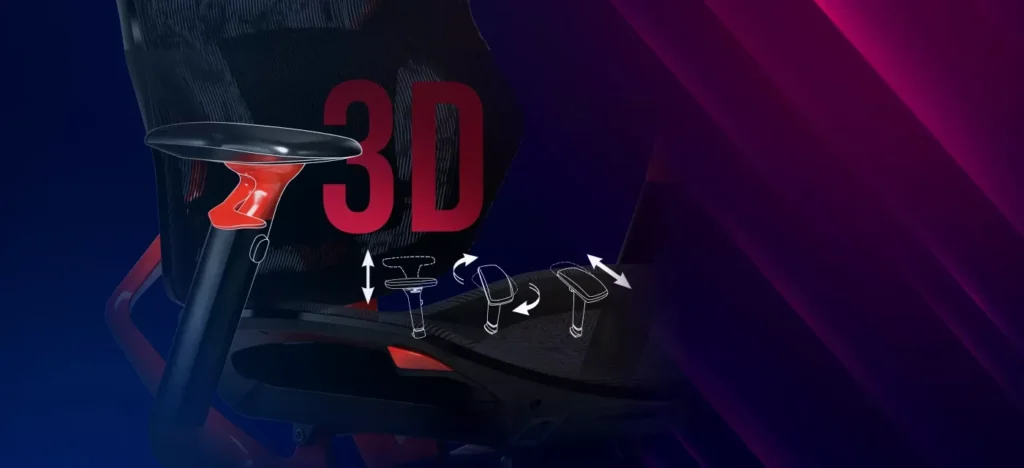
Office chairs typically present more restrained armrest modifications, concentrating on elevation and occasionally width. While they might not appear as spectacular, they’re designed to supply stable assistance for keyboard operation and mouse manipulation – the principal activities in most corporate configurations.
Performance and Daily Use
When evaluating whether gaming chairs suit office work demands, numerous elements enter consideration. Thermal regulation proves critical for prolonged comfort. Mesh office chairs perform exceptionally in airflow management, while gaming chairs featuring denser padding and reduced breathability materials might become warm during extended utilization. Certain producers tackle this through perforated substances or cooling gel-enhanced foam.
The caliber of manufacturing becomes evident in everyday application through acoustic levels and operational smoothness. Premium office chairs customarily incorporate noiseless casters and fluid adjustment technologies. Gaming chairs could generate increased noise owing to their metallic construction and multiple control points. However, they frequently excel in delivering reinforcement for assorted seated postures and expanded reclining alternatives.
Noise and Movement
Manufacturing excellence manifests in routine operation through acoustic characteristics and mechanism fluidity. High-caliber office chairs typically include silent casters featuring rubberized coating, smooth pneumatic lift performance, quiet tilt mechanisms.
Gaming chairs might demonstrate greater susceptibility to noise because of metal framework construction, numerous adjustment interfaces and expanded motion ranges.
Advanced Features and Innovation
The gaming chair marketplace has launched several innovative characteristics targeting enhancement of user experience. Certain models now integrate built-in thermal management systems, massage capabilities, tactile feedback for gaming immersion, and integrated audio systems. While these attributes can improve the gaming encounter, they customarily aren’t essential for daily application and can substantially influence the cost structure.
Office chairs, in comparison, concentrate their innovation on ergonomic progressions. Features like synchronized tilt mechanisms, adaptive lumbar reinforcement, and precision modifications for various body types demonstrate this emphasis on functional enhancement over supplementary characteristics.
The Price Factor
Regarding cost considerations, both gaming chairs and office chairs present selections across the economic spectrum. Budget-friendly gaming chairs commence approximately at $100, with premium editions ascending considerably beyond $500. Office chairs follow a comparable pricing structure, though high-end ergonomic office chairs can readily surpass $1,000. Here’s the intriguing aspect: while you can locate quality alternatives in both classifications, gaming chairs frequently supply more attributes at reduced price brackets. However, office chairs tend to allocate more resources toward ergonomic innovation and construction excellence at the upper tier.
Economy models (approximately $100-200) in both categories implement specific concessions. Office chairs emphasize fundamental ergonomic characteristics while gaming chairs prioritize aesthetics over premium materials. The intermediate market ($200-500) presents possibly the optimal value, with office chairs introducing sophisticated ergonomic attributes and gaming chairs advancing in material quality and customization capabilities.
The luxury segment (above $500) discloses the most pronounced contrasts. Office chairs at this pricing level showcase advanced ergonomic systems targeting sustained comfort and work efficiency. Gaming chairs provide improved materials and additional characteristics that serve the gaming experience, frequently integrating distinctive accessory options and assertive design components that attract committed gamers.
Making Your Decision
Here’s when you should contemplate a gaming chair:
- You distribute your schedule between gaming and occupational tasks
- You appreciate comprehensive reclining alternatives
- You desire assertive, expressive styling
- You value external, modifiable support cushions
- You’re seeking gaming-specific attributes
And when an office chair proves more logical:
- Your principal concentration involves productivity-oriented work
- You favor restrained, professional visual appeal
- You want advanced, integrated support technologies
- You prioritize classical ergonomic design principles
- You require optimal positioning for keyboard operation
Supplementary elements to contemplate:
- Ambient temperature and ventilation requirements
- Workstation elevation and configuration arrangement
- Primary undertakings (gaming, occupational duties, or combined application)
- Accessible space and mobility necessities
The Bottom Line
Do gaming chairs justify their cost? Similar to numerous life decisions, it hinges on your particular circumstances. Gaming chairs introduce style and adaptability to the equation, with characteristics that can improve both occupational and recreational activities. Office chairs excel at delivering sophisticated ergonomic reinforcement, frequently with more polished engineering supporting their comfort attributes.
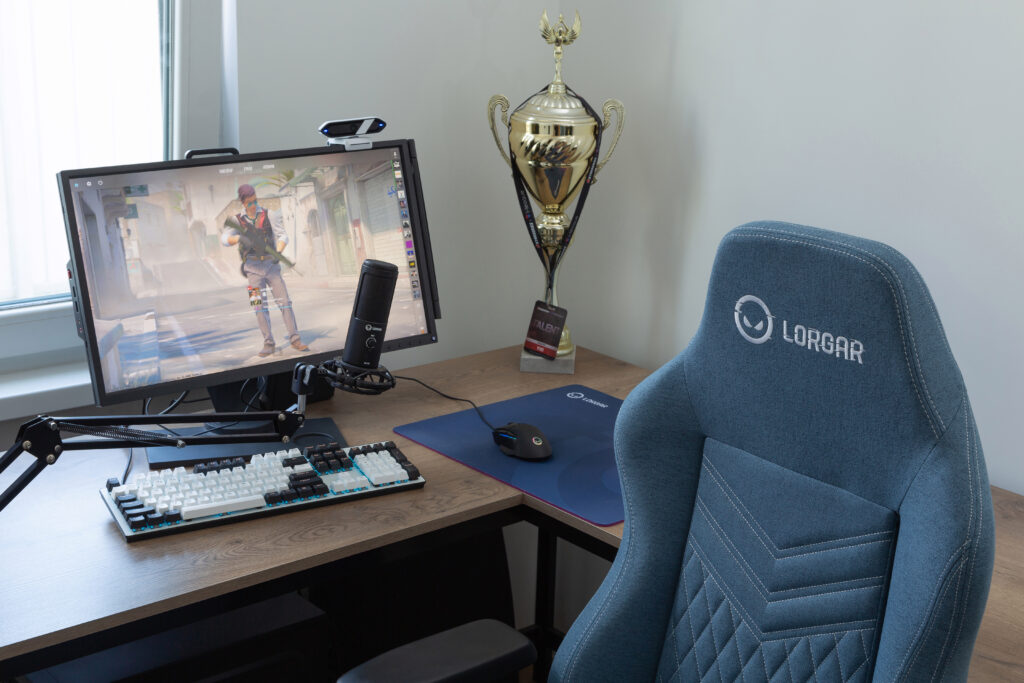
Extended health consequences should weigh substantially in the selection procedure. Appropriate reinforcement for the spinal column, cervical region, and upper extremities proves essential for preventing discomfort and potential injury. The optimal chair should encourage proper spinal alignment while permitting natural motion and posture transitions throughout the day. Both gaming and office chairs can accomplish this through different methodologies.
Consider how you’ll principally utilize the chair, your visual preferences, and your financial constraints. Don’t become excessively absorbed in the gaming versus office chair controversy – concentrate instead on locating a quality product matching your requirements. Ultimately, the superior chair represents the one maintaining your comfort and support during those extended periods at your workstation, whether you’re mastering financial documents or digital domains.
The fundamental distinction between gaming chairs and office chairs begins with their core design philosophy. Gaming chair manufacturers deliberately emulate high-performance racing car seats, resulting in the distinctive high-back profiles, aggressive side bolsters, and vibrant color schemes that define this category. These chairs function as the automotive sports cars of seating—designed to command attention and make bold visual statements in any gaming setup.
Office chairs adopt a completely different approach, prioritizing subtle integration into professional environments while focusing on ergonomic performance. The comparison resembles choosing between a luxury executive sedan and a track-ready supercar—both transport you effectively but communicate vastly different messages about your priorities and environment.
Are gaming chairs good for office work? This common question requires nuanced consideration. Gaming chairs provide exceptional support for dynamic sitting positions, making them perfect for extended gaming marathons where you frequently transition between upright gaming postures and relaxed reclining positions between matches.
Office chairs engineer comfort through a task-oriented lens, emphasizing proper spinal alignment during intensive computer work and typing sessions. The support mechanisms tend to be more sophisticated, often incorporating advanced lumbar systems that dynamically adapt to your movements throughout the workday.
Materials and Construction
Office chairs typically utilize aluminum or high-grade reinforced nylon bases, materials selected for their optimal balance between structural integrity and weight efficiency. Premium office models frequently incorporate die-cast aluminum bases capable of supporting up to 400 pounds, with central columns housing class 4 gas lifts for precise height calibration.
Gaming chairs, in contrast, often employ comprehensive steel frame construction including the base components. While this increases overall weight, it delivers exceptional stability—though this can make repositioning the chair more challenging in smaller spaces.
Upholstery selections critically influence both immediate comfort and long-term durability. Office chairs commonly provide mesh, fabric, or leather options, each offering distinct advantages for temperature management and postural support.
- Mesh: Delivers superior air circulation and conforms to body contours, making it ideal for warmer climates and extended sitting periods
- Fabric: Provides balanced breathability and cushioning, available in varying durability grades
- Leather/Faux Leather: Projects premium aesthetics but presents temperature regulation challenges during prolonged use
Gaming chairs typically feature PU leather or fabric upholstery, with premium versions sometimes incorporating genuine leather. The padding generally consists of high-density foam ranging from 45 to 60 kg/m³ density. This creates a firmer seating experience that maintains structural integrity over time but might feel excessively rigid for users preferring softer seating surfaces.
Seat Cushions
Seat architecture fundamentally determines comfort during extended desk sessions. Gaming chairs typically incorporate bucket-style seats with firm cushioning and pronounced edge bolstering—excellent for maintaining centered positioning during intense gaming moments but potentially restrictive for users who frequently change sitting positions.
Office chairs generally provide flatter, more conventional seat designs with graduated padding levels. The front edge typically incorporates what ergonomic designers term a “waterfall” contour, which systematically reduces pressure on thigh undersides during long sitting periods—a subtle design element you may not immediately notice but will profoundly appreciate after several continuous hours.
Lumbar Support Systems
Office chairs have pioneered diverse lumbar support methodologies. High-end models often feature dynamic lumbar systems that automatically adjust to your spinal movements, utilizing either mechanical spring mechanisms or flexible composite materials. Some integrate adjustable depth and height parameters, enabling users to target specific lower back regions with precision.
Gaming chairs typically depend on external cushion attachments for lumbar support. While these offer extensive adjustability—you can reposition them vertically, horizontally, or remove them completely—they cannot replicate the sophisticated dynamic support found in premium office chairs. However, they do provide superior customization capabilities for users who understand exactly where they require spinal support.
Neck and Head Support
Both chair categories approach cranial and cervical support through different design philosophies. Office chairs frequently incorporate adjustable headrests that can be micro-calibrated for both height and angular positioning. Some premium office models include articulating headrests that move synchronously with your reclining or leaning motions.
Gaming chairs typically integrate the headrest into their elevated back design, supplemented by detachable neck pillows. This methodology delivers consistent support but may not accommodate all anthropometric variations equally effectively. The capacity to remove or reconfigure the neck pillow does provide some personalization options.
Height Adjustment and Base Stability
Both chair types employ gas lift cylinders for vertical adjustment, but their operational implementations differ significantly. Office chairs concentrate on smooth, precise height modifications within the conventional 40-55 centimeter floor-to-seat range. Gaming chairs often provide marginally higher maximum elevations to accommodate taller users or alternative desk configurations.
Base stability represents a critical consideration for both categories but is accomplished through different engineering approaches:
- Office chairs typically utilize five-point bases with 50 millimeter casters
- Gaming chairs frequently incorporate expanded bases with 60-75 millimeter casters for enhanced weight distribution
Recline Options
Contemporary ergonomic research indicates that maintaining a slight recline (approximately 135 degrees) potentially benefits spinal health more than the traditional 90-degree vertical posture. Gaming chairs demonstrate superiority in this aspect, typically providing more comprehensive recline capabilities that benefit users during rest intervals. However, for active computing tasks and gaming engagements, preserving correct postural alignment remains paramount.
The tilt mechanism constitutes one of the most substantial functional distinctions separating these chair categories. Office chairs typically incorporate:
- Synchronized tilt: Seat and backrest components move in pre-established proportional relationships
- Weight-sensitive recline: Resistance parameters automatically calibrate according to user weight
- Multi-position tilt lock: Enables secure positioning at multiple angular settings
Gaming chairs generally provide:
- Independent back recline: Frequently extending to 180-degree capability
- Tilt tension adjustment: Manual regulation over recline resistance intensity
- Rock and lock functionality: Capacity for free rocking motion or fixed positional locking
Armrests
Never underestimate the critical importance of optimized armrest design—they perform essential functions in mitigating shoulder and cervical strain. Gaming chairs often incorporate what the industry terms 3D or 4D armrests, meaning they accommodate adjustments across multiple directional planes:
- Vertical height calibration
- Lateral width modification
- Forward/backward depth adjustment
- Rotational pivot configuration
This multidimensional flexibility proves excellent for identifying the ideal positioning for diverse activities, ranging from precision gaming to intensive typing sessions.
Office chairs typically offer more restrained armrest adjustment capabilities, concentrating on elevation and occasionally width parameters. While they may lack dramatic visual appeal, they’re engineered to deliver consistent support for keyboard and mouse operations—the predominant activities in most professional settings.
Performance and Daily Use
When evaluating whether gaming chairs serve effectively for office duties, multiple performance factors demand consideration. Thermal management proves crucial for sustained comfort. Mesh office chairs demonstrate excellence in air circulation management, whereas gaming chairs incorporating thicker cushioning and less permeable materials may generate warmth during prolonged usage periods. Certain manufacturers counter this through perforated materials or cooling gel-infused foam technologies.
Construction quality manifests clearly in everyday usage through acoustic emissions and operational smoothness. Premium office chairs typically incorporate silent-rolling casters and fluid adjustment mechanisms. Gaming chairs might generate increased noise due to metallic construction elements and multiple adjustment interfaces. However, they frequently excel in delivering support for various sitting postures and expanded recline capabilities.
Noise and Movement
Manufacturing excellence becomes evident in routine operation through sound levels and mechanical fluidity. High-end office chairs typically feature noiseless casters with rubberized coatings, seamless gas lift operation, hushed tilt mechanisms.
Gaming chairs demonstrate increased susceptibility to acoustic emissions resulting from metal framework construction, numerous adjustment junctions and broader movement parameters.
Common mistake: Users often prioritize visual aesthetics over functional noise considerations, only realizing the distraction during focused work sessions.
Practical tip: Test chair movement and adjustment noises before purchase—what seems minor in a store becomes significant during concentration-intensive tasks.
The Price Factor
Regarding financial considerations, both gaming chairs and office chairs present options spanning the complete pricing spectrum. Entry-level gaming chairs commence around $100, with premium configurations extending well beyond $500. Office chairs track a comparable range, although high-end ergonomic office chairs frequently surpass $1,000 easily. The intriguing observation: while both categories contain quality selections, gaming chairs often provide more features at reduced price thresholds. However, office chairs typically allocate more resources toward ergonomic innovation and construction quality at elevated price segments.
Entry-level models (approximately $100-200) in both classifications make specific compromises. Office chairs concentrate on fundamental ergonomic characteristics while gaming chairs prioritize stylistic elements over premium materials. The intermediate market ($200-500) potentially delivers optimal value, with office chairs implementing sophisticated ergonomic features and gaming chairs enhancing material quality and adjustability.
The premium category (exceeding $500) reveals the most pronounced contrasts. Office chairs at this pricing level feature advanced ergonomic systems targeting long-term comfort and productivity enhancement. Gaming chairs provide upgraded materials and supplementary features catering to the gaming experience, frequently integrating distinctive accessory options and assertive design components that attract committed gaming enthusiasts.
Optimization tip: For mixed-use scenarios, consider allocating your budget toward a quality mid-range office chair with superior ergonomics rather than a gaming chair with extensive features but compromised support systems.
Making Your Decision
Here are specific scenarios when you should seriously consider selecting a gaming chair:
- You divide your time proportionally between gaming entertainment and productive work
- You prioritize comprehensive reclining capabilities
- You desire assertive, expressive visual styling
- You value external, customizable support cushions
- You’re seeking gaming-specific enhancement features
And when an office chair represents the more logical selection:
- Your principal focus involves productivity-oriented work
- You prefer restrained, professional visual aesthetics
- You want advanced, integrated support systems
- You emphasize classical ergonomic design principles
- You require optimal positioning configurations for typing
Supplementary factors requiring evaluation:
- Ambient temperature and ventilation requirements
- Workstation height and configuration setup
- Primary activities (gaming, professional work, or combined usage)
- Available spatial dimensions and mobility prerequisites
The Bottom Line
Are gaming chairs worth the investment? Similar to numerous life decisions, the answer depends entirely on your particular requirements and usage patterns. Gaming chairs introduce stylistic flair and functional versatility, incorporating features that can improve both professional work and recreational gaming. Office chairs demonstrate excellence in providing sophisticated ergonomic support, frequently incorporating more refined engineering underlying their comfort technologies.
Long-term health consequences should weigh substantially in the selection methodology. Appropriate support for spinal structures, cervical regions, and wrist joints proves essential for preventing discomfort and chronic pain development. The optimal chair selection should encourage proper postural alignment while permitting natural movement and positional transitions throughout your daily routine. Both gaming and office chair categories can accomplish this objective through divergent design approaches.
Consider thoroughly how you’ll predominantly utilize the chair, your aesthetic preferences, and financial constraints. Avoid becoming excessively preoccupied with the gaming versus office chair controversy—concentrate instead on identifying a quality product that aligns with your specific needs. Ultimately, the superior chair remains the one that maintains your comfort and support during extended desk hours, whether you’re mastering complex spreadsheets or exploring virtual gaming universes.
When exploring the desk chair market, you’ll encounter two dominant categories with fundamentally different design approaches. Gaming chairs draw inspiration from high-performance automotive seating, featuring aggressive side bolsters, elevated backs, and vibrant color schemes designed to make visual statements. These chairs function as the sports cars of seating—bold, expressive, and engineered for dynamic use during extended gaming sessions.
Office chairs embrace a more conservative design language focused on professional integration and ergonomic precision. They prioritize subtle sophistication over dramatic styling, much like comparing a luxury sedan to a track-ready supercar. Both deliver transportation, but their design philosophies cater to different environments and user expectations.
A common question arises: are gaming chairs suitable for office environments? The answer involves nuanced consideration of posture requirements and work habits. Gaming chairs support multiple sitting positions effectively, accommodating shifts from intense focus to relaxed reclining. Many models offer 180-degree back angle adjustments—perfect for brief rest periods between competitive matches.
Office chairs employ task-oriented engineering that emphasizes proper alignment during computer use and typing activities. Their support mechanisms operate more subtly yet often incorporate advanced engineering that adapts to your body’s natural movements throughout the workday.
Materials and Construction
Office chairs typically utilize aluminum or reinforced nylon bases, materials selected for optimal strength-to-weight ratios. Premium versions frequently incorporate die-cast aluminum foundations supporting weights up to 400 pounds, with central columns containing class 4 gas lifts for precise elevation control. Gaming chairs often implement full steel frame construction including the base components. While this increases overall mass, it delivers exceptional stability, though mobility may be compromised.
Upholstery selections profoundly influence both comfort longevity and thermal management. Office chairs commonly provide mesh, fabric, or leather alternatives, each offering distinct advantages for support and climate control.
- Mesh: Delivers superior air circulation and conforms to body contours, ideal for warmer climates
- Fabric: Provides balanced breathability and cushioning, available in multiple durability grades
- Leather/Faux Leather: Projects premium aesthetics but presents thermal regulation challenges
Gaming chairs typically feature PU leather or fabric coverings, with high-end models sometimes incorporating genuine leather. The cushioning generally consists of high-density foam ranging from 45 to 60 kg/m³. This creates a supportive seating experience that maintains structural integrity over time but may feel excessively firm for some preferences.
Seat Cushions
Seat architecture fundamentally determines comfort during prolonged desk sessions. Gaming chairs typically incorporate bucket-style seats with firm padding and elevated edges—excellent for maintaining position during intense gaming but potentially limiting for frequent position changes.
Office chairs generally provide flatter, conventional seat designs with graduated cushioning levels. The forward edge usually incorporates what designers term a “waterfall” contour, which helps minimize pressure on thigh undersides during extended sitting. This subtle design element becomes increasingly appreciated after multiple hours of continuous use.
Lumbar Support Systems
Office chairs have developed multiple lumbar support methodologies. Premium models often feature dynamic lumbar systems that conform to your movements, utilizing either mechanical springs or flexible materials. Some include adjustable depth and height mechanisms, enabling users to target specific lower back regions.
Gaming chairs typically depend on external cushions for lumbar support. While these offer extensive adjustability—movable vertically, horizontally, or completely removable—they don’t provide the continuous adaptive support found in high-end office chairs. However, they deliver greater customization possibilities for users with precise support requirements.
Neck and Head Support
Both chair categories approach cranial support differently. Office chairs frequently include adjustable headrests that can be fine-tuned for height and angle. Some premium versions incorporate articulating headrests that move synchronously with your reclining or leaning motions.
Gaming chairs typically integrate the headrest into their tall back design, supplemented by detachable neck pillows. This approach ensures consistent support but may not accommodate all physiques equally effectively. The capacity to remove or modify the neck pillow does provide some personalization options.
Height Adjustment and Base Stability
Both chair types employ gas lift cylinders for elevation modification, but their execution varies. Office chairs concentrate on fluid, exact adjustments within conventional 40-55 cm floor-to-seat ranges. Gaming chairs often provide marginally higher maximum heights to accommodate taller individuals or varied desk arrangements.
Foundation stability proves critical for both categories but is accomplished through different means:
- Office chairs typically utilize five-point bases with 50 mm casters
- Gaming chairs often incorporate larger bases with 60-75 mm casters for enhanced weight distribution
Recline Options
Contemporary research indicates that sitting at a moderate recline (approximately 135 degrees) potentially benefits spinal health more than traditional 90-degree upright positioning. Gaming chairs perform exceptionally here, typically offering broader recline capabilities that benefit users during rest intervals. However, for active work and gaming periods, maintaining correct posture remains essential.
The tilt mechanism represents one of the most substantial functional distinctions between these chair varieties. Office chairs typically feature:
- Synchronized tilt: Seat and backrest move in predetermined proportions
- Weight-sensitive recline: Resistance automatically calibrates to user mass
- Multi-position tilt lock: Permits securing at multiple angles
Gaming chairs usually provide:
- Independent back recline: Frequently up to 180 degrees
- Tilt tension adjustment: Manual regulation of recline resistance
- Rock and lock functionality: Capacity for free rocking or fixed positioning
Armrests
Avoid underestimating quality armrest architecture—they perform vital functions in minimizing shoulder and cervical strain. Gaming chairs often incorporate what’s termed 3D or 4D armrests, meaning they adapt in multiple orientations:
- Height adjustment
- Width adjustment
- Depth adjustment
- Pivot adjustment
This versatility proves excellent for identifying optimal positions for diverse activities, ranging from competitive gaming to intensive typing.
Office chairs typically offer more restrained armrest modifications, concentrating on elevation and occasionally breadth. While potentially less visually striking, they’re engineered to deliver consistent support for keyboard and mouse operations—the predominant activities in most professional settings.
Performance and Daily Use
When evaluating gaming chairs for professional environments, multiple elements require consideration. Thermal regulation proves vital for sustained comfort. Mesh office chairs perform exceptionally in air circulation, while gaming chairs with denser cushioning and reduced breathability may generate warmth during prolonged usage. Certain manufacturers mitigate this through perforated materials or cooling gel-infused foam technologies.
Construction quality becomes evident in regular operation through acoustic levels and mechanism fluidity. Premium office chairs typically incorporate silent casters and smooth adjustment systems. Gaming chairs might generate additional noise owing to metallic construction and numerous adjustment interfaces. However, they frequently excel in delivering support for varied sitting postures and extensive reclining capabilities.
Noise and Movement
Manufacturing excellence manifests in everyday application through sound characteristics and operational smoothness. High-caliber office chairs typically feature quiet casters with rubber coatings, fluid gas lift operation, noiseless tilt mechanisms.
Gaming chairs can demonstrate increased noise susceptibility due to metal frame construction, multiple adjustment interfaces and expanded movement parameters.
Advanced Features and Innovation
The gaming chair market has introduced several innovative functionalities targeting enhanced user experiences. Certain contemporary models now integrate built-in thermal management systems, massage capabilities, haptic feedback for gaming immersion, and integrated audio systems. While these features can amplify gaming enjoyment, they generally aren’t essential for routine use and can substantially influence pricing structures.
Office chairs, conversely, concentrate their innovation on ergonomic developments. Features including synchronized tilt mechanisms, adaptive lumbar support, and precision adjustments for diverse body types demonstrate this concentration on functional enhancement rather than supplementary features.
The Price Factor
Regarding cost structures, both gaming chairs and office chairs provide alternatives across the financial spectrum. Budget gaming chairs initiate around $100, with premium versions reaching substantially beyond $500. Office chairs follow comparable ranges, though high-end ergonomic office chairs can readily surpass $1,000. Here’s the compelling insight: while quality selections exist in both classifications, gaming chairs frequently deliver more functionalities at reduced price tiers. However, office chairs tend to allocate more resources toward ergonomic innovation and construction quality at the premium level.
Entry-level models (approximately $100-200) in both categories implement specific compromises. Office chairs concentrate on fundamental ergonomic characteristics while gaming chairs emphasize aesthetics over premium materials. The mid-market segment ($200-500) presents potentially optimal value, with office chairs introducing advanced ergonomic features and gaming chairs enhancing material quality and customization capabilities.
The luxury category (above $500) reveals the most pronounced contrasts. Office chairs at this price level feature complex ergonomic systems targeting extended comfort and productivity enhancement. Gaming chairs provide upgraded materials and additional features catering to the gaming experience, often integrating distinctive accessory options and assertive design elements that attract committed gamers.
Making Your Decision
Here are scenarios where gaming chairs merit consideration:
- You divide time between gaming and professional activities
- You value comprehensive reclining capabilities
- You prefer expressive, bold styling
- You appreciate external, modifiable support cushions
- You seek gaming-specific functionalities
And when office chairs represent more logical choices:
- Your primary concentration involves productivity-focused work
- You favor subtle, professional aesthetics
- You desire sophisticated, integrated support systems
- You prioritize traditional ergonomic design principles
- You require optimal positioning for intensive typing sessions
Supplementary elements to evaluate:
- Ambient temperature and ventilation requirements
- Desk elevation and configuration setup
- Principal activities (gaming, professional work, or combined usage)
- Available workspace and mobility needs
The Bottom Line
Do gaming chairs justify their cost? Similar to numerous life decisions, the answer depends on your particular requirements. Gaming chairs introduce style and adaptability, with characteristics that can improve both professional and recreational activities. Office chairs excel at delivering advanced ergonomic support, frequently with more refined engineering underlying their comfort features.
Extended health consequences should weigh significantly in the selection procedure. Appropriate support for spinal, cervical, and carpal regions proves essential for preventing discomfort and pain development. The optimal chair should encourage proper posture while permitting natural movement and position variations throughout daily usage. Both gaming and office chairs can accomplish this through distinct methodologies.
Consider how you’ll principally utilize the chair, your aesthetic inclinations, and your financial constraints. Avoid excessive fixation on the gaming versus office chair discussion—concentrate instead on locating a quality product matching your necessities. Ultimately, the superior chair remains the one maintaining comfort and support during extended desk periods, whether you’re mastering financial documents or digital domains.
Action Checklist
- Assess your daily activity split between gaming and productivity work
- Measure your workspace dimensions and desk height compatibility
- Evaluate temperature regulation needs based on your environment
- Test chair adjustability ranges for your specific body measurements
- Compare material durability against your expected usage intensity
- Set a realistic budget range considering long-term health investment
- Assess your primary usage ratio between gaming and work activities
- Test chair adjustment mechanisms for noise levels and smooth operation
- Evaluate temperature regulation based on your environment and upholstery choices
- Compare lumbar support systems – integrated vs external cushion options
- Determine your budget allocation strategy across price tiers
- Verify armrest adjustability matches your specific typing and gaming needs
- Assess your primary activities ratio (gaming vs work) and posture requirements
- Measure your workspace dimensions and evaluate mobility needs
- Test chair adjustability ranges including height, recline, and armrest positions
- Evaluate temperature regulation needs based on your environment
- Compare material durability and support systems within your budget range
- Prioritize ergonomic features based on your specific health requirements
No reproduction without permission:Tsp Game Club » Gaming Chairs vs Office Chairs Choose Your Chair: Unlock Maximum Comfort, Posture, and Productivity Now