
TL;DR
- Multiplayer gaming evolved from 1950s academic experiments to today’s billion-dollar esports industry
- Key milestones include Spacewar! (1962), MUD1 (1978), Doom (1993), and PUBG (2017)
- Modern challenges include market saturation and aggressive monetization strategies
- Successful games balance innovation with consistent content updates and community engagement
- The genre continues to adapt through new gameplay mechanics and business models
Multiplayer titles currently dominate the gaming landscape, representing some of the most commercially successful and culturally impactful projects in the industry. The journey from early experimental prototypes to today’s sophisticated online ecosystems represents one of gaming’s most remarkable transformations, driven by relentless technological innovation and passionate community development.
At its core, multiplayer gaming encompasses any interactive experience that enables two or more participants to engage simultaneously within the same virtual environment. This broad category spans numerous genres including first-person shooters, real-time and turn-based strategies, MOBA (Multiplayer Online Battle Arena) titles, and various cooperative adventures. Understanding this evolution provides crucial context for appreciating today’s gaming landscape and anticipating future developments.
Early iterations faced significant technical constraints, typically limiting player counts and requiring shared hardware. The transition to online connectivity represented a paradigm shift, enabling global participation and creating entirely new social dynamics around gaming culture.
The origins of shared gaming experiences trace back to the late 1950s with William Higinbotham’s Tennis for Two, an oscilloscope-based demonstration that allowed two players to volley a virtual ball. This groundbreaking experiment demonstrated the potential for interactive entertainment beyond single-user experiences.
In 1962, the DEC PDP-1 computer hosted Spacewar!, a landmark space combat simulation that enabled dual-player dogfights and established foundational concepts for competitive gaming.

The 1970s witnessed explosive innovation through the PLATO computer system, which hosted revolutionary titles including the flight simulator Airfight, strategic conquest game Empire, pioneering shooters Spasim and Maze War, plus the groundbreaking MMORPG Multi-User Dungeon. These projects established core mechanics that would define gaming for decades to come.
Maze War deserves particular recognition as NASA-developed software that introduced first-person perspective gaming, creating the template for subsequent FPS (First-Person Shooter) development.
Multi-User Dungeon (MUD1), created by Roy Trubshaw and Richard Bartle at the University of Essex, established the architectural framework for massively multiplayer online role-playing games. This text-based adventure demonstrated commercial viability for persistent virtual worlds.
Danielle Bunten Berry’s contributions further advanced the field, beginning with Wheeler Dealers (1978) and culminating in the iconic strategy title M.U.L.E. (1983), representing one of Electronic Arts’ inaugural releases and setting standards for economic simulation games.
The 1980s console revolution accelerated cooperative gaming development, with Nintendo’s Super Mario Bros. and Sega’s Golden Axe leading the charge. Arcade classics like Gauntlet (1985) and Quartet (1986) expanded simultaneous participation to four players, establishing new benchmarks for social gaming experiences.
The 1990s represented multiplayer gaming’s transformative decade, as internet accessibility and advancing hardware capabilities enabled unprecedented connectivity. This period birthed legendary franchises that maintain cultural relevance today while establishing dedicated gaming communities and competitive ecosystems.
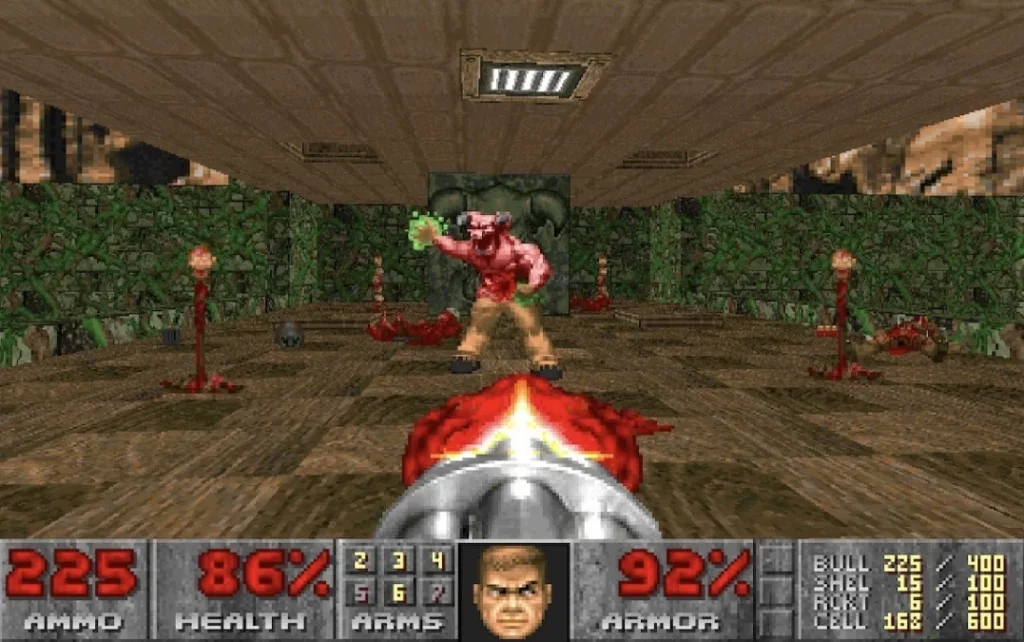
id Software’s 1993 release Doom revolutionized networked gaming by supporting four-player LAN connectivity, while their 1996 follow-up Quake became the cornerstone of competitive esports shooting. The QuakeWorld expansion dramatically enhanced online performance, supporting 32-player matches while addressing critical latency concerns that had previously hampered online competition.
Doom’s cultural impact extended beyond gameplay to establish foundational gaming terminology that remains industry-standard:
- frag — eliminating an opponent (derived from military fragmentation grenade terminology);
- gib (from giblets) — graphically dismembering enemy characters;
- camp — tactical positioning in strategic locations (often criticized as unsportsmanlike behavior);
- spawn — player resurrection points requiring strategic map control;
- lag — network latency causing delayed response times (critical consideration for competitive play);
- cheat — exploiting game vulnerabilities or using unauthorized modifications;
- rage quit — abandoning matches due to frustration (negatively impacts team dynamics).
Valve Corporation transformed the Half-Life modification Counter-Strike into a standalone competitive phenomenon. The franchise continues to thrive through CS2, maintaining its position as an esports cornerstone with professional tournaments offering multi-million dollar prize pools.
Blizzard Entertainment simultaneously redefined real-time strategy through Warcraft: Orcs & Humans and the scientifically-inspired StarCraft. These titles established competitive standards that would eventually evolve into World of Warcraft, catalyzing the MMORPG market explosion.
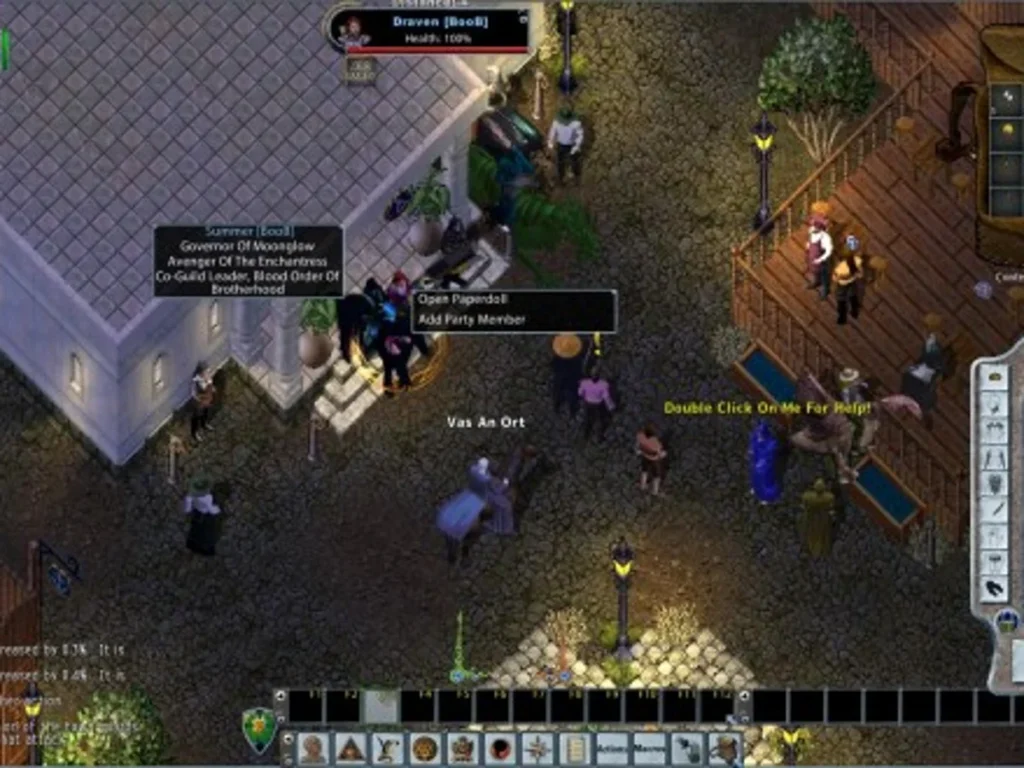
Origin Systems’ 1997 release Ultima Online dramatically expanded public understanding of persistent virtual worlds. Before its launch, many gamers had never experienced true massively multiplayer gaming, where character development, economic systems, and social interactions created living, breathing digital societies.
PlayerUnknown’s Battlegrounds (PUBG) emerged as the battle royale genre’s defining title, establishing Steam platform records for concurrent users. The game introduced survival mechanics where 100 participants scavenge for military equipment across expansive maps, creating intense last-player-standing competitions.
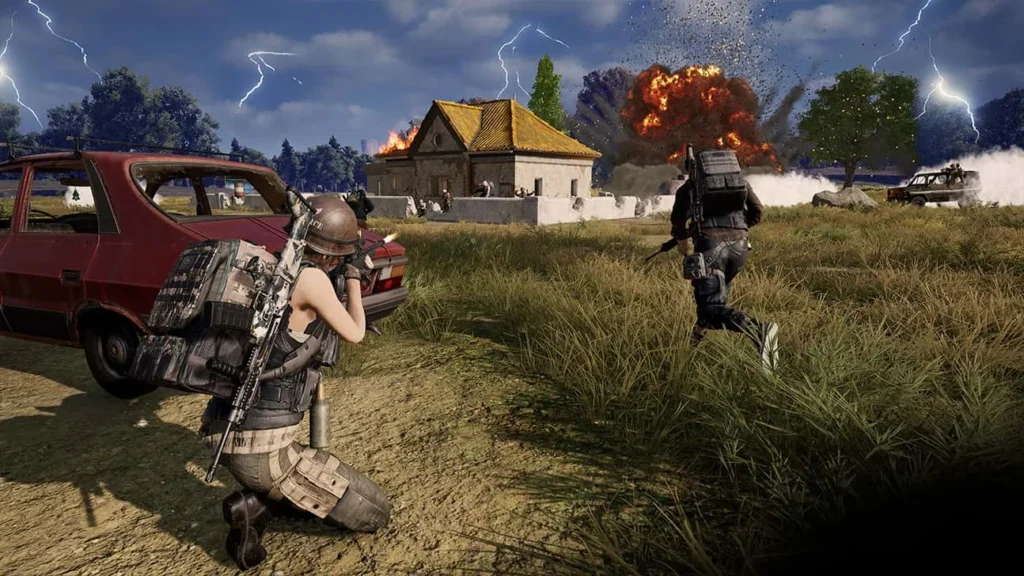
Following PUBG’s commercial success, developers rapidly embraced the battle royale format. Epic Games’ Fortnite introduced construction mechanics and celebrity collaborations, while Respawn Entertainment’s Apex Legends implemented character-specific abilities. Call of Duty: Warzone introduced revival mechanics absent from competing titles, demonstrating ongoing genre innovation.
Recent market analysis indicates declining multiplayer engagement metrics, with numerous new releases struggling to maintain player retention. The dramatic case of Concord illustrates these challenges—launched August 23, 2024, the title was discontinued by September 6th following disappointing commercial performance, reportedly moving approximately 25,000 units. During its final operational days, concurrent Steam users barely surpassed 700, despite nearly eight years of development investment.
Contemporary gaming discussions consistently reference established leaders including CS2, Dota 2, League of Legends, VALORANT, Fortnite, Warzone, Minecraft, and Apex Legends. These titles maintain genre dominance through consistent content updates, competitive infrastructure, and community engagement strategies.
Market oversaturation represents the primary challenge, particularly within shooter and battle royale categories. With countless similar offerings available, developers face immense pressure to deliver genuinely innovative mechanics rather than incremental improvements.
Aggressive monetization strategies frequently undermine player satisfaction through microtransactions, randomized loot systems, and progression-based battle passes. These “pay-to-win” implementations often create competitive imbalances, driving participant frustration and reducing long-term engagement. Additional friction points include mandatory third-party clients and growing interest in sophisticated single-player narratives as alternatives to multiplayer experiences.
Despite these headwinds, the multiplayer genre demonstrates remarkable resilience. Recent successes like Helldivers 2 and Marvel Rivals demonstrate that projects embracing innovation while maintaining development transparency can achieve commercial success. For comprehensive strategies on modern multiplayer gaming, consult our Complete Guide to battlefield tactics and team coordination.
The future of multiplayer gaming hinges on several critical factors: balancing monetization with player satisfaction, implementing genuine innovation rather than genre conventions, and maintaining consistent content pipelines to sustain community interest.
Action Checklist
- Master core gaming terminology and communication protocols for effective team coordination
- Analyze historical game mechanics to understand current design trends and anticipate future developments
- Develop strategic approaches for different multiplayer genres using our Class Guide for optimal character selection
- Optimize network settings and hardware configuration for competitive performance
- Create balanced monetization awareness to avoid pay-to-win traps while maximizing enjoyment
No reproduction without permission:Tsp Game Club » The History of Online Games From Tennis for Two to Modern Esports: The Complete Evolution of Multiplayer Gaming