
Unlocking Genshin Impact’s Perinheri lore: Khaenri’ah secrets, Fatui parallels, and advanced narrative analysis
The Crimson Moon Legacy: Understanding Perinheri’s Origins
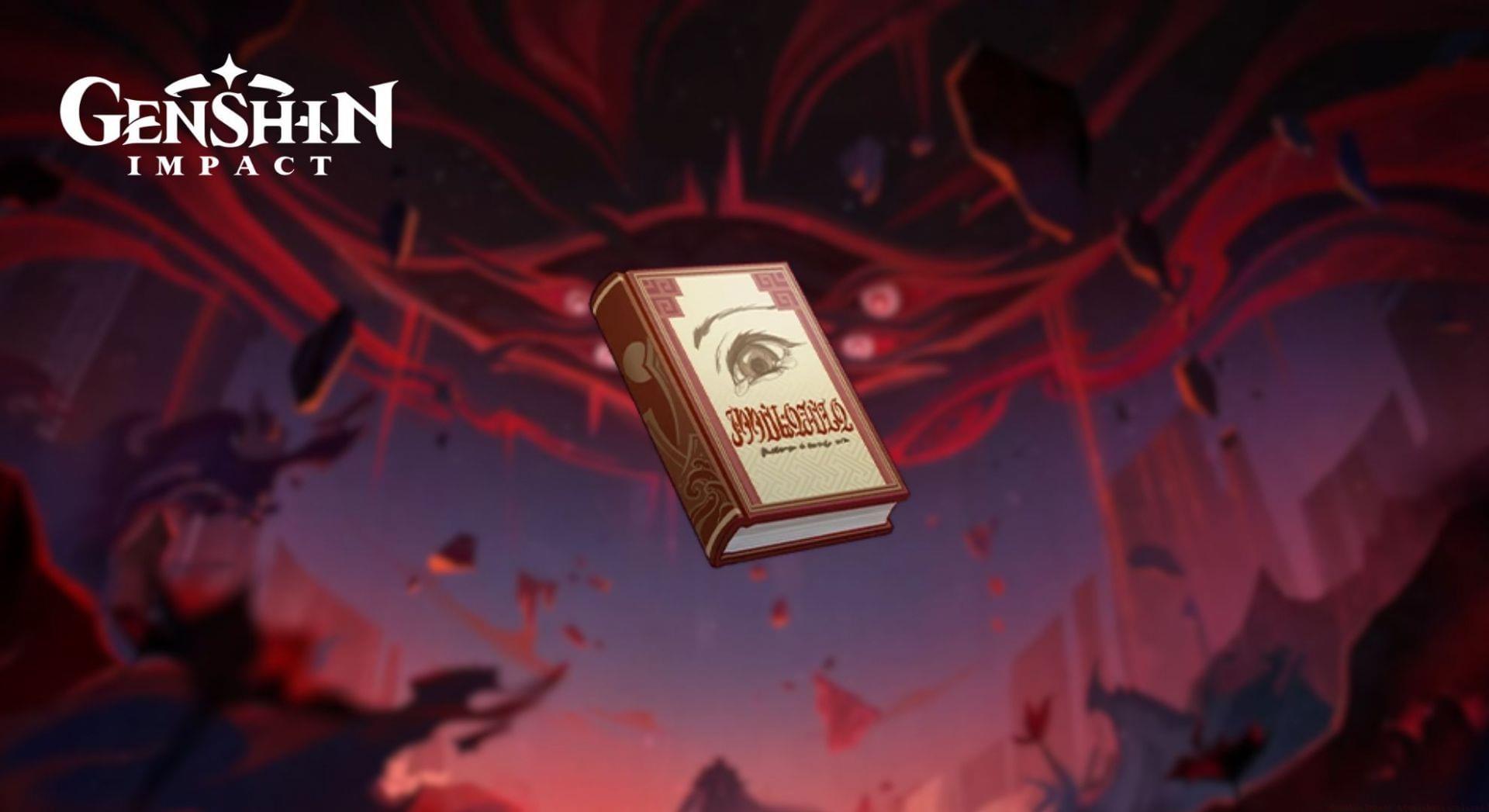
Within Genshin Impact’s expansive lore, the Perinheri narrative emerges as a crucial text referenced by Arlecchino during the “A Nation That Doesn’t Exist” Archon Quest. Originally introduced in version 4.5, this literary work has gained renewed significance as its thematic elements increasingly intersect with the game’s primary narrative arc.
Seasoned players seeking deeper narrative connections should focus on understanding how Perinheri’s multi-generational composition reflects Khaenri’ah’s ancient history. The author deliberately situates the initial volume within an epoch dominated by the Crimson Moon, predating both the Cataclysm and Khaenri’ah’s subsequent Eclipse Dynasty characterized by its distinctive dark sun.
This celestial imagery gains profound relevance through Arlecchino’s personal confirmation that the described kingdom aligns precisely with her ancestral memories and historical records. The narrative depicts a civilization strategically positioned where extradimensional entities, artifacts, and displaced children from destroyed worlds would periodically manifest within its borders.
Advanced players will immediately recognize the narrative parallel to the Traveler’s own backstory, where both siblings witnessed their homeland’s destruction before embarking on interworld journeys culminating in Teyvat. Rather than fearing these interdimensional incursions, Khaenri’ah established specialized orphanages integrating native-born citizens with these extraordinary children from beyond.
Contemporary scholars within Teyvat’s academic circles identify these children as potential Descenders—beings capable of operating outside the Heavenly Principles’ jurisdiction. Perinheri himself underwent a harrowing initiation ritual involving traversal through a coal-ash-filled chimney, where attendants repeatedly questioned whether he had encountered death or witnessed the Crimson Moon.
Following extreme deprivation, Perinheri experienced a vision of the crimson lunar body featuring a distinctive ocular manifestation. Upon emerging covered in soot, elders declared he had “traversed the fire of two worlds” and achieved spiritual rebirth. This ritual potentially represents Khaenri’ah’s experimental attempts to cultivate or identify individuals with divine-resistant capabilities.
Knightly Dynamics: Perinheri’s Role and Relationships
As Perinheri matured within Khaenri’ah’s unique society, he ascended to become one of its most distinguished knights, frequently operating alongside his comrade and rival Hleobrant. Together, they embodied the kingdom’s martial ideals through physical prowess and combat excellence.
The narrative’s trajectory shifts dramatically with Angelica’s arrival—a mysterious woman presenting herself as a displaced princess whose nation fell to “Deus Auri” (identified as Zhongli/Rex Lapis). Carrying herself with prophetic authority and self-identifying as “one who is as a divine emissary,” she captivated the knightly order, particularly enthralling Hleobrant.
Perinheri maintained cautious skepticism regarding Angelica’s claims and motivations. Despite accompanying his friend due to concern, he remained distrustful of her descriptions about external realities, yet acknowledged her formidable influence over Hleobrant.
The situation deteriorated as Hleobrant’s infatuation manifested through relentless duel challenges against fellow knights, seeking validation of his worthiness for Angelica’s affection. Rather than intervening constructively, Angelica exacerbated the situation through mockery and by explicitly identifying Perinheri and four other warriors as Hleobrant’s superiors.
This psychological manipulation catalyzed Hleobrant’s descent into unpredictable madness, leading Perinheri to conclude that eliminating Angelica represented the only viable solution to salvage both his friend and the kingdom from her corrosive influence.
The ensuing chaotic pursuit extended beyond Khaenri’ah’s boundaries, where Angelica revealed her authentic nature. She asserted that Hleobrant’s madness stemmed not from her influence but from an ancestral curse affecting those who betrayed their deity and fled with tainted bloodlines.
Angelica clarified that Perinheri, as an extradimensional drifter lacking such ancestral baggage, remained unaffected by these bloodline curses. She positioned herself as similarly transcendent yet unaffiliated with any divine hierarchy.
The narrative’s pivotal moment occurs at sunrise, where Perinheri witnesses Teyvat’s actual sun for the first time. The text describes his awe-struck reaction—dropping his weapon and shielding his eyes while observing the vast, deity-free landscape appearing simultaneously paradisiacal and cursed.
Allegorical Depth: Khaenri’ah’s Struggle with Divinity
This celestial transition moment symbolically represents the Crimson Moon Dynasty’s decline and replacement by Khaenri’ah’s Eclipse Dynasty under the dark sun. Sophisticated literary analysis reveals Perinheri functions less as conventional knightly literature and more as sophisticated allegory exploring Khaenri’ah’s complex relationship with divinity.
The orphanage metaphor illustrates the kingdom’s systematic attempts to cultivate beings capable of transcending divine jurisdiction, specifically the Heavenly Principles. The recurring “children from beyond” motif directly parallels the Descender concept, exemplified by the Traveler’s current circumstances within Teyvat.
The celestial imagery transition from Crimson Moon to dark sun signifies not merely dynastic succession but fundamental philosophical shifts toward alchemical research, technological advancement, and Abyssal exploration. Hleobrant’s bloodline curse narrative exposes Khaenri’ah’s destructive obsession with genealogical purity, thematically connected to recent Archon Quest IV content in “An Elegy for Faded Moonlight.”
Advanced players should note the deliberate parallel between the tale’s orphanage and the Fatui’s House of the Hearth, which similarly raises specially selected children under organizational supervision. This connection gains additional significance considering Pierro—the inaugural Fatui Harbinger—originated as a Khaenri’ahn scholar, suggesting intentional narrative mirroring.
Common analytical mistakes include overlooking the psychological dimensions of the initiation rituals and underestimating how bloodline narratives reflect Khaenri’ah’s internal conflicts. Optimal analysis requires cross-referencing with current Fatui operations and Celestia’s established behavioral patterns.
Perinheri’s legend stands among Genshin Impact’s most narratively complex lore components by reflecting Khaenri’ah’s ambitious aspirations and inherent vulnerabilities. Beyond its surface-level tragic romance, it encapsulates its historical context while potentially containing additional clues relevant to the ongoing Nod-Krai narrative focusing on Teyvat’s primordial history.
Strategic lore analysis involves tracking how these allegorical elements manifest in current character interactions, particularly those involving Fatui leadership and individuals with Khaenri’ahn heritage. The text’s multidimensional nature rewards repeated examination as new storyline developments emerge.
Advanced Lore Analysis: Connecting to Current Storylines
For players seeking to maximize their understanding of Genshin Impact’s evolving narrative, Perinheri’s story offers critical interpretive frameworks. The text’s treatment of Descenders provides essential context for understanding the Traveler’s unique position within Teyvat’s cosmological structure.
Practical analytical strategy involves maintaining detailed notes comparing Perinheri’s experiences with current Fatui operations, particularly the House of the Hearth’s recruitment and training methodologies. This comparative approach reveals consistent patterns in how organizations manipulate extraordinary individuals for strategic purposes.
Advanced players should特别注意 the psychological dimensions of the initiation rituals, which potentially mirror real-world trauma-based conditioning techniques used to create absolute loyalty. Understanding these mechanisms enhances comprehension of how various factions within Teyvat cultivate their agents.
The bloodline curse narrative introduces crucial concepts about ancestral sin and divine retribution that increasingly appear in current Archon Quests. Tracking how these themes evolve across different character storylines, particularly those involving Khaenri’ahn descendants, provides predictive insights into future narrative developments.
Optimization for lore mastery involves creating thematic maps connecting Perinheri’s allegorical elements to current gameplay events, character voice lines, and environmental storytelling elements throughout Teyvat. This holistic approach transforms seemingly isolated lore fragments into coherent narrative understanding.
The Nod-Krai storyline’s focus on Teyvat’s ancient past makes Perinheri’s prehistoric setting particularly relevant. As this narrative arc develops, the text’s descriptions of the Crimson Moon era may provide crucial contextual information about the world’s primordial state before the current divine hierarchy’s establishment.
Seasoned analysts recommend revisiting Perinheri’s narrative after each major version update, as new story developments frequently recontextualize existing lore elements. This iterative analysis process maximizes comprehension of Genshin Impact’s deeply interconnected narrative universe.
No reproduction without permission:Tsp Game Club » Genshin Impact’s Perinheri explained Unlocking Genshin Impact's Perinheri lore: Khaenri'ah secrets, Fatui parallels, and advanced narrative analysis