
TL;DR
- Flour Sand appears as white smoke-emitting patches exclusively outside Hagga Basin
- Static Compactor dramatically increases collection speed but requires specific crafting materials
- Vermilius Gap offers optimal farming conditions with reduced worm activity
- Always use vehicles and disable certain equipment to minimize Sandworm detection
- Plan collection routes strategically to balance resource yield and survival chances
After conquering the second Trial of Aql in Dune Awakening, you’ll unlock access to a crucial late-game material known as Flour Sand. This distinctive resource serves as the primary component for manufacturing Silicone Blocks, essential for crafting advanced gear and equipment upgrades. What makes Flour Sand particularly challenging is its dangerous harvesting environment – gathering this material in suboptimal locations can lead to permanent equipment loss, making strategic planning absolutely vital for successful collection.
Flour Sand represents one of the most perilous resource gathering activities in the game, requiring careful preparation and execution. Unlike common materials found in safer zones, this resource demands specialized knowledge and equipment to harvest efficiently while minimizing the ever-present threat of Sandworm attacks that could erase hours of progress.
Flour Sand deposits in Dune Awakening manifest as distinctive white, powder-like sand formations scattered across dune surfaces. The most reliable visual indicator for locating these valuable patches is the presence of intermittent white smoke plumes rising from the ground. These resource-rich zones are strictly confined to territories beyond the Hagga Basin boundaries, with the Vermilius Gap standing out as particularly productive hunting grounds.
Advanced players should note that Flour Sand distribution follows specific geological patterns – the resource tends to concentrate on windward slopes and ridge lines where atmospheric conditions create the perfect environment for its formation. Areas with moderate elevation changes often yield higher concentration patches compared to flat desert expanses.
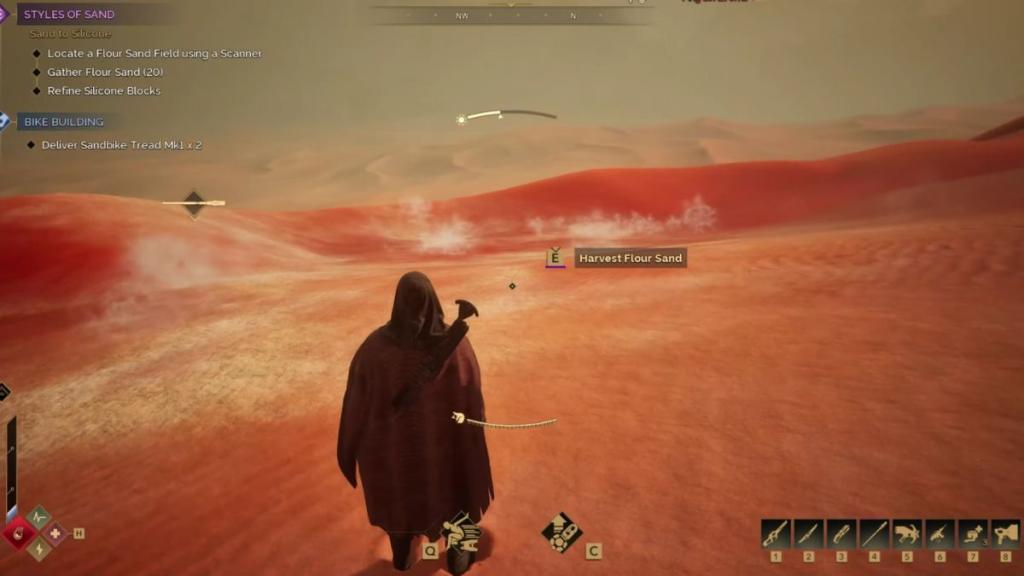
Regional mapping reveals that the eastern sectors of Vermilius Gap typically offer superior Flour Sand density with slightly reduced Sandworm activity compared to western zones. This makes strategic zone selection crucial for maximizing collection efficiency while maintaining acceptable safety margins during extended farming sessions.
While technically possible to gather Flour Sand manually, this approach proves exceptionally time-consuming and dramatically increases your exposure to environmental threats. The vastly superior method involves deploying the Static Compactor device unlocked during your second trial completion. This Fremen-engineered tool transforms identified white sand patches into harvestable Flour Sand clusters through targeted energy application.
The crafting schematic for the Static Compactor demands 10 Iron Ingots alongside 7 EMF Generators. These components can be sourced from various container types distributed throughout scavenger posts, underground cavern systems, and abandoned outposts. For comprehensive iron acquisition strategies, consult our specialized Dune Awakening Iron Ore guide.
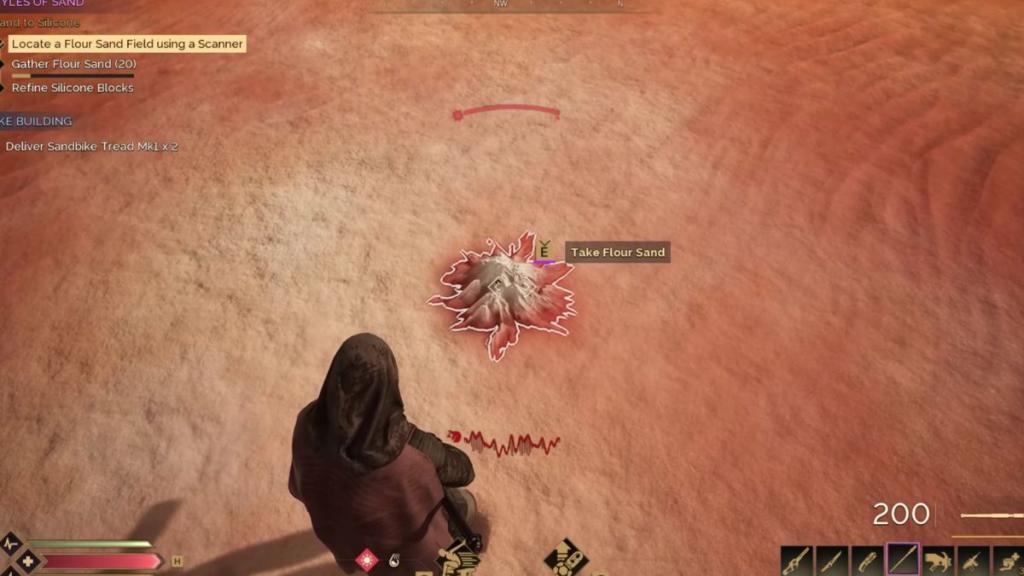
Operational efficiency tips: Position the Static Compactor at a 45-degree angle to the sand patch for optimal cluster formation. The transformation process typically requires 8-12 seconds, after which you can efficiently gather multiple Flour Sand units from the consolidated deposit. Always maintain situational awareness during the compaction sequence, as the device’s energy emissions can attract unwanted attention from subterranean predators.
The inherent danger of Flour Sand collection cannot be overstated – extended surface operations significantly increase your vulnerability to Sandworm attacks. Statistical analysis shows that players spending more than 4-5 minutes continuously in open dune areas face exponentially rising detection probabilities. The consequence of these encounters often means complete equipment loss, making preventive measures absolutely essential.
To substantially reduce your threat profile, we strongly advise utilizing rapid mobility solutions like the Sandbike while deactivating vibration-emitting gear such as Holtzman Shields and Suspensor Belts. These devices generate frequencies that travel through the sand, effectively signaling your presence to the massive predators lurking beneath.
Advanced survival tactics include establishing predetermined escape routes before beginning collection activities and maintaining constant auditory monitoring for subsurface vibration patterns. Experienced gatherers recommend working in 3-4 minute intervals followed by brief repositioning to break detection patterns. For comprehensive evasion techniques, reference our specialized guide on escaping Sandworms in Dune Awakening.
Environmental awareness extends beyond worm threats – Coriolis Storms represent another significant hazard during Flour Sand operations. Always check weather patterns before embarking on collection expeditions and have shelter locations pre-identified along your planned route.
Action Checklist
- Complete second Trial of Aql to unlock Static Compactor access
- Gather 10 Iron Ingots and 7 EMF Generators for compactor crafting
- Travel to Vermilius Gap outside Hagga Basin
- Scan for white smoke plumes indicating Flour Sand deposits
- Deploy Static Compactor at 45-degree angle to patches
- Collect formed clusters within 8-12 second transformation window
- Implement 4-minute collection intervals with positional changes
No reproduction without permission:Tsp Game Club » How to Get Flour Sand in Dune Awakening Master efficient Flour Sand collection in Dune Awakening with advanced strategies and worm avoidance techniques