
TL;DR
- Peeking provides both information gathering and elimination opportunities through calculated aggression
- Dynamic movement prevents focus loss and creates psychological pressure on opponents
- CS2’s netcode creates a legitimate peeker’s advantage through ping compensation
- Master three core techniques: fast peek for baiting, wide peek for positioning, and close peek for surprise attacks
- Combine strafing, aiming, and sound cues for maximum effectiveness
That critical moment when your teammates scream “Don’t peek!” during a clutch situation represents one of CS2’s most fundamental tactical decisions. You face the choice between executing an unexpected aggressive move against your opponent or playing conservatively and potentially wasting valuable intelligence. While the decision ultimately rests with you, calculated aggressive play consistently delivers superior results in competitive scenarios. But what exactly constitutes peeking in CS2, and why is mastering this skill essential for ranking up?
In gaming terminology, ‘to peek‘ describes the action of briefly exposing yourself from cover to gain visual information. It’s crucial to distinguish this from similar-sounding terms like pick, pik, or peak that frequently appear in matchmaking chat.
A ‘peek’ in Counter-Strike 2 involves momentarily stepping out from protective cover to scan for opponents. This maneuver allows you to rapidly identify enemy positions, secure eliminations, or simply gather tactical intelligence. Given that rounds are often decided within milliseconds in CS2, every peek carries inherent risk that could prove fatal for the exposing player. This aggressive tactic possesses the potential to completely reverse round momentum when executed properly.
Strategic objectives behind peeking in CS2:
- Intelligence Acquisition: The player executes a swift movement around cover to visually scan an area. This represents an absolutely critical skill during competitive play. You cannot remain hidden behind protection for an entire round without contributing to your team’s efforts. The more tactical data you provide, the higher your probability of securing round victories.
- Target Elimination: Here, the player possesses general knowledge of an opponent’s location and chooses to engage aggressively. While inherently dangerous, this represents a necessary component of high-level CS2 gameplay. You simply cannot win numerous matches without incorporating peeking into your strategy. The executing player must maintain composure under pressure and demonstrate precise aiming capabilities.
- Combined Action Peek: This advanced technique distinguishes elite competitors from average players. During the brief exposure window when peeking from cover, the player must simultaneously locate enemies and eliminate them. Achieving this requires thorough knowledge and practice of common player positions across maps.
Let’s examine the psychological dimensions first. Players who neglect peeking fundamentals typically adopt what’s known as the “rat” playstyle. These individuals minimally traverse the map, avoid pursuing entry frag opportunities, fail to trade fallen teammates, and prefer waiting for enemies to enter their crosshairs. The primary problem with this approach is that opponents may never cross their line of sight and could simply circumvent their defensive position. Another significant issue involves aiming inconsistency – nobody maintains perfect accuracy even when enemies directly approach their position.
Stationary players maintaining identical positions can experience what veterans call “dozing off.” This describes the phenomenon where focus deteriorates while observing the same area for extended durations. In such situations, you might completely miss adversaries advancing directly toward you. This explains why experienced competitors continuously strafe rather than remaining motionless.
Additionally, the “rat” player who gets eliminated multiple times from the same location begins experiencing anxiety, develops fear about controlling crucial map areas, and retreats from minimal threats. Consequently, by implementing aggressive map movement and proper peeking execution, you’ll achieve psychological dominance over opponents and gain increased tactical flexibility.
Dynamic player always has a small advantage over the one who’s just sitting and waiting. He always aims at the most dangerous positions beforehand and is ready to get a frag.
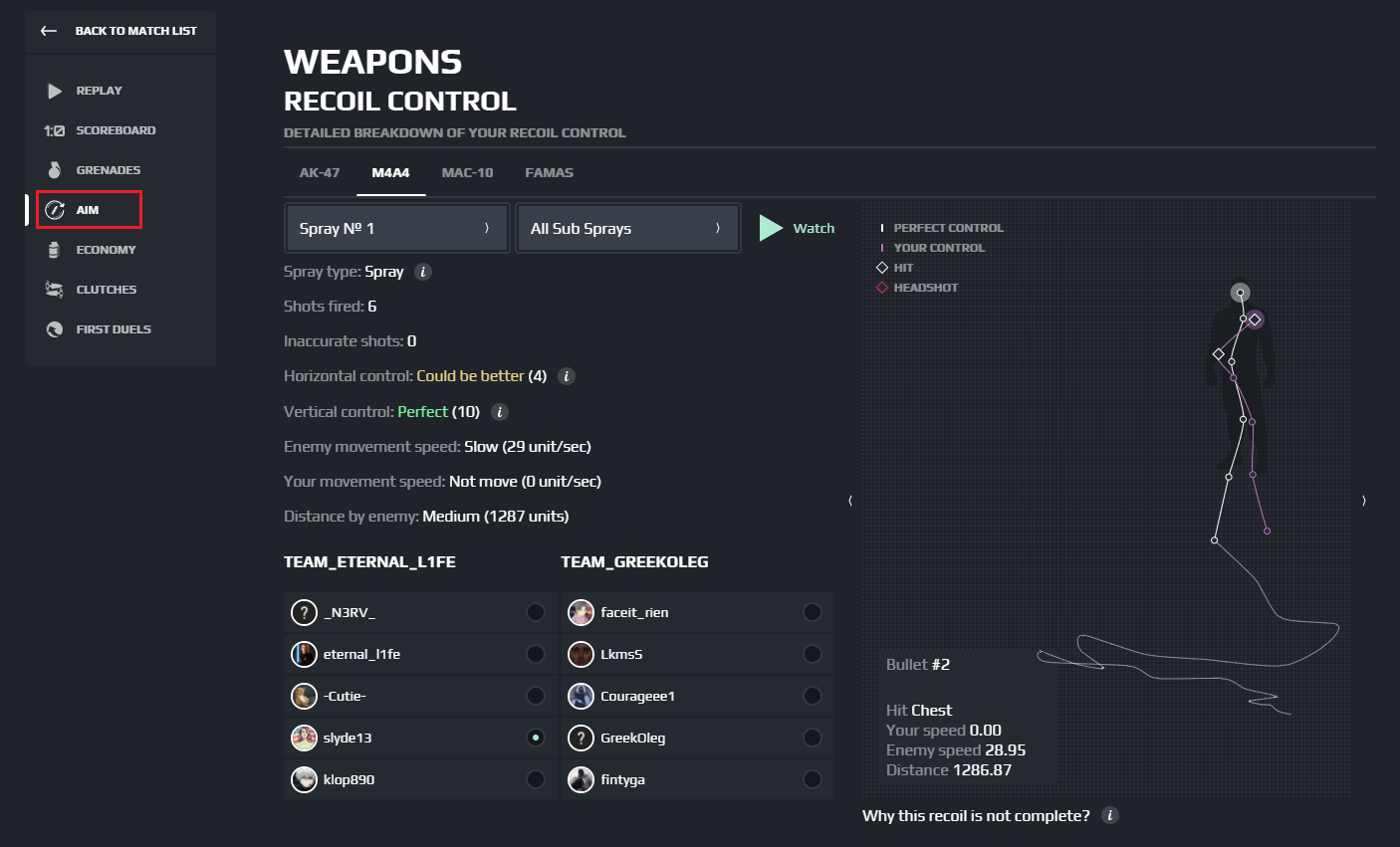
Don’t hesitate to make errors during the learning process. Mistakes represent natural progression markers. Through consistent practice, you’ll internalize fundamental game mechanics and become genuinely effective at peeking in CS2. For performance analysis and improvement guidance, visit SCOPE.GG, authenticate through Steam or Faceit, and review mistakes from your matches. The platform’s integrated systems will comprehensively analyze your errors and provide actionable advice for future prevention.
Now let’s explore mechanical concepts. CS2 incorporates what’s known as player dynamics – terminology describing character movement patterns. When players perform actions while traversing rather than standing stationary, they’re considered dynamic. This indicates heightened player concentration and makes unnoticed enemy movement substantially less probable. While shooting during movement presents increased difficulty, mastering proper strafing techniques and practicing momentary stops for accurate shots becomes essential, though hitting moving targets also proves challenging for opponents.
The mathematical foundation behind peeking superiority involves not just psychology and skill, but also the game’s netcode architecture. Community investigators previously deconstructed CS2’s underlying systems extensively. Their discoveries revealed that the game implements a predictive forecasting mechanism.
To simplify complex networking concepts, you likely understand that all player inputs process through the game client initially before transmitting to servers. Without this system, shooting would become impossible due to varying player latencies, with firing sequences delayed until server confirmation. Consequently, servers implement adjustments based on individual ping values, attempting to balance gameplay conditions across all participants. Through this compensation, high and low latency players visually perceive each other simultaneously.

The notable exception within this system involves servers attempting to display their actual visual perspective. By transmitting the visual representation to higher-ping players slightly earlier, the system enables lagging dynamic players to visually acquire targets first.
Both screenshots were captured simultaneously. As demonstrated, the attacking player successfully peeks the stationary Counter-Terrorist because they see them first. The server compensates for differential player latencies and predicts visual information accordingly.
Critical to recognize: reduced ping differentials between players or generally low latency environments (such as LAN tournaments) correspondingly diminish the so-called peeker’s advantage. Servers must compensate for significantly fewer variables, and the forecasting becomes so minimal that human perception barely registers it.
Ongoing community debates continue regarding the existence of this peeking advantage. Regardless, if potential advantages exist, why wouldn’t you leverage them? As previously established, aggressive peeking not only builds personal confidence and intimidates opponents but can completely reverse match momentum in your favor.
Now let’s examine specialized peeking methodologies in CS2. As indicated earlier, multiple techniques exist, and you should deploy them situationally based on circumstances and individual skill levels. Obviously, novice players cannot consistently eliminate enemies within half-second windows after emerging from cover.
Here’s a video demonstrating how professional competitors execute peeks. Carefully observe movement patterns and timing.
How to fast peek in CS2?
The initial technique involves fast peeking. This entails executing minimal lateral movement from protective walls, typically lasting under one second. Generally, this provides insufficient time for opponents to react and eliminate you. You can review fast peeking mechanics and applications in this demonstration:
Fast peeking divides into two distinct categories. The first constitutes quick shoulder exposure. This means performing abbreviated strafing near corners without fully revealing your position. You momentarily expose your shoulder before immediately retreating. Why implement this technique? To determine whether enemy snipers have your position targeted. You can reasonably assume they maintain complete focus and will instantly react to any pixel movement within their sightlines, though they’ll likely miss their shot.
Considering sniper rifles require approximately two seconds for rechambering, your subsequent movement could prove lethal against them. Thus, the strategic purpose behind fast peeking involves baiting enemy AWP shots, creating opportunities to displace them from advantageous positions.
The second category involves complete exposure from cover. This technique applies in two scenarios. First, to verify enemy presence in anticipated positions. For instance, on Mirage’s connector area. You pre-aim predicted locations, execute rapid lateral movement from protection and back. This typically suffices to confirm enemy positioning.
The secondary scenario employs short strafing to peek and eliminate opponents. You’ve likely observed this technique in the previous video demonstration. Short strafe peeking proves exceptionally effective against better-armed enemies. Even when facing multiple adversaries, quickly eliminating one opponent provides substantial round advantages.
Another fast peeking characteristic involves pre-firing. This means initiating fire immediately upon exiting cover. This works against both confirmed and predicted enemy locations. In both situations, you gain the benefit of firing first – the remaining challenge involves maintaining this advantage through accurate shooting.
Fast peeking advantages:
- Exceptionally effective against enemy snipers.
- Facilitates intelligence gathering.
- Enables catching enemies unprepared, securing eliminations, and safely returning to cover.
Practical optimization: fast peeking delivers optimal performance with lightweight weapons. Increased movement velocity makes enemy reaction and accurate shooting considerably more difficult. This renders AWP and other heavy rifles suboptimal choices, though still feasible with proper acceleration before peeking. This undoubtedly requires dedicated practice and CS2 experience.
How to wide peek in CS2?
Executing wide strafe peeking represents an advanced CS2 skill acquired through extensive practice. Instinctively, players fear openly advancing against enemies, explaining why short strafing dominates most engagements. The limitation involves veteran players with exceptional reaction times being difficult to overcome with such movements.
Imagine circumstances requiring advancement toward crucial map control, but enemies already cover all approach routes. What strategic options remain? Short strafing against enemy snipers can fail. This presents the ideal situation to coordinate with teammates. One player advances using wide strafing, meaning moving 2-3 character widths from cover. Theoretically and psychologically, this appears suicidal.
Reality differs significantly. While you execute 3-4 lateral steps, enemies will attempt shooting but likely miss moving targets. Simultaneously, your teammate executes short strafing from cover and secures the elimination. Mission accomplished – excellent execution!
Wide strafing also references “Ferrari peeking.” The probable naming origin involves player characters emerging from cover with sports car-like velocity.
However, this doesn’t encompass everything regarding CS2 peeking. Mastering proper strafing mechanics and precise stopping at shooting moments proves crucial. Everyone understands accuracy deteriorates substantially during movement. For maximum precision, you must instantly halt movement by inputting opposite directional commands. Advanced players might additionally incorporate Shift and Ctrl inputs. The latter requires momentary activation. Your character model will execute a slight visual adjustment and movement momentum ceases.

Have you observed enemies shooting remarkably accurately while moving? This represents their perspective. Most likely they’re performing extremely wide strafes and stopping precisely when firing. Once you master these techniques yourself, complaints about game mechanics will diminish.
Wide strafing benefits extend beyond crosshair manipulation. This technique provides enhanced situational awareness of enemy formations, broader visual fields, and improved assessment of elimination strategies.
How to close peek in CS2?
Similar to real-world combat, perspective considerations exist within CS2. You need clear comprehension before attempting close peeking, particularly with distance separating you from opponents.
Visualize situations where you position adjacent to obstacles and choose short or wide strafing. Your elbow and torso will become visible considerably earlier than you can observe enemies. Additionally, you’ll require more extensive strafing due to walls obstructing sightlines. In these circumstances, skilled players can easily outmaneuver you. To increase difficulty for them, you can distance yourself from walls before strafing. Your character model appears visually smaller to enemies, making accurate shooting more challenging and reducing your exposure duration.
Close peeking achieves maximum effectiveness with teammate coordination. Request flashbang deployment against enemies and peek immediately afterward. Opponents become visually impaired and vulnerable targets.
How to peek with AWP?
We’ve previously established that peeking with heavy weaponry presents increased difficulty. This remains accurate, though still achievable. Extended practice and experience make peeking even with weapons like the AWP progressively easier.

As sniper specialists, you must adapt peeking techniques accordingly. You move slowly and represent easy targets. You’ll need methods to counteract the inertia generated when strafing from cover and surviving engagements. The solution you seek involves the magical Ctrl command.
Proper AWP peeking execution:
- Equip the AWP and conceal yourself behind protective cover.
- Initiate lateral strafing while scoping near cover edges.
- Immediately upon visual exposure, press Ctrl to crouch and simultaneously fire.
Crouching enhances survivability through reduced movement speed. Enemies will undoubtedly aim for headshots, and crouching may disorient them momentarily.
You might also jump from cover, though this risky maneuver proves largely impractical without teammate support. You’ll probably secure one elimination before being eliminated yourself.
Key skills for peeking in CS2
Essential peeking mastery requirements:
- Aiming Precision: You’ll have mere fractions of seconds to eliminate enemies during peeks. Within this timeframe, you must target enemy heads, fire accurately, and retreat to safety.
- Strafing Control: Mastering left-hand movement represents the difference between survival and elimination during peeking engagements. Additional milliseconds within enemy crosshairs guarantees your demise.
- Audio Intelligence: Comprehending enemy positioning through sound cues enables safe peeking and pre-firing with minimal risk.

Best wishes for your competitive endeavors!
Mastering fast peeking techniques in CS2 requires understanding when and how to deploy these movements strategically. Different situations demand specific approaches, and your skill level will determine which methods you can execute effectively. Beginners typically struggle with rapid target acquisition during initial peeking attempts.
Professional players demonstrate refined peeking mechanics in this instructional video. Observe their movement patterns and timing carefully.
The fundamental fast peek involves executing a brief lateral movement from cover, typically completing within one second. This rapid exposure minimizes the window for enemy reaction and retaliation. Watch this demonstration to see proper fast peeking execution:
Fast peeking divides into two primary methodologies. The shoulder peek represents the first category, where you perform a minimal strafe near a corner without fully exposing your position. You momentarily reveal your shoulder hitbox before immediately returning to safety. Why employ this technique? To detect whether an opposing sniper has your angle covered. You can reasonably expect focused AWPers to react instantly to any visible movement, though their shot accuracy decreases significantly against fleeting targets.
Considering sniper rifles require approximately two seconds for bolt-action cycling, your subsequent peek can prove fatal to the enemy. Thus, the strategic purpose of shoulder peeking involves baiting the AWP shot, creating an opportunity to push the sniper from their entrenched position.
The second methodology involves complete exposure from cover. This technique applies in two distinct scenarios. First, to verify enemy presence at suspected positions. For instance, when checking Mirage connector. Pre-aim your crosshair at the anticipated angle, execute a swift strafe from concealment and immediately return. This provides sufficient intelligence to confirm enemy positioning.
The second application utilizes short strafing for elimination purposes. You may have observed this technique in the previous video demonstration. Short strafe peeking proves particularly effective against opponents wielding superior firearms. Even when facing multiple enemies, rapidly dispatching one adversary then retreating provides substantial round advantage.
Prefiring represents another critical component of fast peeking in CS2. This involves initiating fire immediately upon revealing yourself from cover. This approach works against both confirmed and predicted enemy positions. In both cases, you gain the critical advantage of firing first, requiring only sufficient aim to capitalize on this tactical edge.
Strategic advantages of fast peeking:
Professional insight: fast peeking achieves maximum effectiveness with lightweight firearms. Increased movement velocity makes target acquisition more challenging for your opponents. This makes the AWP and other heavy rifles suboptimal choices, though still feasible with proper momentum building before exposure. This undoubtedly requires dedicated practice and CS2 experience.
Advanced wide strafe peeking represents elite-level CS2 gameplay that develops through consistent practice. Naturally, players hesitate to openly confront opponents, explaining why short strafing and fast peeking dominate most engagements. The limitation of this approach emerges against experienced players with exceptional reaction times who can counter predictable movement patterns.
Consider scenarios requiring advancement toward crucial map control points with enemies already securing all access routes. What tactical options remain? Shoulder peeking against skilled snipers often fails. This creates the perfect context for coordinated team play. One teammate executes wide strafing, moving 2-3 character models from cover. Theoretically and psychologically, this appears suicidal.
Reality contradicts this assumption. During your 3-4 lateral movement steps, the enemy will attempt to fire and likely miss a rapidly transitioning target. Simultaneously, your partner performs a short strafe from concealment to secure the elimination. Mission accomplished – excellent execution!
The wide strafe technique earns the nickname ‘Ferrari peek’ within the community. This terminology likely originates from the character’s explosive emergence from cover, reminiscent of high-performance sports car acceleration. Regardless of nomenclature, this method proves devastatingly effective against opponents aiming precisely at corner edges.
However, peeking mastery extends beyond these fundamentals. Learning proper strafing mechanics and precise stopping at shot execution becomes crucial. Universal knowledge confirms accuracy deteriorates substantially during movement. For optimal precision, you must instantly halt movement by pressing the opposite directional key. Elite players frequently incorporate Shift and Ctrl keys into their technique. The crouch button requires only momentary engagement. Your character model will display a slight visual dip and movement momentum will terminate.
Have you observed opponents landing incredibly accurate shots while appearing to move? This represents perspective distortion. Most likely they’re executing extensive wide strafes and stopping precisely at firing moments. Once you develop this skill yourself, you’ll cease criticizing game mechanics.
The tactical benefits of wide strafing extend beyond distracting enemy crosshair placement. This approach provides comprehensive situational awareness of enemy offensive or defensive setups, expanded visual field coverage, and enemy assessment for strategic elimination planning.
Peeking represents one of the most critical tactical maneuvers in competitive CS2 gameplay. This aggressive movement technique involves briefly exposing yourself from cover to gather intelligence or secure eliminations. Unlike passive positioning, peeking puts initiative in your hands, forcing opponents to react rather than execute their planned strategies.
Strategic Peeking Objectives:
- Intelligence Gathering: Quick exposure reveals enemy positions, weapon choices, and defensive setups. This information becomes invaluable for coordinating team pushes and identifying weak points in enemy formations.
- Elimination Securing: When you have positional awareness, aggressive peeking can remove key defenders and create openings for your team.
- Combination Execution: Advanced players seamlessly transition from information gathering to elimination attempts within the same peek window.
The psychological dimension of peeking cannot be overstated. Players who master aggressive positioning consistently pressure opponents into making errors. The constant threat of sudden exposure forces enemies to divide their attention, reducing their effectiveness in holding angles and responding to team movements.
Movement dynamics form the foundation of effective peeking. Dynamic players—those constantly adjusting positions and angles—maintain superior focus and reaction readiness compared to stationary opponents. The constant motion prevents attentional drift and ensures you’re prepared for sudden engagements.
CS2’s netcode provides measurable advantages to peeking players. The game’s prediction system compensates for latency differences, allowing aggressive players to sometimes see opponents before being visible themselves.
This technical advantage diminishes in low-ping environments but remains significant in typical matchmaking scenarios. Understanding these mechanics helps explain why aggressive play often succeeds against passive defenders.
Dynamic engagement consistently provides slight advantages over reactive positioning. The player controlling the pace typically controls the engagement outcome.
Weapon selection dramatically impacts peeking effectiveness. Lighter weapons like SMGs and pistols enable faster movement and quicker peeks, while heavier rifles require more deliberate timing and movement compensation.
Fast Peeking Execution
Rapid exposure peeking serves multiple strategic purposes. The shoulder peek—showing minimal character model exposure—tests enemy sniper awareness and baits wasted shots. Complete fast peeks gather intelligence or secure quick eliminations against distracted opponents.
Prefire integration separates competent players from experts. By initiating fire during the peek motion, you reduce enemy reaction windows and increase elimination probability.
Wide Peeking Applications
The Ferrari peek technique involves substantial lateral movement from cover. This approach works exceptionally well against players holding tight angles, as the sudden wide exposure forces significant crosshair adjustment.
Movement cessation represents the most technically challenging aspect. Successful wide peeking requires precise counter-strafing to eliminate movement inaccuracy at the exact moment of firing.
Close Peeking Strategies
Perspective management becomes crucial for close-quarters peeking. Creating distance from cover before peeking reduces your visual profile and decreases the time required to acquire targets.
Flashbang coordination dramatically enhances close peek effectiveness. Teammate-provided cover enables safe engagement against otherwise dangerous angles.
AWP Sniper Peeking Methodology
Sniper peeking demands specialized techniques to overcome movement penalties. The crouch-peek combination provides both accuracy benefits and defensive advantages.
Proper AWP engagement requires sequential execution: position behind cover, initiate strafe, scope during movement, crouch at exposure point, and fire immediately.
Jump peeking represents a high-risk alternative with limited practical application outside specific coordinated scenarios.
Core Peeking Competencies:
- Aiming Precision: Target acquisition must occur within 200-500 millisecond windows. Practice flick shots and micro-adjustments to maximize your limited engagement time.
- Movement Control: Left-hand mastery determines peeking effectiveness. Precise counter-strafing separates successful engagements from wasted opportunities.
- Audio Intelligence: Sound cue interpretation provides pre-engagement advantages. Recognizing footstep patterns, weapon sounds, and ability audio tells you exactly when and where to peek.
Consistent practice remains the only path to peeking mastery. Dedicate time to mastering each technique individually before combining them into fluid engagement patterns.
For comprehensive gameplay improvement, explore our Complete Guide to develop foundational skills that transfer across tactical shooters.
Action Checklist
- Practice fast shoulder peeks against bot snipers to bait shots
- Master counter-strafing mechanics in deathmatch modes
- Study common angle holds on 2-3 maps through demo reviews
- Implement wide peeking with teammate coordination in competitive matches
- Practice shoulder peeking in Deathmatch to bait AWP shots safely
- Master counter-strafing by tapping opposite movement keys during peeks
- Coordinate Ferrari peeks with teammates in competitive matches
- Analyze your peeking effectiveness using scope.gg performance tracking
- Practice fast peeking in Deathmatch for 15 minutes daily, focusing on exposure timing
- Master counter-strafing in Aim Training maps until movement cessation becomes automatic
- Integrate prefire into your peeking routine during practice sessions
- Learn sound cue interpretation by playing with game audio only, no visual assistance
- Study our Weapons Unlock Guide to understand how different firearms affect peeking effectiveness
No reproduction without permission:Tsp Game Club » How to peek in CS2? Different types of peeks. Guide by SCOPE.GG Master CS2 peeking: gain intel, secure kills, and dominate with strategic aggression.