
Insights from composer Grant Kirkhope on game music creation, creative process, and advice for aspiring composers
Introduction: A Musical Legacy
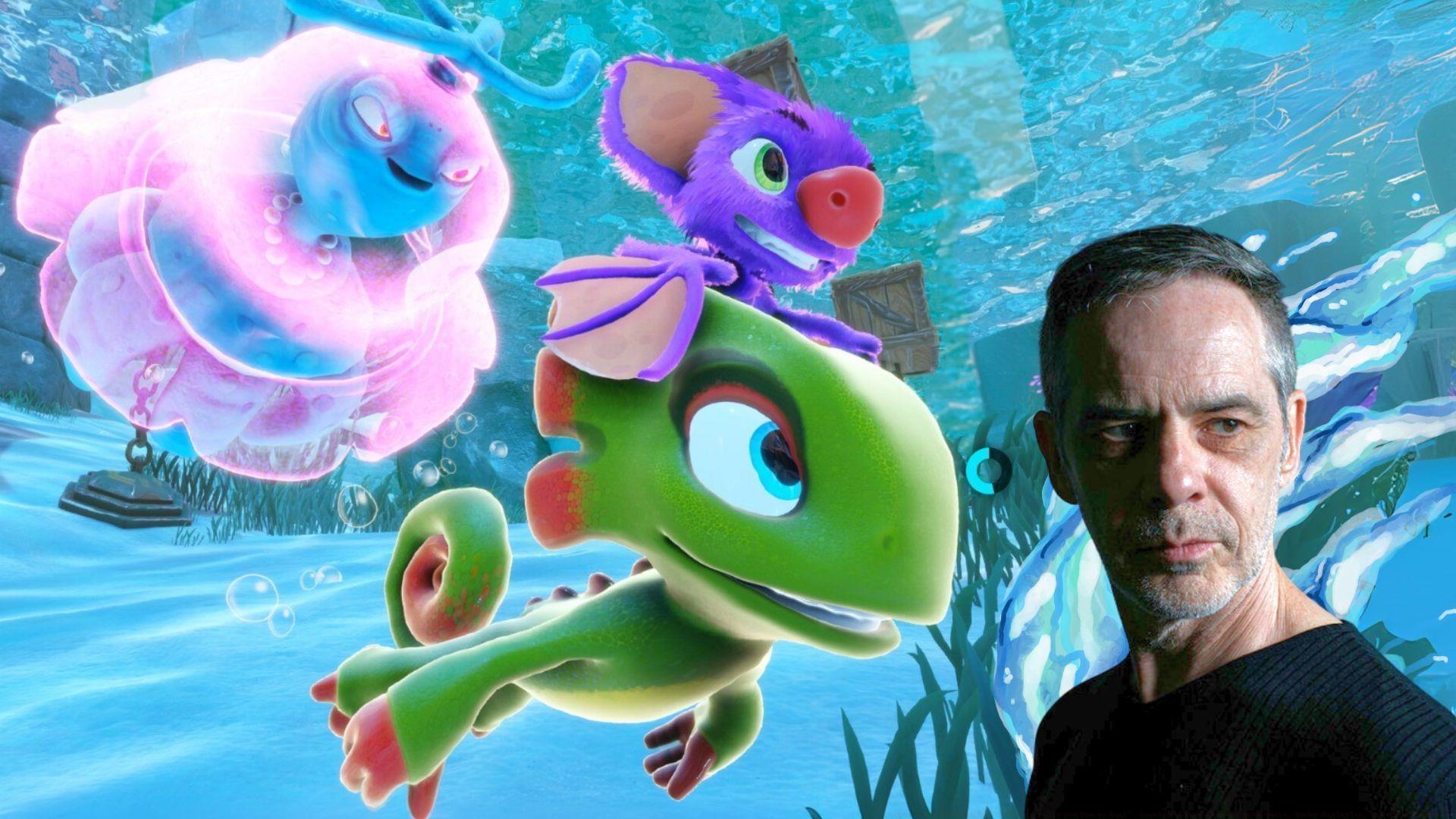
For generations of gamers, Grant Kirkhope’s musical compositions have defined entire gaming eras through his iconic soundtracks. Though our conversation occurred digitally following GDC rather than in person, the legendary composer generously shared insights about his extensive career spanning decades. His impressive portfolio includes groundbreaking titles like Banjo-Kazooie, Donkey Kong 64, GoldenEye 007, Mario + Rabbids: Kingdom Battle, and the upcoming Yooka-Replaylee. With this enhanced version of Playtonic’s platformer announced, we explored his creative methodology, memorable compositions, and naturally, the story behind GoldenEye’s legendary pause music that has transcended gaming culture.
Kirkhope expressed genuine humility about his impact: “I do receive that feedback frequently, and it never fails to move me—being part of someone’s childhood memories is profoundly meaningful. Between ages 5 and 12, we tend to permanently memorize theme songs and lyrics from television shows; I still recall every note from Thunderbirds and Scooby Doo from my own youth. So those childhood gamers now carry fragments of my music with them… I suppose I should apologize!”
Philosophy of Game Music Composition
Q. The gaming space has no shortage of amazing music, but it feels like when people talk about composers, RPG greats like Nobuo Uematsu or Yasunori Mitsuda take the lions share of the praise. What is your philosophy when it comes to composing music for games, and how has it helped put genres like platformers on the map musically?
Grant Kirkhope: Those composers certainly deserve their recognition—I’d include Koji Kondo in that elite category as well. My approach centers on transforming visual elements into auditory experiences. I operate on the principle that visuals convey the narrative while music directs the emotional response. When composing for a frozen ice castle environment, I consider sharp, crystalline sounds utilizing instruments like celeste, glockenspiel, and pizzicato strings to create that frigid, magical atmosphere.
For verdant meadows or dense forests, I lean toward woodwinds and string sections to evoke natural warmth and organic growth. Platform games particularly benefit from musical diversity—they typically contain both lighthearted stages and tense, challenging areas, allowing me to create varied compositions that precisely match each location’s mood and gameplay requirements.
Practical Tip: When scoring environmental themes, study the color palette and architectural details of game assets. Cold blues and sharp angles suggest metallic percussion, while warm earth tones and curved shapes indicate woodwinds and legato strings.
Behind Classic Game Soundtracks
Q. On the topic of classics, you also composed for Banjo-Kazooie, a real classic in the world of collect-a-thons. In the Nintendo Power Banjoo-Kazooie Demo tape, there was a track featured that wasn’t in the game that we’re aware of. Was that one of your pieces, and do you recall why it wasn’t included in the game?
Grant Kirkhope: Interestingly, all music featured in that demonstration utilized stock library recordings rather than my original compositions. This marketing approach frequently frustrated me—promotional materials consistently used unrelated music instead of the actual game soundtrack, which created confusion among fans expecting to hear the authentic musical experience.
Q. You are responsible for arguably the most iconic pause music of all time — except maybe for Battletoads — in Goldeneye: 007 on the Nintendo 64. When that was created, was it intended for another part of the game, or was the intention always to create one of the hardest beats of all time?
Grant Kirkhope: That acknowledgment means a lot! The creation story is quite unexpected—that particular composition took me approximately fifteen minutes to complete. I genuinely assumed players would ignore pause screen music entirely, presuming they’d suspend gameplay for bathroom breaks or meals.
The cultural resonance has been astonishing! I recently received a call from Detroit rapper BabyFace Ray requesting permission to sample the track. The request surprised me tremendously. Due to licensing requirements, I re-recorded the composition to match the original precisely. He incorporated it into his song “Count Money”—demonstrating how GoldenEye’s pause music continues evolving within popular culture.
Common Mistake to Avoid: Never underestimate secondary game elements—seemingly minor components like menu music or sound effects can become culturally significant. Always apply consistent quality standards to all audio elements, regardless of their perceived importance.
Yooka-Replaylee: Reinventing the Score
Q. Some of your most recent work is coming back again when Yooka-Replaylee hits shelves. A fully remastered, remade, and remixed version of the Playtonic platformer, what went into the game from your hands?
Grant Kirkhope: I completely re-recorded all level music using live orchestral performances. Traveling to Prague, I conducted sessions with the City of Prague Philharmonic Orchestra, with whom I’ve established a strong working relationship over multiple projects. The results exceeded expectations, and I’m eagerly anticipating player reactions to these enriched musical arrangements. Nothing compares to the experience of hearing professional musicians perform your compositions—it represents the ultimate creative fulfillment for any composer.
Q. Can fans perhaps expect anything new, in terms of music in Yooka-Replaylee? Perhaps some bonus tracks that didn’t make their way into the first game?
Grant Kirkhope: The game introduces completely new musical compositions for the Rextro Arcade Levels. Additionally, players will discover fresh musical elements specifically created for Replaylee, though these represent enhancements rather than complete new tracks—designed to elevate the overall auditory experience without fundamentally altering the established musical identity.
Q. I know it’s hard to pick a favorite track from a game, in many cases. As a musician and composer, you put so much effort into each one. But was there a track in Yooka-Replaylee that perhaps was more difficult to put together than the others?
Grant Kirkhope: Glitter Glaze Glacier presented particular challenges. I initially composed the piece during the Kickstarter campaign without visual references, but narrative designer Andy Robinson requested revisions when the level’s aesthetic evolved. The environment shifted from resembling Banjo-Kazooie’s Freezeezy Peak toward a more enchantingly magical visual design requiring musical adjustments.
Creative Process & Collaboration
Q. I’ve always been fascinated to learn more about gaming composition, as a gamer, and someone who dabbled in musical composition in high school. What sort of reference materials or visual aids do you typically get, before putting a track together?
Grant Kirkhope: The quantity of preparatory materials varies significantly depending on developer preferences. During my Ubisoft collaboration on Mario + Rabbids titles, I received extensive creative direction including concept artwork and musical reference tracks to establish the desired aesthetic. Conversely, Yooka-Laylee provided minimal guidance beyond basic environment descriptions—though having worked extensively with the development team previously, they trusted my creative instincts implicitly.
Q. One of the most frustrating things, when creating — be it writing or musical composition — is being stuck in a rut. When you’re tapped out creatively, what do you do to get your head back in the right space to create?
Grant Kirkhope: Creative blocks rarely affect me, largely due to my thirteen-year staff composer position at Rare establishing professional discipline. Treating composition as standard office hours (9 AM to 5 PM) ingrained productive habits. Maintaining consistent daily routines trains your brain for creative output during designated periods. I continue this practice today, composing at identical times daily including weekends. The results may not always represent my best work, but consistent practice matters more than waiting for inspiration. The romanticized notion of awaiting divine creative intervention doesn’t resonate with me—just progress systematically: note by note, chord by chord, persistently moving forward.
Q. You’ve worked with, and learned from, some fantastic individuals in your time composing like David Wise. What lessons that you’ve learned from them are you carrying with you into your work on Yooka-Laylee?
Grant Kirkhope: I continuously absorb techniques from fellow composers. Recently attending a Washington State fan convention with David Wise, I noticed an innovative chord inversion in one of his compositions that beautifully enhanced that musical passage. And of course, John Williams remains an endless inspiration source! My Yooka-Laylee soundtrack contains numerous subtle influences from other composers, though perhaps only I recognize their origins.
Optimization Tip: Establish a consistent daily creative schedule rather than waiting for inspiration. The discipline of regular practice often generates better long-term results than sporadic bursts of creativity.
Advice for Aspiring Composers
Q. For those who want to enter the gaming composition space, there’s plenty of competition. For those would-be composers, do you have any advice for someone trying to grow or improve, and get their work out there?
Grant Kirkhope: Musical talent represents merely half the equation—networking and personal connections complete the essential formula. Building professional relationships proves absolutely critical for securing composition opportunities. Simply uploading music to websites or YouTube channels proves insufficient given the overwhelming digital noise. You must actively insert yourself into spaces where game development occurs and establish genuine connections with practitioners.
Game Jams provide excellent networking environments for meeting emerging developers. First-time game creators frequently seek composers for their projects. Attending GDC offers another valuable connection opportunity, though the financial investment can be prohibitive for newcomers.
Strategic Approach: Begin by offering your services for small indie projects or game jam entries to build your portfolio and connections simultaneously. Focus on developing relationships with programmers and designers early in their careers—these connections often lead to future opportunities as their careers advance.
Grant Kirkhope maintains presence on Twitter, with selected musical highlights available on Spotify and YouTube—including a dedicated Donkey Kong 64 album. His compositional expertise will be prominently featured when Yooka-Replaylee releases later this year.
No reproduction without permission:Tsp Game Club » “Images tell the story but the music tells you how to feel”: Grant Kirkhope on video game music, Yooka-Replaylee, and more (Exclusive) Insights from composer Grant Kirkhope on game music creation, creative process, and advice for aspiring composers