
TL;DR
- Inferno’s tight corridors make precise utility essential for controlling key areas
- Learn specific smoke lineups for Banana, CT spawn, and Coffins positions
- Coordinate timing with teammates for maximum effectiveness during executes
- Practice lineups consistently to build muscle memory for clutch situations
- Precise utility lineups transform Inferno from chaotic to controlled gameplay
Inferno distinguishes itself within the CS2 map rotation through its architectural complexity that demands tactical execution above all else. The map’s signature narrow passageways, multi-level vertical spaces, and constrained angles transform every grenade into a potential round-winning asset. Unlike expansive battlegrounds such as Mirage or Dust2, Inferno’s design philosophy centers around chokepoint control and layered defensive positions.
Three primary combat zones define the Inferno experience—Banana’s elongated corridor, Mid’s connector network, and Apartments’ close-quarters engagements. Each area presents unique utility requirements that teams must master to achieve consistent success. Banana specifically emerges as the most fiercely contested territory during initial round phases, with Counter-Terrorists establishing early control while Terrorists mount aggressive takeovers. This slender lane consistently erupts into intense firefights within mere seconds of round commencement.
The infamous Pit on A bombsite and Coffins/New Box positions on B create utility-dependent scenarios where proper flashbang and molotov usage becomes non-negotiable.
Strategic grenade deployment separates elite Inferno players from average performers. The map’s layout punishes impulsive play while rewarding calculated, coordinated utility usage that can single-handedly shift round momentum.
Importance of Grenade Lineups
Utility transcends supportive functions in CS2, evolving into primary weapons that dictate round outcomes. Haphazard smoke throws that vaguely approximate target areas no longer suffice for competitive play. Inferno’s confined spaces and predictable execution paths demand precise lineups. A single misaimed smoke grenade can determine whether your team successfully plants the bomb or faces elimination.
Lineups represent carefully calibrated positions and crosshair placements designed to produce consistent grenade trajectories. These aren’t improvisational techniques developed mid-round but rather systematically studied, repeatedly practiced, and committed to memory through deliberate repetition.
Why does Inferno specifically emphasize lineup mastery? The map’s unforgiving nature severely penalizes tactical errors. An improperly placed CT smoke grants the enemy AWPer an unobstructed sightline from spawn. An inaccurate flashbang into Pit exposes your team to devastating crossfire positions. However, when utility lands exactly as intended, you create advantageous situations while reducing your team’s operational complexity.
Synchronized team execution represents another crucial factor. When every squad member understands their designated lineups, site takes unfold with fluid precision and accelerated timing.
CS2’s enhanced grenade physics introduce more realistic environmental interactions, further elevating lineup importance. Projectiles ricochet off surfaces with realistic physics, incendiary devices propagate fire through combustible materials, and smoke grenades can seal entire entry corridors—moving beyond speculative “throw and hope” approaches. Lineup proficiency grants battlefield control, and within CS2’s competitive ecosystem, control translates directly into victory probability.
Banana Control Smoke
Establishing Banana dominance forms the foundation of successful Terrorist-side Inferno strategy. Without controlling this critical pathway, your strategic options diminish significantly. You cannot execute coordinated B site attacks nor apply meaningful rotational pressure on CT defenses. This is where the Banana Control Smoke proves indispensable.
From T ramp or secondary mid positions, a strategically deployed smoke can land deep within Banana, positioned precisely before sandbag or vehicle cover points. This visual denial compels Counter-Terrorists to either retreat or advance through obscured vision—both scenarios presenting tactical disadvantages.
Here’s how to line it up:
- Position yourself at the T ramp corner adjacent to the half-wall barrier.
- Align your crosshair toward the uppermost section of the wiring on the protruding right-side pole.
- Execute a jump throw with the smoke grenade.
This smoke will descend deep into Banana, obstructing common CT peeking positions behind walls or near sandbag clusters.
Why does this particular smoke generate such impactful results? It disrupts the CT’s established defensive rhythm. During early round phases, most Counter-Terrorist players attempt to expend utility resources to maintain Banana control. However, if your smoke deploys first, it seizes tactical initiative. You can provoke their grenade expenditure, then counter-attack with your own utility arsenal. Combine this smoke with a molotov and precisely timed pop flash, and you’ve secured Banana control without exchanging firearm discharges.
Advanced tactical consideration: Coordinate with a teammate to deploy a flashbang immediately following smoke detonation, potentially catching CTs attempting smoke penetration completely vision-impaired. High-risk maneuver for them, substantial reward for your team.
CT Spawn Smoke (B Site Execute)
The CT spawn smoke arguably represents one of the most vital lineups for executing B bombsite attacks. Failure to deploy this smoke leaves a direct visual corridor available for the CT AWPer positioned in spawn, who will readily eliminate one or two attacking players before site entry.
Here’s the simplified lineup:
- From Banana proximity to the fractured wall, nestle into the corner position.
- Target the upper left section of the metallic roofing or the foliage suspended just beneath the skybox boundary.
- Utilize jump throw mechanics to launch the smoke projectile.
This smoke lands precisely within CT spawn’s central area, completely eliminating visual access. Now, CTs cannot observe your advance from the spawn sightline unless they advance through the smoke screen—placing them at significant positional disadvantage.
This smoke transforms into a lethal asset when integrated with Coffins smoke coverage and New Box molotov deployment. You systematically isolate each major defensive angle, forcing CTs into disorganized retakes or blind rotations. It converts structured CT defenses into chaotic scrambling responses.
Temporal coordination remains paramount with this utility piece. Avoid premature deployment where the smoke dissipates before site engagement, or delayed throwing that exposes your entry players. Ideally, time the smoke to activate exactly as your assault team emerges onto the bombsite.
Coffins Smoke
Coffins represents one of those frustrating defensive positions that enables CTs to maintain B site control from protected cover while still acquiring unobstructed target acquisition.
Execution methodology:
- Assume position at Banana’s half-wall structure.
- Align your aim slightly rightward of the antenna protruding above the Coffins zone.
- Position yourself at CT spawn’s upper section near the wall perimeter.
- Target the area above the vehicle rooftop on Banana’s left flank.
- Execute jump throw with your smoke grenade.
- Deploy one molotov behind the log positions.
- Execute one pop flash over the wall structure.
- Then advance as the smoke fully deploys.
When properly executed, this utility combination disorients Terrorist players while enabling control reclamation without excessive commitment.
Banana territorial control resembles real estate acquisition within CS2’s strategic framework. The earlier and longer you maintain dominance, the greater pressure you apply to T-side operations. They must reconsider whether B execution remains viable or if you maintain close proximity. This smoke facilitates mid-round control reset operations.
Ensure your team coordinates effectively. An isolated smoke deployment lacking supporting utility generates minimal tactical advantage—and potentially costs defensive lives.
Mid Smoke from Arch
Among the most undervalued Counter-Terrorist smokes on Inferno is the Mid smoke from Arch position. While Terrorists frequently utilize Mid for split executes or A site fake attacks, a well-timed smoke deployment at Mid can delay their entire strategic blueprint.
Here’s the execution procedure:
- Position yourself behind the Arch wall structure.
- Target the area just above the balcony roofing tile across the Mid corridor.
- Left-click throw or utilize jump throw depending on elevation and perspective.
This smoke lands at Mid’s upper section, blocking Terrorist visual access from secondary mid or underpass locations. It proves particularly valuable when T-side prepares Mid to Arch split or Mid to Library assault maneuvers.
When strategically employed, it provides A site defenders additional time for positional adjustment, rotational movement, or counter-utility deployment. It additionally disrupts T-side execution timing. Numerous Terrorist assault strategies depend on uncontested Mid control. This smoke denies that strategic foundation without surrendering complete territorial authority.
For enhanced tactical complexity, pair it with an aggressive Mid descent peek from a teammate stationed at short position. The smoke attracts defensive attention while the peek capitalizes on enemy distraction.
Exercise caution however—avoid predictable deployment patterns across consecutive rounds. Astute Terrorist players will time flashbang deployments through the smoke barrier or await dissipation before mounting concentrated assaults. Vary deployment timing and incorporate layered defensive schemes.
Fake Executes Using Utility
Have you encountered the strategic principle “compel them to rotate autonomously”? That encapsulates the power behind fake executes. Through precisely timed utility deployment, you can persuade the opposition that you’re assaulting one bombsite, while clandestinely rotating toward the alternative objective.
Here’s the tactical implementation:
1. Deploy Core Utility from Protected Zones:
- Smoke CT and Coffins positions from T-Ramp or Banana approaches.
- Incorporate a molotov toward New Box position.
- Execute deep site flashbang deployments.
Even without personnel commitment, that comprehensive utility package strongly suggests B site assault. Most Counter-Terrorist defenders will succumb to the deception and rotate away from A site defenses.
2. Temporal Delay and Rotational Maneuver:
- Following auditory cues of defensive movement or communication panic (yes, you’ll detect these indicators), rotate your assault team quietly back toward A bombsite.
- Assault the A site location where merely one or two CTs maintain defensive positions.
This tactical approach forces defensive errors. It disrupts their communication systems. It depletes their utility resources. And it positions your team for simplified bomb plant execution on the weakened defensive site.
Professional Maneuver: Position one lurking player to generate acoustic distraction and bait utility expenditure on the simulated assault site while your primary force strikes the alternative objective.
Crossfire and Utility Timing
Comprehensive utility arsenals prove ineffective if your team lacks synchronization. This is where temporal coordination and crossfire positioning demonstrate critical importance. It represents the strategic catalyst transforming mediocre teams into championship contenders.
Here’s the mastery methodology:
- Coordinate Utility Deployment
- Announce “deploying CT smoke in 3…2…1” and implement countdown procedures before assault initiations.
- Double Flashbang Coordination
- One player executes high-arcing throws, the other employs low trajectory deployments to cover all enemy engagement angles.
- Molotov Preceding Flashbang
- Incinerate common hiding positions, then deploy flashbangs when defenders reposition.
During defensive operations:
- Establish bait configurations, where one player reveals position and the other capitalizes on enemy engagement.
- Implement delayed smoke deployment following Terrorist assault initiation—it provides approximately 7 additional seconds for defensive reorganization.
Don’t neglect adaptive adjustment based on opponent tendencies. If they favor aggressive rushes, preserve utility resources longer. If they employ deliberate pacing, deny early map control initiatives.
The strategic essence of Inferno? It represents a three-dimensional chessboard. Every grenade constitutes a strategic piece. Every lineup represents a calculated move toward victory domination.
Inferno distinguishes itself within the CS2 map rotation through its heavy reliance on tactical coordination and strategic utility deployment. Unlike more expansive battlegrounds such as Mirage or Dust2, Inferno’s constricted passageways, narrow corridors, and multi-level vertical design ensure that every carefully placed flashbang, smoke grenade, and incendiary can determine round outcomes. This environment demands forethought, synchronized team movements, and comprehensive knowledge of grenade mechanics.
The battlefield organizes into three primary combat zones—Banana, Mid, and Apartments. Each sector demands meticulous smoke and explosive placement for survival and success. For instance, Banana emerges as one of the most fiercely contested territories during initial round phases. Counter-Terrorists aim to maintain control while Terrorists seek to capture it. This compact lane transforms into an intense micro-combat arena within the first fifteen seconds of nearly every engagement. A strategically deployed smoke formation can obstruct enemy sightlines, consume valuable time, or facilitate your squad’s safe advancement.
Then consider the notorious A site pit region or B site with its Coffins and New Box defensive positions. Every individual sightline requires specific utility deployment for effective clearance or protection. If you fail to deploy a flash before peeking, you’re essentially gambling with your virtual existence. If you neglect to utilize a molotov for flushing opponents from New Box, you surrender significant tactical leverage.
Inferno instills disciplined gameplay. It compels strategic thinking before action. This explains why it represents a tactical enthusiast’s ideal and a nightmare for those who disregard lineup mastery. Understanding your smoke and grenade placements isn’t merely optional here—it’s an absolute requirement.
Importance of Grenade Lineups
Utility transcends mere supplementary tools in CS2—it functions as a round-altering force. However, haphazardly tossing a smoke while hoping for optimal placement no longer suffices. Particularly on a map like Inferno, where confined spaces and predictable attack patterns demand pinpoint-accurate lineups. A solitary misplaced smoke can differentiate between successful bomb deployment and your team’s complete elimination.
Lineups represent pre-determined positions and aiming angles employed for consistent grenade deployment. These aren’t techniques you improvise during mid-round situations. They’re meticulously studied, repeatedly drilled, and committed to memory. You desire your CT spawn smoke on B to land flawlessly every single instance? You require a lineup. Need to incendiary New Box without exposing yourself? There exists a specific lineup for that objective as well.
Why do they hold such critical importance on Inferno specifically? Because the map penalizes errors severely. Miss a smoke as CT, and the opposing AWPer acquires an unobstructed sightline from spawn. Miss a flash into Pit, and you’re advancing directly into crossfire. However, when your utility lands precisely where intended, you’re simplifying your team’s efforts and generating victory opportunities.
Another crucial element involves team coordination. When every squad member comprehends their respective lineups, site executions become fluid and rapid. Eliminate waiting ten seconds because someone forgot their Arch smoke positioning. No more botched Coffins smokes that leave the bombsite vulnerable to retakes. With proper lineups, everyone understands their assignment, their timing parameters, and their responsibilities.
Within CS2, grenades also demonstrate enhanced environmental interaction physics, rendering lineups even more indispensable. Ricocheting off surfaces, inflicting damage through flames, or sealing entire entry corridors—this transcends simple “throw and hope” methodology. Mastering lineups provides battlefield control, and in a competitive environment like CS2, control translates to victory.
Banana Control Smoke
Establishing Banana dominance constitutes a foundational component of successful Inferno T-side strategy. Without it, your tactical options diminish considerably. You cannot execute B site attacks, nor can you pressure CTs into rotation. This is where the Banana Control Smoke demonstrates its value.
Originating from T ramp or secondary mid positions, a strategically placed smoke can deploy deep within Banana, precisely before sandbags or car placements. This obstructs visibility and compels CTs to either retreat or advance through smoke—neither scenario proving advantageous for them.
Execution methodology:
- Proceed to the corner at T ramp, adjacent to the half-wall barrier.
- Align your crosshair toward the uppermost section of the wire on the protruding right-side pole.
- Execute jump throw smoke deployment.
This smoke will land profoundly within Banana and obstruct the common CT peeking angles from behind the wall or near sandbags. It proves particularly effective during early round phases, providing your team secure space to safely incendiary proximate corners, clear dangerous angles, or advance with flash support.
Why does this smoke demonstrate such potency? It disrupts the CT’s operational tempo. During initial round stages, most counter-terrorists attempt to expend utility for Banana control. However, if your smoke lands initially, it grants tactical initiative. You can bait their grenade deployment, then counter-attack with your own arsenal. Combine this smoke formation with molotov deployment and pop-flash coordination, and you’ve secured Banana control without sustaining firearm damage.
Advanced technique: When coordinating with teammate flash deployment immediately following smoke detonation, you can intercept CTs attempting to push through, completely vision-impaired. High-risk maneuver for them, substantial reward for your squad.
CT Spawn Smoke (B Site Execute)
The CT spawn smoke arguably represents one of the most crucial lineups for B site executions. Failure to deploy it leaves direct visual corridors accessible for AWPers positioned in CT spawn, who will readily eliminate one or two attacking players before you even establish site presence.
Execution sequence:
- From Banana proximity to the damaged wall, position yourself within the corner.
- Direct your aim toward the upper-left section of the metallic roofing or foliage suspended just above the skybox boundary.
- Utilize jump throw mechanics to launch the smoke canister.
This smoke lands precisely within CT spawn’s central area, completely severing visual access. Now, CTs cannot observe your advancement from spawn angles unless they push through smoke—placing them at significant tactical disadvantage.
This smoke transforms into lethal tactical weaponry when integrated with Coffins smoke deployment and New Box molotov coordination. You isolate every major defensive angle, forcing counter-terrorists into blind retakes or rotation. It converts robust CT defensive formations into disorganized scrambles.
Timing coordination proves absolutely essential with this deployment. Avoid premature throwing or it dissipates before site engagement. Refrain from delayed deployment or your entry players become exposed. Ideally, you desire detonation synchronization with your team’s site entry movements.
Coffins Smoke
Coffins represents one of those frustrating positions that enables CTs to defend B from cover while maintaining clean firing lines. Neglecting this position during B executions essentially invites 2v5 scenario development. The Coffins smoke eliminates that challenge entirely.
Deployment instructions:
- Position yourself at the half-wall within Banana.
- Align your crosshair slightly rightward of the antenna protruding above the Coffins sector.
- Execute jump throw smoke deployment.
Upon detonation, the defender positioned behind Coffins loses complete visibility. They can either spray indiscriminately through smoke or retreat toward construction areas. Either tactical decision results in substantial control relinquishment.
When coordinated with the CT spawn smoke, you effectively “encapsulate” the bombsite. The remaining exposed angles include New Box, First Oranges, and Dark sectors—which you can subsequently clear utilizing molotovs and flashbangs. It streamlines your entry pathways and substantially reduces teammate loss probabilities.
Advanced tactical deployment: When simulating B executions through Coffins and CT smoke deployment without commitment, it frequently triggers A site rotations. This creates Mid or Apartments access opportunities for simplified A site captures. These dual smoke deployments collectively generate tactical confusion, even without full-scale assaults.
Entry Flash into B Site
Let’s address reality—charging B site without flash deployment resembles parachute-free skydiving. Survival remains possible, but probability favors unfavorable outcomes. A perfectly timed entry flash becomes your closest tactical ally when assaulting B, particularly when CTs maintain aggressive stances like First Oranges, New Box, or Coffins positions.
Reliable deployment methodology:
- Position near the compromised wall within Banana.
- Direct your aim above the wiring connecting to the elevated pole adjacent Coffins.
- Execute running flash deployment.
This flash will detonate above the site’s skybox boundary, vision-impairing defenders maintaining conventional angles behind Coffins, at New Box, and potentially Construction sectors. The optimal advantage? It detonates atmospherically, avoiding surface ricochets or auditory cues, providing adversaries minimal reaction intervals.
Ensure your squad comprehends timing synchronization. Vocalize coordination: “Flashing deployment, advance upon detonation!” That microsecond coordination guarantees your teammates engage while opponents experience complete visual impairment. Executed correctly, you’ll witness entry frags accumulating sequentially.
Professional recommendation: Consistently coordinate this flash with molotov or smoke deployment. Avoid permitting CTs vision recovery opportunities and counter-attack initiation. Overpower them with coordinated utility deployment, and you command the bombsite.
New Box Molotov (B Site)
If you’ve experienced Inferno gameplay exceeding ten minutes duration, you’ve likely been eliminated by defenders utilizing New Box positioning on B site. It represents one of the most prevalent—and aggravating—CT defensive locations. This explains why maintaining reliable molotov deployment for New Box represents non-negotiable T-side execution components.
Deployment methodology:
- Position yourself at the half-wall or near damaged wall within Banana.
- Observe the roofing above B site and direct your crosshair slightly rightward of the elevated pillar behind New Box.
- Utilize jump throw mechanics to deploy the incendiary precisely behind the defensive structure.
Upon ignition, any defender maintaining New Box positioning confronts two alternatives: sustain combustion damage or reposition. Either tactical decision results in their defensive configuration disruption, representing tactical victory.
Why does this molotov demonstrate such critical importance? Because New Box defenders maintain substantial positional benefits. They’re securely positioned, can engage entry players effectively, and frequently avoid clearance until strategically disadvantageous moments. A strategically deployed molotov resolves that challenge efficiently. It compels them into exposed positioning—directly into your squad’s firing solutions.
When synchronized with CT spawn and Coffins smoke deployment, this incendiary isolates the final potentially hazardous locations. With New Box cleared and Coffins obscured, your entry trajectory becomes significantly more controllable.
Avoid restricting this molotov deployment exclusively to execution scenarios. You can employ it for deceptive advancement simulation or premature rotation induction. CTs auditory detection of molotov deployment at New Box frequently assumes B execution initiation and might over-rotate—providing A split opportunities as alternative tactical approaches.
Pit Molotov (A Site Push)
A site on Inferno maintains a notorious pit defensive location capable of repelling entire teams if neglected. It represents a power positioning scenario. Players can conceal themselves, engage at optimal timing, and potentially survive multiple combat engagements. Therefore, when coordinating A site assaults, clear pit sectors initially—and molotov deployment represents the optimal methodology.
Deployment guide:
- From Apartments balcony or mid positioning, navigate toward secure deployment locations.
- Direct your crosshair above the balcony roofing tiles or across the white structural pillar on the residential building adjacent pit.
- Execute jump throw or standard deployment contingent upon your angular positioning.
Upon ignition, it compels any pit-positioned defenders toward three alternatives: evacuation under fire, damage sustainment, or retreat toward graveyard sectors—where secondary molotov or flash deployment can flush them from concealment.
This molotov functions as momentum-altering deployment. When capable of pit clearance during A site assault phases, it substantially opens the bombsite. You eliminate concerns regarding dual engagements from pit and site positions. You concentrate firepower upon short and mini-pit or graveyard sectors.
Timing coordination proves absolutely essential here. Deploy the pit molotov during teammate short or balcony scaling movements. This tactical timing prevents the pit defender from acquiring repositioning opportunities and punishing players advancing from applications.
Professional recommendation: Coordinate teammate flash deployment toward site synchronization with molotov detonation in pit. It compels the defender toward flash aversion or panic repositioning from incendiary effects, providing clean entry opportunities.
Fake Executes Using Utility
Ever encountered the tactical philosophy “induce opponent self-rotation”? That represents the strategic power of deceptive execution simulations. Through strategically timed utility deployment, you can convince adversaries of bombsite assault initiation, while secretly rotating toward alternative objectives.
Execution methodology:
1. Deploy Core Utility from Protected Zones:
- Smoke CT and Coffins from T-Ramp or Banana positioning.
- Supplement with New Box molotov deployment.
- Execute deep site flash deployment.
Even without commitment execution, that comprehensive utility deployment communicates definitive B site assault. Most CT defenders will succumb to deception and rotate from A site positioning.
2. Tactical Pause and Rotation:
- Following auditory detection of movement or communication panic (yes, you’ll perceive the indicators), rotate your squad toward A positioning covertly.
- Assault the A bombsite where minimal CT defenders remain.
This tactical approach induces opponent errors. It disrupts their communication coordination. It depletes their utility resources. And it prepares your team for straightforward bomb deployment on the weakened bombsite.
Professional Maneuver: Maintain one deception player to generate auditory cues and bait utility deployment on the simulated bombsite while your primary team assaults the alternative objective.
Crossfire and Utility Timing
All available utility globally won’t preserve your team if coordination lacks synchronization. This represents where timing precision and crossfire positioning demonstrate critical importance. It functions as the concealed catalyst transforming average squads into championship contenders.
Mastery methodology:
- Coordinate Utility Deployment Simultaneously
- Vocalize coordination: “smoking CT deployment in three…two…one” and implement countdown procedures before executions.
- Dual Flash Deployment
- One player executes high-altitude deployment, the other low-altitude deployment for comprehensive enemy angle coverage.
- Molotov Preceding Flash Deployment
- Incendiary defensive hiding positions, then execute flash deployment during their repositioning movements.
During defensive scenarios:
- Establish deception configurations, where one player demonstrates presence and the secondary engages upon contact.
- Utilize delayed smoke deployment following T execution initiation—it provides additional seven-second tactical advantages.
Avoid neglecting adaptive tactical adjustments based on opponent strategies. When encountering aggressive rushes, conserve utility deployment duration. When confronting passive gameplay, deny map control during initial phases.
The strategic essence of Inferno? It represents a strategic chessboard. Every grenade functions as a gamepiece. Every lineup represents a tactical maneuver.
How to Set Up Practice Mode
Before achieving grenade dominance during competitive matches, you must complete repetitive training sessions. Fortunately, CS2 facilitates straightforward practice environment configuration where you can refine smoke, flash, and molotov deployment precision.
Initial configuration methodology:
1. Initiate Custom Game with Enabled Cheat Functions
- Access the CS2 command console interface.
- Input:
map de_infernofor map loading procedures.
2. Activate Practice Configuration Parameters
sv_cheats 1
mp_roundtime 60
mp_restartgame 1
sv_infinite_ammo 1
sv_grenade_trajectory 1
sv_grenade_trajectory_time 10
These command sequences provide unlimited grenade availability, activate trajectory visualization, and display individual projectile pathways. You can observe precisely where your smoke lands and its ricochet behavior.
3. Configure Key Binding Assignments
Implement binding configurations for jump-throw mechanics:bind "v" "+jump; -attack; -jump"
Utilizing these configuration parameters, you can repeatedly execute lineups until they become automatic muscle memory responses. Eliminate mid-match deployment uncertainty.
Supplementary Technique: Utilize
noclipfunctionality for aerial navigation around the battleground, testing diverse lineup approaches from multiple angular perspectives. Identify optimal deployment strategies for your squad’s tactical approach or positional assignments.Tips for Perfecting Consistency
Training represents one consideration. Consistent performance during actual competitive scenarios represents another challenge entirely. Here’s your methodology for transforming training into competitive execution:
- Repetitive Execution Proves Essential – Repetitively execute identical lineups twenty to thirty iterations until deployment feels instinctive.
- Capture Screen Images – Preserve your lineup positioning and crosshair alignment data.
- Record First-Person Demonstrations – Review your match recordings and identify utility deployment errors.
- Establish Training Routines – Implement lineup-focused warmup procedures identical to conventional aiming practice.
- Maintain Patch Update Awareness – Occasionally CS2 modifies object placement or environmental geometry slightly. Maintain current knowledge through community guide resources or video content.
Remember: Lineups function merely as tactical instruments. What determines round victories involves deployment methodology and tactical timing. Through sufficient training investment, you’ll initiate pixel-perfect smoke and flash deployment even under competitive pressure.
Common Mistakes to Avoid
One of the most prevalent errors players commit on Inferno involves expending complete grenade inventories during initial twenty-second phases. That represents a formula for tactical disaster, particularly during CT-side scenarios.
Here’s why it demonstrates negative impact:
- T-side executions typically occur during mid-to-late round timing.
- When utilizing all smokes and molotovs prematurely, you’ll become vulnerable targets during actual assault phases.
- Strategically coordinated teams will bait utility deployment then punish your team during resource-depleted phases.
Correction methodology:
- Utilize one smoke or molotov deployment for delaying early aggression.
- Conserve secondary utility for post-execution defensive requirements.
- Maintain communication coordination with teammates for staggered utility deployment timing.
Strategic patience determines round victories.
Poor Communication on Smokes
Nothing demonstrates worse tactical scenarios than observing dual smoke deployments landing identically positioned—except potentially misplaced smoke deployments costing round outcomes.
This occurs due to inadequate communication coordination. Teams neglect vocalizing assignment responsibilities: “Who’s deploying Arch smoke? Who’s handling Library coverage?”
Here’s the correction methodology:
- Before round initiation, designate utility responsibilities: “You execute Arch coverage, I’ll deploy Library obstruction.”
- During mid-round tactical developments, confirm coordination: “Has anyone obstructed CT spawn?”
- During uncertainty scenarios, vocalize assumption: “I’ll execute deployment” and personally handle the requirement.
Elite squads vocalize every individual utility deployment. That represents how you convert tactical chaos into battlefield control.
When deploying the Mid smoke from Arch, elevate your strategy by combining it with calculated aggression. The smoke serves as visual cover while your teammate executes a timed peek down Mid from short position. This dual-action approach divides enemy attention—the smoke creates uncertainty while the peek capitalizes on their distraction.
However, exercise caution against predictable patterns. Experienced T-side players will anticipate your smoke and either coordinate a flash through the smoke or deliberately wait for it to dissipate before mounting their assault. Vary your deployment timing between early-round denial and mid-round disruption to maintain unpredictability.
Common Mistake: Using identical timing every round allows opponents to develop counter-measures. Instead, implement layered defense by occasionally following the smoke with a molotov or delaying your peek to catch them during rotation.
Few situations trigger panic faster than detecting multiple T-side players charging down Banana within the initial seconds. This is precisely why incorporating an anti-rush flash into your CT arsenal is non-negotiable. It genuinely determines whether you successfully defend the site or suffer complete overrun.
Execute this crucial defensive maneuver:
- From CT spawn, advance toward B site with coordinated movement.
- Position one player securely in sandbags or car cover.
- The supporting teammate stations behind the half-wall to launch the flash over Banana.
This flash detonates precisely above the T-side approach angle, effectively blinding any attackers advancing from logs, car positions, or lower Banana areas. The strategic advantage? It deploys rapidly and explodes at optimal height, creating minimal reaction time for opponents.
Your concealed teammate can then capitalize by engaging disoriented enemies or deploying counter-utility during tactical withdrawal. It serves as an exceptional method to neutralize rapid B site assaults or disrupt T-side timing coordination.
Avoid excessive repetition of this flash technique. Consistent deployment enables T-side players to pre-aim expected positions or deliberately delay their rush timing. Reserve it for specific situations, particularly after detecting early footstep audio cues or observing T-side smoke preparations.
Advanced Insight: Following this flash deployment, immediately throw a smoke grenade at Banana’s bottom section. This additional layer of obstruction further impedes their advance and provides critical time for positional recovery.
Pro Timing Tip: Coordinate with your teammate to throw the anti-rush flash precisely as you hear the initial footstep cluster. This synchronization ensures maximum disorientation as they commit to their push.
During A site retake scenarios with the bomb already planted, CT players often feel they’re navigating lethal labyrinth. T-side defenders could be positioned in Pit, Site proper, Graveyard, Balcony—effectively creating a multi-angle deathtrap. This is where precisely timed, strategically placed flashes create the essential window for angle clearance and site reclamation.
Deploy this highly effective retake tool:
- Establish position near Library or Archway.
- Direct aim significantly above the site’s structural framework or rooftop perimeter.
- Execute left-click throw to ricochet it above the bombsite area.
This flash will detonate above site level, simultaneously blinding opponents occupying site positions, Pit area, and potentially Graveyard with proper execution timing. It grants your teammates vital seconds to methodically clear these danger zones without immediate elimination.
One of the most significant errors players commit involves dry peeking or deploying flashes that fail to achieve sufficient penetration depth. An effective Post-Plant Flash should optimize disorientation duration while remaining virtually unavoidable without precise intelligence.
Professional Retake Strategy: Implement double-flash coordination:
- Initial flash compels T-side players to either redirect their focus or reposition defensively.
- Secondary flash impacts as they re-engage combat.
When coordinating with teammates approaching from Short or Apartments while you flash from Arch, you establish a lethal crossfire retake scenario. This coordinated approach can reverse seemingly lost rounds even with time constraints.
Critical Communication: Always announce your flash deployment to prevent accidental teammate blinding. Timing synchronization remains paramount—ensure your teammate prepares to advance exactly as the flash activates. This tactical synergy can secure rounds that initially appeared unwinnable.
Inferno distinguishes itself within the CS2 competitive map rotation through its heavy emphasis on tactical execution and coordinated utility usage. The map’s distinctive narrow choke points, confined passageways, and multi-level vertical design ensure that every properly executed flashbang, smoke grenade, and molotov can single-handedly determine round outcomes. This environment demands strategic preparation rather than reactive gameplay.
The battlefield naturally segments into three primary combat zones—Banana, Mid, and Apartments. Each of these critical areas demands methodical smoke placement and grenade deployment strategies for survival and success. For instance, Banana emerges as one of the most fiercely contested territories during opening round sequences. Counter-Terrorists aim to maintain control while Terrorists seek to capture it. This compact corridor transforms into an intense micro-combat arena within the initial 15 seconds of most rounds. A well-executed smoke lineup can eliminate visibility, consume valuable time, or facilitate safe area control for your squad.
Then there’s the notorious A site pit region and B site featuring Coffins and New Box defensive positions. Every individual angle requires specific utility deployment for effective clearance or protection. Attempting peeks without preceding flash deployment essentially gambles with your survival probability. Similarly, failing to deploy molotovs against CTs holding New Box surrenders significant tactical advantage.
Inferno instills disciplined gameplay methodology. It compels strategic thinking before action execution. This characteristic makes it the ideal playground for tactical specialists and a frustrating challenge for players neglecting lineup mastery. Understanding smoke and grenade deployment becomes mandatory rather than optional for competitive success.
Critical Importance of Grenade Lineups
Utility transcends mere supportive function in CS2—it represents game-changing potential. However, randomly deploying smokes without precise targeting proves insufficient, especially on Inferno where confined spaces and predictable execution patterns demand exact lineups. A single misplaced smoke can determine the difference between successful bomb plants and team eliminations.
Lineups constitute predetermined positions and angling techniques enabling consistent grenade deployment. These aren’t improvisational mid-round techniques but rather studied, practiced, and memorized procedures. Need your CT spawn smoke on B to land perfectly every single instance? You require lineup knowledge. Want to safely molotov New Box without exposure risk? Specific lineups exist for those scenarios too.
Why do they hold particular significance on Inferno? Because the map severely penalizes tactical errors. Miss a CT-side smoke, and the opposing AWPer gains clear firing lines from spawn positions. Fail to flash into Pit effectively, and you enter crossfire kill zones. But when your utility lands precisely as intended, you create advantageous situations for your team while generating winning opportunities.
Another crucial consideration involves team coordination. When every squad member understands their lineups, executes become fluid and rapid. Eliminate those frustrating 10-second delays when teammates forget Arch smoke positioning. Remove those missed Coffins smokes leaving sites vulnerable to retakes. With proper lineup integration, everyone comprehends their responsibilities, timing requirements, and role-specific duties.
Within CS2’s enhanced physics engine, grenades interact more realistically with environmental elements, making lineup mastery increasingly essential. Ricocheting off surfaces, inflicting damage through fire propagation, or sealing entire entry corridors—this transcends simple “throw and hope” methodology. Mastering lineups provides tactical control, and within competitive CS2, control translates to victory potential.
Banana Control Smoke Deployment
Establishing Banana dominance represents fundamental T-side victory requirements on Inferno. Without it, your tactical options become severely restricted. You cannot execute B site takes effectively, nor can you pressure CTs into rotation patterns. This is where Banana Control Smoke strategy becomes essential.
From T ramp or secondary mid positions, accurately placed smokes can deploy deep within Banana, precisely before sandbags or car defensive positions. This eliminates visual intelligence and forces CTs into retreat scenarios or risky smoke penetration attempts—neither situation benefits defensive setups.
Execution methodology:
- Position at T ramp corner adjacent to half-wall structure.
- Align crosshair with upper wire section on protruding right-side pole.
- Perform jump throw smoke deployment.
This smoke will land deep within Banana, blocking common CT peek angles from behind walls or near sandbags. This proves particularly effective during early round phases, providing team security for molotov deployment, angle clearance, or flash-supported advancement.
Why does this smoke demonstrate such effectiveness? It disrupts CT defensive rhythms. During initial round sequences, most CTs attempt utility dumps for Banana control. But if your smoke lands initially, it grants tactical initiative. You can bait opposing grenade deployments, then counter with coordinated utility.
Advanced tactical insight: Coordinate teammate flash deployment immediately following smoke detonation to catch CTs attempting penetration while completely blinded. High-risk scenarios for them, high-reward outcomes for you.
CT Spawn Smoke (B Site Execution)
The CT spawn smoke arguably represents one of the most critical lineups for successful B site executions.
Simple execution guide:
- From Banana proximity to damaged wall, secure corner positioning.
- Target upper left metal roof corner or foliage extending above skybox.
- Utilize jump throw mechanics for smoke deployment.
This smoke deploys directly within CT spawn center, completely eliminating visual lines. Now CTs cannot observe your push from spawn angles unless they risk smoke penetration—placing them at significant disadvantage.
This smoke demonstrates lethal effectiveness when combined with Coffins smoke and New Box molotov deployment. You isolate all major defensive angles, forcing CTs into chaotic retake scenarios or blind rotation patterns. It transforms organized CT holds into disorganized defensive scrambles.
Timing precision remains paramount. Avoid premature deployment or smoke will dissipate before site engagement. Delay too long and your entry players become exposed. Ideal timing involves smoke detonation simultaneous with team site entry.
Coffins Smoke Elimination
Coffins represents one of those frustrating positions enabling CTs to maintain B site control from protected cover while still achieving clean firing solutions.
Execution procedure:
- Position at Banana half-wall structure.
- Align crosshair slightly rightward of antenna protuding above Coffins territory.
- Execute jump throw smoke deployment.
Once activated, the Coffins defender loses all visual capability. They face options of blind smoke penetration or construction fallback. Either choice surrenders significant control.
When coordinated with CT spawn smoke, you effectively “contain” the site. Remaining angles include New Box, First Oranges, and Dark positions—which you can subsequently clear with molotovs and flash coordination. This simplifies entry pathways while minimizing teammate loss probabilities.
Advanced strategic implementation: Fake B executions by deploying Coffins and CT smokes without commitment, frequently triggering A site rotations. This creates Mid or Apartments opportunities for simplified A takes. These dual smokes generate tactical chaos even without full commitment.
Banana Retake Smoke Strategy
As CT defenders, maintaining Banana control during early rounds typically involves intensive grenade exchanges. But what occurs when you lose Banana and require retake capability? This scenario demands Banana Retake Smoke implementation.
Reliable execution methodology:
- Position at CT spawn upper region near wall perimeter.
- Target area above vehicle rooftop on Banana’s left flank.
- Execute jump throw smoke deployment.
This smoke deploys deep within Banana, approximately at half-wall location. It eliminates visual intelligence for Ts holding from car or logs positions, creating safer engagement scenarios for team advancement or flash-supported control.
This smoke demonstrates optimal effectiveness when paired with flash and molotov coordination:
- Single molotov deployment behind logs.
- One pop flash deployment over wall structure.
- Then advance during smoke activation phase.
When properly executed, it disorients Ts and enables control reclamation without excessive commitment.
Banana control resembles strategic real estate acquisition within CS2. The earlier and longer you maintain control, the greater pressure you apply against T-side strategies.
Just ensure team coordination. Solo smoke deployment without supporting utility yields minimal results—and potentially costs defensive survival.
Mid Smoke Deployment from Arch
Among the most underutilized CT defensive smokes on Inferno involves Mid smoke from Arch. While Ts frequently utilize Mid for split executions or A hit fakes, well-timed Mid smoke deployment can delay entire tactical plans.
Execution guide:
- Position behind Arch wall structure.
- Target area above balcony roofing tile across Mid corridor.
- Left-click throw or jump throw depending on positioning height and visual angles.
This smoke deploys at Mid upper region, blocking Ts peeking from secondary mid or underpass positions. This proves particularly valuable when T-side establishes Mid to Arch split or Mid to Library advancement.
Properly utilized, it provides A site teammates additional time for repositioning, rotation, or counter-utility deployment.
If seeking enhanced tactical complexity, pair with aggressive Mid peeking from short-positioned teammates. The smoke attracts attention while the peek capitalizes on enemy distraction.
Exercise caution however—avoid predictable round-by-round deployment patterns. Intelligent Ts will time flash deployments through smoke or await dissipation before executing coordinated pushes.
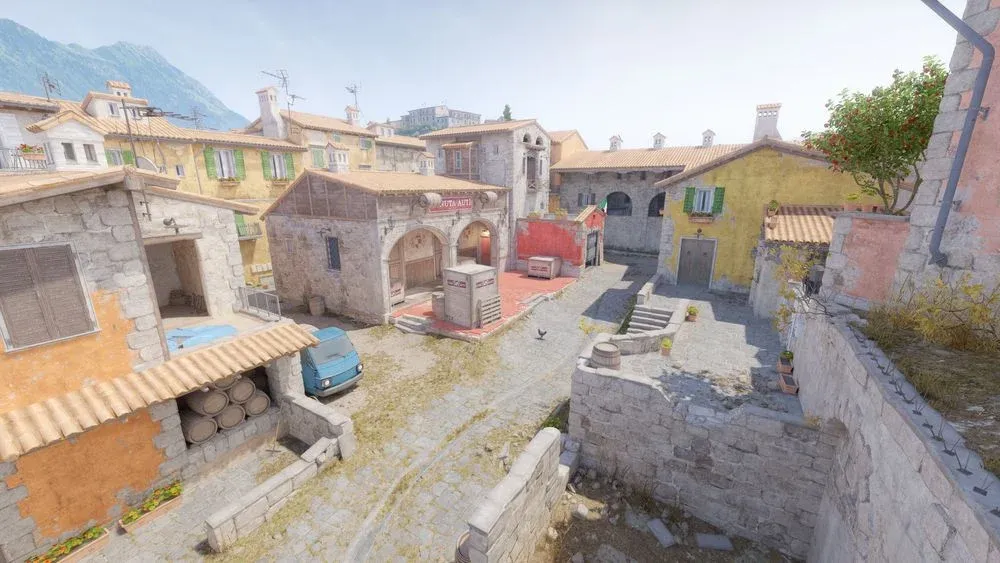
Anti-Rush Banana Flash Deployment
Nothing elevates heart rates like auditory detection of multiple Ts sprinting down Banana during initial five-second round phase. This explains why every CT requires anti-rush flash capability within their tactical toolkit.
Perfect setup configuration:
- From CT spawn, advance toward B with coordinated teammate.
- One player conceals within sandbags or car position.
- The second player positions behind half-wall structure, deploying flash over Banana.
This flash detonates directly above T-side entry corridors, blinding any players advancing from logs, car, or lower Banana regions. The advantage? It’s rapid, and it detonates elevated, complicating evasion maneuvers.
Your concealed teammate can then engage blinded enemies or deploy counter-grenades during retreat phases.
Avoid repetitive round-by-round deployment patterns. If utilized excessively, Ts will pre-aim or delay rush timing to avoid effectiveness.
Professional insight: Following flash deployment, execute smoke deployment at Banana bottom region. This further delays advancement while providing positional recovery time.
Early Round Banana Domination
Banana represents the most intensely contested territory on Inferno. Securing early control as CTs provides complete dominance over one map half. But achieving control demands coordination, precise timing, and grenade combinations that inflict significant health damage or prevent enemy advancements.
Optimal CT combination methodology:
- Single HE grenade deployment for Logs clearance.
- Molotov deployment to force players from Sandbags or Cubby positions.
- One deep Banana smoke deployment.
- Conclude with pop flash deployment for peek engagements.
This coordinated utility deployment forces Ts into retreat scenarios, accepts substantial damage infliction, or risks utility penetration against dual defensive holds.
The HE grenade independently can inflict 40–60 damage with proper timing execution. Combine with molotovs, and T-side players could face elimination before visual contact establishment. Utilize auditory cues and radar intelligence to identify preferred T holding positions—then systematically grenade those locations every round sequence.
Following Banana control achievement:
- Advance for enhanced visual intelligence acquisition.
- Maintain single anchor position with smoke coverage.
- Execute A site stacking upon detecting minimal activity.
This control methodology transforms Banana into tactical traps. You transcend mere holding—you dominate it. And this dominance directly influences T-side strategic decisions throughout remaining round phases.
Advanced tactical implementation: If Ts demonstrate passive gameplay patterns, utilize delayed grenade combinations at 0:30 for mid-round Banana re-clearance operations. Most opposing teams won’t anticipate such strategic depth.
Bait-and-Switch Banana Configuration
Consider advancing beyond basic utility deployment toward strategic outmaneuvering capabilities. The bait-and-switch Banana setup represents classical methodology demonstrating exceptional effectiveness, particularly against aggressive T-side default strategies.
Operational procedure:
- Player 1 conceals behind sandbags or adjacent wall structures.
- Player 2 positions further backward with flash readiness.
- When Ts initiate advancement or utility deployment patterns, Player 2 executes flash deployment.
- Player 1 engages blinded Ts while Player 2 maintains trade coverage.
This configuration penalizes impatient Ts and transforms Banana into lethal channels. It demonstrates enhanced effectiveness when executing early utility deployment followed by acoustic silence—enticing them toward false clearance assumptions.
Utility deployment recommendations:
- Molotov Logs deployment with deep HE grenade early deployment.
- Maintain flash readiness for auditory cue detection.
- Execute smoke deployment at Banana bottom following elimination acquisition.
Everything revolves around timing precision and tactical deception. You project perceived vulnerability, then engage with overwhelming tactical force.
If possessing skilled AWP specialists, you can even bait peeks using rifle deployments and capitalize on missed shot opportunities. Banana evolves into strategic playgrounds for these sophisticated tactical configurations.
Defuse Denial Smoke Strategies
Let’s advance toward post-plant scenarios. You’ve successfully planted explosive device. Subsequent strategic decisions? The crucial element for round victory consolidation involves utility deployment—particularly smokes for defuse prevention attempts.
Regardless of team affiliation, utilizing smokes for delay tactics or deception proves remarkably effective. Implementation methodology:
- T-side implementation: Deploy smoke on bomb when anticipating CT tap attempts and fake defuse procedures.
- CT-side implementation: Deploy smoke on bomb during low health scenarios requiring safe defusement or Ts panic peek inducement.
Smokes generate tactical chaos. They induce nervous reactions. They compel strategic errors. Bomb-positioned smoke deployment can secure additional 5-second advantages—frequently determining rotation success or time-based victories.
Tactical implementation insights:
- Consistently preserve single smoke for post-plant scenarios whenever possible.
- Deploy at bomb location with 10–12 remaining seconds to induce tap attempts.
- Combine with auditory deception like jumping or movement sounds simulating defuse activities.
While lacking visual spectacle, these methodologies secure round victories. And during closely contested matches, those specific rounds demonstrate critical importance.
Post-Plant Molotov Deployment from Secure Positions
Within post-plant tactical situations, the game timer becomes your genuine teammate—but only through intelligent gameplay methodology.
Let’s analyze fundamental components.
B Site Lineup from Banana:
- Execute bomb plant for Banana or default positions.
- Retreat toward deep Banana regions.
- Align molotov deployment for default or bomb positioning utilizing visible environmental markers like shadow patterns, pole structures, or wall features.
- Execute deployment when timer reaches approximately 8–10 remaining seconds.
This lineup compels CTs to abandon defuse attempts, particularly during low health scenarios or utility limitations. And if they maintain bomb commitment, they’ll either suffer combustion damage or face elimination during attempt persistence.
A Site Lineup from Pit:
- Execute plant for Pit or short regions.
- Retreat and align molotov deployment above balcony perimeter.
- Target fire deployment on bomb or Graveyard areas depending on CT defensive positioning.
Timing precision remains absolutely critical. The objective involves molotov deployment during critical defuse commitment moments. This increases tactical pressure, and during intense match situations, those additional seconds can determine victory outcomes.
Additional deceptive tactic: Fake molotov deployments.
- Deploy molotov slightly off-target from bomb position.
- Generate auditory deception simulating accurate deployment execution.
- CTs might demonstrate panic reactions and abandon defuse attempts.
These subtle psychological gameplay elements, when combined with actual utility lineups, secure critical rounds during high-pressure competitive situations.
Action Checklist
- Practice Banana control smoke from T ramp corner using pole wire alignment
- Coordinate CT spawn smoke timing with teammates during B site executes
- Master Coffins smoke deployment from Banana half-wall position
- Configure CS2 practice environment with infinite ammo and trajectory visualization
- Practice CT spawn and Coffins smoke coordination for B executions
- Master New Box molotov deployment from Banana positioning
- Coordinate entry flash timing with teammate site advancement
- Implement fake execution tactics using utility deployment for rotation induction
- Practice Mid smoke coordination with a partner to master timing variations
- Establish anti-rush flash positioning from CT spawn to B site
- Coordinate double-flash retakes with clear communication
- Develop timing variation patterns to counter opponent adaptation
- Practice all essential smoke lineups for both T-side executes and CT-side retakes
- Coordinate with teammates for utility timing and role assignments
- Implement bait-and-switch setups in competitive matches
- Master post-plant molotov deployments from safe positions
- Coordinate Utility Deployment
Jump throw the smoke grenade.
Following deployment, the defending player concealed behind Coffins experiences complete visibility loss. They must choose between speculative firing through the smoke barrier or retreating toward construction area. Either decision results in significant positional concession.
When synchronized with the CT spawn smoke, you effectively “contain” the bombsite. The remaining angles—New Box, First Oranges, and Dark positions—can then be systematically cleared using molotovs and flashbangs. This methodology streamlines your entry pathway while minimizing teammate attrition probability.
Advanced strategic application: If you simulate B site execution by deploying Coffins and CT smokes without committing personnel, it frequently triggers rotational responses from A site defenders. This creates opportunities for Mid or Apartments access leading to simplified A bombsite captures. These two smokes collectively generate tactical confusion, even absent full-scale assault commitment.
Banana Retake Smoke
As Counter-Terrorist personnel, maintaining Banana control during initial round stages typically involves substantial utility expenditure. But what occurs when you lose Banana dominance and require retake operations? This is where the Banana Retake Smoke demonstrates critical importance.
Here’s a consistently effective lineup:
This smoke lands deep within Banana, approximately at the half-wall location. It obstructs visual access for Terrorists holding positions from vehicle cover or log clusters, creating safer conditions for your team to execute wide swings or flashbang-assisted control regaining.
This smoke optimally functions when paired with a flashbang and molotov combination:
No reproduction without permission:Tsp Game Club » Inferno Smokes and Grenade Lineups