
TL;DR
- Vertigo’s vertical design demands unique crosshair placement and utility usage
- A ramp control dictates round tempo while mid access enables multi-site pressure
- Mastering elevation-based peeks and utility lineups provides decisive advantages
- Team coordination and timed executes overcome the map’s tight choke points
- Pro teams leverage delayed takes and B splits through mid construction
Within the competitive landscape of Counter-Strike: Global Offensive and its successor Counter-Strike 2, Vertigo stands apart as a deliberately unconventional battleground. Positioned atop a partially constructed high-rise, this map introduces multi-leveled terrain, tight corridors, and an emphasis on vertical engagements rarely encountered elsewhere. Its integration into both competitive matchmaking circuits and professional esports tournaments followed extensive Valve revisions that replaced established maps like Cache and Train in the active rotation.
The fundamental distinction lies in Vertigo’s design philosophy. Where traditional arenas provide expansive choke points and extended sightlines, Vertigo implements narrow ramps, functional elevators, and tight angles that shift focus from spectacular AWP maneuvers toward coordination, communication, and territorial map control. Squads excelling at outthinking and out-positioning adversaries typically dominate here, particularly those comprehending critical utility usage principles and precise timing execution.
Newcomers frequently experience disorientation initially. The elevation-based nature, atypical configuration, and occasionally unclear callouts establish a demanding learning progression. Yet once proficiency is achieved, Vertigo transforms into one of the most satisfying maps, delivering high-intensity, rapid-fire rounds examining players’ decision-making capabilities, reaction time efficiency, and team synergy cohesion.
The Evolution of Vertigo as a Competitive Map
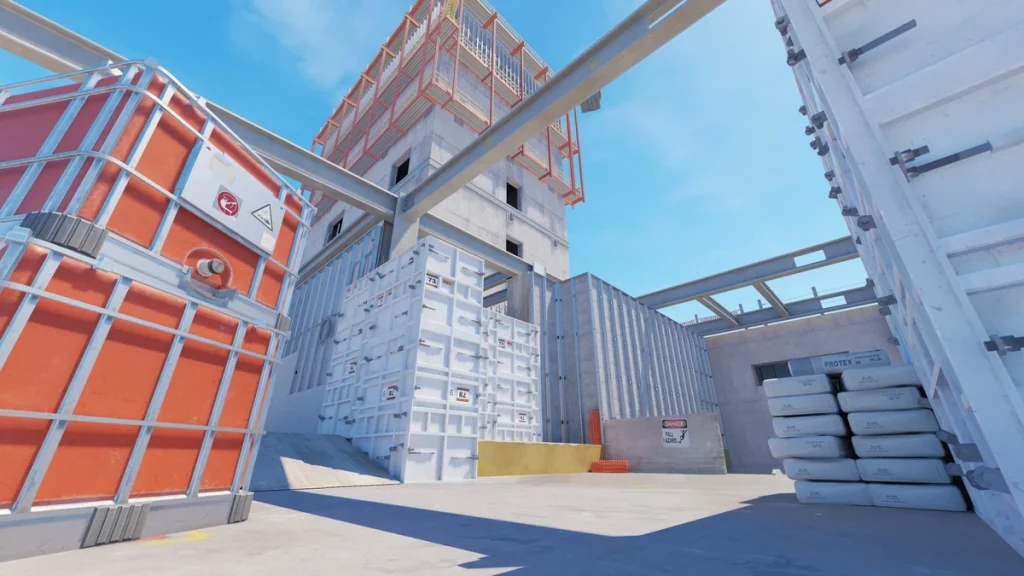
Following Vertigo’s induction into the premier map pool, it encountered massive criticism from professional competitors and recreational participants alike. Numerous critics considered the arena “incomplete” or excessively gimmicky for serious consideration. However, across subsequent seasons, Valve implemented multiple crucial adjustments that fundamentally transformed gameplay mechanics. Significant modifications incorporated:
- Refinements to A ramp visibility and angles
- Additional mid pathways and boost options
- Expanded B site with supplementary cover and entry avenues
- Enhanced auditory indicators and more distinct environmental feedback
These enhancements established Vertigo not merely as playable but as a strategically deep environment possessing distinctive attributes. Elite organizations commenced innovation surrounding it, formulating early ramp control strategies, mid-to-B splits, and delayed A takes incorporating substantial utility deployment. The competitive meta progressed, and consequently, Vertigo emerged as a fan-favorite for analysts owing to the high tactical depth and mind games inherent in its design.
Currently, Vertigo transcends experimental status—it represents a full-fledged competitive map, regularly featured in elite competitions such as BLAST Premier, ESL Pro League, and PGL Majors.
Full Map Overview
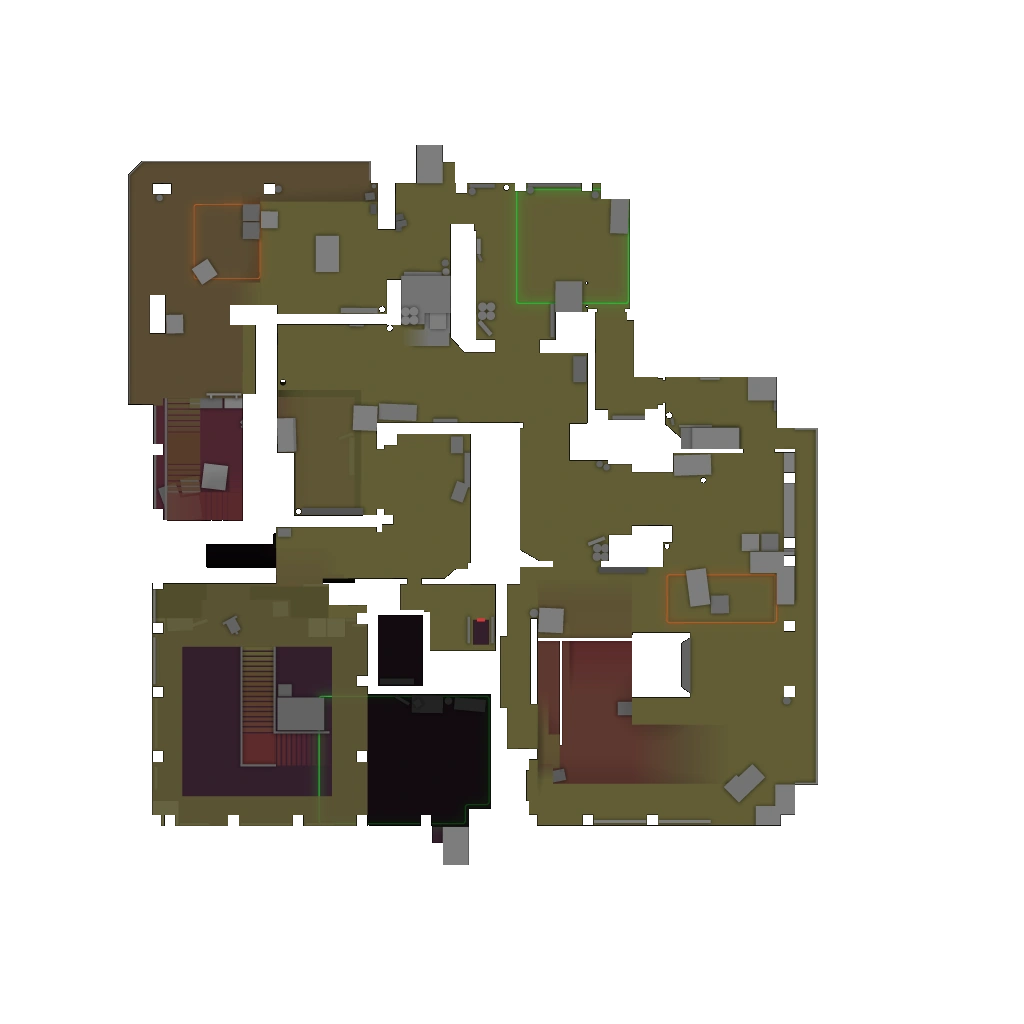
Layout and Structure
Superficially, Vertigo presents as condensed, yet thorough exploration reveals extraordinary layered and interconnected complexity. The arena comprises three principal zones: A Site, B Site, and Mid. Contrasting with arenas like Dust2 or Mirage, extensive open spaces are absent. Instead, Vertigo flourishes through narrow pathways, multi-level scaffolding, and close-quarter fights characterized by rapid engagement transitions.
The T-side spawn provides rapid entry to A Ramp and Mid, whereas CTs spawn near B, facilitating prompt repositioning via spawn elevators. This promotes assertive aggression from both factions and establishes map control as a per-round necessity.
Another distinguishing characteristic involves the vertical design. As implied by its nomenclature, Vertigo extensively incorporates heights, drop-offs, and elevated platforms, introducing an additional dimension to confrontations. Participants frequently must aim up or down, detect footstep acoustics from elevated positions, and manage spatial dominance across three dimensions.
This additionally signifies fall damage and unintentional fatalities from descents represent real concerns. A solitary misstep along A Ramp or B Stairs potentially sacrifices your team’s round.
Importance of Verticality
No arena utilizes height differences comparably to Vertigo. Whether involving combat across A Ramp scaffolding, the elevator flank from mid, or the descent from heaven into B site, verticality remains perpetually operational.
Why does this significance persist? Fundamentally, it alters your approach to crosshair utilization and utility deployment. Across conventional maps, you maintain aim at cranial elevation and pre-aim corners. On Vertigo, you additionally must aim up toward scaffolding or down at players pushing from below, and it impacts reaction time and accuracy during elevation-transition engagements.
Verticality similarly affects movement mechanics. For instance:
- Jump peeks demonstrate exceptional effectiveness along A Ramp.
- Sound cues originating from descending or ascending ladders potentially reveal positional information.
- Molotovs thrown from a height impact more rapidly and encompass varied angles.
Competitors comprehending these dynamics acquire advantages in angle holding, retakes, and post-plant scenarios. Elevation additionally permits ingenious boosts and off-angles that can completely disrupt adversaries anticipating conventional duels.
Callouts Breakdown by Area
A Site Callouts
When engaging Vertigo, A Site constitutes where predominant early-round activity develops. It represents the primary choke point and experiences intensive skirmishing for territorial command nearly every round. Let’s analyze the fundamental callouts present:
A Ramp
The most disputed section of Vertigo. A Ramp constitutes an elongated, constricted incline that Terrorists (Ts) advance upward to seize A site authority. Conversely, Counter-Terrorists (CTs) attempt containment employing early-round utility.
Critical elements to recognize:
- Smoke battles occur here frequently—participants deploy smoke grenades to obstruct visual corridors and advance through.
- Early nades and HE grenades can inflict substantial harm when properly timed.
- Boosts on the ramp enable CTs to observe deep T-side regions.
- Scaffolding on the left provides covert boost positions and unconventional angles.
Commanding A Ramp grants Ts accessibility to short A, scaffolding, and a strong post-plant position.
A Site Default
This represents the standardized planting location and the nucleus of the A bombsite. It’s encircled by assorted containers and pillars offering restricted protection.
- CTs typically anchor here behind site boxes or triple stack.
- Afterplant positioning customarily incorporates ramp hold, scaffold lurk, and A short control.
- Smoke barriers originating from Ts generally land here to obstruct CT vision from elevator and spawn.
It’s additionally vital to comprehend post-plant spatial distribution. You shouldn’t position all five teammates on-site—one should lurk mid or remain ramp to postpone retakes.
A Elevator
Positioned proximate to CT spawn, this constitutes the main rotation path from B to A. It’s also a common late-round flanking route.
- Remain vigilant for Ts attempting to flank CTs from elevator during post-plant.
- CTs frequently dispatch a rotator here for late round support or retake scenarios.
- Smokes or mollies within this vicinity can delay retakes or surprise flanks.
Elevator additionally functions as an audio cue zone—descending or rotating here potentially discloses intentions unless executed silently.
Mid Callouts
Mid, Ladder, and Window
Mid represents the pivot point of Vertigo. Acquiring mid command unlocks multiple flank routes and provides Ts the alternative to split A or B. Correspondingly, CTs commanding mid can shut down rotations and deliver rapid reinforcement to either bombsite.
Key Mid Callouts:
- Mid Boost – Utilized by CTs during early rounds to observe into T mid.
- Ladder Room – A constricted connector that proceeds from mid into A site or CT elevator.
- Window – The compact region permitting Ts to observe toward mid or leap to ladder.
Securing mid control permits Ts to:
- Encircle onto A site from ladder
- Divide B via construction
- Lurk silently and eliminate rotators
Conversely, forfeiting mid control potentially costs CTs the round as rotations become riskier and site anchors get isolated.
Best Utility Usage on Vertigo
Smokes
Smoke grenades constitute the lifeblood of Vertigo strategy. They regulate visibility within constricted passageways and permit secure movement through hazardous zones.
Top Smoke Spots:
- A ramp top smoke – Inhibits CTs from observing your approach.
- Elevator smoke – Obstructs CT rotations and decelerates retakes.
- Mid boost smoke – Prevents early CT peeks.
- B default smoke – Protects planting position.
Professional Insight: Layer your smokes. One profound smoke succeeded by a proximate one enables you to seal gaps securely and intercept CTs repositioning.
Molotovs
Incendiary devices prove catastrophic on Vertigo owing to the close quarters and tight choke points. A solitary molly can postpone a push by numerous seconds—or expel a concealed adversary.
Critical Molotov Spots:
- A scaffolding – Deny early CT boost positions.
- Mid window – Prevent mid aggression.
- B stairs – Decelerate flankers or late rotators.
Don’t neglect to use mollies post-plant to reject defuses or eliminate common concealment locations like behind site boxes or beneath scaffolding.
Flashbangs
Because of the tight angles and corners, properly deployed flashbangs on Vertigo can readily blind entire teams.
Flashbang Recommendations:
- Pop flashes surrounding corners (like A ramp or B entrance) can result in instantaneous entry frags.
- Employ delayed flash timings to intercept repositioning participants.
- Double flash scaffolding or B site throughout executes for comprehensive coverage.
Ensure to communicate during flashing—“flashing scaff!” or “pop B in 3…2…”—so your teammates avoid being captured in the detonation.
Effective Team Coordination and Communication
Callout Practice and Consistency
Vertigo’s configuration necessitates precise communication. There exist multiple levels, close chokepoints, and off-angles ubiquitously. Miscommunication or ambiguous callouts can forfeit rounds.
Top Callouts to Master:
- A ramp, A site, short A, scaffolding, elevator, sandbags
- Mid boost, mid box, ladder room, window
- B stairs, B site, generator, construction, heaven
Align your team through practicing callouts in warmups or scrims. Uniform terminology = accelerated reactions = superior trades.
Timing and Synchronicity
Temporal precision proves paramount on Vertigo. Should your team lack synchronization throughout pushes or retakes, you’ll become dismantled by crossfires and utility.
Recommendations:
- Call flash timings distinctly: “Flashing ramp in 3…2…1…”
- Utilize the clock for executes: strike A ramp at 0:55 subsequent to drawing out utility.
- Advance together—avoid permitting one individual to perish solo on scaffolding while the remainder trail 5 seconds behind.
Even a 1-second postponement can destroy the round. Practice utility chains and timed advances in scrims to cultivate muscle memory.
Handling Rotations
Since Vertigo demonstrates such constricted and vertical characteristics, rotations can either preserve or undermine rounds.
Optimal methodologies:
- Maintain one participant perpetually proximate to mid elevator for rapid reinforcement.
- If Ts capture ramp but decelerate, rotate one CT back to B.
- Avoid excessive rotation! Ts adore to fake A then strike B late.
Learn to confidence your teammates’ communications and employ the clock intelligently.
Vertigo stands as one of the most distinctive battlegrounds in Counter-Strike: Global Offensive and Counter-Strike 2 competitive rotations. Situated across multiple skyscraper construction levels, this map challenges competitors with its multi-layered terrain architecture, constricted passageways, and emphasis on vertical engagements rarely encountered elsewhere. It has evolved into a cornerstone for both ranked matchmaking and professional tournaments, particularly following Valve’s comprehensive redesign and integration into the active duty pool replacing legacy maps like Cache and Train.
What distinguishes Vertigo fundamentally is its structural design philosophy. Whereas most competitive arenas provide expansive, open choke points and extended sightlines, Vertigo selects narrow inclined pathways, mechanical elevators, and tight engagement angles. This transforms the combat environment from highlight-reel AWP displays toward coordinated teamplay, precise communication, and territorial dominance. Squads capable of outmaneuvering and superior positioning typically excel here, especially those comprehending the critical importance of tactical utility deployment and timing synchronization.
For recreational players, Vertigo initially feels overwhelming. Its vertical architecture, unconventional layout, and occasionally ambiguous location terminology create a demanding learning progression. However, once proficiency is achieved, Vertigo becomes exceptionally gratifying, delivering intense, rapid-round engagements testing participants’ tactical decision-making, reaction speed, and team synergy.
The Evolution of Vertigo as a Competitive Map
When Vertigo initially entered the active map rotation, it encountered substantial criticism from professional competitors and casual participants alike. Many considered the environment “unfinished” or excessively gimmicky for serious competition. However, across subsequent seasons, Valve implemented multiple pivotal updates that redefined engagement dynamics. Critical modifications included:
- Adjustments to A ramp visibility and angles
- New mid pathways and boost options
- Opened up B site with additional cover and entry points
- Better audio cues and clearer environmental feedback
These enhancements established Vertigo not merely as viable but as a tactically profound arena with distinctive characteristics. Professional organizations initiated innovation cycles, developing early ramp control methodologies, mid-to-B division tactics, and delayed A site assaults with intensive utility expenditure. The competitive meta evolved, and consequently, Vertigo transformed into a viewer-favorite for analysts owing to the elevated strategic complexity and psychological warfare components.
Currently, Vertigo represents no longer experimental content—it’s a fully-developed competitive environment, consistently featured in elite tournaments including BLAST Premier, ESL Pro League, and PGL Majors.
A Site Callouts
When competing on Vertigo, A Site constitutes where primary early-round engagements develop. It represents the fundamental choke nexus and experiences substantial skirmishing for territorial command nearly every engagement cycle. Let’s examine the essential location terminology here:
A Ramp
The most heavily contested Vertigo territory. A Ramp represents an extended, narrow gradient that Terrorist forces ascend to establish A site command. Conversely, Counter-Terrorist operators attempt containment using early-round utility deployment.
Critical engagement considerations:
- Smoke confrontations frequently occur here—competitors deploy vision-blocking devices to facilitate advancement.
- Initial explosive devices and fragmentation grenades can inflict substantial damage when properly synchronized.
- Elevation assists on the ramp enable CTs to surveil deep T-side territories.
- Scaffolding structural elements provide concealed elevation advantages and unconventional angles.
Commanding A Ramp provides Terrorist units accessibility to short A approaches, scaffolding networks, and advantageous post-detonation positioning.
A Site Default
This constitutes the standard explosive placement location and the core of A bombsite operations. It’s encircled by assorted containers and structural pillars offering limited protective coverage.
- CTs typically establish defensive positions here behind site containers or triple stacking formations.
- Post-detonation positioning frequently incorporates ramp containment, scaffolding infiltration, and A short territorial command.
- Smoke barriers from Terrorist forces generally land here to obstruct CT observation from elevator and spawn sectors.
Comprehending post-detonation spacing proves essential. Avoid concentrating all five squad members on-site—one operative should infiltrate mid or maintain ramp presence to impede retake operations.
A Elevator
Positioned adjacent to CT spawn, this represents the primary rotational pathway from B to A. It additionally functions as a frequent late-round flanking conduit.
- Remain vigilant for Terrorist attempts to outflank CT formations from elevator during post-detonation scenarios.
- CTs frequently dispatch rotational support here for late engagement cycle assistance or retake circumstances.
- Smoke canisters or incendiary devices in this sector can postpone retakes or surprise flanking maneuvers.
Elevator additionally operates as an acoustic indicator zone—descending or rotating through this area can reveal strategic intentions unless executed acoustically covertly.
Mid Callouts
Mid, Ladder, and Window
Mid constitutes the strategic pivot nexus of Vertigo. Establishing mid territorial command unlocks multiple flanking pathways and provides Terrorist units the alternative to divide A or B. Correspondingly, CTs commanding mid can terminate rotations and deliver rapid reinforcement to either combat zone.
Key Mid Callouts:
- Mid Boost – Utilized by CTs during early engagement cycles to surveil T mid sectors.
- Ladder Room – A confined connector channel directing from mid into A site or CT elevator systems.
- Window – The compact area permitting Ts to observe toward mid or transition to ladder structures.
Achieving mid control enables Terrorist forces to:
- Encircle onto A site from ladder networks
- Divide B through construction zones
- Infiltrate silently and eliminate rotational support.
Conversely, surrendering mid territorial command can cost CTs the engagement cycle as rotational movements become more hazardous and site defensive anchors become isolated.
Controlling A Ramp
A Ramp transcends being merely an A Site access route—it represents the central combat theater of Vertigo. Engagement cycle after engagement cycle, both Terrorist and Counter-terrorist forces collide here, striving to establish dominance. Why? Because whichever faction commands A Ramp controls the engagement tempo rhythm.
For Terrorist Forces:
Your operational objective involves applying strategic pressure during initial phases without excessive commitment. Deploy your early-phase smoke canisters and incendiary devices to obstruct visibility and compel CTs from aggressive positioning. Elite competitive organizations frequently simulate A ramp territorial command regularly to lure Counter-terrorist utility expenditure. A deliberate, systematic advancement with disorientation devices clearing proximate corners can pressure CTs toward A site retreat, establishing your territorial foothold.
Tactical recommendations:
- Utilize a precision smoke deployment for upper ramp sectors to force CTs from advantageous angles.
- Deploy incendiary projectiles against proximate left sectors or scaffolding networks to deny CT early-phase advancements.
- Employ acoustic deception tactics—ascend ramp then tactical withdrawal to attract utility deployment.
For Counter-Terrorist Forces:
Maintaining A ramp defensive positions revolves entirely around intelligence gathering and pressure application. Should you adopt excessively passive postures, Terrorist units will advance unchallenged. Should you become overly aggressive, you risk tactical elimination. The optimal engagement zone exists within synchronized utility timing and crossfire positioning.
Defensive methodologies:
- Initiate with a deep-reaching incendiary device or smoke deployment to postpone enemy advancements.
- Coordinate dual positioning on scaffolding structures to intercept unsuspecting Terrorist advances.
- Employ elevation assists on sandbag barriers or behind wooden structures for unexpected eliminations.
A substantial component of A Ramp territorial command involves communication synchronization. Should Terrorist units concentrate for tactical execution, you require rapid rotational support. Should they employ deception tactics, your B and mid operatives must maintain defensive integrity.
Mid Control Dynamics
Mid on Vertigo functions as the adhesive binding the combat environment together. It represents the most adaptable combat zone, providing Terrorist forces accessibility to ladder room networks (for A) and construction sectors (for B). For Counter-terrorist forces, maintaining mid territorial command can fragment enemy pressure and enable rapid rotational movements.
Terrorist-Side Mid Tactics:
Mid rarely falls under territorial command through direct aggression—it typically constitutes component of a prolonged engagement cycle. Initially, clear T-side window sectors and surveil mid using disorientation devices or elevation assists. From this positioning:
- Dispatch one operative toward ladder room networks to threaten A site defenses.
- Infiltrate another toward B stairwell systems via construction zones.
- Maintain pressure using utility deployment against mid container structures and CT side window openings.
The intimidation of mid presence maintains CTs in speculative positioning and frequently divides their utility allocation across combat zones.
Counter-Terrorist Mid Containment:
CTs cannot permit Terrorist units mid territorial command without tactical cost. During initial engagement phases, deploy a incendiary projectile toward T mid ramp sectors and position an AWP specialist or rifle operative adjacent to boost positioning. You may additionally:
- Dispatch a rifle specialist to surveil mid with disorientation support from B sector reinforcements.
- Command ladder networks to intercept T mid-to-A encirclement tactics.
- Maintain construction zone control using passive angular positioning or intelligence-gathering maneuvers.
The tactical objective? Deny territorial command, postpone Terrorist strategic planning, and potentially capture infiltrators off tactical guard.
Smokes
Smoke canisters represent the strategic lifeblood of Vertigo tactical planning. They govern visibility within constricted corridors and enable secure movement through hazardous zones.
Elite Smoke Deployment Locations:
- A ramp upper smoke deployment – Prevents CT surveillance of your approach vectors.
Pro Tactical Insight: Layer your smoke deployments. One deep-reaching smoke followed by a proximate deployment permits closing tactical gaps securely and intercepting CTs during repositioning maneuvers.
Molotovs
Incendiary devices prove devastating on Vertigo owing to the proximity-based combat and tight choke nexuses. A single molotov deployment can postpone enemy advancement by multiple seconds—or expel concealed hostile operatives.
Critical Molotov Deployment Zones:
- A scaffolding networks – Deny early-phase CT elevation advantage positioning.
- Mid window openings – Prevent mid territorial aggression.
- B stairwell systems – Decelerate flanking maneuvers or late rotational support.
Remember to deploy incendiary devices during post-detonation scenarios to deny defusal operations or clear frequent concealment positions like behind site containers or beneath scaffolding structures.
Flashbangs
Due to the constricted angular engagements and corners, properly deployed disorientation devices on Vertigo can effortlessly blind entire enemy formations.
Flashbang Tactical Recommendations:
- Pop flash deployments around corners (like A ramp or B entry points) can produce immediate entry frag eliminations.
- Employ delayed disorientation timing synchronization to capture repositioning hostile operatives.
- Dual flash deployment against scaffolding or B site sectors during tactical executions for comprehensive coverage.
Ensure communication synchronization when deploying disorientation devices—“flashing scaffolding sectors!” or “pop flash B in 3…2…”—ensuring squad members avoid exposure to the disorientation effects.
Utility Location Purpose A Ramp Smoke From T Spawn Blocks CT view on A ramp Elevator Smoke From A ramp Delays CT rotates on A site B Site Molly From B stairs Clears default planting position Mid Window Smoke From T mid Blocks mid aggression Flash Over Scaff From A ramp Blinds CTs holding scaffolding Initialize practice server sessions with
sv_cheats 1,noclip, andgrenade trajectoryactivated. Designate your deployment positions using bullet impact markers or environmental indicators. Practice these until they transform into muscular memory patterns.Executing A Site
The fundamental Terrorist-side strategic approach on Vertigo involves a well-synchronized A site tactical execution. Everything initiates with ramp territorial command. Once you’ve pressured CTs into tactical withdrawal using smoke canisters and incendiary devices, consolidate for the concluding assault.
Classic Execution Configuration:
- Smoke deployment against elevator and short sectors to obstruct CT surveillance capabilities.
- Incendiary deployment behind site and sandbag positions to expel defensive operatives.
- Disorientation deployment over ramp sectors preceding entry maneuvers.
- Explosive placement default or secure behind container structures.
- Maintain post-detonation positioning from ramp, scaffolding, and elevator flanking routes.
Synchronization proves essential. You must assault A while CT utility reserves remain depleted, and your squad maintains tactical positioning for trade eliminations.
Professional Insight: Avoid concentrating all five squad members on ramp. Position one infiltrator mid or maintain scaffolding presence for flanking intelligence.
Splitting Mid to B
This strategic approach requires extended configuration but demonstrates exceptionally effective against passive CT defensive postures.
Execution phases:
- Dispatch two operatives mid to clear ladder and construction zone sectors.
- Two Terrorist units operate B stairwell systems methodically with utility deployment.
- One operative maintains T spawn surveillance or infiltrates A ramp for acoustic distraction.
When mid operatives reach construction zones:
- Deploy smoke coverage against B site left and rear sectors.
- Deploy disorientation devices and execute pincering maneuvers with B stairwell operatives.
This generates a crossfire engagement on site and isolates any individual B anchor position. When executed precisely, it represents one of the most secure methodologies for B site acquisition.
Default Playstyle and Map Pressure
Occasionally, the optimal strategic approach involves applying strategic pressure across the combat environment, collect intelligence, then commit based on CT defensive revelations.
Terrorist-side default configuration should incorporate:
- 2 operatives engaging A ramp with utility deployment.
- 1 operative maintaining mid surveillance and checking elevation assist positions.
- 1 operative monitoring B stairwell systems for flanking maneuvers.
- 1 infiltrator positioned near T spawn or scaffolding networks.
This tactical distribution:
- Attracts CT utility expenditure.
- Maintains tactical alternatives.
- Penalizes enemy advancements and rotational movements.
When CTs overextend tactically, penalize them with mid territorial command or rapid B site assaults. When they adopt defensive postures on sites, reorganize and execute with overwhelming tactical force.
Vertigo stands as one of the most distinctive and debated battlegrounds within the Counter-Strike: Global Offensive and Counter-Strike 2 competitive rotation. Situated across the upper construction levels of a towering skyscraper, Vertigo tests player capabilities through its multi-tiered terrain architecture, constricted passageways, and emphasis on vertical engagement rarely encountered elsewhere. It has established itself as fundamental within both ranked matchmaking and professional esports circuits, particularly following Valve’s comprehensive redesign and integration into the active duty pool replacing legacy maps such as Cache and Train.
What truly distinguishes Vertigo is its underlying design methodology. Whereas most competitive arenas provide expansive, open choke points and extended sightlines, Vertigo emphasizes narrow ascent paths, vertical transport systems, and tight engagement angles. This transforms the map from emphasizing spectacular AWP performances toward prioritizing coordinated teamplay, communication efficiency, and territorial dominance. Squads capable of strategic outmaneuvering and superior positioning typically excel here, especially those comprehending the critical nature of tactical equipment application and temporal awareness.
For recreational participants, Vertigo may initially appear overwhelming. Its vertical nature, unconventional layout, and occasionally ambiguous location terminology create a significant learning progression. Nevertheless, once proficiency is achieved, Vertigo represents one of the most gratifying maps, delivering intense, rapid-round engagements examining participants’ tactical decision-making, reaction speed, and team synergy development.
The Evolution of Vertigo as a Competitive Map
During Vertigo’s initial inclusion within the active map rotation, it encountered substantial criticism from professional competitors and casual participants alike. Numerous individuals considered the arena “incomplete” or excessively gimmick-oriented for serious consideration. However, across subsequent development cycles, Valve implemented numerous critical revisions that fundamentally reshaped gameplay dynamics. Essential modifications comprised:
- Refinements to A ramp visibility perspectives and engagement angles
- Additional mid traversal routes and elevation assistance options
- Expanded B territory with supplementary protective elements and access vectors
- Enhanced auditory indicators and clearer environmental interaction feedback
These enhancements transformed Vertigo from merely viable toward becoming a tactically profound environment possessing unique characteristics. Professional organizations commenced innovative development surrounding it, crafting early ramp dominance methodologies, mid-to-B division maneuvers, and delayed A assaults employing extensive equipment utilization. The strategic meta evolved, and consequently, Vertigo emerged as a viewer-preferred analytical subject owing to its exceptional strategic complexity and psychological warfare elements.
Currently, Vertigo no longer represents experimental content—it constitutes a fully-realized competitive arena, consistently featured within elite tournaments including BLAST Premier, ESL Pro League, and PGL Majors.
Full Map Overview
Layout and Structure
Upon initial examination, Vertigo presents compact dimensions, but thorough exploration reveals its remarkably stratified and interconnected architecture. The battlefield comprises three principal zones: A Territory, B Territory, and Central Sector. Unlike arenas such as Dust2 or Mirage, extensive open regions are absent. Instead, Vertigo flourishes through constricted thoroughfares, multi-level structural frameworks, and close-proximity combat.
The Terrorist deployment zone provides rapid accessibility to A Ascent Path and Central Sector, while Counter-Terrorists emerge adjacent to B, facilitating early repositioning via spawn vertical transport systems. This promotes aggressive tempo from both factions and establishes territorial command as round-by-round priority.
Another distinguishing characteristic involves the vertical architectural approach. As the designation implies, Vertigo substantially incorporates elevation variances, descent hazards, and raised platforms, introducing additional dimensionality to confrontations. Participants frequently must aim upward or downward, detect footsteps from elevated positions, and regulate spatial control across three dimensions.
This additionally signifies fall damage and accidental fatalities from plummeting represent genuine considerations. Single misstep along A Ascent or B Staircases might determine round outcomes.
Importance of Verticality
No competitive environment utilizes height differentials comparable to Vertigo. Whether involving combat across A Ramp structural framework, the elevator flanking maneuvers from central sector, or the descent from upper platform into B territory, vertical engagement remains perpetually active.
Why does this significance matter? Fundamentally, it modifies your approach toward crosshair positioning and tactical equipment deployment. Across conventional arenas, you maintain aim at cranial elevation and pre-target corners. On Vertigo, you additionally must target upward toward structural framework or downward at adversaries advancing from inferior positions, and it influences reaction velocity and precision.
Vertical dynamics additionally impact movement mechanics. For instance:
- Jump-peek techniques demonstrate exceptional effectiveness along A Ascent Path.
- Auditory indicators from descending or ascending ladders might reveal positional information.
- Molotov cocktails launched from elevation impact more rapidly and encompass divergent engagement perspectives.
Participants comprehending these operational dynamics secure advantage within engagement angle maintenance, territory recapture scenarios, and post-detomation situations. Height variances additionally permit ingenious elevation assistance and unconventional engagement positions that might entirely disrupt opponents anticipating conventional confrontations.
Effective Team Coordination and Communication
Callout Practice and Consistency
Vertigo’s architectural design necessitates precise communication protocols. Existence of multiple elevation tiers, constricted passage points, and unconventional engagement perspectives throughout. Miscommunication or ambiguous location reporting might determine round failures.
Essential Callout Terminology:
- A ascent path, A territory, abbreviated A zone, structural framework, vertical transport, protective barriers
- Central elevation assistance, central container, ladder chamber, viewing aperture
- B staircases, B territory, power source, construction area, upper platform
Establish team synchronization through systematic callout repetition during preparatory sessions or practice matches. Uniform terminology = accelerated reactions = superior trade eliminations.
Temporal Synchronization and Unified Execution
Temporal precision represents absolute necessity across Vertigo. Should your squad lack coordination during advances or territory recaptures, you’ll become eliminated through intersecting fire and equipment deployment.
Strategic Recommendations:
- Announce flash deployment timing explicitly: “Illuminating ascent path within 3…2…1…”
- Utilize temporal measurement for coordinated assaults: strike A ascent at 0:55 subsequent to adversary equipment expenditure.
- Advance collectively—avoid permitting singular participant elimination alone across structural framework while remaining personnel trail 5 seconds posterior.
Even singular second delay might compromise round success. Practice equipment sequence deployment and temporally-optimized advances during practice matches to establish reflexive execution patterns.
Mastering temporal coordination transforms adequate teams into dominant forces. Professional organizations dedicate significant training toward developing split-second synchronization that separates elite competitors from average participants.
Rotation Management Protocols
Because Vertigo demonstrates such constriction and vertical orientation, repositioning maneuvers might either preserve or undermine rounds.
Optimal methodologies:
- Maintain single participant perpetually proximate central vertical transport for rapid reinforcement.
- Should Terrorists secure ascent path but decelerate advancement, reposition one Counter-Terrorist returning toward B.
- Avoid excessive repositioning! Adversaries prefer to feign A pressure subsequently assault B during late-phase timing.
Acquire confidence toward teammates’ communications and compete temporally intelligently.
Pro-Level Strategies and Meta Trends
Elite Organizational Playbooks
Premier-tier collectives including Vitality, Heroic, and G2 have formulated sophisticated Vertigo tactical systems concentrating upon:
- Postponed A territory assaults employing profound smoke deployment.
- Simulated A pressure application while establishing B division maneuvers through central sector.
- AWP defensive positions across A ascent path and central construction for initial elimination acquisition.
Professional competitors additionally investigate unconventional engagement perspectives—maintaining from unexpected containers, elevation assistance locations, and timing-dependent advances.
- Should opponents consistently implement standard A ascent path approaches, counter through early structural framework advances.
- If they execute central-to-B division maneuvers, dual defensive construction maintenance employing smoke deployment and molotov implementation.
- Employ match recording analysis or historical performance data to anticipate assault timing patterns.
- Utilize targeting maps featuring elevation-oriented objectives (comparable to Yprac Aim Training System).
- Practice peeking upward and downward engagement angles (from structural framework toward territory, staircases toward upper platform).
- Execute 100 repetitions of jiggle-peeking A ascent path and structural framework to master those confrontations.
- Practice A ramp smoke lineups from T spawn for vision control
- Master vertical crosshair placement on elevation-based angles
- Develop mid control strategies with ladder room access
- Coordinate B site splits through mid construction
- Practice A ramp smoke lineups from T spawn for 10 minutes daily
- Master mid control utility deployment including molotovs and flashbangs
- Coordinate team executes with synchronized utility timing
- Develop vertical crosshair placement through elevation-based aim training
- Analyze professional demos for anti-stratting opportunities
- Practice A ramp executes at precisely 0:55 after drawing enemy utility expenditure
- Establish mid elevator presence for rapid cross-territory reinforcement while monitoring for deception tactics
- Study professional team Vertigo playbooks focusing on delayed takes and B splits
- Develop utility chain muscle memory through coordinated scrimmage sessions
- Analyze opponent execute patterns through demo reviews and implement targeted counter-strategies
- Master vertical crosshair positioning and elevation-based movement mechanics
Counter-Strategy Development and Opposition Neutralization
To achieve victory across Vertigo confronting skilled adversaries, you necessitate superior to fundamental targeting capability—you must strategically outmaneuver them.
Exceptional squads adjust dynamically during engagement. You should similarly adapt.
Vertigo Practice Routines and Drills
Aim Mechanics and Movement Across Elevations
Vertigo examines your targeting fundamentals comparable to few competitive environments. The perpetual elevation modifications—ascent path, staircases, structural framework—signify necessity for superior-than-average regulation of your vertical crosshair positioning.
Training Methodologies:
Movement significance additionally exists. Avoid perpetual crouch-advancement—it generates auditory prominence and predictability. Comprehend when to advance silently, peek, strafe, or sprint-jump to surprise your opponents.
Essential Equipment Lineup Mastery
Should you demonstrate serious commitment toward Vertigo improvement, you must acquire lineup knowledge. Presented core equipment inventory for daily repetition:
| Equipment Type | Deployment Location | Strategic Objective |
|---|---|---|
| A Ascent Path Smoke Deployment | Originating from Terrorist Deployment Zone | Obstructs Counter-Terrorist visual acquisition across A ascent path |
| Vertical Transport Smoke | From A ascent path | Delays Counter-Terrorist repositioning across A territory |
| B Territory Molotov Implementation | From B Staircases | Eliminates standard detomation positioning |
| Central Viewing Aperture Smoke | From Terrorist central sector | Prevents central sector aggression |
| Flash Over Structural Framework | From A ascent path | Impairs vision of Counter-Terrorists maintaining structural framework |
Initialize practice environment with sv_cheats 1, noclip, and grenade trajectory activation. Designate your lineups through impact markings or environmental indicators. Execute them until achieving reflexive execution patterns.
Action Checklist
No reproduction without permission:Tsp Game Club » Vertigo Guide: Callouts, Tips, and Strategies