
TL;DR
- Create 6’3″-6’4″ Sniper with Right Wing secondary for optimal ice time and scoring potential
- Always select Confidence dialogue options to unlock exclusive trait point reward trees
- Focus on skating traits first to reach 90+ speed before Memorial Cup tournaments
- Master the World Juniors for massive trait point bonuses and draft stock elevation
- Balance offensive production with defensive awareness for maximum overall rating growth
Building your hockey legend in NHL 26’s Be a Pro mode demands strategic foresight from the very first creation screen. Unlike previous iterations where raw talent could carry you, this year’s edition emphasizes intelligent attribute distribution and long-term planning. Your foundational choices here will determine whether you struggle through minor leagues or dominate from your first shift.
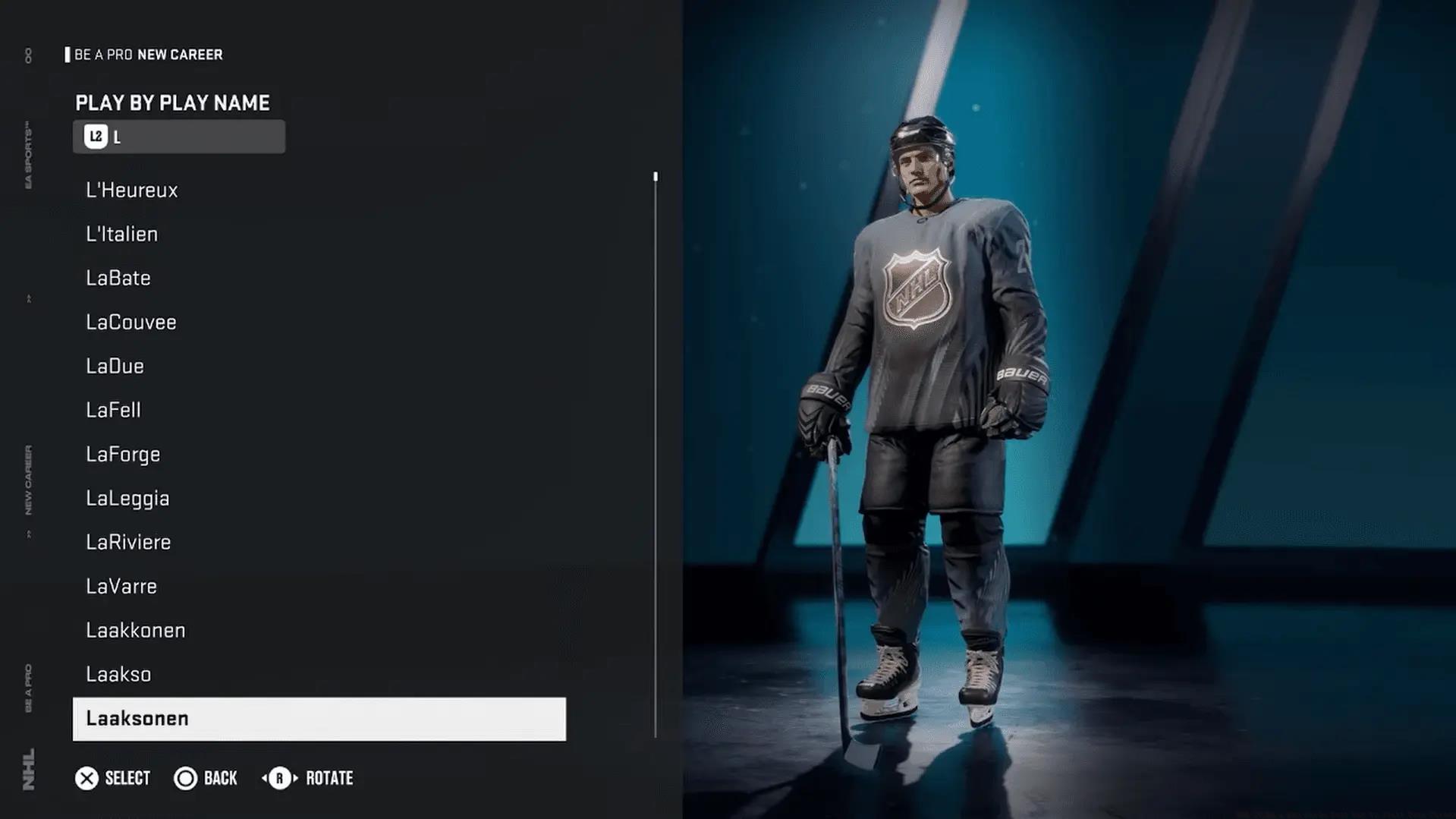
Physical dimensions provide the framework for your player’s capabilities. The sweet spot lies between 6’3″ and 6’4″ with 185-190 pounds – this creates the ideal power-to-agility ratio that modern hockey demands. Taller players gain reach advantages for poke checks and defensive coverage, while maintaining the acceleration needed for breakaways. Lighter builds get knocked off pucks too easily, while heavier ones sacrifice the explosive first-step quickness that separates elite scorers.
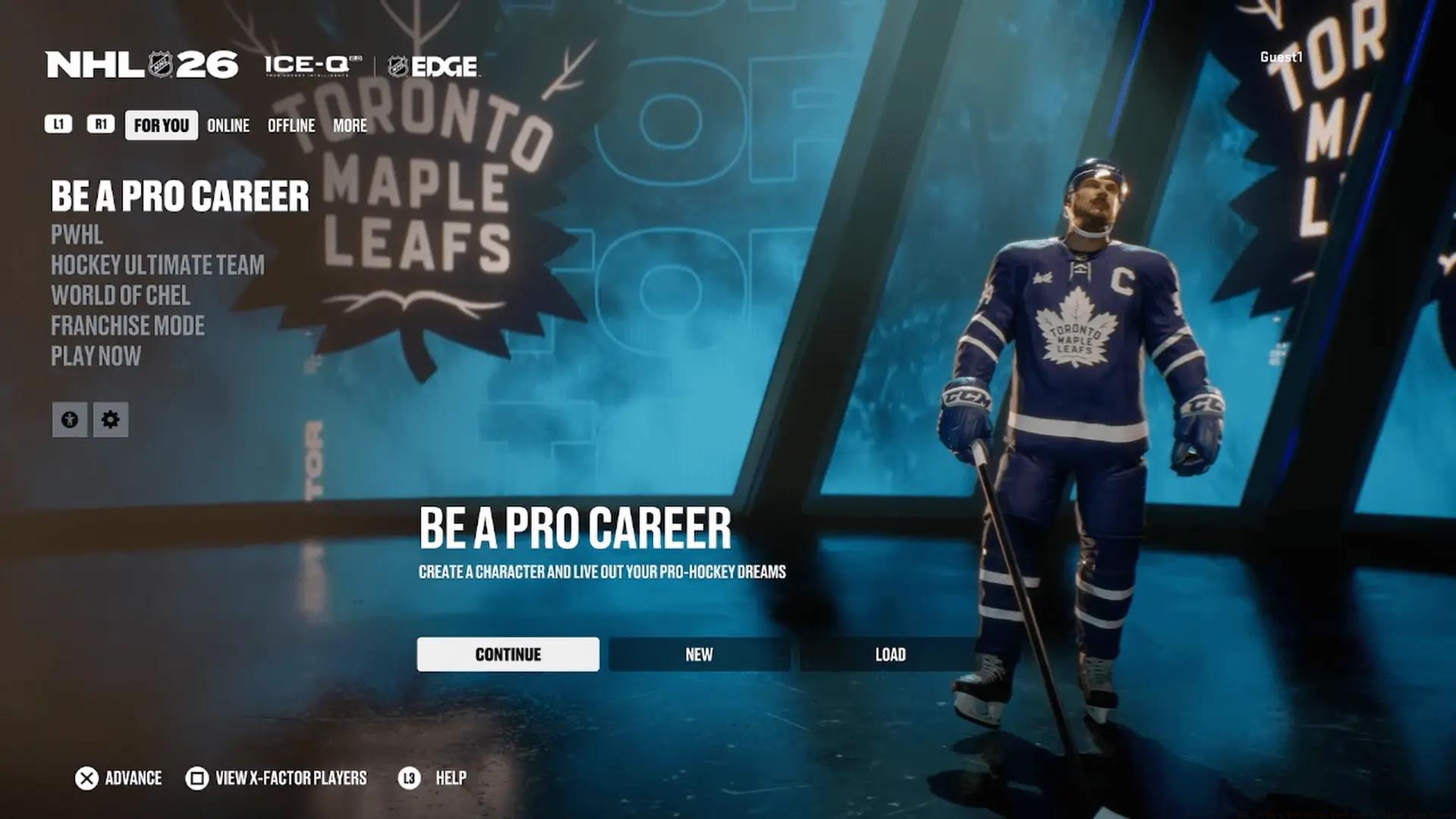
Position selection goes beyond personal preference – it’s about maximizing development opportunities. Choosing Center with Right Wing secondary ensures you’ll see ice time in various situations, including power plays, penalty kills, and crucial faceoff scenarios. Centers naturally accumulate more points through assists and defensive contributions, while the wing position allows for pure offensive focus during scoring chances.
Your archetype decision sets the trajectory for your entire career. The Sniper specialization provides immediate shooting accuracy bonuses and quick release mechanics that translate directly to goal production. This archetype synergizes perfectly with the Confidence dialogue system, creating compounding benefits as you progress through interview sequences.
During every media interaction and team meeting, consistently selecting Confidence responses activates hidden progression pathways. These exclusive reward trees deliver bonus trait points and early X-Factor unlocks that dramatically accelerate your development timeline. The game tracks your personality choices throughout the career, with Confidence building unlocking the most powerful offensive perks available.
Optimizing your control scheme and visual settings provides the competitive edge needed to excel in NHL 26’s enhanced gameplay. The default configurations often handicap skilled players, while custom settings can unlock your true potential. Proper setup reduces reaction time and increases situational awareness during high-pressure moments.
Control customization begins with switching to Skill Stick controls if you haven’t already. This advanced system provides precise deke execution and shooting control that basic controls simply cannot match. Adjust your passing assistance to medium – too high removes skill expression, while too low creates frustrating turnovers. Bump up your shooting power to 70-75% for better accuracy on one-timers and snipes without sacrificing power.
Camera selection dramatically impacts your performance. The Dynamic High camera offers the best balance of ice visibility and player control, allowing you to see developing plays while maintaining precise skating control. Avoid the overhead cameras that sacrifice player feel for visibility – you’ll lose the nuance needed for elite puck handling. Adjust your camera height and zoom to personal preference, but ensure you can see at least two zones ahead.
Difficulty balancing requires careful consideration. Starting on Pro difficulty provides the right challenge level for skill development while still allowing statistical success. All-Star and Superstar difficulties, while rewarding more points, can frustrate early development with unrealistic opponent advantages. The sweet spot is Pro difficulty with slightly adjusted sliders for more realistic gameplay.
Common configuration mistakes include leaving auto-backskate enabled (which kills momentum transitions), using automatic shot aim (reduces scoring precision), and overlooking controller vibration settings (provides crucial gameplay feedback). Each of these small adjustments compounds into significant performance improvements over a full season.
Understanding NHL 26’s revamped trait system separates casual players from franchise legends. Traits now function as the foundation of your player’s capabilities, while X-Factors provide situational dominance. The progression economy demands strategic investment rather than haphazard point spending.
Trait point acquisition follows multiple pathways beyond simple game performance. While scoring goals and winning matches provides baseline points, the real gains come from completing specific in-game challenges and maintaining consistent performance metrics. Focus on earning A+ team play ratings rather than just padding goal statistics – the game rewards well-rounded excellence more than pure offensive production.

Your initial trait investment should prioritize skating attributes above all else. Acceleration and Speed traits provide the most immediate impact on your effectiveness, allowing you to create separation from defenders and backcheck effectively. Aim for 90+ speed before the Memorial Cup tournament – this threshold transforms your player from competent to dominant. Balance offensive awareness with defensive responsibility traits to maximize your overall rating growth.
X-Factor selection requires understanding synergy between abilities. For Sniper builds, focus first on Shnipe (increased wrist shot accuracy) and Close Quarters (better scoring in tight spaces). These complement your archetype strengths while covering common scoring situations. Avoid spreading points across too many X-Factors early – concentrated investment in 2-3 core abilities provides more impact than diluted point distribution.
Advanced players should master the trait point farming technique through simulated games with key moments. Simulate to the third period of blowout games, then play the final minutes to secure the A+ team grade and associated trait points. This method accelerates progression without the time commitment of full games while maintaining statistical production.

Progression optimization involves balancing trait development with overall rating growth. The game’s hidden mechanics reward players who excel in categories beyond scoring – faceoff wins, hits, blocked shots, and defensive positioning all contribute to faster development. Neglecting defensive traits creates one-dimensional players that struggle in crucial playoff situations where complete hockey skills are essential.
Navigating the critical transition from junior hockey to professional ranks demands strategic career management. The Memorial Cup and World Juniors represent pivotal moments that can catapult your draft stock or reveal developmental weaknesses. Approach these tournaments with specific performance goals rather than simply playing games.
The Memorial Cup tournament provides your first major trait point bonus opportunity. Dominating here requires focusing on per-game efficiency rather than raw statistics. Aim for at least 3 points per game while maintaining +2 or better plus/minus ratings. The game weights tournament performance heavily, so exceptional play here can compensate for mediocre regular season statistics. Practice specific skills between games – particularly one-timers and defensive positioning – as these provide hidden performance modifiers.

World Juniors participation represents the most significant pre-draft development opportunity. The heightened competition level provides accelerated trait point gains and scouting visibility. Adjust your play style for international ice – the larger surface favors speed and positioning over physical play. Focus on power play performance and short-handed situations where scouts particularly notice impact players.
NHL draft preparation involves more than just statistical production. Team interviews and personality assessments now influence your draft position significantly. Maintain consistent Confidence responses while demonstrating hockey IQ through smart positional play. Teams value two-way forwards more than pure scorers, so balance offensive creativity with defensive responsibility during crucial scouting appearances.

Post-draft development requires adjusting to professional competition levels. The jump from junior to NHL hockey exposes technical deficiencies quickly. Focus on strength training and endurance traits during your first professional training camp – these attributes separate NHL-ready prospects from those needing minor league development. Utilize the new mentorship system to learn from veteran players, gaining hidden attribute bonuses that accelerate your adaptation to professional hockey.
Long-term career planning involves anticipating attribute plateaus and planning trait point investments accordingly. Most players hit development walls at overall ratings of 85, 88, and 92. Prepare for these plateaus by stockpiling trait points before reaching them, allowing immediate breakthrough to the next tier. Balance your development between offensive firepower and the complete skillset needed for championship hockey.
Action Checklist
- Create 6’3″-6’4″ Sniper with Right Wing secondary position
- Configure Skill Stick controls with Medium passing assistance and 70% shot power
- Select Confidence responses in all dialogue sequences to unlock reward trees
- Prioritize skating traits to reach 90+ speed before Memorial Cup
- Master World Juniors tournament for accelerated trait point gains
- Balance offensive production with defensive metrics for maximum overall growth
No reproduction without permission:Tsp Game Club » NHL 26 Be a Pro Guide Best Way to Start Your Career Master NHL 26 Be a Pro with optimized player creation, trait strategies, and career progression tactics