
TL;DR
- Tap firing excels at long-range precision with minimal recoil but requires excellent crosshair placement
- Burst firing balances speed and control for mid-range engagements requiring rhythm timing
- Spray control dominates close-quarters combat but requires extensive pattern memorization
- CS2’s subtick system improves all firing styles’ consistency and hit registration
- Weapon choice and map positioning dictate optimal firing technique selection
Your choice between tap, burst, and spray firing in CS2 can determine whether you secure the round victory or become another statistic in the kill feed. Each approach offers distinct tactical advantages, specific weaknesses, and ideal combat scenarios where it performs optimally. This comprehensive guide deconstructs all three methodologies, demonstrates effective implementation strategies, and delivers elite-level advice to elevate your combat effectiveness. Regardless of whether you’re a novice developing fundamental accuracy or an experienced competitor polishing your targeting skills, dominating these core mechanics proves essential for competitive success.
Introduction to CS2 Gun Mechanics
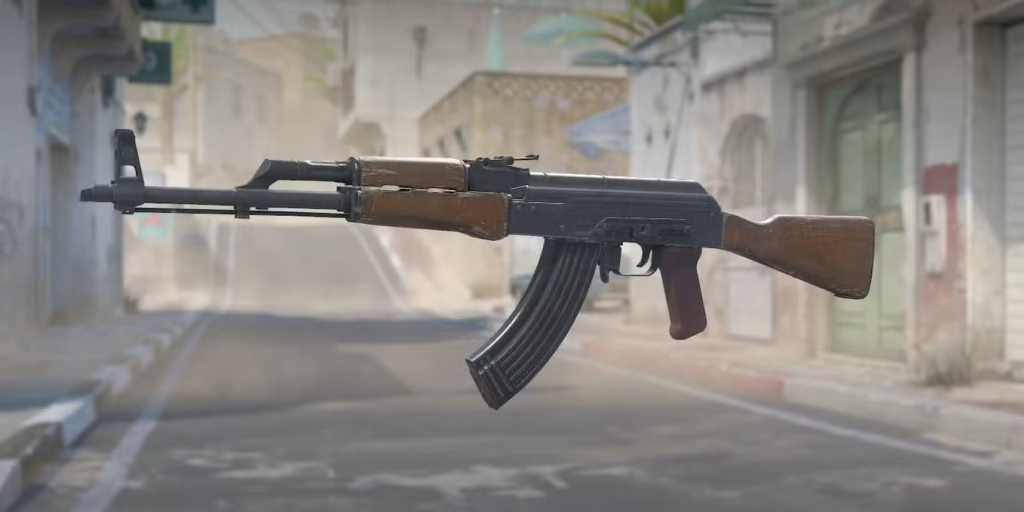
The Evolution from CS:GO to CS2
Counter-Strike 2 introduced substantial backend modifications from CS:GO, particularly within the subtick server architecture and firearm performance characteristics. These technical upgrades translate into subtly altered shooting dynamics during gameplay. Individual tap shots now register with improved responsiveness, while sustained spray management feels more fluid yet still demands developed muscle memory and precision execution. While foundational principles remain consistent, practical implementation has undergone minor adjustments.
The revamped game engine additionally improves bullet registration precision and recoil feedback, making situational firing mode selection even more critical for success. Contrasting with CS:GO’s occasional inconsistency, CS2 aims to minimize those fringe-case registration failures. Consequently, you must refine your shooting fundamentals to an even higher standard if you aim to achieve dominance in matches.
Why Understanding Firing Techniques Matters
Consult any professional competitor, and they’ll emphasize that targeting proficiency reigns supreme in CS2. However, unrefined aiming capability alone proves insufficient—you must comprehend how to engage based on your positioning, equipped firearm, and opponent actions. This is precisely where firing methodologies become strategically relevant.
- Tap Firing delivers exceptional performance at extended distances and during precision-demanding scenarios.
- Burst Firing provides equilibrium between control and rapid engagement for intermediate-range confrontations.
- Spraying prevails in confined combat zones where sheer projectile volume outweighs precision requirements.
Understanding when to transition between these tactical approaches enhances your lethality and sharpens your strategic decision-making capabilities. Comprehending these engagement styles holds equal importance to your positional awareness or game intelligence.
Definition and Basic Mechanics
Tap firing represents the disciplined art of discharging individual projectiles with semi-automatic exactness. It primarily serves extended-distance engagements where accuracy prioritization exceeds fire rate considerations. Within CS2’s environment, precision tapping has gained additional potency through enhanced hit confirmation systems and recoil management responsiveness.
Tap firing depends upon rapid, singular mouse actuations that reinitialize following each projectile discharge. Your objective involves firing singular bullets sequentially, pausing momentarily for sight alignment restoration, then repeating the sequence. This methodology guarantees each projectile impacts precisely where your targeting reticle indicates.
CS2’s modernized weapon mechanics have additionally refined initial-shot precision. This enhancement now delivers greater reliability—particularly with assault rifles like the M4A4 and AK-47—rendering precision tapping increasingly viable strategically.
When and Where to Use Tap Firing
Tap firing demonstrates exceptional performance in combat circumstances where:
- You’re maintaining or examining extended-distance sightlines (comparable to Dust2 Long or Mirage Mid engagements).
- You possess limited ammunition reserves and desire projectile conservation.
- You’re employing firearms possessing superior initial-shot precision (such as the AK-47 or Desert Eagle).
- You’re attempting to preserve stealth capabilities or trigger restraint during critical round situations.
The strategic objective involves achieving cranial impacts with minimal target exposure. One accurately positioned tap can eliminate an adversary before they initiate counter-action.
This approach also proves ideal when your mobility becomes constrained or during rapid peeking maneuvers—swift taps can prevent overcommitment and subsequent punitive consequences.
Pros and Cons of Tap Firing
Advantages:
- Exceptional accuracy and precision capabilities
- Minimal recoil management requirements
- Optimal performance in extended-range confrontations
- Excellent ammunition conservation characteristics
Disadvantages:
- Reduced rate of fire creates vulnerability in proximate engagements
- Failed shots prove particularly punishing
- Demands superior crosshair positioning skills
- Ineffective against multiple adversaries advancing rapidly.
Developing tap firing mastery requires significant discipline. You cannot simply spam projectiles and anticipate victory. However, once you establish confidence in your targeting abilities, tapping transforms into one of your most lethal tactical instruments—especially when you possess precise knowledge of your opponent’s location and can align that pixel-perfect cranial shot.
What is Burst Firing?
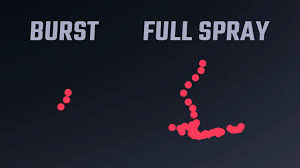
Understanding Burst Fire Patterns
Burst firing occurs when you discharge 2–4 projectiles rapidly in quick sequence, then interupt to permit reticle reinitialization. It represents the intermediary approach between precision tapping and volume spraying—quicker than tapping, more manageable than spraying.
Within CS2’s environment, burst fire configurations demonstrate slightly improved tightness attributable to enhanced recoil feedback mechanisms and upgraded animation synchronization. This enables you to expel 3-4 bullets with acceptable precision before degradation into uncontrolled spraying occurs. This renders it a potent intermediate-distance instrument, particularly when securing angles or investigating corners.
The essential component for successful burst firing involves managing projectile quantity and pause timing. Should you exceed reasonable limits and discharge 5-6 rounds, you’re essentially spraying without adequate control.
Best Scenarios for Burst Firing
Bursting delivers optimal results when:
- You’re engaging at intermediate distances, comparable to Inferno banana or Mirage connector engagements.
- You cannot completely dedicate to a spray but desire greater volume than singular taps provide.
- You’re rapidly advancing into bombsite areas or maintaining confined angles where rapid reaction proves necessary.
- You’re utilizing assault rifles or handguns supporting brief bursts, such as the FAMAS or Glock-18.
This methodology also demonstrates effectiveness when you’re maneuvering while engaging—quickly bursting and resetting can secure duel victories without complete accuracy degradation.
Advantages and Limitations of Burst Firing
Strengths:
- Equilibrated accuracy and damage output
- Accelerated elimination timing compared to precision tapping
- Effective performance in multiple-adversary circumstances
- Increased forgiveness compared to taps when targeting proves slightly inaccurate
Weaknesses:
- Recoil initiates rapidly if excessive bursting occurs
- Inaccurate at extended ranges
- Can entice you into complete spray mode
- Requires rhythmic timing coordination
Burst firing provides versatile tactical options, but requires substantial practice to master effectively. Most inexperienced competitors over-burst or improperly time their discharges, converting the technique into unintentional spraying. Master the rhythmic coordination, however, and you’ll commence outperforming dedicated sprayers in intermediate-distance firefights.
What is Spray Control?
How Recoil Works in CS2
Spraying entails continuous mouse button depression and releasing projectile streams. However, within CS2’s environment, you cannot simply target and maintain—you must manage the recoil configuration if you desire those projectiles to impact successfully.
Every firearm possesses a predetermined spray trajectory. For instance, the AK-47’s projectiles travel upward then arque laterally. Learning this trajectory enables counteraction through mouse manipulation in the contradirectional orientation while discharging. This specialized skill designation is spray control.
CS2’s game engine has rendered recoil more visually discernable. You’ll observe subtle display oscillations and improved projectile tracers, facilitating real-time adjustment capabilities.
Learning Spray Patterns
To develop spraying proficiency, you must commit to memory the recoil trajectory for each individual weapon. Begin with prevalent selections like:
- AK-47
- M4A1-S / M4A4
- Galil / FAMAS
- MP9 / MAC-10
Practice these configurations within training environments like “Recoil Master – Spray Training”. Concentrate on drawing your mouse contrary to projectile travel direction.
The initial 10 projectiles prove most critical—the majority of combat encounters won’t extend beyond that duration.
Comparison: Tap Firing vs Burst vs Spray
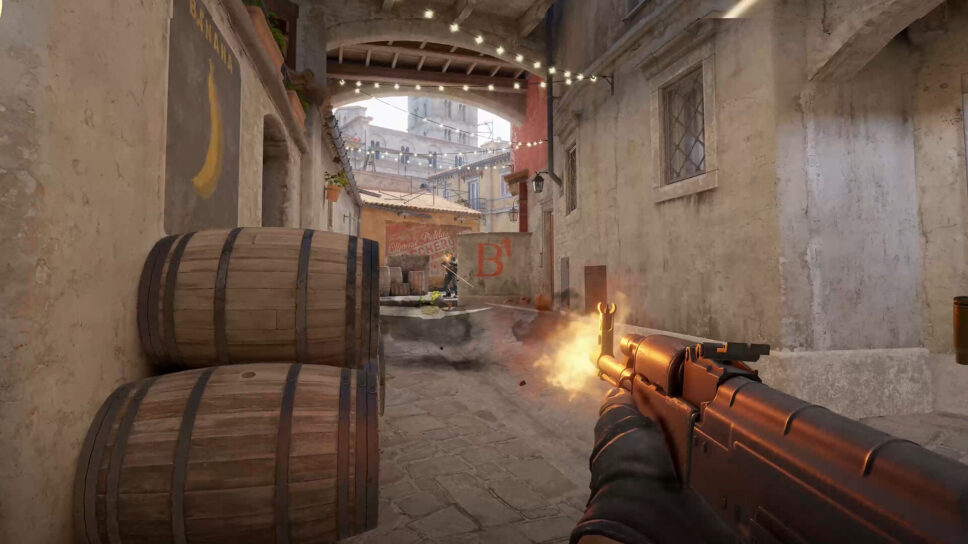
Accuracy and Bullet Spread
Regarding pure precision capabilities, tap firing maintains superiority. Each projectile discharges with comprehensive recoil reinitialization, ensuring your shots connect precisely where your targeting reticle indicates. This renders tapping ideal for pixel peeking and extended-distance confrontations. Nevertheless, should your crosshair positioning or reaction timing prove inaccurate, a failed tap can prove consequential.
Burst firing provides intermediary equilibrium. The initial 2-3 projectiles within a burst typically remain within manageable deviation ranges. Precision proves acceptable, but compromise exists—each subsequent bullet contributes additional recoil. Should your burst extend excessively, it transforms into uncontrolled spraying. Appropriately timed bursts deliver effective balance between damage output and precision requirements.
Spraying, conversely, trades accuracy for projectile volume. The longer you maintain trigger activation, the greater your bullet dispersion expands. At proximate distances, however, this factor diminishes in importance—volume triumphs over precision within confined spaces comparable to apartments or tunnel systems.
Summary:
- Tap: Maximum precision, minimal dispersion.
- Burst: Balanced, intermediate spread characteristics.
- Spray: Reduced accuracy following initial projectiles, extensive dispersion over duration.
Damage Output and Kill Potential
Tap firing delivers superior damage per projectile, particularly with assault rifles like the AK-47, capable of singular-tap adversary elimination through cranial impacts—even penetrating protective helmets. However, its elimination potential diminishes if you cannot achieve headshots. It provides precision, but lacks rapid engagement capabilities.
Burst firing enhances kill potential through accelerated time-to-kill (TTK) compared to precision tapping. A properly positioned burst can readily dispatch an opponent within sub-second timeframes, especially with competent recoil management. It permits subsequent torso impacts should the cranial shot fail to connect.
Spraying optimizes your DPS (damage per second). Should you successfully control the recoil, it proves unmatched for overwhelming multiple adversaries or responding to unexpected advances. A complete spray, when accurately executed, can eliminate two or additional enemies without trigger release.
Summary:
- Tap: Superior damage per projectile, low TTK unless precision maintained.
- Burst: Intermediate-to-high damage output, faster TTK.
- Spray: Maximum DPS potential, multiple eliminations possible.
Recoil Recovery and Control
Tap firing minimally necessitates recoil compensation. You await reticle reinitialization following each discharge, indicating recoil essentially reaches zero if properly timed. Your concentration focuses on targeting rather than control requirements.
Burst firing commences with manageable recoil, but the critical element involves releasing before control degradation occurs. The optimal timing involves discharging 2-4 projectiles, then reinitializing. Developing this rhythmic coordination proves essential. You additionally require slight downward crosshair adjustment during burst sequences to maintain projectile alignment.
Spraying represents the most challenging technique to master. Each individual weapon possesses a unique recoil trajectory, and you must manually manipulate your mouse in the contradictory orientation to maintain projectiles on intended targets. This demands extensive practice duration and developed muscle memory.
Summary:
- Tap: No recoil compensation required.
- Burst: Intermediate control necessities, particularly following the 3rd projectile.
- Spray: Elevated skill threshold for comprehensive control.
Training to Master Each Firing Technique
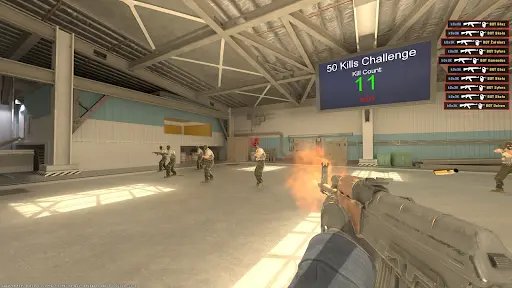
Aim Training Maps and Servers
To develop proficiency in tapping, bursting, and spraying, you require developed muscle memory and crosshair discipline. The most effective approach for building these capabilities involves utilizing community-developed training environments:
- Aim Botz: Optimal for precision tap and burst training exercises. Practice cranial impacts and movement coordination.
- Yprac Aim Trainer: Provides configurable burst/spray training regimens.
- Recoil Master – Spray Training: Learn spray management through visual guidance systems.
- Fast Aim/Reflex Training: Perfect for reaction-based tapping and bursting methodologies.
Dedicate 20–30 minutes daily within these training environments, concentrating on individual skill development sequentially. Avoid simply spraying every engagement—train your techniques with deliberate intentionality.
Practicing in Deathmatch and Custom Servers
Deathmatch sessions assist in developing real-time tactical decision-making capabilities. Combine your firing methodologies:
- Tap during extended-distance confrontations.
- Burst within intermediate-range engagements.
- Spray during rapid advances or proximate combat situations.
Utilize community deathmatch servers with unrestricted weapon access, instantaneous respawn mechanisms, and specific map configurations. Additionally experiment with “1v1 arena” servers—they replicate duel scenarios and prove ideal for practicing burst/tap timing coordination.
Sensitivity, Crosshair, and Config Optimization
Should your targeting prove unstable, precision tapping won’t provide assistance. Refine your configuration settings:
- Reduced sensitivity for improved tapping control (1.5–2.0 using 400 DPI configurations).
- Employ a static crosshair with discernable coloration.
- Activate “cl_crosshair_recoil 1” within training environments to develop spray feedback comprehension.
Additionally, deactivate mouse acceleration functionalities, and verify your mouse surface permits fluid movement coordination.
When you step into a CS2 match, your skill with firing modes—tap, burst, or spray—can be the difference between clutching the round or ending up in the kill feed. Each technique has its strengths, weaknesses, and situations where it shines. This guide will break down all three, explain how to use them effectively, and give you pro-level tips to take your gunplay to the next level. Whether you’re a beginner learning how to shoot straight or a seasoned player trying to refine your aim, mastering these mechanics is essential.
Introduction to CS2 Gun Mechanics
The Evolution from CS:GO to CS2
Counter-Strike 2 introduced major under-the-hood changes from CS:GO, particularly in the subtick server system and weapon behavior. What this means for you as a player is that shooting mechanics feel significantly different. Tap shots register faster due to improved server-side processing, while spray control feels more predictable but demands precise muscle memory execution. Although core shooting principles remain consistent, their implementation requires refined technical execution.
The new Source 2 engine enhances hit registration consistency and recoil feedback, making it absolutely critical to select the appropriate firing mode based on situational context. Unlike CS:GO where hit registration inconsistencies sometimes occurred, CS2 minimizes these edge-case scenarios through enhanced server architecture.
Why Understanding Firing Techniques Matters
Ask any professional player, and they’ll emphasize that aim proficiency is paramount in CS2. However, raw aiming ability alone isn’t sufficient—you must understand how to shoot depending on your positioning, weapon selection, and enemy movement patterns. That’s where firing mode selection becomes strategically important.
- Tap Firing excels in long-range engagements where precision matters more than firing volume.
- Burst Firing provides optimal balance between control and engagement speed for mid-range encounters.
- Spraying dominates in close-quarter combat situations where raw firepower output outweighs precision requirements.
Understanding when to transition between these techniques dramatically increases your lethality and sharpens your tactical decision-making capabilities.
Situational Decision Making
When engaging through visual obstruction or after flash effects, prioritize burst or spray techniques. Tapping depends heavily on clear visual acquisition. Spraying through smoke screens is particularly common on CT-side when delaying enemy pushes. Bursting following pop-flash deployment proves highly effective for securing rapid eliminations while maintaining positional safety.
Strategic utility deployment enables optimal firing style configuration:
- Execute flashbang deployment followed by aggressive peeking with spray control.
- Utilize molotov incendiaries then maintain long sightlines with precise tapping execution.
- Deploy smoke screens to isolate engagement zones and employ bursting from defensive cover positions.
Advanced players recognize that different map areas demand specific firing approaches. Long corridors like Dust2’s A Long or Mirage’s Mid require tapping discipline, while confined spaces like Inferno’s Banana or Overpass’s B tunnels favor spray dominance.
Utility Integration Tactics
Professional gameplay demonstrates that utility usage should directly complement your intended firing methodology. This integration creates tactical advantages that separate elite performers from average competitors.
Common strategic errors include misjudging engagement distances and failing to adapt firing techniques to situational evolution. Many intermediate players default to spraying in long-range scenarios where tapping would yield superior results, or conversely attempt precision tapping in close-quarters where spray control proves more effective.
Developing proficiency in tapping, bursting, and spraying demands cultivated muscle memory and crosshair discipline maintenance. The most effective approach involves utilizing community-developed training environments:
- Aim Botz: Perfect environment for tap and burst training exercises. Practice headshot accuracy and movement coordination simultaneously.
Spend 20–30 minutes daily practicing on these specialized maps, concentrating on individual skill development systematically. Avoid defaulting to spraying during every practice session—instead, train each technique with deliberate intentionality.
Muscle Memory Development
Deathmatch sessions cultivate real-time tactical decision-making. Systematically vary your firing approaches:
- Employ tapping during extended-range engagements.
- Utilize spraying during aggressive rushes or close-proximity confrontations.
Utilize community-operated deathmatch servers featuring unrestricted weapon access, immediate respawn mechanics, and map-specific training opportunities. Additionally, experiment with “1v1 arena” servers—these simulate direct confrontation scenarios and provide ideal conditions for practicing burst/tap timing precision.
Configuration Optimization
If your aiming stability demonstrates inconsistency, tapping effectiveness diminishes significantly. Optimize your technical configuration:
- Reduce sensitivity parameters for enhanced tapping control (recommended 1.5–2.0 sensitivity range using 400 DPI).
- Implement static crosshair configuration with clearly distinguishable color selection.
- Activate “cl_crosshair_recoil 1” command during training sessions to develop spray control visual feedback recognition.
Additionally, disable mouse acceleration functionality, and verify that your mousepad surface enables fluid movement execution.
Clutch Situation Execution
During high-pressure clutch scenarios, firing style selection can determine round outcome. Tapping provides precision targeting, bursting delivers rapid lethal capability, and spraying offers defensive assurance when confronting multiple advancing opponents simultaneously.
In 1v1 engagements:
- Tap when maintaining defensive angles.
- Burst when systematically clearing tactical positions.
- Avoid defaulting to spraying unless experiencing aggressive enemy pushing or time constraint pressure.
In 1vX situations:
- Position strategically to create sequential 1v1 engagement opportunities.
- Prioritize tapping initially, transitioning to bursting secondarily, and reserve spraying exclusively for overwhelming situational circumstances.
- Monitor auditory environmental cues and maintain trigger discipline while holding tactical angles.
Sound-Based Tactical Decisions
Your selected firing methodology influences your acoustic signature. Spraying generates substantial noise emission. Tapping maintains stealth operational characteristics and calculated engagement methodology. If intending to surprise opposing players or avoid attracting additional enemy attention, employ tap or burst firing to minimize acoustic exposure.
Advanced tactical recommendations:
- Maintain fire discipline unless confirming target acquisition.
- Allow enemy combatants to advance into your pre-positioned crosshair alignment.
- Deliberately postpone shooting initiation to bait multiple opponents into advantageous positioning.
Your position on the team significantly influences which firing techniques will deliver optimal results. Different roles demand distinct approaches to tap, burst, and spray firing based on engagement distances and tactical responsibilities.
Entry Fragger vs Support Playstyles
Entry fraggers initiate site takes and require immediate lethal capability. Your primary focus should be on spraying and bursting techniques since you’ll typically encounter defenders at close-to-medium ranges during initial engagements.
- Eliminate site defenders with controlled sprays.
- Penetrate smokescreens and flashbang effects using short bursts.
- Leverage movement-based accuracy during aggressive peeks.
Support players operate with more deliberate pacing. You’re deploying utility, maintaining angle coverage, and monitoring flanking routes. In these scenarios, tapping and precise bursting become more advantageous. You maintain better cover positions, necessitating clean shot execution when opponents enter your field of view.
- Maintain angle control with taps or minimal bursts.
- Secure trade eliminations using well-timed bursts.
Lurkers excel through timing manipulation and surprising unprepared opponents. Your initial shot must connect decisively—tap firing becomes essential. You operate based on auditory information and strategic placement, making sustained spraying suboptimal unless managing post-engagement cleanup situations.
AWPers sometimes transition to rifle usage. During these instances, they typically employ tapping or bursting techniques, maintaining stationary positioning for single precise eliminations rather than uncontrolled spraying.
Team captains (IGLs) don’t typically prioritize pure mechanical skill development, but their shooting methodology must complement their positional awareness and tactical decision-making. IGLs generally:
- Employ tapping when securing areas or managing final-round defenses.
- Utilize bursting for efficient trade elimination scenarios.
- Reserve spraying exclusively for unavoidable direct confrontations.
Serving as an IGL doesn’t preclude maintaining sharp shooting skills—understanding when to deploy the appropriate firing mode is fundamental for effective leadership demonstration.
During high-pressure round-deciding scenarios, your selected firing methodology can determine victory or defeat. Tapping provides surgical precision, bursting delivers rapid elimination potential, and spraying offers protection when multiple opponents coordinate assaults.
In 1v1 engagements:
- Execute taps while maintaining angle coverage.
- Implement bursts during corner clearance operations.
- Minimize spraying unless experiencing aggressive pushes or facing time constraints.
In 1vX scenarios:
- Establish positioning for sequential 1v1 confrontations.
- Prioritize tapping initially, transition to bursting secondary, and resort to spraying only when completely overwhelmed.
- Monitor auditory indicators and maintain angles with firing restraint.
Your selected firing technique directly impacts your acoustic signature. Sustained spraying generates significant noise pollution. Tapping maintains stealth and calculated approach. If your objective involves surprising opponents or preventing additional player interventions, employ tapping or bursting to minimize auditory detection.
Pro-level recommendations:
- Maintain firing restraint until target confirmation.
- Allow opponents to advance into your pre-aimed positions.
- Implement delayed shooting to lure multiple enemies into vulnerable positions.
Action Checklist
- Practice 15 minutes daily in Aim Botz focusing exclusively on tap firing headshots
- Master AK-47 spray pattern through Recoil Master map training
- Configure optimal sensitivity (1.5-2.0 at 400 DPI) for improved control
- Analyze professional match demos to identify firing style transitions
- Record and review your own gameplay to identify firing technique errors
- Daily 20-30 minute focused training sessions using Aim Botz and Recoil Master maps
- Configure optimal sensitivity (1.5-2.0 at 400 DPI) and static crosshair
- Practice firing style transitions in community deathmatch servers
- Analyze match demos to identify firing style selection errors
- Practice AK-47 spray pattern for 15 minutes daily using Recoil Master map
- Spend 10 minutes in Deathmatch focusing exclusively on burst firing technique
- Configure crosshair to static style with high visibility color
- Analyze one professional match demo focusing on firing technique transitions
No reproduction without permission:Tsp Game Club » Tap Firing vs Burst vs Spray in CS2