
Master Shanghai Circuit with this optimized F1 25 setup guide featuring strategic tips and common pitfalls
Shanghai Circuit Challenges and Setup Philosophy
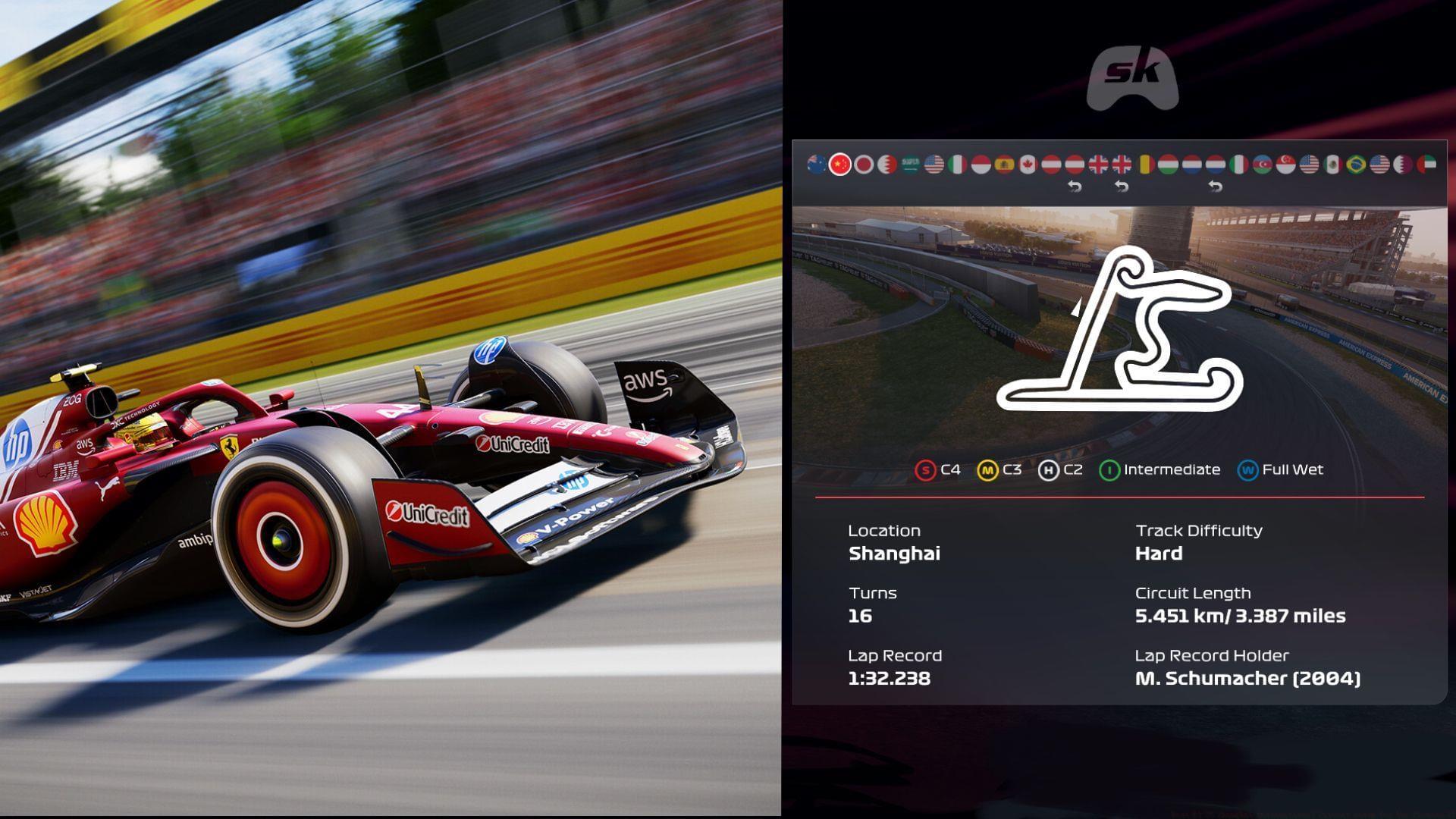
Shanghai International Circuit returns to F1 25 with its signature blend of high-speed challenges and technical complexity. This demanding 5.451km track combines one of Formula 1’s longest straights with a intricate middle sector that tests car balance and driver precision to the limit.
The circuit’s unique “snail” shape features multiple heavy braking zones transitioning into complex corner sequences, requiring a setup that balances straight-line efficiency with mechanical grip. Understanding the track’s three distinct sectors is crucial: Sector 1 emphasizes top speed, Sector 2 demands precision handling, and Sector 3 requires balanced traction.
Our Chinese Grand Prix configuration focuses on achieving optimal compromise between high-speed stability and low-speed mechanical grip. The setup prioritizes rear traction for the circuit’s multiple acceleration zones while maintaining sufficient downforce for the technical middle section.
Complete Setup Configuration
This meticulously crafted Chinese GP setup delivers exceptional balance across Shanghai’s varied demands. The configuration prioritizes stability under braking while maximizing traction out of slow-speed corners.
- Differential Adjustment On Throttle: 90% – This high setting provides maximum traction during acceleration, crucial for Shanghai’s multiple low-speed exits
- Differential Adjustment Off Throttle: 10% – Minimal off-throttle differential ensures stable braking and smooth turn-in characteristics
- Front Anti-Roll Bar: 1 – The softest setting enhances mechanical grip through the technical middle sector while maintaining responsive turn-in
- Front Right Tyre Pressure: 26 psi – Balanced front pressure optimizes turn-in response and mid-corner stability
- Front Left Tyre Pressure: 26 psi – Consistent front pressures ensure predictable handling through left-right transitions
- Rear Right Tyre Pressure: 22 psi – Lower rear pressures increase contact patch for better traction out of slow corners
- Rear Left Tyre Pressure: 22 psi – Symmetrical rear setup maintains balance under hard acceleration
Also Read: F1 25 review: A Formula One game that knows where it’s going
Advanced Driving Techniques and Common Mistakes
Mastering this setup requires understanding how to exploit its strengths while avoiding common driving errors. The high on-throttle differential demands smooth throttle application to prevent traction loss, particularly in Shanghai’s tricky Turn 6 and Turn 11 complexes.
Critical Driving Techniques:
- Progressive throttle application through corner exits maximizes traction from the 90% differential
- Early and smooth braking inputs complement the 10% off-throttle setting for stable turn-in
- Utilize the soft front anti-roll bar by carrying slightly more speed through medium-speed corners
- Manage tire temperatures carefully – the pressure differential can lead to front tire overheating if pushed too aggressively
Common Setup Mistakes to Avoid:
- Avoid increasing front anti-roll bar stiffness – this reduces mechanical grip in Sector 2
- Don’t equalize tire pressures – the front-rear differential is crucial for balanced performance
- Resist lowering on-throttle differential below 85% – this compromises crucial traction zones
- Avoid over-driving in qualifying – this setup rewards consistency over single-lap heroics
Performance Optimization and Race Strategy
This versatile Chinese GP configuration excels in both time trial consistency and race durability. The balanced aerodynamic approach ensures stable performance throughout stints while the suspension setup minimizes tire degradation across Shanghai’s abrasive surface.
Setup Refinements for Specific Conditions:
- For wet conditions: Increase front tire pressures to 27psi for better aquaplaning resistance
- For hot track temperatures: Consider reducing rear pressures to 21psi to manage overheating
- For fuel-heavy race starts: Temporarily increase off-throttle differential to 15% for better stability
Race Strategy Considerations:
- The setup favors two-stop strategies due to consistent tire wear characteristics
- Excellent traction enables aggressive overtaking into Turn 14 hairpin
- Stable braking performance supports late-braking maneuvers into Turn 1 and Turn 6
The combination of low off-throttle differential and balanced tire pressures ensures strong corner entry stability while preserving straight-line performance. This Shanghai configuration proves particularly effective through the circuit’s most demanding technical sections in F1 25, providing confidence to push through the challenging snail-shaped layout.
Read more F1 25-related articles below:
Best F1 25 Albert Park Circuit setup for the Australian GP
Best F1 25 Lusail International Circuit Setup for the Qatar GP
Best F1 25 Yas Marina Circuit Setup for the Abu Dhabi GP
Best F1 25 Las Vegas Strip Circuit setup for the Las Vegas GP
No reproduction without permission:Tsp Game Club » Best F1 25 Shanghai International Circuit setup for the Chinese GP Master Shanghai Circuit with this optimized F1 25 setup guide featuring strategic tips and common pitfalls