
TL;DR
- Master 12 universal position names like Mid, Long, and Heaven for consistent team communication
- Use radar position names as reliable fallbacks when learning new map callouts
- Develop team-specific terminology while maintaining standard English callouts for solo play
- Practice progressive learning: start with bomb sites, then connectors, and finally detailed positions
- Implement clear, concise callout protocols to maximize information efficiency during rounds
Exceptional aim alone won’t guarantee victory in CS2. The most successful players develop a comprehensive skill set that includes strategic thinking, game sense, and most importantly, effective communication. Without these elements, even the best shooters struggle to climb the competitive ranks.
Clear communication stands as a cornerstone of high-level CS2 gameplay. When you can’t identify specific map positions by name, you compromise your team’s ability to coordinate strategies and respond to enemy movements efficiently.
Using standardized position names transforms chaotic team chatter into precise tactical information. Attempting to describe locations without established terminology wastes precious seconds and creates confusion that skilled opponents will exploit immediately.
Many players underestimate how much time they lose trying to explain enemy positions. In fast-paced rounds, a simple “two Long A” communicates infinitely faster than “uh, two guys coming from that really long area near the big doors.”
While CS2 maps feature diverse layouts and designs, certain position names remain consistent across multiple locations due to their universal functionality and strategic importance.
- Mid – represents the central corridor or area connecting map sections. Interestingly, some competitive maps like Nuke don’t feature a traditional Mid position.
- Long — designates the extended approach route to a bombsite, prominently featured on Dust 2, Overpass, and Inferno.
- Short — identifies the shorter, more direct path to an objective, commonly referenced on Dust 2 and Mirage.
- Connector — serves as the transitional space linking multiple pathways or bomb sites together.
- Heaven — describes elevated positions offering overview of bomb sites or key areas, typically requiring opponents to look upward to engage.
- Ramp — indicates sloped transitions between different map levels, often creating challenging engagement angles.
- Default — the standardized bomb plant location available on all maps, considered optimal for post-plant defense or safest detonation positioning.
- Headshot — refers to defensive spots where only the defender’s head remains visible to approaching enemies.
- Ladder — marks locations featuring climbable ladders for vertical map movement and positioning.
- Under — identifies underground passages or tunnel systems beneath main map areas.
- Respawn, Spawn — the starting location where players begin each round, separated by team alignment.
- City, CT, CT-Spawn — specifically denotes Counter-Terrorist team spawning areas and initial positions.
Professional teams often develop additional nuanced callouts, but these universal terms form the foundation that every competent player should memorize. Understanding when to use “Heaven” versus “Upper” can mean the difference between a coordinated retake and chaotic individual efforts.
Each competitive CS2 map contains approximately 10-15 unique position names that experienced players recognize instantly. Attempting to memorize everything simultaneously proves overwhelming for most learners.
Adopt a progressive learning strategy: begin with bomb site names (A Site, B Site), then master connecting pathways (Connector, Mid), and finally learn the specific positions within each area.
During your learning phase, leverage the built-in radar position indicators as reliable communication fallbacks. Simply glance at your radar’s corner—the game displays official position names directly above the minimap for quick reference.
For players who frequently queue alone or with changing teammates, mastering the standard English position names becomes essential. This ensures your callouts remain universally understood regardless of your teammates’ experience level or language background.
Established teams that practice together consistently often develop customized callout systems. However, remember that these team-specific terms create communication barriers when playing with unfamiliar teammates.
Common beginner mistakes include over-complicated descriptions, inconsistent terminology, or waiting too long to relay critical information. Practice delivering concise, immediate callouts: “One Mid to B” rather than “I think there might be someone coming through the middle area toward the B site.
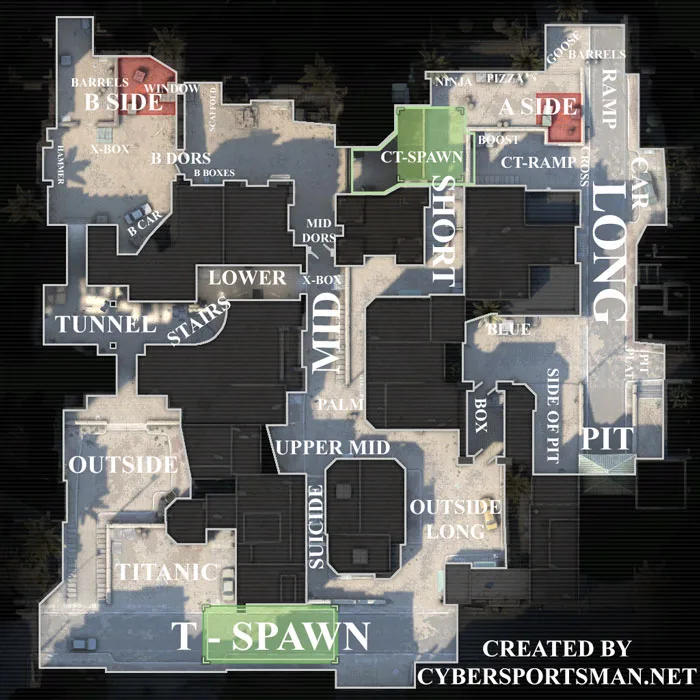
Mastering Dust 2 Position Callouts
As one of Counter-Strike’s most iconic maps dating back to CS 1.6, Dust 2 features exceptionally well-balanced design for both attacking and defending teams.
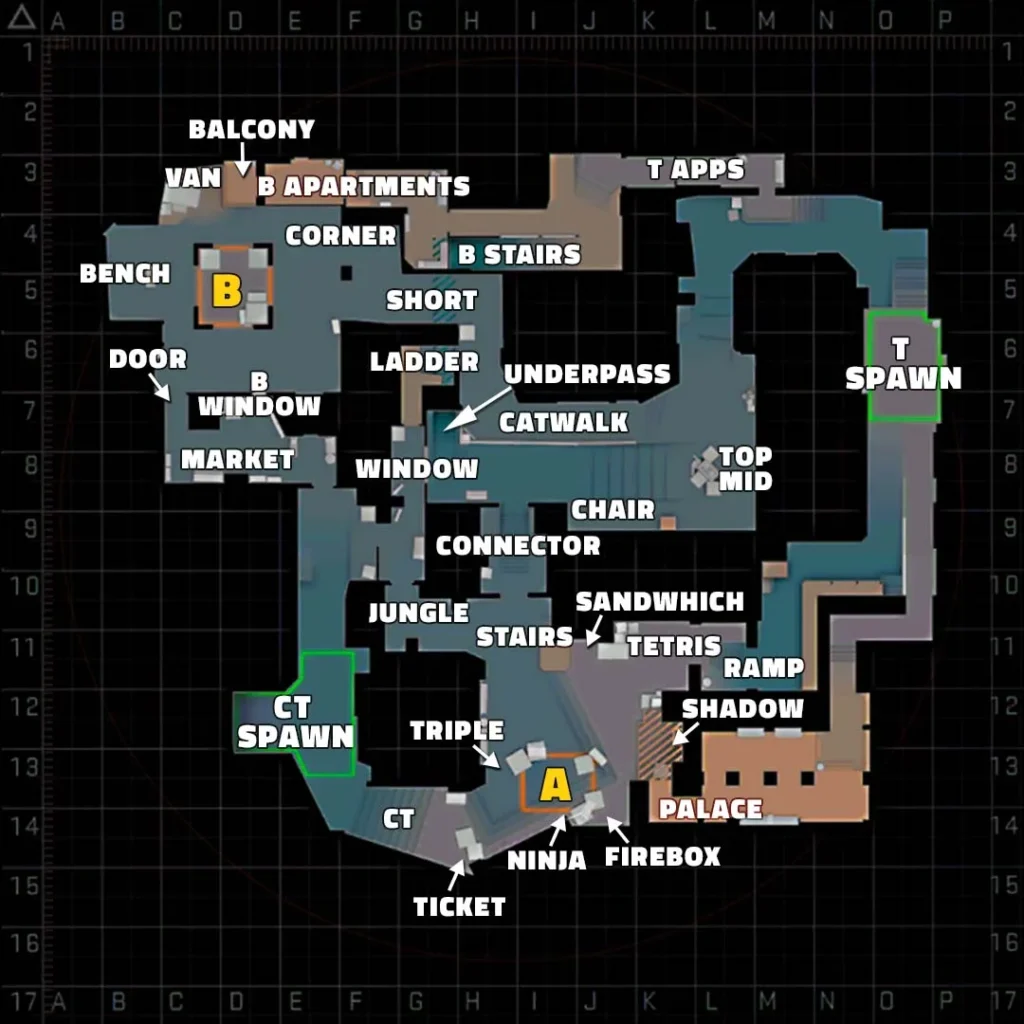
Navigating Mirage Position Terminology
Since its introduction in July 2013, Mirage has maintained its status among the game’s most played competitive maps. Its straightforward layout makes position names relatively easy to internalize through consistent play.
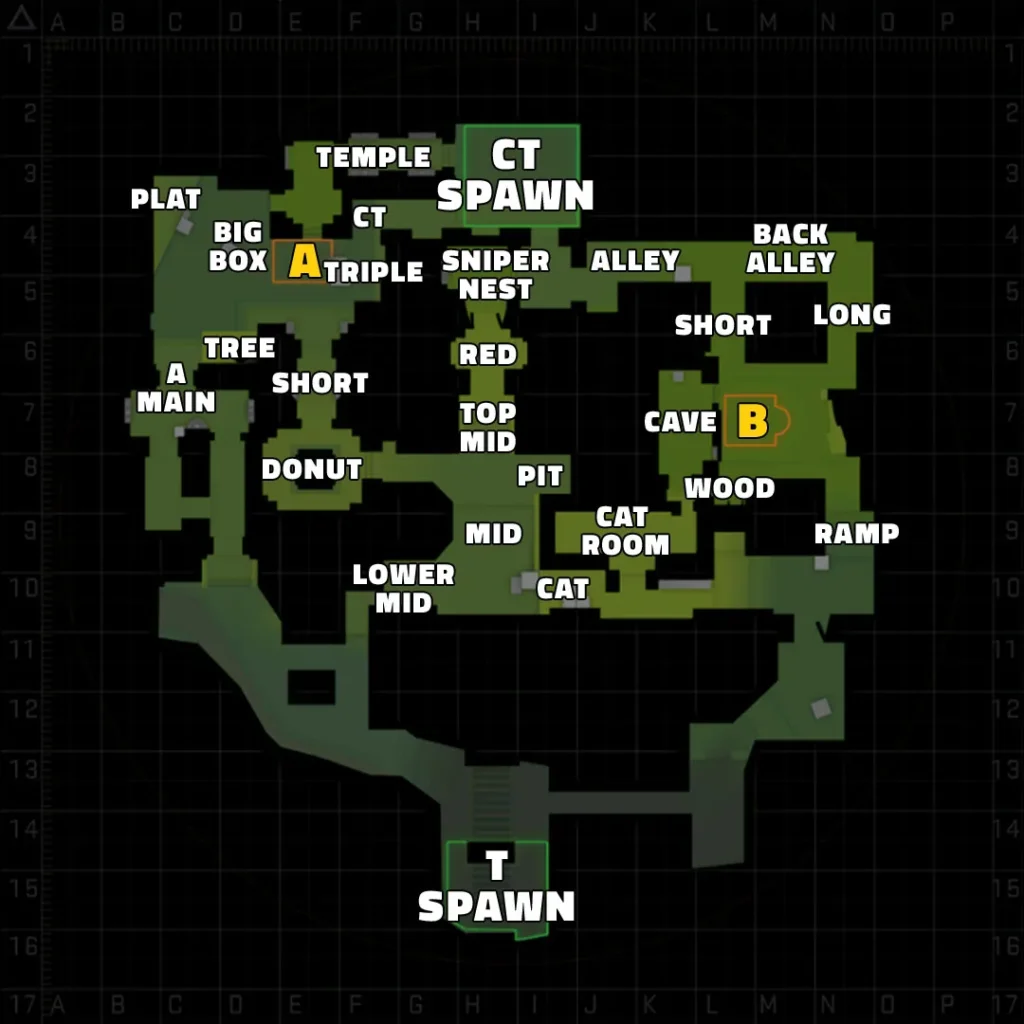
Understanding Ancient’s Unique Position Layout
As a relatively recent addition to the competitive map pool, Ancient presents a standard Counter-Strike structural foundation with distinctive characteristics and specialized position names.
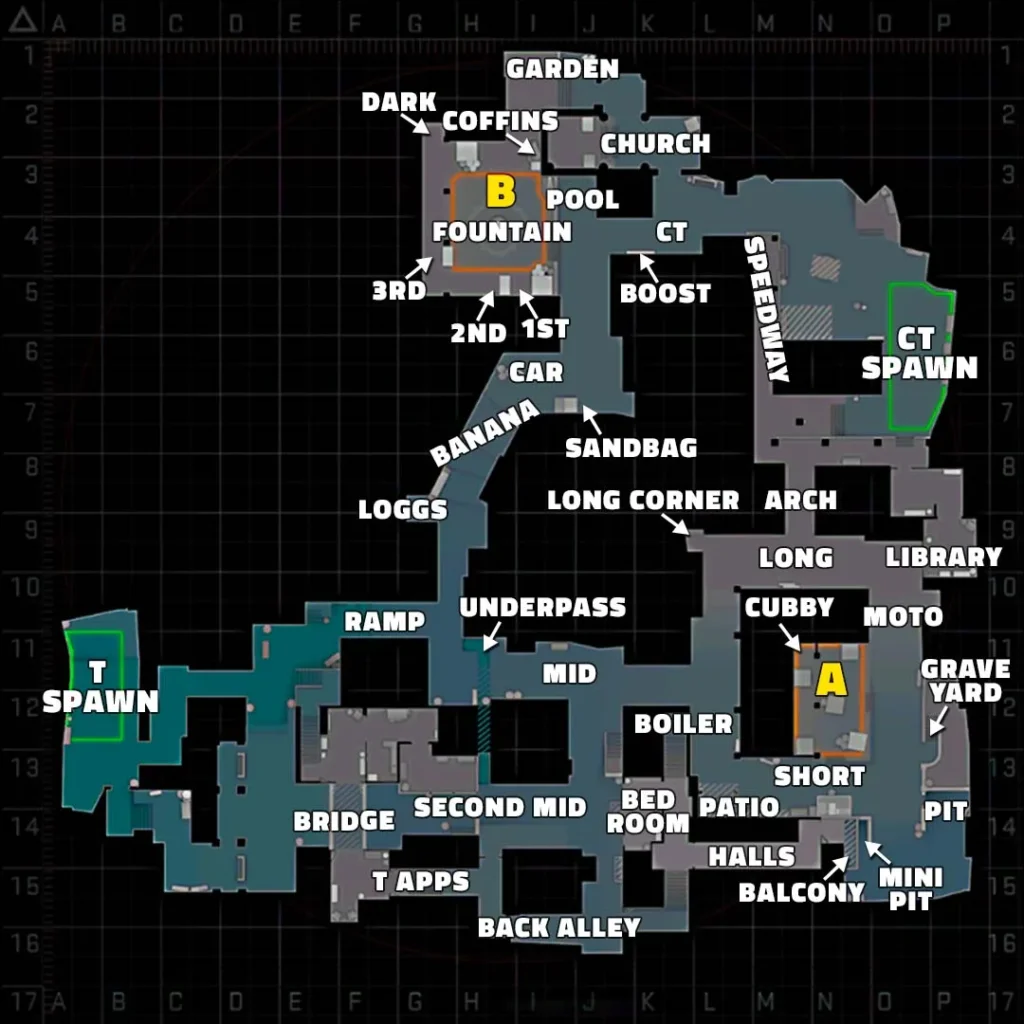
Inferno’s Italian Village Position Structure
Modeled after traditional Italian town architecture, Inferno presents a deceptively complex layout despite its initial simplicity. The map contains numerous corners and hiding spots where opponents can position themselves, making precise callouts absolutely critical for success.
Navigating Nuke’s Multi-Level Complexity
Nuke’s distinctive design features two operational floors with bomb sites positioned vertically above one another, creating unique communication challenges.
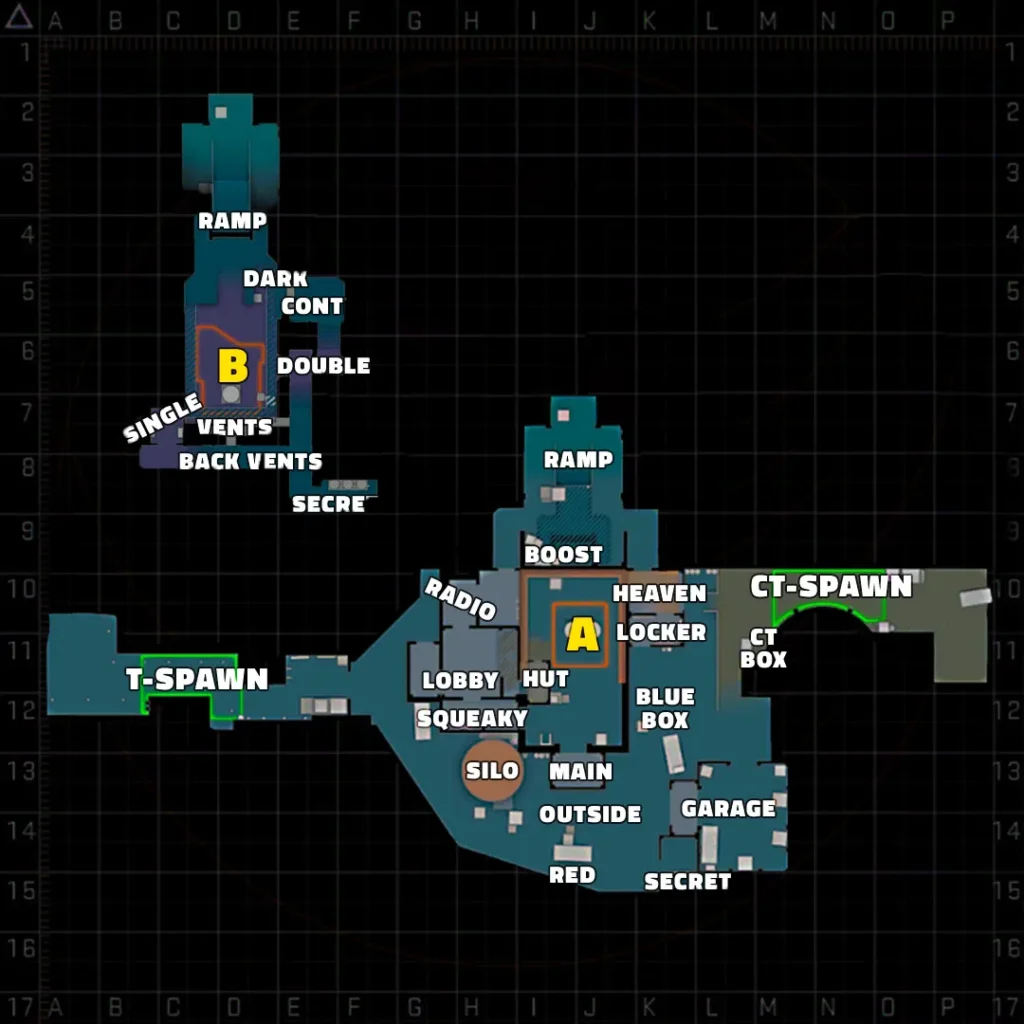
Mastering Vertigo’s Dual-Level Position System
Similar to Nuke’s vertical design, Vertigo incorporates two separate floors that can create navigation confusion for inexperienced players. Precise position knowledge prevents miscommunication during critical rounds.
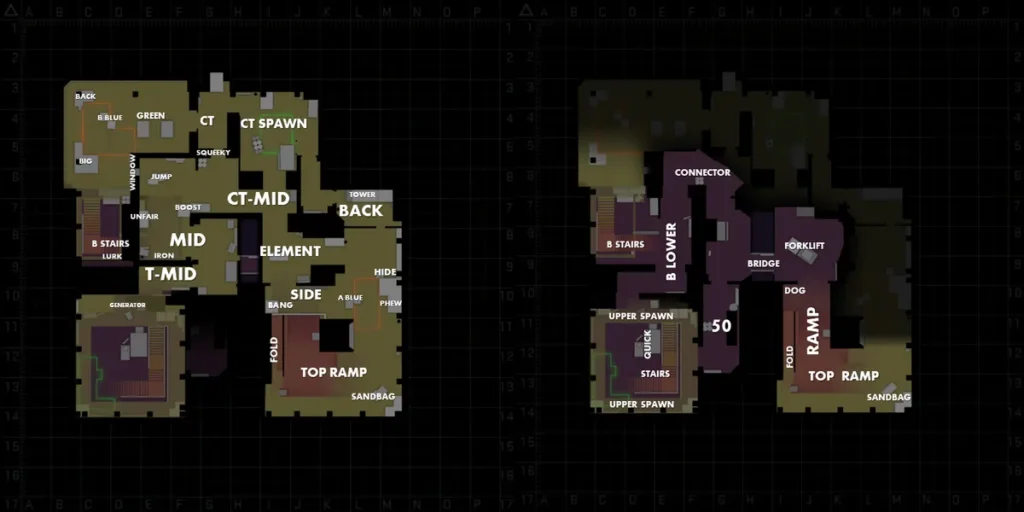
Anubis: Blending Traditional and Modern Position Names
Anubis skillfully merges tight passageways, expansive combat zones, and multi-level engagements to deliver varied tactical experiences. While many positions utilize universal terminology, several locations feature specialized names unique to this map’s Egyptian theme.
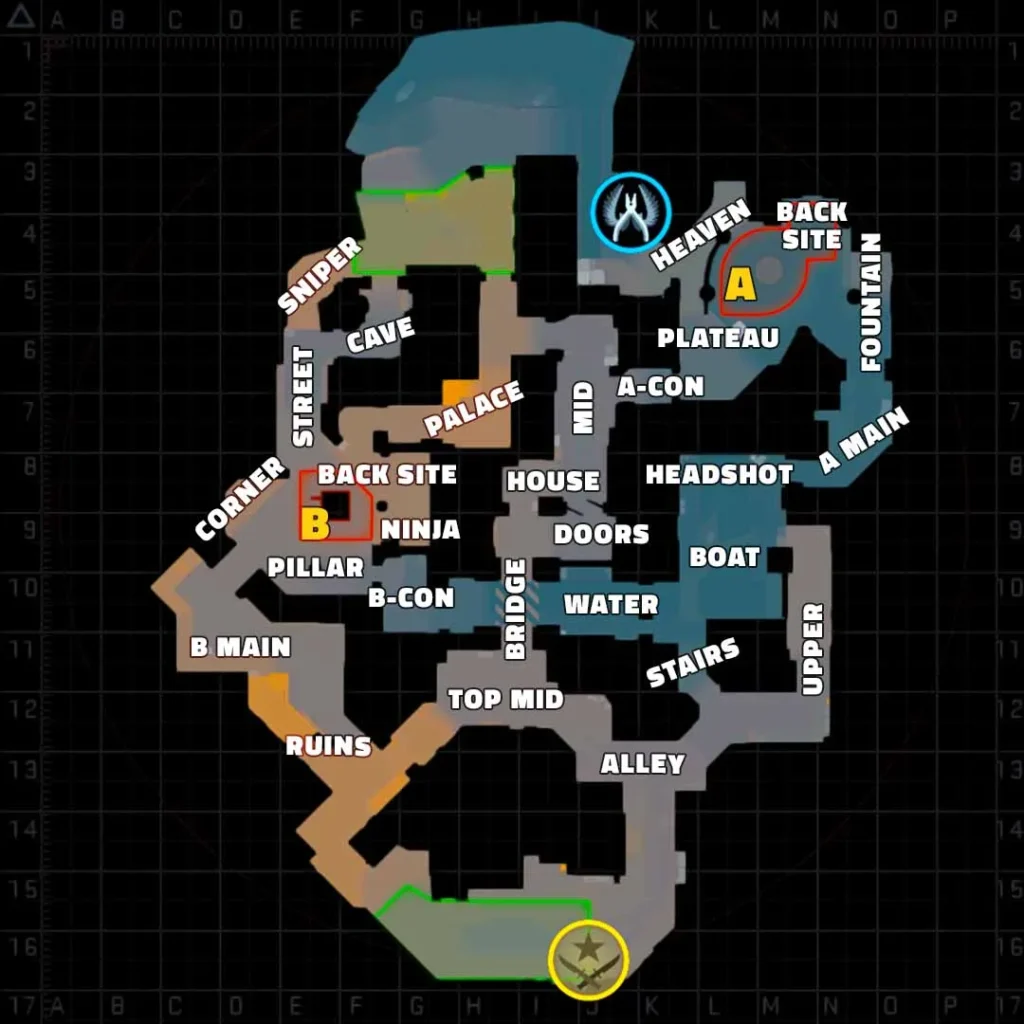
When establishing team-specific callouts, maintain balance between customization and accessibility. While “Kitchen” might work for your regular team, unfamiliar players will understand “CT” or “Spawn” immediately.
Advanced players develop information prioritization systems: immediate threats first (“Two pushing B”), then strategic information (“Last seen Mid”), and finally utility coordination (“Smoking Window”).
For optimal team performance, establish clear communication protocols before matches. Determine callout responsibility areas, establish confirmation systems (“Copy that”), and practice concise information delivery to minimize radio clutter during intense situations.
Common advanced mistakes include over-communication during clutch situations, inconsistent volume levels, or failing to update information as situations evolve.
Remember that effective callouts should answer three questions: How many enemies? Where are they? What are they doing? A perfect callout sounds like: “Two A Long, one planting, last spotted with AWP.”
As you progress, you’ll discover that mastering map callouts represents one of the highest-return investments for improving your competitive performance. For comprehensive team strategy development, consult our Complete Guide to coordinate advanced tactical approaches.
Action Checklist
- Memorize the 12 universal position names and practice using them in deathmatch games
- Focus on learning one competitive map completely before moving to the next
- Practice delivering concise callouts using the format: [Number] [Position], [Additional Info]
- Establish team communication standards including callout responsibilities and confirmation protocols
- Review and refine your callout efficiency by watching your own match demos
No reproduction without permission:Tsp Game Club » CS2 map positions guide Master CS2 map callouts with essential position names, communication strategies, and team coordination techniques