
TL;DR
- CS2’s volumetric smoke system creates dynamic, interactive vision denial that reacts to bullets and explosives
- Strategic utility usage provides space control, movement manipulation, and psychological pressure advantages
- Economic management of grenades requires strategic allocation based on round objectives and team economy
- Practice with custom workshop maps builds muscle memory for consistent lineup execution
- Advanced techniques like fake executions and utility conditioning separate elite players from average competitors
Why Utility Usage Defines Competitive Excellence
When analyzing what truly separates CS2’s elite competitors from average players, the answer extends far beyond raw aiming skill. Superior utility deployment consistently determines round outcomes in high-level matches. Consider how frequently you’ve lost crucial rounds because opponents perfectly deployed smokes or molotovs that completely shutdown your team’s advances. This demonstrates the decisive power of tactical grenade usage. Vision-blocking smokes, disorienting flashes, and area-denying molotovs function as your greatest tactical assets—or most dangerous threats—based entirely on your mastery level.
Within CS2’s competitive ecosystem, utility transcends simple vision obstruction or damage dealing. These tools enable territorial dominance, enemy positioning manipulation, and critical time acquisition. They facilitate push delays, site take deceptions, hidden opponent flushing, and enemy blinding for optimal peeking opportunities. It represents explosive chess—where timing precision, strategic planning, and execution accuracy converge.
One frequently underestimated advantage involves psychological warfare implementation. Expertly deployed smokes or flashbangs can trigger opponent self-doubt, hesitation responses, or premature site rotations. Within CS2’s high-stakes environment, hesitation frequently costs teams the entire round.
Whether you’re climbing solo queue rankings or competing in Faceit tournaments with teammates, utility mastery equates to map dominance. This transformation shifts your role from pure fragger to round-winning strategist. Once you develop proficiency deploying utility at professional levels, you’ll observe substantial improvements in your overall match influence.
Essential Grenade Types and Their Functions
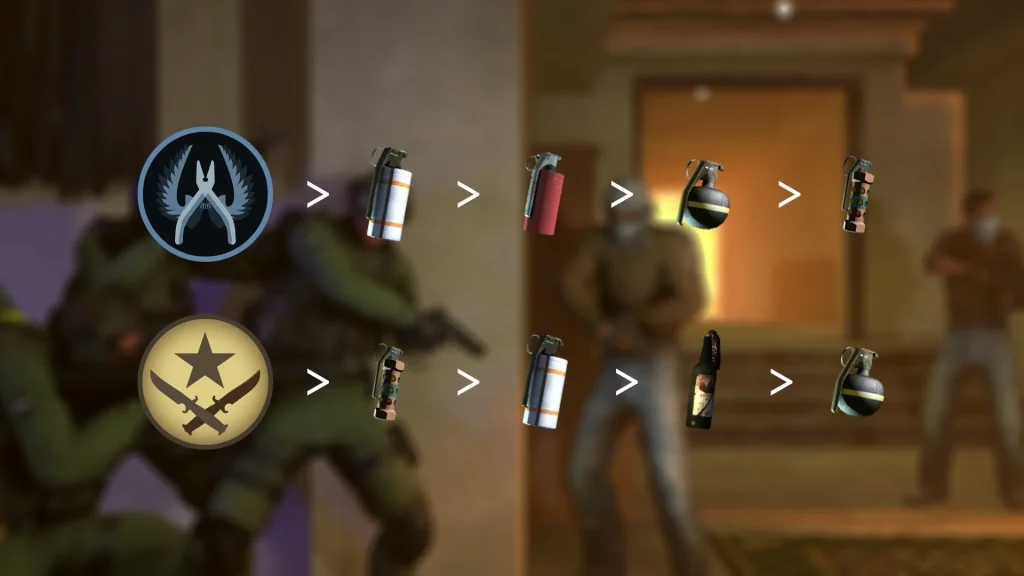
Let’s systematically examine the three primary utility categories every serious CS2 competitor must command:
- Smoke Grenades – These deliver visual obstruction capabilities, making them ideal for angle elimination, sniper sightline blocking, or site assault enabling. Within CS2, smoke behavior significantly differs from CS:GO implementations, incorporating volumetric smoke technology that interacts with explosive devices and projectile fire.
- Flashbangs – These serve as your combat initiation tools. Properly executed flashes can disorient multiple opponents simultaneously, creating easy elimination opportunities. However, mistimed deployments? You risk disorienting your entire squad instead.
- Molotovs/Incendiaries – These represent territorial control instruments. Deploy one across Inferno’s Banana corridor and you effectively delay enemy advances for precious seconds. They’re perfect for eliminating common positioning spots, forcing repositioning, and occasionally securing unexpected eliminations.
Mastering these utility categories doesn’t simply enhance individual performance—it elevates team lethality, improves rotation intelligence, and increases clutch situation success rates.
Smoke Grenades
Volumetric Smoke System Mechanics
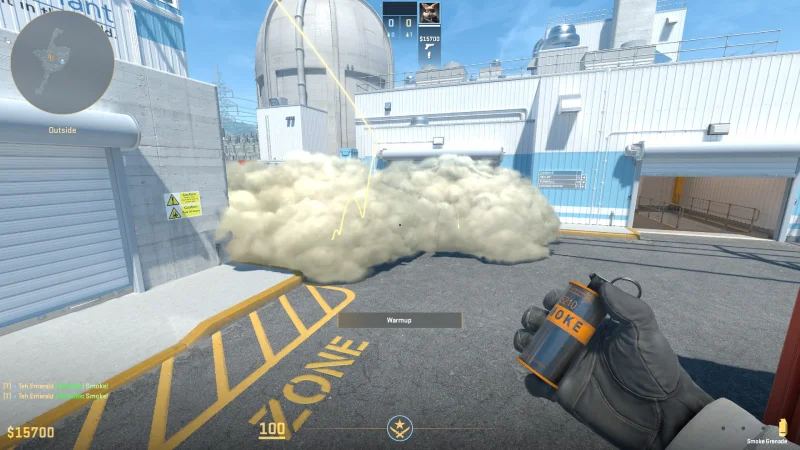
CS2’s smoke grenade system received substantial enhancements compared to previous CS:GO iterations. Valve implemented volumetric smoke physics, meaning clouds now realistically occupy three-dimensional space. This represents more than visual enhancement—it fundamentally alters strategic meta.
Here’s the operational breakdown:
- Smokes demonstrate progressive expansion, generating interactive 3D formations that respond to environmental factors. Deploy one within confined geometry? It will naturally permeate the space rather than creating static spherical obstructions.
- Explosive devices including grenades or molotovs can displace smoke volumes. This introduces additional tactical complexity—envision utilizing HE grenades to temporarily clear visual obstruction.
- Projectile interaction produces tangible effects. Firing through smoke formations can partially dissipate them, potentially revealing silhouettes or enabling brief visibility windows.
The outcome establishes considerably more dynamic gameplay systems. You can no longer automatically assume smoke deployments guarantee complete vision denial. Competitors increasingly utilize explosive devices and suppressive fire to create temporary sightlines through smoke barriers, elevating timing precision and positioning significance.
Additionally, CS2’s rendering engine creates variable smoke visibility between players based on positional relationships. What appears as completely obstructed angles from your perspective might actually contain visibility gaps for opponents. This represents significant strategic implications requiring adaptation.
Strategic Smoke Deployment Categories
Smokes transcend simple vision blocking functionality. When deployed strategically, they evolve into deception instruments, delay mechanisms, and control apparatus.
Here are practical implementation categories:
- Site Entry Smokes: On competitive maps including Mirage or Dust2, executing standardized smoke deployments (like CT or Jungle positions) enables secure site penetration.
- One-Way Smokes: When positioned intelligently, smokes can generate advantageous vision gaps for your team while remaining completely obstructive to opponents.
- Lurk Smokes: Deploy smoke formations to simulate aggressive pushing intentions, then patiently await rotating enemy engagements.
- Retake Smokes: Utilize them to isolate choke points or separate angles during defuse attempts.
Planning A site assault on Mirage? Deploy CT, Jungle, and Stairs smoke formations. Defending B site on Inferno independently? Smoke mid positions to delay advances. The concept appears straightforward, but execution timing requires perfection.
Effective smoke utilization distinguishes clutch-performing competitors from strategically unaware participants.
Map-Specific Smoke Lineup Mastery
Let’s examine specific implementations. For optimal effectiveness, you must master smoke trajectory calculations. Here are essential smoke deployments for frequently played competitive maps:
Mirage
- CT Smoke: From T-spawn initiation points, target central coordinates to obstruct CT visibility during A site assaults.
- Jungle Smoke: Critical for mid-to-A split strategy executions.
- Window Smoke: Mid control dominance begins here. Perfect this deployment from T-spawn or underpass positions.
Inferno
- Top Banana Smoke: Delays CT aggression or T-side pushing maneuvers.
- CT Smoke (B Site): Essential for late-round execution scenarios.
- Library/Arch Smoke: Protects rotation pathways during A site assault operations.
Dust2
- Cross Smoke (A Long): Combine with flash deployment for secure crossing maneuvers.
- Mid to B Smoke: Enables stealthy B site plays without excessive attention attraction.
- Xbox Smoke: Key for mid control establishment and catwalk advancement operations.
For dedicated improvement seekers, allocate practice sessions to master these smoke deployments in offline training environments or utilize specialized workshop maps. Muscle memory development transforms competent players into legendary competitors.
Utility Economy Management
Cost-to-Impact Analysis
Every grenade type in CS2 carries specific financial costs—and during tight economic rounds, every dollar carries strategic weight. Comprehending the financial efficiency ratio for each utility piece represents essential strategic purchasing intelligence.
Here’s comprehensive cost breakdown analysis:
| Grenade Type | Purchase Cost |
|---|---|
| Smoke Grenade | $300 |
| Flashbang | $200 |
| HE Grenade | $300 |
| Molotov (T-side) | $400 |
| Incendiary (CT) | $600 |
| Decoy Grenade | $50 |
So which delivers optimal return on investment?
- Flashbangs provide maximum potential value returns. For merely $200 investment, you can disorient multiple opponents simultaneously and secure easy eliminations. That represents potential $5,000+ elimination value generation from minimal financial commitment.
- Smokes represent the most tactically significant grenade category. For only $300 expenditure, you can deny visual information, simulate pushing intentions, or force enemy repositioning.
- Molotovs and Incendiaries carry higher financial costs, but when deployed correctly, they can delay enemy advances, eliminate positioned players, or determine post-plant scenario outcomes.
- Decoys? Occasionally valuable for deception strategies or auditory misdirection, but generally not prioritized unless executing specialized tactical plans.
The crucial principle involves synchronizing utility acquisitions with team strategic objectives for each round. Executing comprehensive A site assaults? Every member requires smoke and flashbang combinations. Engaging pick-oriented strategies? Perhaps single molotov deployment combined with pop-flash combinations suffices.
Round-Specific Buying Strategies
During limited-buy or economic rounds, avoid excessive utility expenditures unless they constitute integrated tactical coordination. Here’s fundamental purchasing guidance:
- Full Buy Rounds: Consistently purchase minimum 2–3 grenade pieces. Flashbang + Smoke combination represents minimal configuration. Supplement with molotov or HE grenade if budgetary constraints permit.
- Force Buys: Prioritize flashbang deployments and smoke formations. Molotovs might represent excessive expenditure unless performing anchoring roles.
- Economic Rounds: One or two smoke deployments can facilitate deception strategies or post-plant opportunity creation. Avoid over-commitment.
- Post-Plant Scenarios: Preserve utility resources during explosive device placement for retake prevention or defusal control establishment.
Utility should receive treatment equivalent to primary weapons. Avoid expenditure simply because resources exist. Strategically plan each round’s utility deployment based on positional advantages, timing considerations, and opponent behavioral patterns.
Practicing Utility Lineups
Training Maps and Custom Servers
You’ve absorbed comprehensive information regarding utility importance. However, theoretical knowledge proves insufficient alone. You require deliberate practice implementation, and CS2 provides multiple methodologies for perfecting your grenade deployments.
Initiate by downloading specialized workshop maps designed specifically for utility training:
- Yprac Practice Maps – These maintain legendary status for justified reasons. You can configure smoke, flashbang, molotov, and even simulated bot peeking scenarios.
- Crashz’s Crosshair and Nade Training – Excellent for novice competitors seeking enhanced angle comprehension and grenade deployment mastery.
- Recoil Master + Nade Practice – Incorporates trajectory visualization scripting, impact timing displays, and assists with throw strength refinement.
What establishes these maps’ excellence involves systematic repetition. You can deploy identical smoke formations repeatedly until achieving perfect landing consistency every execution. This develops the muscle memory translating directly into competitive match performance.
Additionally, utilizing in-game grenade trajectory visualization commands assists with understanding how grenades rebound and detonate:
sv_grenade_trajectory 1
sv_cheats 1
sv_infinite_ammo 1
(These function exclusively within private server environments)
Creating Custom Lineups for Unpredictability
Developing personalized lineup configurations represents where creative innovation and map knowledge integration converge.
Imagine discovering innovative angles during Ancient exploration, realizing CT smoke deployment possibilities from mid staircase positions. That becomes your strategic lineup now.
Custom lineup development methodology:
- Identify consistent reference markers (including wall markings or structural elements).
- Maintain consistent positioning for every deployment.
- Target precise pixel coordinates or geometric edges.
- Document throw methodology specifications – jump deployment, running deployment, or standard deployment techniques.
- Record configurations within personal notes or capture reference screenshots.
These self-developed lineups evolve into your signature tactical approaches. Opponents won’t comprehend how you achieved perfect molotov placements without exposure risks. That strategic unpredictability provides competitive advantages.
Increased custom lineup development directly correlates with enhanced territorial control capabilities. Once you distribute these among squad members? Now you’re actively shaping competitive meta.
Common Mistakes with Utility
Timing and Coordination Errors
Have you observed competitors deploying smoke formations without subsequent pushing maneuvers? Or teammates simultaneously deploying flashbangs that disorient nobody? This represents resource wastage, and it constitutes significant strategic deficiency.
Frequent strategic errors:
- Premature utility deployment: This provides opponents opportunity windows to wait out effects or execute rotations.
- Redundant deployments: Multiple players utilizing identical grenade types (like dual molotov deployments across Banana) squanders limited resources.
- Inaccurate timing coordination: Flashbang detonations occurring before team peeking maneuvers, or smoke formations landing after assault initiations.
- Absent tactical follow-through: Utility gets deployed, but nobody capitalizes on created advantages.
Timing precision represents everything. Perfect smoke deployment becomes strategically worthless if your squad remains distanced from target sites. Similarly, flashbang effectiveness diminishes if peeking occurs several seconds post-detonation.
Communicate strategic intentions clearly. Designated player deploys, coordinated teammate advances. During solo engagements, ensure your flashbang or molotov deployments receive immediate movement follow-through. Utility exists to generate opportunities—not decorative map elements.
Breaking Predictability Patterns
The temptation exists to deploy utility identically across multiple rounds. However, intelligent opponents rapidly identify behavioral patterns.
Utilizing identical smoke or molotov deployments repeatedly generates predictable tactical patterns. Eventually, enemies will pre-aim your smoke perimeter edges or advance through molotov deployments understanding your deception strategies.
Here’s unpredictability maintenance methodology:
- Deployment timing variation: Delay utility usage or deploy prematurely to create confusion.
- Lineup variation implementation: Utilize alternative deployment methodologies to achieve identical smoke formations from different positional origins.
- Deception strategy implementation: Deploy CT smoke formations simulating B site assaults, then silently rotate toward A site objectives.
- Utility resource preservation: Occasionally, preserving molotov resources for post-plant scenarios delivers greater strategic value than early deployment.
Strategic unpredictability doesn’t imply random deployment. It signifies intentional tactical variation that maintains opponent uncertainty.
Advanced Utility Techniques
Fake Executions
This represents where utility deployment becomes strategically engaging. Imagine deploying comprehensive A site smoke formations across Mirage—CT, Jungle, Stairs—and defensive players instantly rotate… only for your team to silently penetrate B site.
Fake execution strategies leverage recognizable utility patterns that opponents identify. When they observe specific smoke deployments, they formulate assumptions—and that’s where you execute decisive strikes.
Fake execution implementation methodology:
- Deploy 2–3 utility pieces typically associated with legitimate site assault operations.
- Generate auditory deception (running simulations, weapon discharge) to enhance credibility.
- Execute rapid rotations toward actual target sites with coordinated team movements.
- Execute explosive device placement before opponent realization of deception.
You can even position留守 players to maintain strategic illusions—”lurker” roles who continue utility deployment or engage trade eliminations.
Fake execution strategies represent high-risk, high-reward tactical approaches. If opponents don’t respond as anticipated, you operate with limited utility resources. However, if they over-rotate? Uncontested site control.
Pro-Level Tactical Conditioning
Utility behavioral conditioning occurs when you train opponents to anticipate specific actions based on previous behavioral patterns.
For instance:
- You deploy molotov formations into obscured B site corners across three consecutive rounds. They abandon those positioning strategies. During round four, you abstain from deployment—and intercept rotation attempts instead.
- You consistently deploy Top Mid smoke formations. One specific round, you abstain—opponents initiate peeking maneuvers, and you maintain prepared positioning with AWP weaponry.
Utility baiting strategies represent additional sophisticated deception techniques. Position near Banana corridors, demonstrate presence, allow opponent molotov and smoke deployments—then execute tactical withdrawals. You’ve successfully depleted $800+ worth of opponent utility resources without expenditure.
These psychological warfare tactics can shatter opponent confidence levels and generate continuous second-guessing behaviors.
Cost vs. Value of Each Grenade
Every grenade investment in CS2 requires careful economic consideration. Understanding the cost-to-impact ratio transforms your team’s economic efficiency dramatically.
Here’s a quick breakdown of the costs:
| Grenade | Cost |
|---|---|
| Smoke Grenade | $300 |
| Flashbang | $200 |
| HE Grenade | $300 |
| Molotov (T-side) | $400 |
| Incendiary (CT) | $600 |
| Decoy Grenade | $50 |
So what delivers the maximum return on investment?
- Flashbangs provide exceptional value. For just $200, you can blind multiple opponents and secure elimination rewards worth thousands.
- Smokes offer tactical flexibility for only $300. Proper smoke placement can deny multiple enemy sightlines simultaneously.
- Molotovs and Incendiaries represent premium investments, but when deployed correctly they can control entire areas, force enemy repositioning, or guarantee post-plant scenarios.
- Decoys serve niche purposes in deception strategies but rarely justify priority purchasing.
The strategic approach involves synchronizing your utility acquisitions with team objectives. Planning a coordinated A site assault? Each member requires smoke coverage and flash support. Engaging in pick-oriented gameplay? Limited molotov usage combined with quick-flash combinations often suffices.
When to Buy What
During economic disadvantage situations, avoid excessive utility expenditure unless executing coordinated tactical maneuvers. Use this comprehensive purchasing framework:
- Full Buy Rounds: Purchase minimum 2-3 grenades per player. Basic flash-smoke combinations form the foundation. Supplement with molotov or high-explosive devices when financially feasible.
- Force Buy Scenarios: Emphasize flashbang acquisition and smoke deployment. Molotovs become economically challenging unless maintaining defensive anchoring positions.
- Economic Recovery Rounds: Deploy 1-2 smokes for deception plays or post-plant opportunities. Maintain fiscal discipline.
- Post-Plant Situations: Preserve remaining utility resources following bomb placement for retake prevention or defuser protection.
Treat utility equipment as tactical weaponry. Avoid indiscriminate expenditure simply because funds exist. Develop round-specific utility deployment strategies considering positioning factors, timing considerations, and opponent behavioral patterns.
Training Maps and Custom Servers
Understanding utility theory represents merely the initial step. Genuine mastery demands consistent practical application, and CS2 provides multiple training methodologies for grenade perfection.
Begin by acquiring specialized workshop maps designed specifically for utility training:
- Yprac Practice Maps – These maintain legendary status for valid reasons. Configure smoke placements, flash deployments, molotov trajectories, and even simulated opponent engagements.
- Crashz’s Crosshair and Nade Training – Excellent for novice players seeking comprehensive angle comprehension and grenade mechanics understanding.
- Recoil Master + Nade Practice – Incorporates trajectory visualization scripting, detonation timing displays, and throwing technique refinement tools.
The primary advantage of these training environments involves systematic repetition. Execute identical smoke deployments repeatedly until achieving perfect placement consistency. This develops the neuromuscular memory essential for competitive match performance.
Additionally, utilizing the integrated grenade trajectory visualization commands assists in comprehending grenade physics and explosion mechanics:
sv_grenade_trajectory 1
sv_cheats 1
sv_infinite_ammo 1
(These commands function exclusively within private server environments)
Creating Your Own Lineups
Developing personalized utility deployments represents where creative innovation intersects with cartographic expertise.
Imagine discovering an innovative angle during Ancient exploration, realizing you can deploy CT smoke coverage from mid staircase positions. This becomes your tactical signature.
Custom lineup development methodology:
- Establish consistent reference markers (such as wall textures or architectural elements).
- Maintain consistent positioning alignment.
- Target specific pixel coordinates or environmental edges.
- Document throw technique specifications – jump throws, movement-assisted throws, or standard deployments.
- Record deployment data in tactical notes or capture reference imagery.
These personalized deployments evolve into distinctive tactical signatures. Opponents cannot anticipate your molotov placements without visual exposure. This tactical unpredictability provides competitive advantages.
Expanding your custom deployment repertoire directly correlates with enhanced territorial control. When shared with teammates, you collectively influence match meta-dynamics.
Wasted Utility and Timing Issues
Have you witnessed smoke deployments without subsequent team advancement? Or dual teammate flash deployments simultaneously blinding nobody? This constitutes utility resource wastage, representing significant strategic deficiencies.
Frequent tactical errors:
- Premature utility deployment: This permits opponents reaction time for countermeasures or positional adjustments.
- Redundant deployments: Multiple players utilizing identical grenade types (like dual molotovs on Banana) squanders economic resources.
- Suboptimal timing coordination: Flash detonation occurs before team engagement, or smoke formation completes after assault initiation.
- Absence of tactical follow-through: Utility deployment occurs without capitalizing on created advantages.
Temporal coordination proves absolutely critical. Perfect smoke placement becomes tactically irrelevant if your team remains distanced by 10+ seconds from objective sites. Similarly, flashbang effectiveness diminishes completely if engagement occurs 2+ seconds post-detonation.
Communicate tactical intentions clearly. Designate deployment specialists and engagement initiators. During individual play, ensure flash or molotov deployment receives immediate movement support. Utility exists to generate opportunities—not environmental decoration.
Over-Reliance and Predictability
The temptation to employ utility identically every round proves strong. However, intelligent opponents rapidly identify behavioral patterns.
Repeated utilization of identical smoke or molotov deployments creates tactical predictability. Eventually, adversaries will anticipate your smoke boundaries or advance through molotov deployments recognizing deception tactics.
Maintaining unpredictability strategies:
- Temporal variation implementation: Delay utility deployment or execute early deployments to create confusion.
- Deployment variation: Employ alternative throwing techniques to achieve identical smoke coverage from different positions.
- Deception deployment: Smoke CT positions as though executing B site assault, but silently transition to A objectives.
- Utility conservation: Occasionally, preserving molotov resources for post-plant scenarios delivers greater value than premature area denial.
Maintaining unpredictability does not imply randomization. It signifies purposeful variation that maintains adversary uncertainty.
Fake Executions
This domain represents where utility deployment becomes genuinely engaging. Visualize deploying comprehensive A site smokes on Mirage—CT, Jungle, Stairs—and defenders immediately rotate… only for your team to execute silent B site infiltration.
Deception executions depend on utility patterns your adversaries recognize. When they identify specific smoke deployments, they formulate assumptions—creating vulnerability points for strategic exploitation.
Deception execution methodology:
- Deploy 2-3 utility components typically associated with legitimate site assaults.
- Generate auditory cues (movement sounds, weapon discharges) to enhance deception credibility.
- Execute rapid rotation to actual objective sites with remaining team members.
- Execute bomb placement before adversary deception recognition.
Consider maintaining single team members to sustain deception illusions—”lurkers” who continue utility deployment or exchange tactical eliminations.
Deception executions represent high-risk, high-reward strategies. If adversaries don’t respond predictably, you face utility resource depletion. However, if they over-rotate? Uncontested site control.
Baiting and Utility Conditioning
Utility behavioral conditioning involves training adversaries to anticipate specific actions based on historical behavior patterns.
Illustrative examples:
- You deploy molotovs into shadowed B site corners across 3 consecutive rounds. They abandon those positions. During round 4, you withhold deployment—and intercept rotation movements instead.
- You consistently smoke Top Mid positions. One round, you abstain—opponents engage, and you maintain prepared sniper positioning.
Utility resource baiting constitutes additional sophisticated tactics. Position near Banana, demonstrate presence, permit adversary molotov and smoke deployment—then execute tactical withdrawal. You’ve successfully depleted $800+ worth of opponent utility resources without expenditure.
These psychological engagements can undermine adversary confidence and induce perpetual hesitation.
For those seeking comprehensive tactical development, our BF6 Class Selection Guide provides additional strategic frameworks applicable across competitive shooters.
Fake Executions
This is where tactical utility deployment becomes truly transformative. Imagine deploying full A site smoke coverage on Mirage—CT, Jungle, Stairs—then watching the entire defensive team instantly rotate… while your squad silently infiltrates B site completely undetected.
Fake executions exploit enemy recognition of utility patterns. When opponents identify specific smoke placements, they naturally make assumptions about your intentions—creating the perfect opportunity for strategic strikes.
Executing a flawless fake requires precision:
- Deploy 2–3 utility pieces typically associated with genuine site takes.
- Generate convincing audio cues (sprinting, controlled gunfire) to reinforce the deception.
- Execute rapid rotation to the actual target site with coordinated team movement.
- Secure the plant before defenders realize the tactical misdirection.
You can strategically position one player as a “lurker” to maintain the illusion—continuing utility deployment or engaging in calculated trades.
These deceptive maneuvers carry significant risk-reward dynamics. If opponents don’t commit to the rotation, you’ll face the remainder of the round with depleted resources. However, successful over-rotation by the enemy team? Completely uncontested site control.
Baiting and Utility Conditioning
Utility conditioning represents the psychological dimension of tactical play—training opponents to anticipate specific actions based on your established patterns.
Consider these advanced conditioning scenarios:
- You systematically deploy molotovs into B site’s dark corner for three consecutive rounds. Enemy players naturally adjust their positioning. In the fourth round, you withhold the molotov—intercepting the predictable rotation with prepared crossfires.
- You consistently smoke Top Mid during pistol rounds. One critical round, you abstain—enemy players aggressively peek, encountering your pre-aimed AWP setup.
Strategic utility baiting introduces another sophisticated layer. Demonstrate presence near Banana, trigger enemy molotov and smoke responses, then execute tactical withdrawal. You’ve successfully depleted $800+ worth of opponent utility without commitment.
These psychological engagements can systematically dismantle your opponent’s confidence foundation, forcing hesitation in every tactical decision.
Iconic Utility Plays in CS2
To truly comprehend utility’s game-defining potential, observe professional execution. Historic CS rounds frequently hinge on perfectly timed smoke deployments or disruptive flashbang coordination.
Let’s examine several legendary professional examples:
- s1mple’s Mirage One-Way Smoke Innovations: He employs pixel-perfect lineups to establish visual asymmetries through smoke coverage, securing uncontested eliminations.
- NiKo’s Inferno Molotov-HE Synchronization: Pre-positioned incendiary combined with immediate high-explosive follow-up generates instant multi-kills against rushing Terrorists in Banana control.
- The Legendary “Deceptive Smoke Defuse” Technique: Numerous professional matches feature players deploying bomb site smoke, initiating defuse animations, then capitalizing on baited peeks for smoke-enshrouded multi-frag opportunities.
CS2’s enhanced utility mechanics have dramatically expanded creative possibilities. Elite teams now integrate volumetric smoke properties with coordinated utility disruption—employing HE grenades to create temporary visual corridors within smoke volumes.
Observe tournament replay analysis and you’ll witness how premier organizations strategically layer utility deployments, implement late-round tactical denials, and execute flawlessly synchronized team coordination. It represents tactical artistry—accessible through dedicated study.
What You Can Learn from the Pros
Professional observation transcends entertainment—it’s immersive education in round-winning utility application. Focus your demo analysis on these critical elements:
- Advanced Timing Protocols: Notice systematic smoke delays until approximately 30 seconds remain? This intentional delay denies critical intelligence while generating psychological pressure.
- Strategic Utility Stacking: Elite teams don’t deploy singular flashes—they implement layered blinding sequences. One disrupts deep angles, another covers close engagements. One molotov clears back site positions, while another controls default plant locations.
- Systematic Information Denial: Numerous organizations systematically smoke critical enemy holding positions to force miscalculated rotations or baited aggressive pushes.
- Continuous Communication Frameworks: Post-match interviews and team communication recordings consistently demonstrate—professionals maintain constant dialogue regarding utility deployment timing and tactical intentions.
Maintain detailed observation notes. Replicate professional setups in dedicated practice environments. Once you integrate professional-level utility comprehension, your in-game decision-making evolves into instinctive response patterns.
The Complete Utility Player Mindset
CS2 transcends mere precision aiming and rapid response times—it’s strategic warfare where utility constitutes your primary control arsenal. Mastering smoke, flashbang, and molotov deployment transitions you from competent participant to team-carrying strategic force.
Let’s consolidate our comprehensive coverage:
- Smoke grenades provide vision denial capabilities, shape engagement parameters, and generate tactical opportunities.
- Flashbangs initiate offensive sequences, disrupt enemy visual acquisition, and enable supported peeking opportunities.
- Molotovs/incendiaries establish area control, delay opposing advancement, and secure critical round conversions.
- Integrating utility with precise timing and team coordination establishes impenetrable site execution patterns and resilient defensive formations.
- Dedicated lineup practice, strategic economy management, and tactical unpredictability form the foundation for sustained competitive advancement.
But the fundamental imperative? Consistent practice. Analytical learning. Strategic adaptation.
Allocate time in customized training servers. Systematically review professional match recordings. Develop personalized utility lineups. Before recognition, you won’t merely participate in CS2—you’ll orchestrate battlefield dominance.
Pro Tip: When studying our Class Guide, pay particular attention to how different roles utilize utility—this knowledge directly transfers to CS2’s tactical framework.
Remember that utility represents more than equipment—it’s your strategic vocabulary for communicating control, deception, and dominance across every CS2 engagement.
Action Checklist
- Download Yprac practice maps and spend 15 minutes daily mastering essential smoke lineups for your main competitive maps
- Practice the three core utility types in custom servers: smokes for vision control, flashes for engagement initiation, molotovs for area denial
- Develop 2-3 custom lineups for each map you regularly compete on
- Analyze professional match demos focusing specifically on utility timing and coordination patterns
- Practice 3 essential smoke lineups on your main competitive maps using Yprac training environments
- Develop custom utility deployments from unusual map positions
- Implement strategic utility purchasing based on round economy
- Analyze professional match demos focusing on utility timing and coordination
- Practice 3 new smoke lineups daily using Yprac maps for muscle memory development
- Analyze one professional demo weekly focusing specifically on utility timing and coordination
- Develop one custom utility lineup per week for your primary maps
- Implement one fake execution strategy in your next competitive match
- Review your utility economy decisions post-match using our Weapons Unlock guide principles for resource optimization
No reproduction without permission:Tsp Game Club » CS2 Utility Guide: Smokes, Flashes, and Molotovs Explained