
TL;DR
- CS2 features significantly improved hitbox accuracy with better animation synchronization
- Headshot hitboxes now align precisely with visual models during movement
- Source 2 engine enables sub-tick updates for more precise registration
- Consistent crosshair placement at head level dramatically improves accuracy
- Network optimization reduces peeker’s advantage for fairer engagements
Counter-Strike 2 represents a monumental leap forward in competitive first-person shooter technology, building upon the foundation of CS:GO with revolutionary improvements to core gameplay mechanics. The transition to Source 2 engine brings more than just visual enhancements—it fundamentally transforms how bullets register and how players interact with hit detection systems. For serious competitors and professional gamers, these changes translate directly to improved performance and competitive reliability.
The Competitive Edge of Precision Mechanics
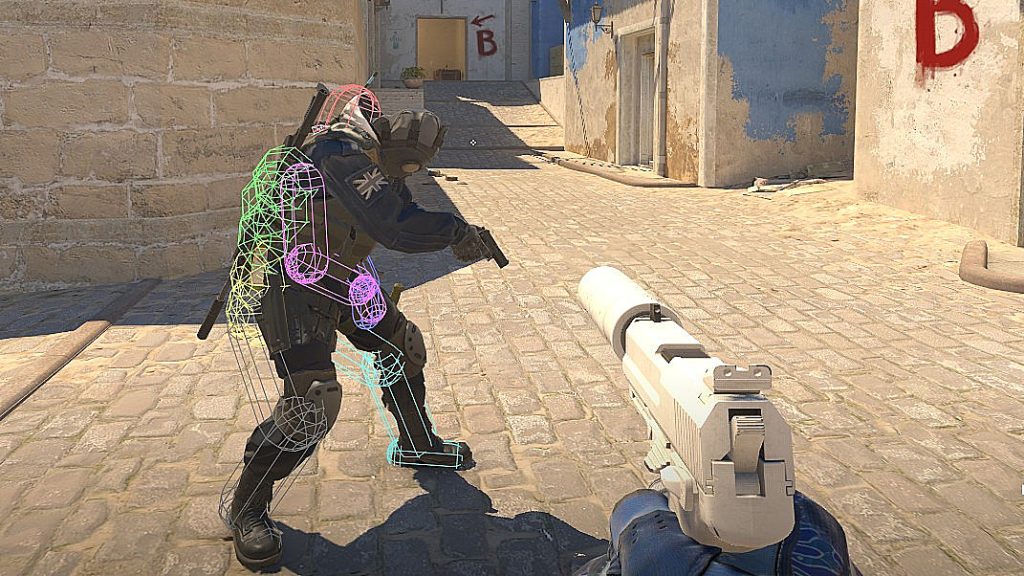
Valve’s development team specifically targeted legacy systems that had plagued CS:GO for years. This comprehensive overhaul addresses tick rate inconsistencies, smoke grenade behavior, lighting systems, and most critically—hitbox detection mechanics. The elimination of ghost bullets and misaligned hit registration creates a more trustworthy competitive environment.
Common Mistake Alert: Many players transitioning from CS:GO initially struggle with the improved accuracy, continuing to blame the game for missed shots that are now genuinely player error.
In high-level gameplay where milliseconds determine match outcomes, hitboxes function as the invisible determinants of combat success. A perfectly executed flick shot becomes meaningless if the underlying hitbox framework doesn’t correspond accurately to the visible character model.
Player model fidelity plays an equally crucial role in competitive integrity. When two opponents engage from identical angles, any disparity in model visibility or hitbox synchronization creates imbalanced competitive conditions. Valve’s commitment to resolving these issues demonstrates their dedication to maintaining CS2 as a premier esports title.
What Are Hitboxes in FPS Games?
Hitboxes constitute the invisible geometric framework that defines where projectiles can successfully connect with targets. In CS2’s implementation, these collision detection zones encompass distinct regions: head, chest, arms, stomach, and legs. Each hitbox area features specific damage multipliers, with headshots delivering maximum damage potential—typically resulting in instant elimination when opponents lack helmet protection.
Visualize hitboxes as the actual targets you’re engaging—not the visible character models themselves, but the underlying detection structure that determines combat outcomes.
CS2 leverages Source 2 engine capabilities to create a substantially more precise hitbox ecosystem compared to CS:GO. The refined hit detection boundaries maintain superior alignment with player animations and respond more accurately during rapid tactical movements.
Anatomy of Hitbox Zones: Head to Legs
The CS2 hitbox architecture comprises strategically designed combat zones:
- Head: The most valuable and challenging target zone. Precision shots here deliver immediate eliminations, particularly when utilizing high-caliber weapons including the AK-47 and Desert Eagle.
- Chest/Upper Torso: A frequently engaged area delivering substantial damage, though typically requiring multiple successful impacts for elimination.
- Stomach/Lower Torso: Moderately reduced damage output compared to chest shots but offering improved accessibility during crouched positioning or strafing maneuvers.
- Arms and Legs: These extremity zones inflict minimal damage, with certain firearms necessitating 4-5 successful impacts to achieve elimination.
Optimization Tip: Advanced players should prioritize head-level crosshair placement while anticipating enemy positioning at common engagement angles.
Headshot Hitbox Critical Importance
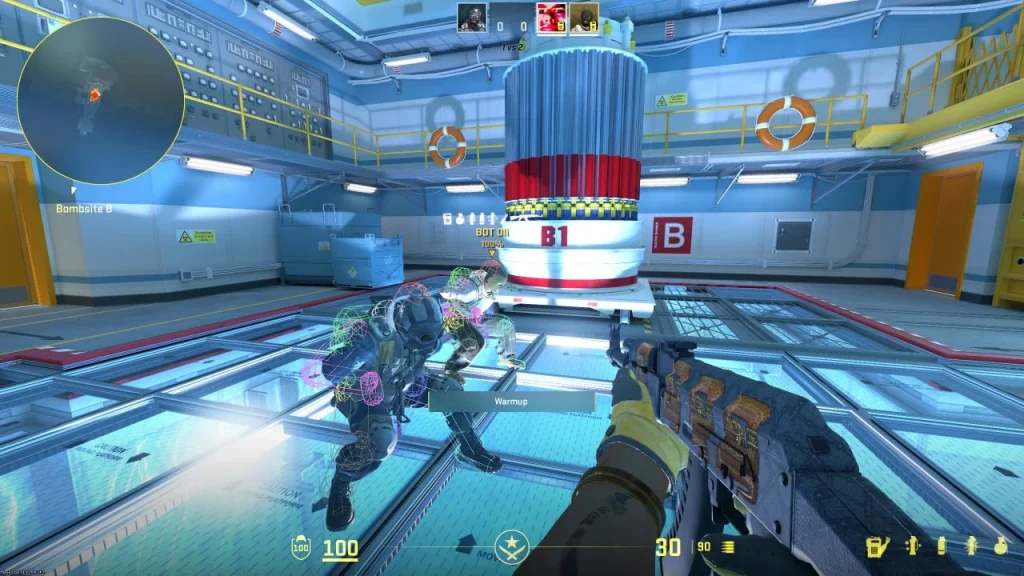
The headshot hitbox represents arguably the most crucial gameplay component in CS2’s competitive ecosystem. Whether competing on FACEIT, ESEA, or standard Matchmaking, executing precise headshots can instantly shift match momentum. Players dedicate extensive training sessions specifically to perfecting head-level crosshair positioning.
CS2 ensures superior synchronization between headshot hitboxes and visible head models, maintaining alignment during complex movement patterns including sprinting, crouching, or rotational maneuvers.
Furthermore, CS2’s enhanced tick rate simulation (sub-tick architecture) facilitates more accurate impact registration. This proves particularly vital when engaging mobile adversaries. In CS:GO, head hitbox consistency frequently suffered during peek engagements or airborne actions. CS2’s development team has systematically addressed these edge-case inconsistencies.
Source 2 Engine Technical Advancements
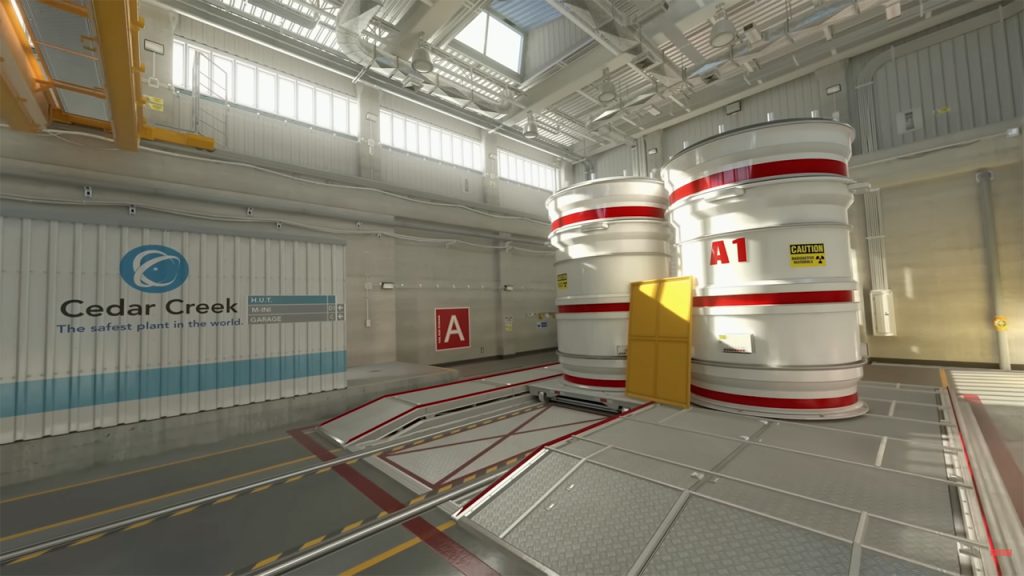
The Source 2 engine introduces numerous technical innovations to CS2, but perhaps the most significant gameplay enhancement involves hitbox detection and network responsiveness improvements.
Within Source 1 (CS:GO’s foundation), hitbox registration heavily depended on server tick rates. With 64-tick servers representing the standard in matchmaking, players frequently encountered inconsistent impact registration, particularly when competing with elevated latency. CS2 implements sub-tick updates, enabling servers to evaluate projectile impacts and player positioning with enhanced precision—down to the exact instant mouse activation occurs.
This architectural transformation creates substantial improvements in how hitboxes interact with aiming precision. Because computational processing now occurs at action moments rather than predetermined intervals (characteristic of 64-tick architecture), every engagement receives more accurate measurement. This enhancement proves especially noticeable during headshot executions and rapid flick maneuvers.
Practical Strategy: When peeking angles, anticipate that your shots will register with improved consistency compared to CS:GO’s networking infrastructure.
Real-Time Feedback and Bullet Registration
A fundamental enhancement in CS2 involves how the system delivers real-time feedback for each discharged round. In CS:GO, the temporal gap between activation and observing projectile effects could demonstrate inconsistency—sometimes delivering immediate eliminations, other times producing confusing delays.
In CS2, projectile registration demonstrates improved immediacy and intuitive response. When discharging firearms, servers log engagements in real-time, facilitated by sub-tick architectural improvements. The combined visual and auditory feedback—including blood spray effects, impact indicators, and adversary reactions—all synchronize with superior coordination.
Additionally, elimination replays and death perspectives now display enhanced hitbox visualization, clearly demonstrating exact projectile impact locations. This transparency assists players in comprehending tactical errors while simultaneously building confidence in system fairness.
Advanced Technique: Monitor your network performance metrics using the net_graph command to identify potential latency issues affecting hit registration consistency.
Damage Multipliers and Helmet Interactions
Regarding headshot mechanics in CS2, damage output proves critically important, with underlying mathematical calculations being both straightforward and impactful. A successful headshot delivers the game’s maximum damage multiplier—typically 400% of base weapon damage. This establishes headshots as the most efficient elimination method in terms of ammunition conservation and reaction time optimization.
Here’s where strategic considerations become fascinating: helmets play significant roles in mitigating headshot damage. When players equip helmets (costing $350 in-game economy), this protective gear can absorb headshot damage from specific firearms, creating life-or-death distinctions. For example:
- AK-47: Single-tap elimination to the head, even through helmet protection.
- M4A1-S / M4A4: Cannot deliver one-tap eliminations against helmet-protected opponents, unless adversaries demonstrate pre-existing health degradation.
- Desert Eagle (Deagle): Capable of eliminating with single headshots through helmets.
- USP-S and Glock: Require dual headshots against helmet-protected opponents unless engaging at extremely close proximity.
In CS2, helmet interaction logic remains consistent with CS:GO’s established mechanics, but with hitboxes now demonstrating improved accuracy and responsiveness, players are discovering that headshot mechanics feel more reliable.
Common Pitfall: Many intermediate players incorrectly assume all weapons can deliver one-tap headshot eliminations—understanding specific firearm capabilities proves essential for tactical decision-making.
One-Tap Weapon Mastery Techniques
Nothing delivers greater satisfaction in Counter-Strike than executing crisp single-tap headshot eliminations. This represents the defining characteristic of skilled competitors and serves as crucial tools in high-pressure scenarios.
Firearms including the AK-47, Desert Eagle, and AWP maintain their reputation for one-tap potential. However, consistency proves paramount—and that’s precisely where enhanced hitbox mechanics demonstrate significant improvements.
There’s also an observable distinction in how movement influences headshot effectiveness. In CS:GO, combining movement with discharge frequently produced inconsistent outcomes. In CS2, the updated sub-tick system provides marginally increased forgiveness and precision for micro-movement adjustments.
Pro-Level Headshot Consistency Tips
Aspiring to become a headshot specialist in CS2? Consider these combat-validated strategies that can dramatically enhance your precision:
- Crosshair Placement: Consistently maintain head-level targeting—this appears self-evident, yet numerous players target excessively low, particularly during movement engagements.
- Pre-Aim Angles: Avoid exclusive reliance on flick aiming—pre-aim anticipated enemy positions. This provides tactical advantages in reaction timing and enables immediate one-tap executions.
- Crouch Tap Shooting: During constrained situations, crouching while executing tap discharges can enhance aiming stability and increase headshot precision, especially when utilizing rifles.
- Counter-Strafing: Master effective counter-strafing techniques. Immediately upon releasing movement keys and activating opposite directional inputs, movement cessation occurs and projectile accuracy reaches 100% reliability.
- Deathmatch Headshot-Only Servers: These specialized servers design specifically to train reflex development and muscle memory for head-level engagements.
- Aim Trainer Utilization: Applications including Aim Lab, Kovaak’s FPS Aim Trainer, or integrated training environments like “Aim Botz” can assist in developing tracking and flicking precision.
- Sensitivity Optimization: Reduced sensitivity parameters facilitate more controlled movements, particularly for refined adjustments at head elevation.
Time Investment: Dedicate 15-30 minutes daily to focused headshot training for measurable improvement within 2-3 weeks.
Peekers Advantage in CS2
The notorious “peeker’s advantage” consistently features in Counter-Strike gameplay, but in CS2, it demonstrates increased transparency due to networking code improvements. This terminology references the slight delay defenders experience when reacting to peeking adversaries—caused by server-client latency and input delay characteristics.
In CS:GO, this frequently resulted in confusing scenarios where it appeared the peeker observed and engaged you before you could process visual information.
In CS2, sub-tick networking architecture substantially reduces peeker’s advantage. Player movement, projectile detection, and positioning updates occur at the precise instant they transpire.
Regarding hitboxes, this proves tremendously significant. Currently, when observing an adversary’s head and discharging your weapon, projectiles undergo verification against server sub-tick datasets, not delayed tick snapshots.
Lag Compensation Strategies
Lag compensation represents an unavoidable necessity in online gaming environments. It enables competitors with elevated latency to maintain competitive viability by compensating for delayed input transmission.
In CS2, Valve has refined lag compensation algorithmic logic. Servers now compute exact opponent positioning at projectile discharge moments—not merely approximate estimations.
The enhanced compensation framework diminishes “peek-and-eliminate” frustration. When executing headshots on your display, they now successfully register on servers simultaneously.
To optimize latency management:
- Engage servers demonstrating minimal possible latency metrics.
- Avoid packet loss scenarios and high jitter connectivity.
- Utilize Ethernet connectivity rather than Wi-Fi for enhanced connection stability.
- Monitor network performance graphics (in-game command:
net_graph 1) to monitor latency, variance, and packet loss characteristics.
Best Aim Maps and Workshop Tools
Enhancing your headshot precision in CS2 involves more than simply increasing play duration—it requires intelligent practice methodologies. Among the most effective approaches for refining aiming capabilities involves utilizing aim training environments and custom workshop utilities, many receiving CS2-specific updates.
Recommended precision training environments:
- Aim Botz – Training (developed by uLLeticaL): The original training map for practicing reflex headshots. You can configure bot movement patterns, incorporate armor simulations, or activate single-tap configurations to concentrate on head-elevation targeting.
- training_aim_csgo2: An updated iteration incorporating hitbox zone visualization, mobile targets, and customizable difficulty parameters.
- Reflex Aim Training: Engineered to simulate authentic gameplay scenarios featuring varied peeking angles and elevation differences—ideal for crosshair positioning practice.
Beneficial workshop commands:
sv_cheats 1; bot_kick; mp_limitteams 0; mp_autoteambalance 0; mp_respawn_on_death_ct 1; mp_respawn_on_death_t 1; mp_roundtime 60- These configurations enable practice sessions without interference and simulate multiple duel scenarios within individual rounds.
Crosshair Placement and Movement Drills
Headshot executions commence with crosshair discipline. If your crosshair doesn’t maintain head-level positioning by default, you’re incorporating additional reaction time layers whenever encountering adversaries.
Crosshair optimization strategies:
- Consistently maintain crosshair positioning at head elevation while navigating combat environments.
Movement training exercises for practice implementation:
- Counter-strafe and discharge: Navigate leftward, activate rightward input to cease movement, and immediately execute projectile discharge.
- Wide peeking headshots: Practice extensive peeking maneuvers against training adversaries and target single-tap executions.
- Crouch-discharge-tap: Initiate from standing posture, subsequently crouch and discharge instantaneously.
- Crosshair Positioning: Maintain head-level alignment consistently—this fundamental principle often gets neglected, with many players aiming too low, particularly during motion. Keep your crosshair positioned at anticipated enemy head locations continuously.
- Corner Pre-Aiming: Avoid relying solely on flick shots—anticipate enemy positions by pre-aiming common angles. This provides reaction time advantages and enables instant one-tap eliminations.
- Crouch-Stabilized Tap Firing: In confined engagements, crouching while executing controlled taps enhances aim stability and boosts headshot success rates, especially with rifle-class weapons.
- Counter-Strafing Execution: Master counter-strafing mechanics thoroughly. The moment you release your movement key and press the opposite direction, your character stops instantly and your shot achieves maximum precision.
- Headshot-Exclusive Deathmatch Practice: These specialized servers focus exclusively on training reflex responses and muscle memory for head-level targeting. They prove exceptionally effective for developing consistent shooting patterns.
- Aim Training Software Utilization: Applications such as Aim Lab, Kovaak’s FPS Aim Trainer, or built-in training maps like “Aim Botz” assist in cultivating tracking and flick-shot capabilities.
- Sensitivity Optimization: Reduced sensitivity settings facilitate more controlled motions, particularly for minute head-level corrections. Discovering your personal optimal sensitivity configuration and maintaining consistency delivers substantial benefits.
- Aim Botz – Training (by uLLeticaL): The foundational map for practicing reflex headshot responses. You can activate bot movement patterns, incorporate armor simulation, or enable exclusive one-tap modes to concentrate on head-level targeting precision.
- training_aim_csgo2: An updated version incorporating hitbox zone visualization, mobile targets, and adjustable challenge levels.
- Reflex Aim Training: Engineered to replicate authentic combat situations with varied peeking angles and elevation differences—ideal for crosshair positioning drills.
sv_cheats 1; bot_kick; mp_limitteams 0; mp_autoteambalance 0; mp_respawn_on_death_ct 1; mp_respawn_on_death_t 1; mp_roundtime 60- These configurations permit uninterrupted training sessions and simulate multiple engagements within individual rounds.
- Sustain your crosshair at head altitude while navigating the battlefield.
- Strategic pre-aiming of common defensive positions where opponents typically establish holds.
- Prevent observing the ground or ceiling unless absolutely essential—it squanders valuable milliseconds.
- Counter-strafe engagement firing: Move laterally, execute opposite directional input to cease motion, and discharge immediately. Replicate this sequence repeatedly to perfect motion-controlled shooting accuracy.
- Expansive peek headshot practice: Execute wide peeking maneuvers against training bots and target one-tap eliminations. This develops muscle memory for head-level flick responses.
- Crouch-initiated shooting sequences: Begin from standing posture, then crouch and fire instantaneously. Excellent for resetting aim positioning during mid-engagement scenarios.
- Head: The premium precision target delivering instant elimination with proper weaponry, particularly devastating with rifles like AK-47 or Desert Eagle.
- Chest/Upper Torso: A substantial damage zone requiring multiple impacts for elimination.
- Stomach/Lower Torso: Intermediate damage region frequently exposed during crouching or strafing movements.
- Arms and Legs: Peripheral zones inflicting minimal damage, often necessitating 4-5 successful hits for elimination.
- Crosshair Placement: Maintain consistent head-level targeting—while seemingly elementary, numerous competitors aim excessively low, particularly during movement sequences.
- Pre-Aim Angles: Avoid exclusive reliance on flick shooting—pre-aim anticipated enemy positions. This provides reaction time advantages and enables instantaneous one-tap eliminations.
- Crouch Precision Shooting: During high-pressure engagements, crouching combined with controlled tapping can optimize aim stabilization and augment headshot accuracy.
- Counter-Strafing Mastery: Develop effective counter-strafing execution. Upon releasing movement keys while tapping opposite directions, movement cessation occurs and shot accuracy reaches maximum potential.
- Deathmatch Specialization: Headshot-exclusive servers specifically design to train reflexive responses and muscle memory for head-level engagements.
- Aim Training Integration: Utilize specialized tools like Aim Lab, Kovaak’s FPS Aim Trainer, or integrated training environments like “Aim Botz” to cultivate tracking and flicking precision capabilities.
- Sensitivity Optimization: Reduced sensitivity parameters enable more precise movement execution.
- CT operational uniforms frequently incorporate darker coloration schemes.
- T character models occasionally present broader visual profiles.
- Environmental lighting conditions can preferentially advantage specific factions visually.
- Standardized skeletal framework application across all character representations.
- Executed hitbox alignment verification for each animation sequence and movement pattern.
- Continuous lighting and model contrast refinements based on community input data.
- Aim Botz – Training (by uLLeticaL): The foundational training environment for developing reflexive headshot capabilities.
- training_aim_csgo2: Contemporary iteration incorporating hitbox zone visualization.
- Reflex Aim Training: Engineered to simulate authentic engagement scenarios.
sv_cheats 1; bot_kick; mp_limitteams 0; mp_autoteambalance 0; mp_respawn_on_death_ct 1; mp_respawn_on_death_t 1; mp_roundtime 60- These configurations enable uninterrupted practice sessions and simulate multiple duel scenarios within individual rounds.
- Maintain crosshair positioning at head elevation during map navigation.
Pre-aim positioning common engagement angles where opponents frequently establish defensive postures.
- Avoid ground or ceiling observation unless absolutely essential.
- Counter-strafe engagement sequencing: Execute lateral movement, counter-tap directional reversal, and immediate discharge. Repeated practice develops muscle memory for accurate movement shooting.
- Expansive peeking headshot practice: Train wide peeking maneuvers against training bots.
- Crouch-shoot-tap combinations: Initiate from standing posture, transition to crouched position, and discharge instantaneously.
- Coordinated double peek formations designed to bait opponent headshot attempts while enabling immediate refrag opportunities.
- Headshot-exclusive angles being maintained more frequently, particularly during economic disadvantage rounds when Desert Eagles or AK-47s represent primary weapons.
- Expanded utilization of dry peek maneuvers when players possess confidence in their crosshair positioning due to the predictable hitbox behavior.
- Strategic timing of peek animations to minutely delay hitbox exposure timing.
- Weapon switching during jump actions potentially causing minor synchronization discrepancies (though frequently addressed through subsequent patches).
- Shoulder peek micro-strafe techniques designed to bait opponent shots without providing full target exposure.
- Spectator perspective ≠ Active participant viewpoint.
- Hitbox visualization rendering ≠ Actual hit registration mechanics.
- Synchronization discrepancies ≠ Deliberate rule violation attempts.
- Consistently maintain crosshair positioning at standard head elevation while navigating combat environments.
- Systematic pre-aiming of common defensive positions where opponents frequently maintain angles.
- Avoid directing visual focus toward flooring or ceiling elements unless absolutely necessary—these habits consume valuable milliseconds.
- Counter-strafe engagement practice: Move directional left, immediately tap opposite directional right to halt momentum, and initiate firing sequence. Repeatedly practice this technique to perfect movement-incorporated shooting accuracy.
- Wide peek headshot repetition: Execute expansive peeking maneuvers against training opponents while focusing exclusively on single-tap head-level targeting.
- Crouch-shoot-tap combinations: Begin from standing position, then rapidly crouch while simultaneously executing precision fire. Excellent for aim recalibration during mid-combat scenarios.
- Practice 15 minutes daily on Aim Botz with headshot-only configuration
- Master counter-strafing techniques in deathmatch servers
- Optimize crosshair placement by maintaining head-level positioning during map navigation
- Monitor network performance using net_graph command
- Analyze elimination replays to identify hit registration patterns
- Configure crosshair at head height for common map positions and practice maintaining alignment during locomotion
- Master counter-strafing timing through focused repetition (aim for 50-100ms transition windows)
- Practice one-tap firing patterns on Aim Botz with armor-enabled bots
- Test and finalize optimal sensitivity settings through systematic experimentation
- Practice 15-minute daily sessions on Aim Botz with headshot-only mode enabled
- Master counter-strafing technique with AK-47 on custom servers
- Analyze your missed headshots using replay system hitbox visualization
- Test different character models to understand visual perception differences
- Monitor net_graph during matches to identify latency issues affecting hitbox perception
- Practice 15 minutes daily on headshot-only community servers to build muscle memory
- Master counter-strafing technique by incorporating it into all engagement scenarios
- Analyze your own match replays focusing specifically on crosshair positioning during missed shots
- Adjust mouse sensitivity to find optimal balance between flick speed and precision control
By integrating movement control with deliberate crosshair positioning, you’ll substantially increase headshot success percentages and evolve into a more dependable combatant.
For comprehensive weapon mastery, consult our detailed Weapons Unlock guide covering all available armaments and their specific tactical applications.
CS2’s enhanced feedback mechanisms deliver immediate confirmation when your bullet connects with helmet or unprotected head regions. Blood spray effects, distinctive audio cues, and immediate damage indicators now operate in perfect synchronization, enabling split-second tactical decisions during intense firefights.
The satisfying crack of a perfect one-tap headshot remains Counter-Strike’s signature skill expression, but CS2 transforms this iconic mechanic into a more reliable and technically precise execution. The improved visual and auditory feedback creates a tighter connection between player input and game response.
High-caliber weapons including the AK-47, Desert Eagle, and AWP maintain their lethal one-shot potential while benefiting from CS2’s refined technical foundation. Consistency becomes the defining factor—and that’s precisely where the upgraded hitbox mechanics demonstrate their superiority. Since head hitboxes in CS2 no longer suffer from animation lag or desynchronization during peeking maneuvers, your precision shots feel genuinely deserved. Projectiles now travel exactly where your crosshair indicates, and sharp aim receives appropriate rewards.
Movement’s impact on headshot accuracy reveals noticeable improvements over CS:GO’s inconsistent results. CS2’s advanced sub-tick architecture provides greater forgiveness and exactness for micro-adjustments. The essential counter-strafing technique to halt movement before firing remains crucial, but once motion ceases—even momentarily—shot registration occurs with enhanced clarity and rapidity.
For dedicated players who practice aiming techniques systematically, CS2’s optimized feedback loop accelerates muscle memory development. Professional players like NiKo and s1mple demonstrate deadly headshot consistency because the game finally provides technical systems that match their exceptional reflexes.
Aspiring to become a headshot specialist in CS2? These competition-proven strategies can substantially elevate your shooting precision:
The notorious “peeker’s advantage” phenomenon has always characterized Counter-Strike gameplay, but CS2 introduces greater transparency through network code enhancements. This term describes the minor delay defenders experience when responding to aggressively peeking opponents—caused by server-client latency disparities and input processing delays.
In CS:GO, this frequently resulted in perplexing situations where it appeared the peeker observed and engaged you before you could process the threat. This occurred because the peeker’s positional updates reached the server marginally before the defender visually registered them. This timing discrepancy created inconsistent hit registration experiences.
CS2’s sub-tick networking architecture substantially mitigates peeker’s advantage. Player locomotion, shot verification, and positional updates now occur at the exact instant they transpire. This means when you execute a peek or maintain an angle hold, the game represents that tactical choice with increased accuracy in real-time scenarios.
Regarding hitbox behavior, this represents a significant advancement. Now, when you visually identify a head and fire, your projectile undergoes verification against the server’s sub-tick dataset, rather than delayed tick snapshots. The outcome? More dependable registration and reduced instances where you perceive the game denied you a legitimate elimination.
Lag compensation remains an unavoidable requirement in online gaming environments. It enables participants with elevated ping values to remain competitive by accounting for their delayed inputs. However, in competitive titles like CS2, it can generate unusual anomalies—such as receiving headshots around corners or posthumous trade kills.
In CS2, Valve has refined the lag compensation algorithms. The server now computes the precise location of your adversary at the moment your shot was discharged—not merely a rough estimation. This proves particularly critical for headshots, where pixel-perfect precision distinguishes between successful eliminations and missed opportunities.
The enhanced compensation framework diminishes “peek-and-die” aggravation. When you successfully land a headshot on your display, it now registers on the server simultaneously. This synchronization between client and server cultivates confidence in the system—players can now engage in peeks or maintain angles with increased assurance.
Elevating your headshot proficiency in CS2 extends beyond simple playtime accumulation—it demands strategic practice methodologies. Among the most efficient approaches to refine your aiming capabilities involves utilizing specialized training maps and custom workshop utilities, numerous of which have received CS2-specific updates.
These represent the premier aim training environments for mastering headshots:
Practical workshop commands:
Additionally, contemplate employing dedicated aim trainers such as Aim Lab, Kovaak’s, or FlickIt. These independent applications monitor your performance metrics, reaction velocities, and precision consistency—excellent for establishing long-term headshot reliability.
Crosshair Discipline and Movement Integration
Consistent headshots originate with crosshair control discipline. If your crosshair defaults below head elevation, you introduce additional reaction time requirements each encounter. CS2 prioritizes precise headshot gameplay more intensely than previous iterations, making crosshair management paramount.
Crosshair optimization techniques:
Movement integration exercises warrant regular practice:
Through combining movement regulation with intentional crosshair positioning, you’ll dramatically increase your headshot percentage and evolve into a more dependable combatant.
Counter-Strike 2 represents a quantum leap in competitive FPS technology, moving beyond CS:GO’s legacy limitations. Built on Source 2 engine architecture, CS2 delivers unprecedented hitbox accuracy that fundamentally changes how players approach gunfights. The transition from Source 1 to Source 2 eliminates ghost bullets and misaligned hit registration that plagued high-level CS:GO gameplay.
In a game where milliseconds determine match outcomes, hitbox reliability becomes the foundation of competitive integrity. Every animation, movement transition, and peeking action now maintains perfect hitbox synchronization, ensuring that skill—not technical flaws—decides engagements.
Imagine two professional players peeking the identical angle simultaneously. If one character model presents a distorted hitbox profile due to animation desynchronization, the entire competitive ecosystem collapses. That’s why Valve implemented rigorous testing protocols ensuring every animation frame maintains perfect hitbox alignment.
The competitive implications extend beyond individual duels. Team strategies now incorporate hitbox-aware positioning, knowing that clean sightlines translate directly to reliable target acquisition.
What Are Hitboxes in First-Person Shooters?
Hitboxes function as the definitive collision detection framework in FPS games, representing invisible geometric boundaries that determine bullet impact validity. In CS2’s sophisticated implementation, these zones include precisely defined regions for head, chest, arms, stomach, and legs—each with distinct damage multipliers governing combat effectiveness.
Visualize hitboxes as the actual targets beneath character models. When projectiles intersect these zones, damage calculations activate based on precise hit location data.
CS2’s Source 2 engine delivers substantially improved hitbox precision compared to CS:GO’s legacy system. The enhanced detection framework provides tighter alignment with player animations and responsive updates during rapid tactical maneuvers.
Anatomy of a CS2 Hitbox: Head, Chest, Arms, and Legs
Breaking down CS2’s hitbox architecture reveals critical competitive insights:
The headshot hitbox represents the most crucial competitive element, dictating how effectively skilled marksmen can capitalize on precision aiming.
The Importance of Headshot Hitboxes
Headshot hitbox reliability forms the cornerstone of CS2’s competitive ecosystem. Professional competitors dedicate hundreds of training hours perfecting head-level crosshair positioning. Without accurate hitbox alignment, these developed skills become functionally irrelevant.
CS2 guarantees that headshot hitboxes maintain precise alignment with visual character models throughout all movement sequences.
Furthermore, enhanced tick rate simulation through sub-tick technology enables more precise impact registration, particularly critical when engaging mobile targets.
Improvements in Hitbox Accuracy
The most transformative enhancement from CS:GO to CS2 emerges from comprehensive hitbox accuracy improvements. CS:GO’s technical limitations frequently generated player complaints regarding ghost bullets—visually confirmed impacts that failed to register properly.
CS2’s comprehensive hitbox system overhaul utilizing Source 2 technology delivers refined, precise collision detection tightly synchronized with character models across all animation states.
Contemporary hitbox tracking demonstrates enhanced fluidity during character animations. When players execute turns, crouches, or jumps, hitbox adjustments occur in real-time synchronization with skeletal framework data.
Additionally, head hitboxes no longer demonstrate trailing behavior during lateral movement or peeking actions.
How Source 2 Engine Influenced Hitbox Detection
Source 2 technology introduces numerous technical advancements to CS2, but arguably the most significant gameplay impact emerges from hitbox detection and network responsiveness enhancements.
Within Source 1 architecture powering CS:GO, hitbox registration remained heavily dependent on server tick rate limitations.
This fundamental shift creates substantial differences in hitbox-aim interaction dynamics. Because computations now execute at action moments rather than predetermined intervals, every projectile receives more accurate measurement.
Additionally, Source 2 enables superior skeletal animation tracking. This means CS2 hitboxes function as dynamically attached frameworks rather than floating geometric shapes.
Real-Time Feedback and Bullet Registration
A primary CS2 enhancement involves real-time feedback implementation for each discharged round.
In CS2, bullet registration demonstrates increased immediacy and intuitive responsiveness. When triggering weapons, server-side shot logging occurs in real-time thanks to sub-tick architectural foundations.
Moreover, kill replays and death camera perspectives now display enhanced hitbox overlay visualization, precisely indicating impact locations.
Common Mistake: Many intermediate players underestimate how network latency affects hitbox perception. The 15-20ms delay between client action and server confirmation can create false expectations about hitbox behavior.
Damage Multipliers and Helmet Interaction
Regarding headshot mechanics in CS2, damage output calculations prove critical, with underlying mathematics presenting both straightforward and devastating consequences. A successful headshot delivers the maximum damage multiplier—typically 400% of base weapon damage. This establishes headshots as the most efficient elimination methodology in terms of ammunition consumption and reaction time optimization.
Helmets introduce significant damage mitigation dynamics. When players purchase helmets ($350 equipment), these protective items can absorb headshot impact from specific firearms.
In CS2, helmet protection mechanics remain unchanged from CS:GO implementations, but with contemporary hitbox accuracy and responsiveness, players experience enhanced mechanical consistency.
Additionally, real-time feedback systems assist immediate confirmation regarding helmet versus unprotected head impacts.
One-Tap Weapons and Headshot Accuracy
Nothing delivers greater satisfaction in Counter-Strike than precise one-tap headshot eliminations.
Weapons including AK-47, Desert Eagle, and AWP maintain legendary one-tap potential. But consistency proves paramount—and that’s where enhanced hitbox mechanics demonstrate their true value.
There’s also a discernible difference in movement’s influence on headshot effectiveness.
For dedicated marksmanship practitioners, CS2’s refined feedback loops facilitate superior muscle memory development.
Pro Tips for Consistent Headshots
Aspiring to become a headshot specialist in CS2? Consider these professionally validated techniques that can dramatically improve precision:
Optimization Tip: Elite players spend 15-20 minutes daily in aim training maps, focusing specifically on head-level target transitions and micro-adjustment refinements.
Myth or Fact: Is One Side Easier to Hit?
One persistent debate within Counter-Strike communities questions whether Counter-Terrorist (CT) versus Terrorist (T) character models demonstrate divergent hitbox dimensions or visibility characteristics.
Clarification: hitboxes maintain identical dimensions across all character models in CS2. Valve verification confirms universal player models, irrespective of team affiliation or cosmetic appearances, utilize standardized skeletal frameworks and hitbox structural configurations.
For instance:
Consequently, while hitbox dimensions remain consistent, visual perception dynamics can influence engagement accuracy. Strategic competitors adjust crosshair positioning and situational awareness based on opposing faction characteristics.
Valve’s Balancing Approach in CS2
Valve demonstrates comprehensive awareness regarding visual and hitbox parity significance within competitive FPS environments. In CS2, the development organization implemented more rigorous methodological approaches to model design and validation testing.
Essential implementation measures:
The strategic objective remains unambiguous: eliminate scenarios where participants could claim specific models provide unfair competitive advantages.
Valve maintains ongoing monitoring of community feedback, professional competitor commentary, and analytical community assessments.
Common Pitfall: Many players mistakenly attribute missed shots to hitbox inconsistencies when the actual cause involves suboptimal crosshair positioning or movement inaccuracy.
For those seeking to master Class Guide principles, understanding that model selection should prioritize personal preference rather than perceived competitive advantage.
Best Aim Maps and Workshop Tools
Enhancing headshot precision in CS2 transcends simple gameplay repetition—it demands strategic practice methodologies. Among the most effective approaches for refining marksmanship skills involves utilizing specialized aim training environments and custom workshop utilities, many specifically updated for CS2 compatibility.
Premium aim training environments for headshot mastery include:
Practical workshop implementation commands:
Additionally, consider incorporating specialized aim trainers including Aim Lab, Kovaak’s, or FlickIt.
Crosshair Placement and Movement Drills
Elite headshot execution originates from crosshair discipline fundamentals.
Crosshair optimization strategies:
Movement training protocols for implementation:
By integrating movement control with intentional crosshair positioning, competitors can significantly increase headshot percentage effectiveness.
For comprehensive weapon mastery, consult our Weapons Unlock comprehensive resource guide for advanced techniques.
Accuracy Feedback from Top Players
When elite competitors like ZywOo and s1mple first tested CS2’s hitbox mechanics, they identified significant improvements over CS:GO’s legacy system. Professional analysis reveals that hit registration now occurs with greater consistency, particularly during aggressive peeking scenarios where milliseconds determine outcomes.
Most professional players report that one-tap engagements feel substantially cleaner, with aim training results translating more reliably into competitive match performance. The enhanced sub-tick architecture ensures that bullet impacts register at the precise moment of mouse activation rather than waiting for server tick cycles.
However, some competitors noted occasional “floaty” movement sensations during transitional animations, which can momentarily affect how hitboxes track player positions. Some professionals also observed that while headshot detection has improved dramatically, shoulder hitboxes during sustained angle holds can still produce unexpected trade scenarios that require tactical adjustment.
Despite these minor concerns, the overwhelming consensus indicates that CS2’s mechanical enhancements provide meaningful competitive advantages, especially in high-pressure duel situations where visual clarity matters most.
Strategic Meta Changes
The improved hitbox fidelity in CS2 has fundamentally transformed professional tactical approaches. With headshot precision becoming more rewarding and mechanically predictable, teams increasingly prioritize aggressive aim-focused strategies that leverage the new system’s reliability.
Tactical innovations now commonly deployed include:
Multiple professional squads have also reconfigured their standard map positioning to accommodate cleaner line-of-sight engagements, preferring sightlines where maintaining head-level crosshair alignment proves more straightforward.
Exploiting Animations to Avoid Headshots
Within CS:GO’s ecosystem, competitors frequently discovered methods to manipulate character animations for marginal advantages—such as crouch-spamming to distort hitbox alignment or utilizing diagonal movement patterns to disrupt bullet registration consistency. While CS2 has substantially reduced the effectiveness of these techniques, some players continue experimenting with boundary-case scenarios to minimize headshot vulnerability.
Potential exploitation methods currently under community discussion include:
Valve has systematically patched numerous identified exploits, yet the perpetual competition between exploit developers and game developers persists. Any competitive edge, regardless of how minimal, becomes exponentially more valuable at professional competitive tiers.
Anti-Cheat Measures and Player Integrity
Valve’s continuously evolving VAC anti-cheat infrastructure now incorporates additional protective layers within CS2 to monitor client-server data transmission, animation manipulation attempts, and suspicious movement pattern detection. Players attempting to manipulate hitbox mechanics for unfair competitive benefits risk account flagging or permanent banning.
Perhaps most significantly, CS2’s comprehensive replay functionality simplifies identifying questionable behaviors. With enhanced hitbox overlay visualization and detailed kill replays, examining player movement patterns and engagement decisions now serves as an analytical resource for both the community and development teams.
How Spectators See Hitboxes Differently
When observing CS2 competitive matches or analytical replays, spectators frequently notice apparent shot registration discrepancies or elimination events that seem temporally delayed. This phenomenon stems from the inherent divergence between client and spectator rendering systems. Hitboxes displayed within spectator perspective don’t always maintain perfect synchronization with what the active participant observes, particularly when utilizing third-person perspectives or free-camera angles.
Spectator visualizations operate on a delayed tick-based architecture to ensure smooth playback consistency. Consequently, the hitbox positioning you witness as a viewer might lag several milliseconds behind the actual in-game occurrence.
This visualization timing difference has generated confusion during match analysis sessions and occasionally prompted unwarranted cheating allegations against players.
Valve is proactively enhancing the spectator infrastructure to more faithfully represent hitbox information within replays, incorporating real-time x-ray hit confirmation displays.
Misunderstandings and Player Accusations
Regrettably, hitbox visualization discrepancies have occasionally resulted in mistaken accusations. Observers who lack comprehension of the distinction between participant perspective and replay visualization may incorrectly allege players of “aim failure” or “unfair advantage utilization” when in reality, the shot placement was technically precise.
Essential considerations for accurate match analysis:
Valve has implemented comprehensive elimination feedback systems, detailed damage logging, and frame-by-frame replay capabilities to help clarify actual event sequences.
Crosshair Placement Drills
Developing consistent headshot capability in CS2 fundamentally begins with crosshair discipline mastery. If your aiming reticle doesn’t maintain head-level positioning by default, you introduce additional reaction time requirements every engagement opportunity.
Essential crosshair positioning principles:
Movement Optimization
Advanced movement training exercises for competitive development:
By integrating movement control methodologies with intentional crosshair positioning strategies, you’ll significantly elevate headshot percentage performance and transform into a more dependable elimination contributor.
Action Checklist
No reproduction without permission:Tsp Game Club » Headshot Hitboxes and Player Models in CS2