
TL;DR
- Coordinate trades by stacking players and baiting shots for follow-up kills
- Use rush tactics with coordinated utility to overwhelm unprepared defenders
- Implement bait and switch strategies to exploit CT rotation habits
- Select weapons based on engagement distance and team strategy
- Time utility usage precisely to maximize cost efficiency
When operating as Terrorists during economic hardship rounds, your tactical approach must prioritize collective execution over individual skill. The core principle revolves around negating weapon disadvantages through numerical superiority and strategic positioning. Understanding that eco success hinges on creating favorable engagement conditions rather than winning aim duels is fundamental to transforming these challenging situations into potential round victories.
Group and Trade Coordination
The optimal methodology involves selecting a single access corridor—frequently a constricted passage such as B Apartments on Mirage or Short on Dust2—and advancing as a cohesive unit. Designate the lead player to provoke defensive responses or utility deployment, enabling teammates to flank aggressively and secure elimination trades. Accept that the initial player may fall—this outcome aligns with the strategic framework. The subsequent team members exist to promptly penalize the defender who has disclosed their location through recent actions.
Trading eliminations represents the central concept in this context. A prosperous economic round focuses on collective pressure, efficient trading mechanics, and acquiring discarded primary weapons. Upon obtaining a frag and securing a rifle, your probability of capturing the bombsite and deploying the explosive device increases dramatically. Each firearm acquired represents one fewer costly repurchase the opposing squad must finance.
Additionally, contemplate integrating flashbang grenades strategically. Even a solitary $200 illumination device can disorient a site guardian sufficiently to facilitate your squad’s site penetration and tactical advancement. In summary, terrorist-side economic rounds should consistently emphasize unity, elimination trading, and focusing on confined combat scenarios.
Rush Execution Principles
Periodically, your objective involves completely surprising the counter-terrorist defenders. This is where rapid assault methodologies excel—particularly during economic rounds when velocity and disorder can equalize the competitive landscape. Whether executing a B-site assault on Inferno or a comprehensive charge through A Ramp on Mirage, these maneuvers depend on precise timing and unpredictability.
However, avoid conflating rushing with thoughtless advancement. An effective rapid push demands synchronization. All participants should comprehend the pathway, illumination deployment timing, and critical angle verification. Designate a target location, concentrate five operatives, and initiate the operation. The crucial element involves employing available utility intelligently: deploy a rapid-flash to disorient the anchoring player, obscure a choke point with smoke, or eliminate common positions with incendiary devices (if economically feasible).
A representative illustration is the “dust2 B rush.” Concentrate five Terrorists in Upper Tunnelss, propel a flash over the barrier or beneath the window aperture, and penetrate the site before CT reinforcements can arrive. Even utilizing only sidearms, you possess reasonable odds to overpower the B anchor and successfully plant the explosive device. That solitary bomb deployment yields your squad $800 per participant—significant for an economic round.
This tactical approach additionally capitalizes on counter-terrorist behavioral patterns. Numerous defenders will presume you’re employing slow or standard tactics, particularly following multiple economic rounds. Striking rapidly while they remain unprepared provides that essential competitive advantage.
Bait and Switch Approaches
The craft of misdirection prospers during economic rounds. Without rifle firepower to depend upon, luring CTs into excessive rotation or position exposure constitutes an remarkably potent maneuver. This is where decoy and redirection techniques excel.
Consider this scenario: one operative demonstrates presence and generates auditory cues on A Ramp utilizing several glocks. The counter-terrorists observe this activity and request reinforcement redistribution. Simultaneously, the remainder of your squad remains stationary silently exterior to B. Once you observe CT utility concentration at A or detect rotation sounds, execute—you assault B with four players and an uncontested site.
This form of tactical deception only succeeds if your team maintains discipline and acoustic stealth. The decoy must appear authentic, yet not transparent. Discharge several rounds, deploy a flash, potentially even execute a jump reconnaissance. Sufficient to attract notice without excessive compromise.
Another variation involves “executing a false site take.” If your squad possesses multiple smoke canisters or flashbangs, simulate an A-site execution with comprehensive force. Position the smoke screens, launch a flash, and pause momentarily. When CTs redistribute or advance aggressively for intelligence gathering, penalize them accordingly.
Decoy and redirection strategies transform your firepower deficiency into a strategic advantage—you exchange raw power for cerebral strategy.
Utility Optimization
Decoy grenades might appear insignificant, but during economic rounds, every utility component matters. Positioning a decoy device within a specific zone can conceal footfall sounds or simulate operative presence. For instance, deploying a decoy at A while your team progresses through Mid can divert attention and misguide the CTs. They’re economical, and they can provide just adequate diversion to alter the equilibrium.
Flashbang grenades, conversely, arguably represent the most powerful economic-round utility. A properly positioned rapid-flash can blind a rifle-equipped CT and grant your squad a complimentary elimination. Practice these illumination techniques. Familiarize yourself with your battlegrounds. One blinded counter-terrorist can result in a rifle acquisition and suddenly a winnable round.
Superior approach? Concentrate flash deployment. Two or three participants each purchasing one flash provides abundant opportunities to blind site defenders, disorient rotating reinforcements, or even hinder defusal attempts post-plant.
In brief, economical utility can generate premium opportunities.
Glock Train Perfection
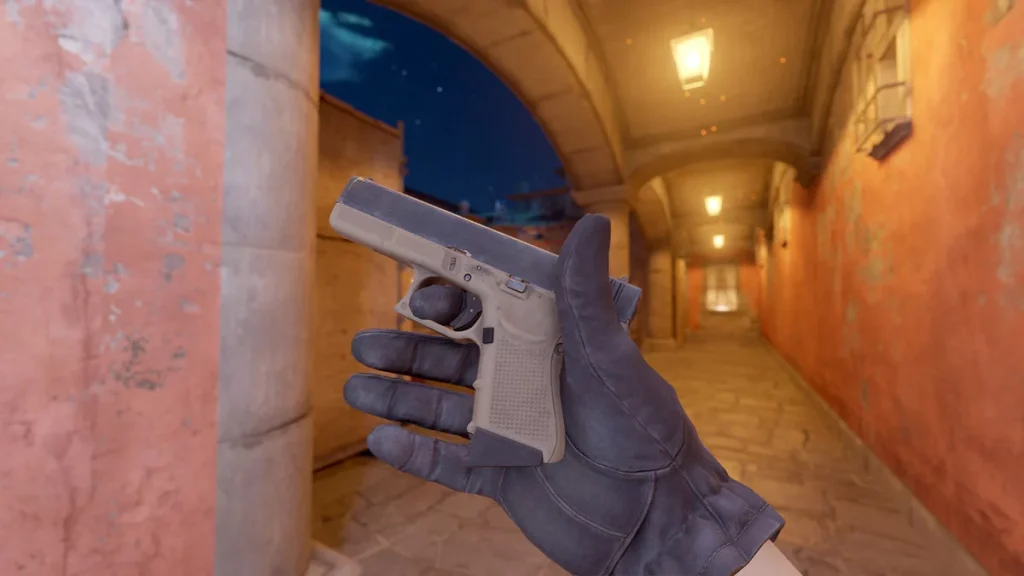
We’ve all encountered the humorous commentary regarding glocks functioning as projectile vegetables—however in competent hands, even these standard sidearms can prove lethal. The “Glock train” methodology is straightforward yet potent: concentrate five Ts, maintain proximity, and charge into confined zones resembling a cattle drive.
The concept involves overpowering defenders through rapidity and numerical superiority. Advance through central doorways on Mirage, invade connector on Overpass, or penetrate banana on Inferno. The more constricted the combat space, the more advantageous. A solitary CT defending with an M4 typically cannot eliminate more than one attacker before being surrounded.
Here’s the methodology for perfecting the Glock train:
- Maintain direct physical contact.
- Maintain continuous forward momentum.
- Designate one or two players for reconnaissance or decoy functions.
- Immediately retrieve discarded weaponry.
- Rapidly plant the explosive device if you secure the site.
You won’t triumph in every Glock train engagement—however it consistently provides an opportunity to distrupt the CT defensive structure, harm their financial situation, and potentially exit with a bomb deployment or rifle acquisition.
Timing and Coordination
Successful economic round execution demands precise temporal management and flawless team synchronization. The difference between successful and failed eco execution often comes down to split-second decisions and role clarity. Teams that master eco timing can consistently turn 15-20% of their economic rounds into victories, creating substantial economic pressure on opponents.
Advanced teams implement what’s known as “split-second synchronization” where every player understands their exact movement timing, utility deployment moment, and engagement sequence. This level of coordination requires dedicated practice sessions focusing specifically on economic round scenarios with varying weapon loadouts and utility combinations.
Reading Opponent Patterns
Strategic economic round planning extends beyond your own financial situation to include comprehensive opponent economic tracking. Are they likely to execute a weak purchase next round? Did you eliminate four adversaries last engagement and compel weapon repurchases? Utilize this intelligence effectively.
If you detect they’re economically disadvantaged, perhaps you force purchase rather than save, providing enhanced opportunity for round victory. Conversely, if they possess abundant currency and you’re financially constrained, execute a complete conservation strategy to reset your economic foundation and prevent additional opponent revenue generation.
Common Pitfalls and Solutions
The most significant economic round error involves deploying as a full purchase. Distributing 1-1-1-1-1 throughout the battleground results in easy individual eliminations with zero trading potential.
During economic situations, maintain unit cohesion. Trade eliminations. Avoid independent reconnaissance. You lack the individual combat capability to consistently win solo engagements. Succeed through numerical advantage and tactical surprise, not individual confrontations.
Every flash, smoke, or incendiary device you acquire during an economic round represents a valuable asset. Premature deployment or utilization without coordinated follow-through squanders its tactical value. Schedule your utility deployment:
- Rapid-flash deployment during your engagement swing.
- Smoke screen placement as you assault a site.
- Decoy utilization preceding your deception maneuvers.
Utility should facilitate the tactical play—not dictate it.
You eliminate one CT—excellent! But subsequently you pursue another across the map, and impact—you’re singled out. Your squad loses formation integrity and the round disintegrates.
Discipline represents the fundamental principle. Avoid pursuit unless the elimination proves secure or critical. Don’t abandon position to knife an opponent when your team executes bomb deployment. Execute intelligently, preserve unit cohesion, and safeguard any acquired rifles.
Pistol Tier Analysis
Sidearm selection significantly influences your economic round performance. Not all handguns perform equivalently, and understanding which to select for your faction proves crucial to impact maximization.
For T Side:
- P250 – Economical and potent, the P250 constitutes a substantial enhancement from the Glock. It’s capable of eliminating armored adversaries with several well-aimed discharges and remains highly affordable at $300. Optimal for economic rounds when attempting to secure critical headshots in confined combat scenarios.
- Tec-9 – A monster in close-quarters combat, the Tec-9 represents a popular selection for aggressive terrorist-side economic strategies. Its elevated discharge frequency and mobility render it lethal when assaulting sites or trading eliminations with squad members.
- Deagle – The monarch of single-tap eliminations. If confident in your targeting proficiency, the Deagle constitutes a high-risk, high-reward handgun. At $700, it represents a substantial investment, but merely one elimination can alter round momentum—particularly if you recover the opponent’s primary weapon.
- Glock – While generally inferior, it retains potential in collective assaults. The crucial element involves quantity over quality—overwhelm defenders through numerical superiority.
For CT Side:
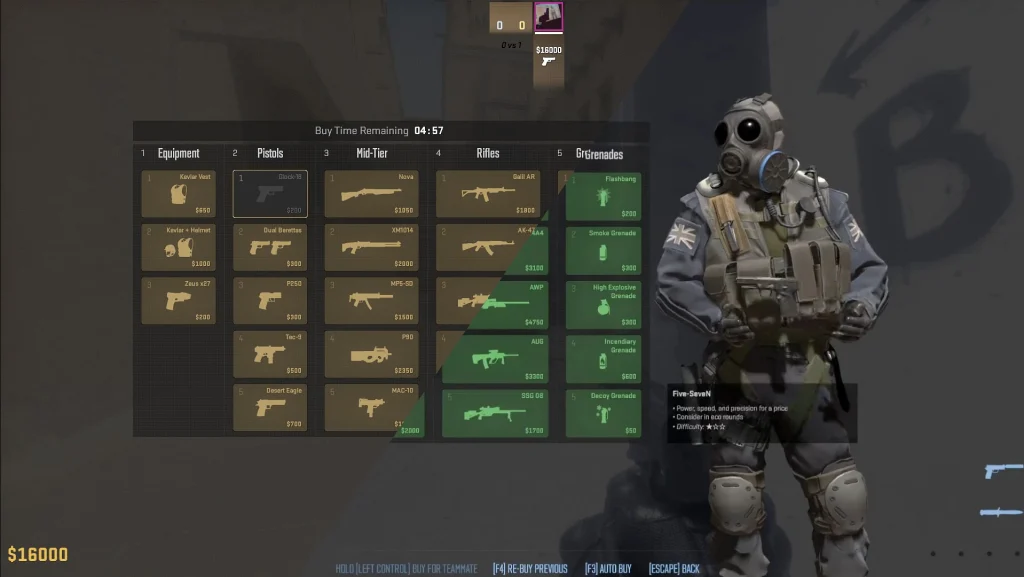
- Five-Seven – This handgun performs exceptionally for economic plays. Superior armor penetration, excellent damage output, and substantial magazine capacity render it a close-combat powerhouse.
- CZ75-Auto – Excellent for surprise eliminations but challenging to perfect. Its automatic discharge capability can rapidly neutralize opponents in constricted spaces, but its limited magazine capacity and accuracy complications create risk.
- USP-S/P2000 – Your standard sidearm. Strong long-distance capability with clean headshots, particularly when maintaining narrow firing angles.
- Deagle – Identical to terrorist side, it represents the economic round game-changer. Landing one precise discharge can generate a cascading effect if you acquire a discarded rifle.
Understanding when to expend $300 on a P250 versus $700 on a Deagle depends on your strategic approach. Are you attempting to win the engagement or merely secure an elimination and preserve a rifle? Consistently align your handgun selection with your round objectives and playstyle.
Situational Weapon Buys
Periodically, economic rounds demand creativity—and nothing indicates unconventional tactics like a properly timed shotgun or SMG play. If you possess adequate currency for a purchase but desire to disorient your adversaries, investing in a economical close-combat weapon can achieve the objective.
Shotguns such as the Nova or Mag-7 remain extremely affordable and absolutely lethal at minimal distances. Especially on battlegrounds like Inferno (defending apartments) or Mirage (beneath balcony), a shotgun can yield an effortless elimination or two and provide you $900 per frag. Additionally, that represents utility damage—your opponent must now repurchase equipment.
SMGs, conversely, perform excellently for mobility and supplementary revenue. The MP9 (CT side) and MAC-10 (T side) demonstrate rapidity, spray-friendly characteristics, and rewarding performance. Utilize them to advance aggressive angles or defend constricted corners. Bonus: SMG eliminations provide you $600, thus even if you don’t secure round victory, you’re still enhancing your economic foundation.
These armaments function optimally when:
- You’re protecting narrow zones.
- You anticipate a complete purchase from the adversary and desire to surprise them.
- You’re operating near an economic situation but desire to invest for early eliminations and tactical pressure.
Deploy them as components of a concentrated formation or aggressive advancement. You might not secure round victory, but you can create significant disruption to the enemy economic structure, and that frequently proves more valuable.
Advanced Utility Usage
The Scout (SSG 08) represents a surprisingly powerful acquisition during economic and forced rounds—particularly on counter-terrorist side. Costing $1700, it constitutes one of the few primary weapons accessible when financially constrained. In proficient hands, the Scout can:
- Single-discharge eliminate unarmored adversaries.
- Mark opponents for squad members to finalize.
- Maintain long-distance angles and hinder advancements.
Combine it with a Deagle or P250 and you possess an economical AWP/sniper hybrid configuration that proves lethal when utilized correctly. If you’re competing on maps like Dust2, Overpass, or Mirage, the Scout can function as the central component of your economic strategy. Position your most accurate player on long or mid, provide them a Scout, and support them with illumination and decoy reconnaissance.
The Deagle, simultaneously, represents a high-risk economic favorite. However, it’s essential to recall: if no squad member possesses utility or armor and five participants acquire Deagles, you’re essentially gambling. To achieve effectiveness, only one or two players should Deagle upgrade while the remainder provide support with sidearms and utility.
If your targeting proves accurate and you comprehend reconnaissance mechanics, the Deagle can secure rounds independently. However, if you’re missing discharges, you’re simply distributing $700 investments without returns.
Balance represents everything—avoid Deagle over-investment unless your team provides comprehensive support.
Effective eco round execution begins with intelligent positioning that compensates for your team’s firepower disadvantage. Your primary objective should be securing angles where your pistols can deliver lethal headshots or rapid double-taps before rifle-wielding opponents can react. This requires understanding choke points and common engagement distances where pistol accuracy can overcome rifle firepower.
Identify positions that offer immediate one-shot headshot potential or allow you to land two rapid body shots. Classic examples include the area immediately outside B apartments on Mirage, the tight corners near banana logs on Inferno, and the space behind boxes on A ramp positions.
Incorporate off-angles—positions that terrorist players rarely check during their site approaches. These unexpected angles create opportunities for free kills that can dramatically shift round momentum. Remember that eco round positioning requires discipline: take your shot, then immediately fall back or reposition to avoid giving opponents easy trade frags. Let your teammates capitalize on the distraction you create.
Ambush kills gain additional value during eco rounds because they enable weapon theft. When a T peeks without properly clearing your position and you successfully grab their AK-47, you’ve created a massive power shift mid-round that can completely change the outcome.
Pistol selection fundamentally determines your eco round effectiveness. Understanding the distinct advantages of each sidearm allows you to maximize your limited economic resources.
For T-Side Operations:
- P250 – This cost-effective sidearm provides substantial upgrade from standard Glocks at only $300 investment. It delivers reliable armor penetration and can eliminate fully-equipped opponents with precise shot placement. Excellent for securing critical headshots in confined spaces where engagement distance favors pistol accuracy.
- Tec-9 – Dominates close-range engagements with exceptional fire rate and mobility characteristics. Perfect for aggressive terrorist-side eco strategies focused on site rushing and teammate trading scenarios.
- Deagle – The definitive one-tap specialist weapon. Demands marksman-level accuracy but rewards with single-shot elimination potential. At $700, represents significant investment but single kill can completely transform round dynamics, especially when recovering enemy weaponry.
- Glock – While statistically inferior, retains value in coordinated group assaults where numerical superiority compensates for individual weapon limitations.
For CT-Side Defense:
- Five-Seven – Exceptional eco round performance with superior armor penetration, damage output, and magazine capacity. Functions as close-quarters combat powerhouse.
- CZ75-Auto – Excellent for ambush scenarios but requires practiced control. Automatic fire capability can eliminate opponents rapidly in confined areas, though limited magazine size and accuracy challenges introduce risk factors.
- USP-S/P2000 – Your standard-issue sidearms. Provide impressive long-range accuracy with clean headshot capability, particularly when defending narrow angles and choke points.
- Deagle – Maintains game-changing potential on counter-terrorist side. Landing one precise shot can initiate domino effect, especially when acquiring dropped rifle weapons.
Strategic weapon investment decisions—whether allocating $300 for P250 versus $700 for Deagle—should align with your team’s strategic objectives for the round. Are you prioritizing round victory or focusing on securing kills to preserve rifle inventory?
- When defending constricted spaces and narrow corridors
- When anticipating fully-equipped enemy approaches but wanting to deliver unexpected resistance.
- When operating near eco threshold but wanting to invest for early elimination advantage and sustained pressure application.
- Spreading out excessively – Maintaining proper teammate proximity ensures effective trade potential and collective defensive strength.
Premature utility expenditure – Every flashbang, smoke grenade, or incendiary device purchased during eco rounds represents precious resource allocation. Deploying them too early or without coordinated follow-up actions wastes their strategic potential. Time your utility deployment strategically:
- Execute pop flashes during your engagement movements.
- Deploy smokes as you execute site takes.
- Utilize decoys before executing deception maneuvers.
Chasing elimination opportunities – You successfully eliminate one counter-terrorist—excellent! But pursuing additional targets across the map frequently results in your elimination. Your team loses formation integrity and the round collapses rapidly.
Discipline remains paramount. Avoid pursuing targets unless the elimination opportunity presents minimal risk or delivers critical strategic value. Refrain from abandoning position to pursue melee opportunities while your team executes bomb plants. Execute intelligent gameplay, maintain group cohesion, and protect any acquired rifle weaponry.
Eco rounds function as resource management puzzles requiring collective solution. Distribute components and resolve them cooperatively.
Strategic deception transforms eco rounds from predictable low-buy situations into opportunities for psychological domination. The limited utility available during these rounds becomes disproportionately valuable when used to manipulate enemy perception and decision-making.
You can also use decoys and running footsteps to simulate numbers. With proper coordination, three players can sound like five.
Timing is everything. Toss utility, wait for the reaction, and then hit your real target with pace. These low-cost mind games only work once or twice per half, so use them sparingly—but use them smartly.
Advanced teams layer multiple deception elements simultaneously. For example, combine a decoy grenade with coordinated footstep sounds from multiple angles to create the illusion of a full execute. The key is observing how opponents respond to initial pressure—do they over-rotate, push aggressively for information, or abandon positions prematurely?
The most effective deception plays exploit specific opponent tendencies. Against teams that heavily rely on sound information, deploy decoys in rotation pathways while your actual team approaches from the opposite direction. This approach capitalizes on the natural human tendency to trust auditory cues over strategic analysis.
Eco rounds require decisive and unified calls. Without coordination, they quickly devolve into chaos—players take individual fights, spacing falls apart, and the round ends before it begins. But when one clear strategy is called and everyone commits, eco rounds become far more dangerous.
A good IGL or shot-caller knows the strengths and weaknesses of the team and maps out eco strats accordingly. Should you stack and hit fast, or bait and rotate? Do you play for damage or go all in for the win? These questions must be answered before the round begins—not mid-round.
- Decide early in freeze time. Don’t hesitate.
- Call clear roles: who’s entry, who’s flashing, who’s holding flank.
- Make backup plans: “If A fails, we rotate B.”
You don’t need a 10-step strat. Just a basic plan and good communication can flip a round. For example: “Rush B apps. Deagle entry, flash over, try to get bomb down. If two die instantly, fall back and save.” That simple call gives your team structure and focus—exactly what an eco round needs.
Professional teams develop eco round playbooks with 3-5 core strategies for each map. This preparation ensures that when eco situations arise, the team can immediately execute a rehearsed plan rather than improvising under pressure.
Eco rounds can feel hopeless, especially after a string of lost buys. But this is exactly when team morale matters most. Losing one or two ecos in a row can tilt even experienced players—but staying mentally strong is what separates good teams from great ones.
Positive communication is key. Acknowledge small wins: a bomb plant, a kill, forcing a rebuy. These aren’t wasted rounds—they’re investments in future success. Remind your team of that. A round might be lost on the scoreboard, but won in economy damage.
A single eco round win can shift momentum. That’s why it’s critical to approach every round—even low buys—with intention and optimism. Avoid frustration, sarcasm, or blame. Instead, say:
- “Nice eco, we made them spend.”
- “We’re close, let’s tighten trades next round.”
- “We forced them to rebuy—next round is ours.”
That mindset keeps the team locked in, focused, and ready for a comeback.
The psychological impact of eco rounds extends beyond immediate round outcomes. Teams that consistently maintain composure during economic disadvantages develop a reputation for resilience that psychologically pressures opponents in future encounters.
Even in eco rounds, team play matters. Say you kill a CT and snag an M4. That weapon might be more valuable in a teammate’s hands—someone with armor, or someone playing the entry role.
Smart teams drop rifles to their strongest players or set up bodyguard plays, where two pistols protect a rifler. If you pick up a gun with five bullets, hand it to your clutch player. If your lurker has a great position, toss them the Deagle you just picked up.
Also, communicate about saving. If you snag an AK late in an eco round but have no chance to win, save it. Your team can buy around it next round, giving you a stronger buy than expected.
Eco rounds are resource management puzzles. Share the pieces and solve them together.
Advanced resource management involves calculating weapon value based on multiple factors: remaining ammunition, player positioning, teammate economy status, and upcoming round strategic requirements.
The most sophisticated teams develop weapon priority hierarchies. Typically: AWPs for designated snipers, rifles for entry fraggers, then support players based on remaining utility and armor status.
Once opponents realize you’re eco, many will get greedy—pushing aggressively, holding forward positions, and going for easy stats. This is where you flip the script.
Read the over-aggression and bait it. Play anti-flash, hold tight angles, and wait for that CT to swing with confidence. Punish him, grab the weapon, and collapse on his site. Suddenly, the round is winnable.
Overconfidence is a weapon for both sides. If your opponents disrespect you during ecos, make them pay.
Elite teams maintain deception logs tracking which strategies worked against specific opponents and adjusting their approach based on observed patterns and tendencies.
The most devastating counter-plays emerge from recognizing opponent behavioral patterns across multiple eco rounds. Document which deception techniques generated which reactions, and build strategic profiles of enemy teams’ eco round vulnerabilities.
Successful adaptation requires real-time pattern recognition combined with strategic memory of previous encounters against the same opponents.
Action Checklist
- Practice coordinated trading with teammates in custom servers for 15-20 minutes daily
- Master 2-3 rush routes on your primary maps with utility integration
- Develop opponent economic tracking skills by reviewing match demos
- Perfect pop-flash techniques for 3 common engagement angles
- Implement bait and switch strategies in scrim matches
- Identify 2-3 tight angles on your current map where pistols can one-shot headshot effectively
- Coordinate pistol selections with teammates based on round strategy
- Establish repositioning protocols after initial engagements
- Time utility deployment to maximize distraction and create engagement opportunities
- Develop 3 core eco strategies per map with clear role assignments and backup plans
- Implement layered deception combining decoys with coordinated audio cues
- Establish weapon priority hierarchy based on player roles and positioning
- Create opponent behavior tracking system for adaptive strategy development
Sometimes eco rounds demand creative solutions—and nothing delivers unexpected results like well-executed shotgun or SMG tactical plays. When you possess marginal economic resources but want to disrupt opponent expectations, investing in economical close-range weaponry can produce dramatic results.
Shotgun options including the Nova and Mag-7 offer remarkably cost-effective lethality in proximate engagements. Particularly effective on maps like Inferno (defending apartment areas) or Mirage (positioned beneath balcony structures), these weapons can secure easy eliminations while generating $900 per frag reward. Additionally, this represents utility damage—your opponent must now reinvest in equipment.
SMG alternatives, conversely, provide mobility advantages and economic bonuses. The MP9 (counter-terrorist side) and MAC-10 (terrorist side) deliver rapid fire characteristics, spray-friendly handling, and rewarding performance. Deploy them for aggressive angle control or tight corner defense scenarios. Bonus consideration: SMG eliminations yield $600 economic reward, ensuring you strengthen your team’s financial position even if you don’t secure round victory.
These specialized weapons perform optimally under specific conditions:
Utilize them within stacked defensive formations or aggressive pushing strategies. You might not achieve round victory, but you can create significant disruption to enemy economic stability, which often delivers greater strategic value than simply winning the engagement.
Knowing when to allocate resources for P250 versus Deagle investments depends entirely on your strategic approach. Are you attempting to win the round outright or focusing on securing eliminations to preserve rifle inventory? Consistently align your pistol selection with round objectives and personal playstyle preferences.
Advanced eco round execution requires understanding several critical timing elements. Your initial positioning should account for likely enemy approaches and rotation patterns. Avoid committing to positions that leave you vulnerable to multiple engagement angles simultaneously.
Common mistakes to avoid:
No reproduction without permission:Tsp Game Club » Eco Round Strategies for T and CT