
TL;DR
- CS2’s sub-tick system makes damage calculation more precise and consistent than CS:GO
- Armor reduces damage by approximately 50% but degrades with successive hits
- Weapon penetration varies dramatically between classes – AK/AWP excel through thin surfaces
- First-shot accuracy is critical – tap shooting often outperforms uncontrolled spraying
- Economic armor decisions can determine round outcomes – know when to force buy vs save
When Valve transitioned from CS:GO to CS2, players anticipated visual enhancements but encountered a complete overhaul of the core shooting mechanics. The introduction of sub-tick servers, physics-driven smoke effects, and refined bullet interaction systems fundamentally changed how damage registers and armor protects.
The enhanced precision means every shot now follows predictable physical principles. From bullet trajectory to surface penetration, CS2 delivers a more authentic combat experience where understanding the underlying mechanics provides measurable competitive advantage.
Why CS2’s Mechanics Demand Deeper Understanding
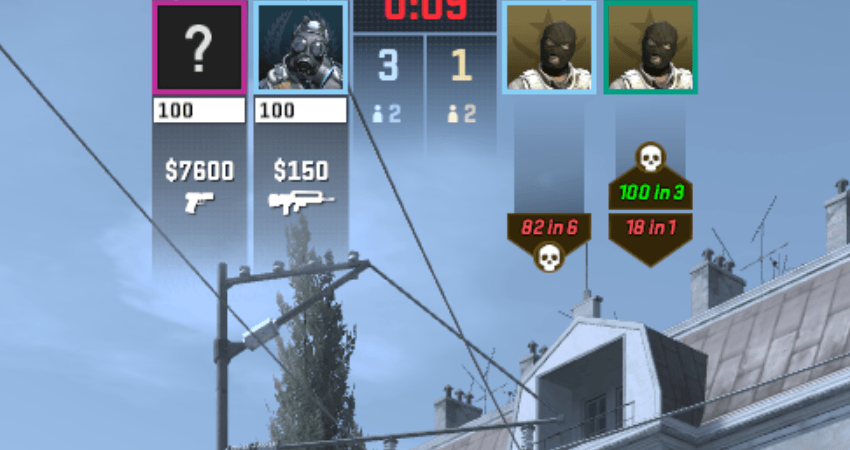
Possessing elite aim means nothing if you lack comprehension of damage scaling, armor absorption rates, and effective penetration tactics.
Victory in firefights frequently hinges on micro-decisions: Did you purchase armor this round? Are you engaging with a weapon capable of defeating enemy protection? Are you shooting through destructible materials versus solid barriers?
In high-stakes competitive scenarios, every millisecond and damage point becomes decisive. Understanding whether to target the chest versus head based on opponent armor status, or selecting superior penetration firearms to shoot through Mirage’s B apps walls, could determine whether you secure the round or suffer elimination.
Therefore, if ranking advancement is your objective, cease depending solely on mechanical skill. Commanding the science behind damage computation and protective gear mechanics will distinguish you from mediocre competitors—potentially transforming you into that player who consistently lands unexpected wallbang eliminations.
Weapon Base Damage Values Explained
Each firearm in CS2 possesses distinct base damage characteristics representing raw impact potential before applying modifiers like hitbox multipliers, armor mitigation, or surface penetration calculations.
Let’s examine the foundational numbers:
- AK-47: Approximately 36 base damage
- M4A4/M4A1-S: Ranging between 33–38 contingent on engagement distance.
- AWP: Single-shot elimination to torso or cranium with 115+ base damage.
- Deagle (Desert Eagle): Massive damage potential (up to 53), ideal for economic rounds.
These numerical values might appear insignificant initially, but remember—CS2 implements damage multipliers. Cranium impacts frequently deliver 4x damage, enabling even sidearms to achieve one-shot kills with precise targeting.
The crucial realization: firearm damage diminishes across distance. Certain weapons experience damage degradation over range (like the MP9), whereas rifles maintain effectiveness. This explains why employing submachine guns from Long A on Dust2 typically proves ineffective compared to rifle utilization.
Additionally, never overlook—specific weapons feature enhanced armor penetration capabilities. Therefore, even with lower base damage statistics, they might demonstrate superior performance against protected opponents.
If you’ve ever questioned why your USP-S headshot failed to eliminate—this clarifies the reasoning.
Hitbox Multiplier Mechanics
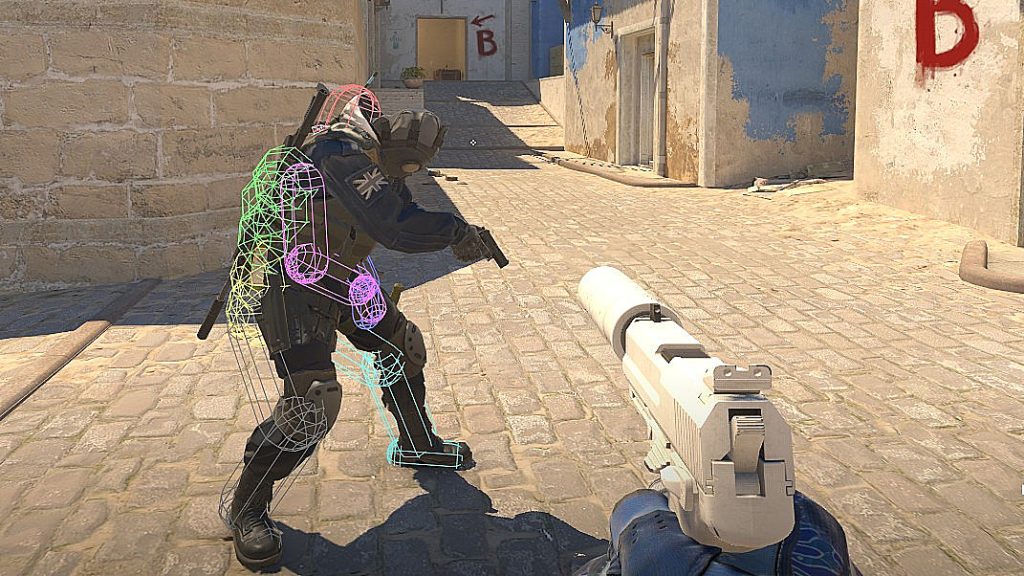
Hitbox multipliers represent the genuine differentiating factor in CS2 damage computation. A projectile striking the cranium isn’t merely standard impact—it’s a multiplier of the weapon’s foundational damage. CS2 segments player models into distinct impact zones:
- Head: Approximately 4x multiplier (instantaneous elimination with most rifles)
- Chest/Stomach: Roughly 1.25x multiplier
- Arms/Legs: About 0.75x or diminished
Consequently, impacting the cranium with an AK-47 (36 base damage × 4 = 144) will immediately eliminate fully armored adversaries (who possess only 100 HP). This explains why headshots prove exceptionally lethal.
Conversely, uncontrolled firing and striking extremities will likely result in reduced damage and increased opportunities for opponents to survive and counter-attack.
Range and Accuracy Impact Analysis
Within CS2, engagement distance significantly influences outcomes. Firearms incorporate “range modifier” mechanics that diminish their damage across extended distances. For example:
- SMGs: Substantially decreased damage at prolonged range.
- Rifles: Consistent performance across intermediate to extended distances.
- AWP/Scout: Essentially no degradation.
Therefore, if you’re utilizing a MAC-10 while attempting to eliminate adversaries across A Long, you’re destined for disappointment. Alternatively, rifles like the AK-47 and M4A4 preserve damage remarkably well, enhancing their versatility.
Precision additionally interconnects with this principle. CS2 rewards competitors who master recoil patterns and implement controlled firing at distant ranges. Missed projectiles resulting from weapon kick can compromise more than individual duels—it can sacrifice your team’s round victory.
Professional Insight: Employ single-shot precision or abbreviated bursts at extended ranges to optimize damage delivery and maintain accuracy. You’ll experience astonishment how many engagements you secure simply through superior precision compared to opponents.
Types of Armor – Kevlar and Helmet
Protective equipment in CS2 manifests in two primary configurations: Kevlar and Kevlar + Helmet. If you’ve ever pondered why you occasionally experience instantaneous headshot eliminations or why your projectiles seem ineffective—it likely correlates with your adversary’s armor composition.
- Kevlar (Body Armor): This safeguards your torso against bullets. It diminishes damage sustained from impacts to the chest, abdominal region, and upper limbs.
- Helmet: This supplements protection versus cranium impacts from most firearms, particularly pistols and submachine guns.
Here’s a concise breakdown of helmet protection effectiveness:
| Weapon | Helmet Protection? | One-shot Headshot? |
|---|---|---|
| Glock-18 | ✅ Yes | ❌ No |
| USP-S / P2000 | ✅ Yes | ❌ No |
| Deagle | ❌ No | ✅ Yes |
| AK-47 | ❌ No | ✅ Yes |
| M4A4 / M4A1-S | ✅ Yes | ❌ No |
| AWP | ❌ No | ✅ Yes |
Most competitors consistently purchase Kevlar + Helmet, particularly during firearm rounds, because solitary cranium impacts can otherwise conclude the round for you immediately. However, it also demands greater expenditure—$1000 for comprehensive protection versus $650 for torso-only. Therefore, during economic rounds, players might omit the helmet.
Comprehending what your opponents can and cannot withstand assists in optimizing your targeting selections. If they cannot afford cranial protection, you can pursue more aggressive headshot tactics even with submachine guns.
How Armor Reduces Incoming Damage
Protective gear doesn’t render you invulnerable, but it substantially reduces damage absorption—especially from projectiles impacting the torso.
When you sustain impact while wearing armor, dual processes occur:
- Damage undergoes mitigation — the system calculates what portion of the projectile gets absorbed by the protective layers.
- Your armor sustains damage — diminishing its protective capacity for subsequent impacts.
The computational formula demonstrates complexity, but here’s a simplified interpretation:
- If a shot strikes your protected region, approximately 50% of that damage gets absorbed by the armor.
- Specific weapons feature elevated armor penetration (like the AK-47), which disregards more of the armor’s protective properties.
For instance, if you’re hit in the chest with a weapon delivering 40 base damage while you’re equipped with armor:
- You might only absorb 20–25 actual HP damage,
- And your protective equipment will experience durability reduction.
Ultimately, if your armor becomes depleted, you’ll commence receiving complete damage again. This explains why preserving armor integrity across rounds constitutes significant strategic consideration.
When to Buy Armor – Strategy and Economy
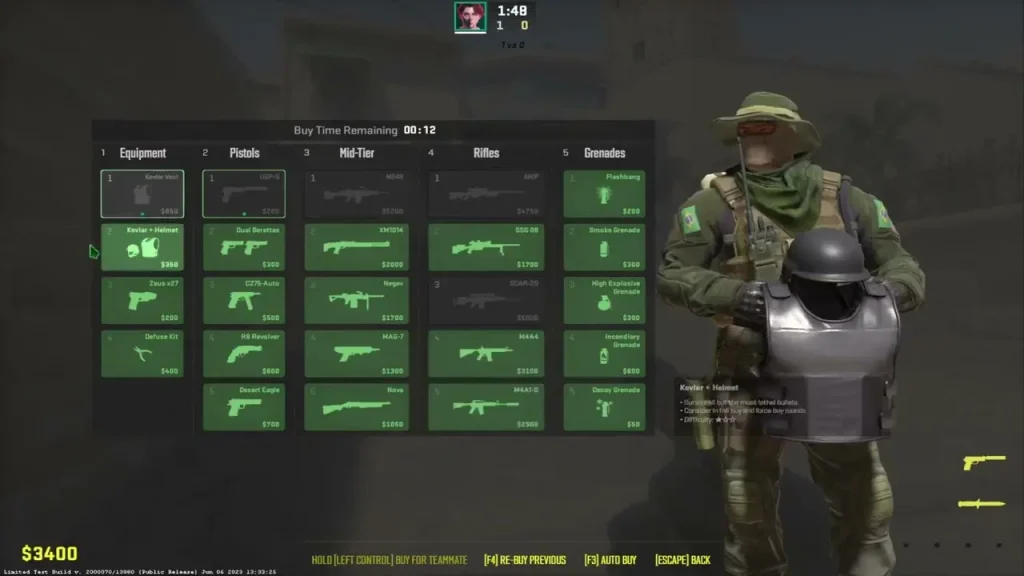
Armor acquisition decisions can determine or compromise your team’s economic stability. During comprehensive purchase rounds, no uncertainty exists—acquire Kevlar + Helmet. However, during economic or forced purchase scenarios, circumstances become more intricate.
Let’s analyze by situational context:
- Pistol Round (Round 1):
- CTs frequently purchase armor to withstand several impacts and survive initial engagements.
- Ts occasionally bypass armor for tactical equipment (e.g., smoke + flashbang for B site execution).
- Force Buy Round:
- Consider omitting the helmet if the opposition primarily utilizes rifles (AKs will single-tap through helmets regardless).
- Anti-Eco Round (You’re Upgraded, Enemy is Economically Disadvantaged):
- Anticipate pistols like Deagle or Five-Seven—purchase helmet if surplus funds exist.
Here’s an effective guideline: If the opposing team employs pistols or submachine guns, helmet significance increases. If they possess AKs or AWPs, helmet won’t protect you from cranium impacts.
Additionally, armor demonstrates reusability! If you survive a round with protective equipment intact, you can transport it forward and conserve currency subsequent round. Intelligent competitors monitor how much armor preservation remains before determining reacquisition.
Wallbangs and Surface Penetration Mechanics
Wallbanging—the capability to shoot through walls or surfaces—remains viable and potent within CS2. Actually, CS2 enhances wallbang mechanics through refined impact registration and surface penetration modeling.
In summary, whether a projectile penetrates a wall (and how much damage it inflicts subsequently) depends upon:
- Weapon penetration capacity
- Surface material composition (wood, metal, concrete)
- Impact angle and surface thickness
For example:
- Shooting through slender wooden doors on Inferno or Dust2 will permit projectiles to traverse readily, delivering diminished but still substantial damage.
- Attempting to shoot through dense concrete (like Mirage’s B site bench barrier) will obstruct most damage—or the projectile entirely.
Each firearm possesses a penetration rating, and every material exhibits a resistance value. The lower the resistance and the higher the weapon’s penetration strength, the greater damage will penetrate.
Wallbangs can additionally generate psychological pressure. If you identify an adversary positioned behind a wall or container, firing through it can either eliminate them or compel repositioning—providing your team territorial advantage.
How Different Weapons Interact with Different Surfaces
Firearms demonstrate inequality regarding wallbang potential. High-caliber weapons like the AWP or AK-47 exhibit significantly superior penetration capability compared to submachine guns or pistols.
Here’s a simplified comparison:
| Weapon | Penetration Strength | Ideal for Wallbangs? |
|---|---|---|
| AK-47 | High | ✅ Yes |
| M4A4/M4A1-S | Medium | ✅ Yes |
| AWP | Very High | ✅✅ Absolutely |
| SMGs (MP9, MAC-10) | Low | ❌ No |
| Deagle | Medium | ✅ Situationally |
Certain weapons, like the AWP, can even single-shot eliminate through specific walls if targeted at the cranium. Combine this with precise adversary intelligence or auditory indicators, and you can secure eliminations without visual contact.
Practicing frequent wallbang positions (like Banana on Inferno or B applications on Mirage) will substantially enhance your utility as a competitor.
Penetration Power Stats and Weapon Classes
CS2 doesn’t display penetration statistics in-game, but they’re embedded within the programming and recognized throughout the community. Here’s a general guide:
- AWP / Scout: Optimal penetration within the game.
- AK-47 / M4A1-S: Sufficiently potent to wallbang slender surfaces effectively.
- Pistols (Glock, USP): Minimal penetration—won’t accomplish much through walls.
- Shotguns: Nearly zero penetration; close-proximity exclusively.
Specific weapons like the SSG 08 (Scout) demonstrate surprisingly effective shooting through doors and thin walls despite reduced cost.
Understanding these classifications assists in determining which angles merit pre-firing or wallbanging. For instance, you might never prefire through a wall with a MAC-10, but with an AK? Pursue the opportunity.
Breaking Down the Damage Formula
Let’s deconstruct how CS2 computes damage, because it’s not as elementary as simply discharging a projectile and inflicting raw numerical values. Concealed behind every bullet exists a sophisticated equation that determines actual damage inflicted upon a player.
Here’s a simplified interpretation of the damage formula:
Final Damage = Base Weapon Damage × Hitbox Multiplier × Range Modifier × Penetration Modifier – Armor Reduction
Let’s clarify each constituent:
- Base Weapon Damage: The initiation point. This gets defined within the weapon’s statistical parameters. For example, AK-47 exhibits 36 base damage.
- Hitbox Multiplier: Based upon impact location—cranium, chest, abdominal region, arms, legs.
- Range Modifier: Firearms lose effectiveness across distance. Rifles like AKs demonstrate superior range modifiers compared to submachine guns.
- Penetration Modifier: If a projectile traverses an object (like a wall or teammate), it experiences damage reduction.
- Armor Reduction: If the opponent possesses armor, a portion of the damage undergoes absorption.
Let’s suppose you deliver a cranium impact to an adversary with an AK-47 from intermediate distance through a wooden container while they’re equipped with a helmet:
- Base damage = 36
- Hitbox multiplier = 4x (headshot) → 144
- Range modifier = 0.95 (minor loss across distance) → ~137
- Penetration modifier = 0.5 (wooden barrier) → ~68
- Armor reduction = Applies, but insufficient for survival
Elimination achieved, but it demonstrates how significantly each variable influences outcomes. Alter any parameter (e.g., absent helmet or no obstruction in trajectory), and the result transforms.
The Role of Penetration and Armor in the Final Damage Output
Now, let’s explore more profoundly how armor and penetration specifically affect final damage computation.
Penetration:
When a projectile impacts a surface before reaching the adversary (a wall, container, or additional player), it experiences a damage penalty contingent upon:
- Surface thickness characteristics
- Material classification (wood, metal, etc.)
- Entry angle considerations
A bullet that penetrates a dense metallic wall might only preserve 10–20% of its original damage. Conversely, shooting through plywood might preserve 50–70%.
Armor:
Once the projectile reaches the adversary, if they possess armor:
- Damage undergoes reduction before application to HP.
- Some damage portion gets absorbed by the protective equipment itself.
- If the damage proves sufficiently elevated (like a Deagle or AK cranium impact), armor won’t protect the competitor.
What proves essential to comprehend here is that armor influences the final damage, not the foundational values. Therefore penetration and range modifiers occur initially, then armor activation follows.
A practical illustration:
- Deagle cranium impact (74 damage foundation × 4 = 296)
- If it strikes a helmet, armor attempts to absorb some portion
- But 296 demonstrates sufficient magnitude to eliminate, even following armor mitigation.
This explains why specific weapons demonstrate “single-shot” capability irrespective of armor, while others feel inconsistent without perfect targeting.
Useful Workshop Maps and Console Commands
If you desire to genuinely comprehend and command CS2’s damage and penetration framework, you must engage in systematic practice. Fortunately, the CS2 community provides exceptional resources and instrumentation.
Workshop Maps to Practice On:
- “Recoil Master” – Master spray patterns and projectile control.
- “Yprac Aim Trainer” – Provides penetration testing, hitbox guidance, and bot training exercises.
- “Wallbang Training” – Enables testing weapon penetration across various surface types.
Search these instructional environments within the Steam Workshop. They simulate authentic in-game conditions, and demonstrate:
- Projectile damage per individual shot
- Penetration potential assessments
- Spray consistency measurements
Key Console Commands:
sv_cheats 1sv_showimpacts 1– Displays projectile impact locations.sv_damage_print_enable 1– Outputs damage inflicted within console interface.r_drawothermodels 2– Visualize player models through obstructions (for experimental purposes).weapon_accuracy_nospread 1– Practice foundational aiming without random deviation.
You don’t require speculation regarding how much damage a Deagle inflicts through a doorway—you can experiment independently.
Dedicate 15 minutes daily within these training environments, and you’ll observe substantial improvement.
How to Train Wallbang Spots
Wallbangs no longer remain exclusively for professional competitors. With appropriate practice, you can master map-specific wallbang techniques that surprise adversaries and provide your team tactical superiority.
Here’s a methodological approach:
- Select one environment to master (like Mirage).
- Memorize frequent positions behind penetrable cover—triple containers, B applications vehicle, A standard positions.
- Enter offline mode with automated opponents or collaborators.
- Align crosshairs and experiment through barriers.
- Utilize
sv_showimpacts 1andsv_damage_print_enable 1to observe outcomes.
Over duration, you’ll establish a cognitive repository of damage-efficient pre-firing locations. Even without achieving eliminations, you’ll:
- Inflict cumulative damage
- Compel adversaries to reposition
- Expend their tactical equipment or force disadvantageous positioning.
Wallbang proficiency = complimentary damage + complimentary psychological warfare.
When Valve transitioned from CS:GO to CS2, they fundamentally overhauled the core combat engine. Beyond graphical enhancements, CS2 introduces sub-tick server architecture, physics-based smoke systems, and significantly refined bullet interaction mechanics that create more realistic gunplay.
The enhanced precision means every bullet behaves more predictably based on real-world ballistic principles. From improved hit registration to sophisticated armor calculations, CS2 represents a complete modernization of Counter-Strike’s foundational systems.
Weapon Damage Values
Every firearm in CS2 possesses distinct base damage statistics representing raw impact potential before any modifiers take effect.
Let’s examine the damage profiles of primary weapons:
- AK-47: Consistently delivers 36 base damage.
- M4A4/M4A1-S: Ranges between 33-38 damage depending on engagement distance.
- AWP: Devastating 115+ base damage capable of one-shot eliminations to chest or head regions.
- Desert Eagle: Massive damage output (up to 53), making it ideal for economic rounds.
While these numbers appear modest initially, CS2 implements comprehensive multiplier systems. Headshots typically inflict 3x normal damage, enabling even sidearms to secure instant kills with precise targeting.
Critical insight: weapon effectiveness diminishes over distance. Submachine guns like the MP9 suffer severe damage reduction at range, while rifles maintain consistency across most combat distances.
Hitbox Multipliers and How They Affect Damage
Hitbox multipliers represent the cornerstone of CS2’s damage calculus. Targeting different anatomical regions dramatically alters damage output through specific multiplier coefficients.
- Head: Approximately 4x multiplier (guaranteed elimination with most primary rifles)
- Chest/Stomach: Roughly 1.25x damage amplification
- Extremities: Typically 0.75x or reduced damage values
Consequently, an AK-47 headshot (36 × 4 = 144) instantly defeats fully armored opponents (maximum 100 health points).
Conversely, uncontrolled spraying frequently results in limb impacts, substantially decreasing damage potential and allowing adversaries to counter-attack effectively.
The Role of Range and Accuracy in Damage Output
Distance significantly influences ballistic performance. Firearms incorporate “range modifiers” that reduce damage effectiveness over extended engagement distances.
- Submachine Guns: Experience dramatic damage reduction during long-range exchanges.
- Rifles: Maintain consistent performance across medium to extended combat ranges.
- Sniper Rifles: Maintain virtually consistent damage across all practical engagement distances.
Therefore, attempting to eliminate targets across Dust2’s Long A corridor with a MAC-10 proves exceptionally challenging.
Professional Recommendation: Employ controlled tap firing or concise burst sequences during long-distance engagements to maximize damage efficiency and preserve targeting precision. You’ll discover significantly improved duel outcomes simply through superior accuracy management.
Types of Armor – Kevlar and Helmet
CS2 features two primary armor configurations: Standard Kevlar and Comprehensive Kevlar + Helmet protection.
- Kevlar (Torso Protection): Safeguards chest, abdominal, and arm regions from ballistic impact.
- Head Protection System: Provides additional defense against headshots from most sidearms and submachine guns.
Quick reference for helmet protection effectiveness:
| Weapon Type | Helmet Effective? | Instant Headshot Kill? |
|---|---|---|
| Glock-18 | ✅ Yes | ❌ No |
| USP-S / P2000 | ✅ Yes | ❌ No |
| Desert Eagle | ❌ No | ✅ Yes |
| AK-47 | ❌ No | ✅ Yes |
| M4A4 / M4A1-S | ✅ Yes | ❌ No |
| AWP | ❌ No | ✅ Yes |
Most competitive participants purchase complete armor packages during weapon rounds, as singular head impacts can otherwise terminate engagements immediately.
How Armor Reduces Incoming Damage
Armor implementation doesn’t create invulnerability but substantially decreases damage absorption—particularly for torso impacts.
When struck while armored, two sequential processes occur:
- Damage Mitigation — The game engine computes ballistic energy absorption by protective gear.
- Armor Degradation — Protective equipment loses structural integrity, diminishing protective capacity for subsequent impacts.
The underlying calculation involves complexity, but here’s a simplified representation:
- When projectiles impact armored zones, approximately 50% of damage gets absorbed by protective systems.
- Certain firearms feature enhanced armor penetration characteristics (AK-47 platform), which bypass significant portions of protective mitigation.
For instance, receiving chest impact from a weapon dealing 40 base damage while armored:
- You might sustain only 20-25 actual health point damage,
- While your armor sustains durability reduction.
Ultimately, once armor integrity depletes completely, you’ll begin receiving unmitigated damage again. This durability mechanic makes armor preservation across multiple rounds a crucial strategic consideration.
When to Buy Armor – Strategy and Economy
Armor acquisition decisions critically impact team economic stability. During comprehensive purchase rounds, complete protection packages are essential, but during economic or forced engagements, decisions become substantially more nuanced.
Let’s analyze situational decision frameworks:
- Initial Engagement (Round 1):
- Counter-Terrorists: Frequently purchase armor to withstand initial combat exchanges.
- Terrorist Forces: Sometimes prioritize tactical equipment over personal protection (e.g., smoke deployment + flash utilization for site execution strategies).
- Economic Constraint Rounds:
- Consider helmet omission when opposing forces primarily utilize rifles (AK platforms penetrate helmets regardless).
- Counter-Economic Situations (Your Team Equipped, Enemy Economically Limited):
- Anticipate sidearm utilization like Desert Eagle or Five-Seven—acquire helmets when financial resources permit.
Strategic Guideline: When opposing teams employ pistols or submachine guns, helmet protection becomes crucial. If they field AK platforms or sniper rifles, helmets provide minimal protective benefit against head impacts.
Additionally, armor systems feature reusability mechanics! Surviving rounds with intact protection allows equipment carry-over, conserving financial resources for subsequent engagements. Discerning participants monitor armor integrity before making repurchase determinations.
Wallbangs and Surface Penetration Mechanics
Wall penetration capabilities—the tactical ability to engage targets through environmental obstructions—remains fully functional in CS2. The updated engine enhances wallbang realism through refined impact registration and sophisticated surface interaction modeling.
Essentially, whether projectiles penetrate surfaces (and resultant damage delivery) depends upon three critical factors:
- Firearm penetration characteristics
- Surface material composition (timber, metallic, concrete)
- Impact angle and material thickness
Practical illustrations:
- Engaging through Inferno’s wooden doors or Dust2’s thin partitions allows significant damage transmission despite reduction coefficients.
- Attempting ballistic penetration through dense concrete structures (Mirage’s B site bench barriers) will typically block substantial damage—or prevent penetration entirely.
Each weapon incorporates penetration statistics, while each material possesses resistance values. Lower resistance combined with superior penetration power enables greater damage transmission.
Wallbang tactics generate psychological pressure dynamics. Identifying opponent positioning behind cover enables suppressive fire that either eliminates threats or forces repositioning—creating tactical space for team advancement.
How Different Weapons Interact with Different Surfaces
Firearms demonstrate significant variation regarding wall penetration capabilities. High-caliber weapon systems like the AWP or AK-47 platforms feature substantially enhanced penetration performance compared to submachine guns or sidearms.
Simplified comparative analysis:
| Weapon System | Penetration Capacity | Wallbang Viability? |
|---|---|---|
| AK-47 | High | ✅ Yes |
| M4A4/M4A1-S | Medium | ✅ Yes |
| AWP | Exceptional | ✅✅ Absolutely |
| Submachine Guns (MP9, MAC-10) | Limited | ❌ No |
| Desert Eagle | Medium | ✅ Conditional |
Certain specialized firearms like the AWP platform can achieve single-shot eliminations through specific wall types when targeting cranial regions. Combining this capability with precise enemy intelligence or auditory cues enables elimination without visual target acquisition.
Mastering common wallbang positions (Banana corridor on Inferno or B apartments on Mirage) dramatically enhances your combat utility as a strategic participant.
Penetration Power Stats and Weapon Classes
CS2 doesn’t display penetration metrics within standard interface elements, but these values remain embedded within game code and established within competitive communities.
- AWP / Scout Systems: Feature superior penetration characteristics within the game environment.
- AK-47 / M4A1-S Platforms: Sufficiently powerful to effectively penetrate thin environmental surfaces.
- Sidearm Systems (Glock, USP): Minimal penetration effectiveness—ineffective through substantial barriers.
- Shotgun Platforms: Virtually negligible penetration; optimized for close-quarters engagement only.
Understanding these classification systems enables informed decisions regarding which engagement angles warrant preemptive firing or wallbang attempts.
Breaking Down the Damage Formula
Let’s deconstruct CS2’s damage calculation methodology, as it involves considerably more complexity than simple projectile impact calculations. Each ballistic interaction incorporates a sophisticated equation determining actual damage inflicted upon target entities.
Simplified representation of the comprehensive damage formula:
Final Damage Output = Base Weapon Damage × Hitbox Multiplier × Range Coefficient × Penetration Modifier – Armor Mitigation
Explanation of constituent components:
- Base Weapon Damage: Foundational parameter defined within weapon statistical profiles. For example, AK-47 maintains 36 base damage.
- Hitbox Multiplier: Based on anatomical impact location—cranial, thoracic, abdominal, extremity regions.
- Range Modifier: Firearms lose ballistic effectiveness over distance. Rifle platforms like AK systems feature superior range coefficients compared to submachine gun categories.
- Penetration Modifier: When projectiles traverse environmental objects (barriers, partions, or team members), they experience damage reduction.
- Armor Reduction: When targets possess protective equipment, substantial damage portions get absorbed.
Illustrative scenario: cranial impact with AK-47 from intermediate distance through wooden obstruction while target utilizes helmet protection:
- Base damage parameter = 36
- Hitbox multiplier coefficient = 4x (headshot) → 144
- Range modifier = 0.95 (minor distance attenuation) → ~137
- Penetration modifier = 0.5 (timber barrier) → ~68
- Armor mitigation = Applies, but insufficient for survival
Successful elimination, but demonstrates how significantly each variable influences engagement outcomes. Altering any parameter (e.g., absent helmet or unobstructed trajectory), and the result substantially shifts.
The Role of Penetration and Armor in the Final Damage Output
Now, let’s examine how protective systems and penetration dynamics specifically influence resultant damage.
Penetration Mechanics:
When projectiles impact surfaces before reaching intended targets (barriers, containers, or other participants), they incur damage penalties determined by:
- Surface thickness characteristics
- Material classification (timber, metallic, etc.)
- Impact angle parameters
A projectile traversing substantial metallic barriers might preserve only 10-20% of original damage potential. Conversely, penetrating plywood structures might maintain 50-70% effectiveness.
Armor Functionality:
Once projectiles reach intended targets, if they possess protective equipment:
- Damage gets reduced before application to health points.
- Substantial damage portions get absorbed by the protective systems themselves.
- If the damage magnitude proves sufficient (Desert Eagle or AK cranial impacts), armor systems cannot preserve the participant.
Critical comprehension point: protective systems influence resultant damage, not foundational values. Consequently, penetration and range modifications occur initially, followed by armor mitigation processes.
Practical combat illustration:
- Desert Eagle cranial impact (74 damage foundation × 4 = 296)
- If impacting helmet protection, armor attempts absorption
- But 296 damage magnitude proves overwhelmingly lethal, even following armor mitigation processes.
This explains why certain weapon systems achieve “single-shot” effectiveness regardless of protective systems, while others demonstrate inconsistency without perfect targeting execution.
How Spray Control Affects Damage
Projectile dispersion—commonly referenced as “spray patterns”—represents one of CS2’s fundamental skill requirements. Every automatic firearm follows distinctive dispersion sequences after initial projectile discharge, and without proper control mechanisms, projectiles deviate significantly from reticle positioning.
Essential realization: damage potential becomes irrelevant without impact registration. You might control an AK-47 (single-tap elimination capability), but if you employ uncontrolled spraying without recoil management, you might only achieve extremity impacts—inflicting 10-20 damage per registered hit.
Comprehending spray control methodologies involves:
- Training spray patterns of rifle systems within offline training environments.
- Mastering counter-strafing techniques to reestablish accuracy parameters.
- Understanding when to employ burst sequences versus when to utilize comprehensive spraying.
If your initial projectile impacts the cranial region but subsequent five projectiles land upon the opponent’s lower extremities, that represents ineffective damage application.
Professional Recommendation: For rifle platforms like AK-47 or M4A1-S systems, initial-shot precision proves critically important. Consequently, crouch-tapping or micro-bursting frequently generates superior damage outcomes during combat exchanges compared to sustained mouse button depression.
Action Checklist
- Practice first-shot accuracy in deathmatch for 10 minutes daily focusing on headshots only
- Test weapon penetration values on workshop maps, focusing on AK-47 and AWP through common wallbang surfaces
- Master spray patterns for 3 key rifles (AK-47, M4A4, Galil)
- Analyze your demo replays to identify damage calculation errors in lost fights
- Implement economic armor purchase strategies based on round context and team finances
- Practice first-shot accuracy with AK-47 and M4 platforms for 15 minutes daily in offline training environments
- Memorize helmet protection effectiveness against common weapon systems
- Test weapon penetration through different materials using workshop maps
- Analyze round-end damage statistics to identify optimal target selection patterns
- Review professional match recordings to observe armor purchasing decisions and wallbang positioning strategies
No reproduction without permission:Tsp Game Club » How Damage, Armor, and Penetration Work in CS2