
TL;DR
- Overpass gives CTs faster site access, creating unique early-round advantages
- Master vertical combat with Heaven, Connector, and multi-level engagement zones
- Utility usage determines success more than raw aiming skill
- Control of mid and Connector zones dictates round outcomes
- Avoid over-rotating and practice essential smoke lineups
Among Counter-Strike 2’s competitive map pool, Overpass stands apart as a masterpiece of asymmetric design that tests mental agility alongside mechanical skill. Originally introduced in CS:GO and refined for CS2 with enhanced visual clarity and minor layout adjustments, this map deliberately breaks from traditional balanced spawn positioning. Counter-Terrorists receive dramatically quicker pathways to both bomb sites, enabling them to establish defensive control before terrorists can even approach key areas.
The signature complexity of Overpass emerges from its sophisticated vertical layering system. Players navigate through ladders, elevated sniper perches, underground tunnels, and multi-tiered combat zones including Connector and Heaven. Combine these elevation changes with expansive sightlines along A Long and constricted choke points like Monster, and you have a battleground demanding cerebral understanding beyond mere shooting proficiency. Split-second timing governs every action—peek half a second too early and you give away positioning; rotate a moment too late and you forfeit site control entirely.
Map Design Philosophy
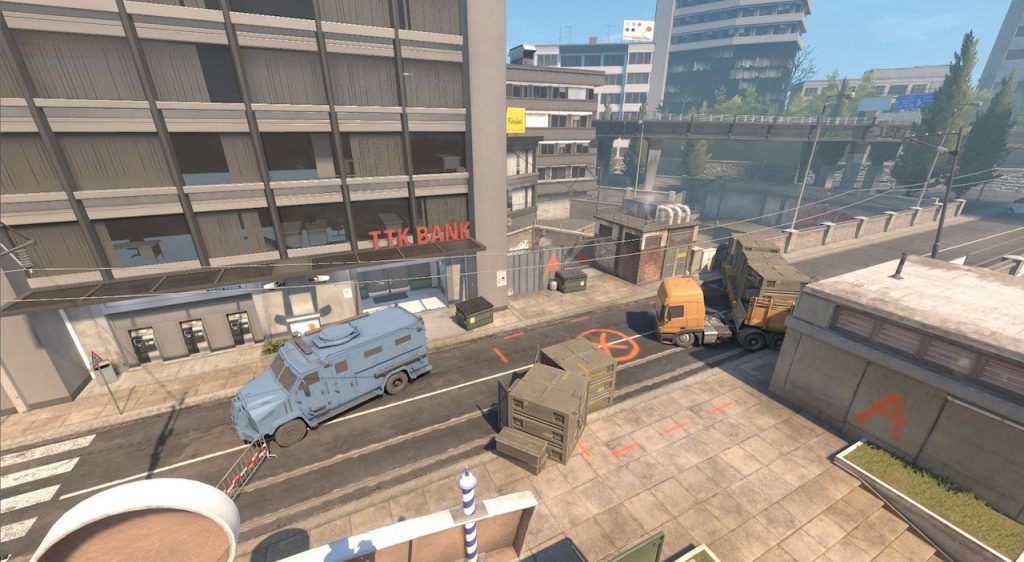
When contrasted with symmetrical classics like Mirage or Dust II, Overpass consistently rewards proactive decision-making and calculated aggression. This isn’t terrain for passive observation—it’s a psychological chess match where the CT faction enjoys inherent early-round superiority through rapid site accessibility.
Here’s what makes Overpass strategically distinct:
- CT Early Control Advantages: Defenders can aggressively challenge Fountain, Party, and Playground sectors within the opening 10-15 seconds. This tactical positioning disrupts terrorist initial strategies and governs the round’s developmental flow.
- Dynamic Rotation Pathways: Movement between sites presents both opportunities and vulnerabilities. While Connector and CT spawn enable swift transitions, mistimed rotations can leave bombsites vulnerable to quick strikes.
- Utility-Dominated Meta: Smoke grenades, flashbangs, and incendiary devices carry amplified importance here. Inadequate grenade employment makes capturing objectives nearly unachievable against coordinated defensive setups.
- Three-Dimensional Combat: Engagements unfold across multiple elevations—from Heaven above B site to staircases connecting from Connector, demanding exceptional spatial cognition.
Newcomers frequently feel overwhelmed by Overpass’s intricacies, but systematic breakdown of callout systems, tactical approaches, and map flow mechanics transforms intimidation into creative tactical expression. Whether competing solo or with organized teams, developing proficiency on this map significantly elevates your comprehensive CS2 capabilities.
Complete List of Callouts (A and B Sites)
Communication mastery represents half the victory in CS2, particularly on tactically dense terrain like Overpass. Whether executing rapid site transitions or communicating critical enemy intelligence, mastering the location vocabulary distinguishes competent players from exceptional teammates.
A Site Navigation
Begin with A bomb site and adjacent territories:
- A Site – Primary detonation zone; commonly defended from Truck or Bank positions.
- Truck – Vehicle situated on A site delivering substantial protective coverage.
- Bank – Enclosed space behind A containing currency equipment, optimal for post-plant defensive scenarios.
- Default Plant – Standard explosive placement location positioned between Truck and Optimus structures.
- Optimus – Metallic storage unit located behind the conventional planting spot.
- Bathrooms (Toilets) – Passageway connecting Party to A; frequent terrorist advancement route.
- Long A – Extended corridor on the distant right flank from terrorist spawn; utilized for methodical A site captures.
- Fountain – Central territory preceding Party, contested during initial engagement phases.
- Playground – Early terrorist control sector, relatively secure for reconnaissance peeking.
Comprehending these positional relationships enables enemy movement prediction and coordinated assault/retake execution.
B Site Hotspots
Transitioning to B site—the map’s most tempo-driven objective zone:
- B Site – Central detonation area surrounded by structural frameworks and aquatic elements.
- Monster – Subterranean passage leading directly from terrorist territory to B; crucial rush pathway.
- Short B – Access route originating from Connector or Water leading into the site perimeter.
- Water (Pit) – Depression beneath Heaven; strategically vital for area dominance.
- Heaven – Elevated platform above B site; formidable defensive vantage point.
- Barrels – Protective obstructions adjacent to site; preferred CT holding location.
- Graffiti – Rear wall positioned behind the detonation zone.
- Bridge – Compact overpass linking Water to B site.
- Sandbags – Corner placement near Short B; excellent for unexpected peeking maneuvers.
- Sandbags – Corner placement near Short B; excellent for unexpected peeking maneuvers.
Every positional designation transcends mere geography—it represents tactical opportunity. When teammates report “They’re advancing through Monster rapidly!” your squad understands to deploy grenades, initiate early rotations, and establish defensive crossfires.
T-Side Execution Framework
Successful A site assaults typically involve coordinated splits between Toilets/Connector and Long A pathways. Your objective centers on compelling defenders to address multiple threat vectors simultaneously.
- Early Mid Dominance: Utilize tactical equipment to challenge Fountain and apply pressure to defensive positions. This tactical diversion attracts CT reinforcements to central territories where they potentially exhaust resources or reposition disadvantageously.
- Split Assault Coordination: Deploy personnel through Toilets into Bathrooms, additional units from Connector into Party, with supporting elements from Long A. Synchronization proves critical—coordinate ingress timing to fragment defensive attention.
- Strategic Utility Deployment: Deploy smoke screens across critical positions including Bank, Truck, and Fountain. Employ flashbang devices across Long A and into Bathroom sectors to disorient defenders. Incendiary or high-explosive devices targeting Fountain or Party zones effectively flush out entrenched opponents.
- Trade Execution Discipline: When entry frags occur, supporting personnel must maintain trade readiness. Never commit fully without adequate backup support structures.
- Post-Plant Positional Strategy: Following explosive device placement, establish defensive formations from Bank, Truck, or Optimus cabinet rear positions. Maintain crossfire arrangements with teammates, while monitoring secondary angles like Toilets or Connector.
CT-Side Defensive Architecture
Bomb site B security constitutes the defensive foundation for numerous CT victories on Overpass.
- Heaven Superiority Control: One or two defenders secure Heaven early, governing Water and Barrels territories. This represents an exceptional observation platform for monitoring Monster or Water advancement patterns.
- Proximity/Short Control: A CT positioned tightly against Short can impede Connector pushes and relay intelligence to squad members. Preliminary flash and grenade employment delivers substantial benefits.
- Monster and Water Defensive Protocols: The CT situated near Water can deploy incendiary or tactical equipment toward Monster to diminish rapid assault effectiveness.
- Strategic Fallback Positions: Should terrorists breach perimeter defenses, transition to secure positions—Barrels or Short-adjacent areas. Defenders ideally maintain crossfire arrangements from Barrels and Heaven positions.
- Intelligent Rotation Systems: Consistently maintain contingency planning for B site reinforcement requirements. Should central control be compromised, rotate from A via Connector or spawn routes; maintain vigilance against flanking attempts.
Utility Mastery Essentials
Tactical equipment proves absolutely indispensable on A site operations. Without precisely positioned smoke and flash deployment, ingress becomes virtually unattainable.
- Fountain Smoke Deployment: Obstructs visual acquisition for defenders positioned in mid and Bank sectors. Frequently employed during initial phases to divide defensive focus.
- Bank and Truck Smoke Screens: Deploy smoke across Truck angles to force defender repositioning; screen Bank to facilitate secure crossing maneuvers.
- Toilets Flashbang Employment: Launch flash devices into Toilets ensuring advancing personnel avoid unexpected blinding.
- Party/Connector Flash Utilization: Illuminate from central territories or through window apertures to disorient defenders situated in A site rear positions.
- Incendiary Deployment for Party/Long: Utilize fire to eliminate defenders from confined spaces or corners including Party or Long during early capture attempts.
Coordinate these tactical applications with crossfire configurations—once equipment deployment has attracted CT attention, entry procedures become significantly smoother.
Rotation Discipline Errors
Among the most significant defensive traps on Overpass involves excessive rotation. Given the map’s expansive geography and multiple interconnection points between A and B objectives, misinterpretating enemy movement patterns and prematurely abandoning defensive positions represents a frequent mistake. Veteran terrorists capitalize on this vulnerability, performing fake assaults that bait rotations before striking the now-underdefended alternative site.
Over-rotation typically manifests in two primary scenarios:
- Premature Rotation Based on Audio Cues: Several smoke deployments and a single flashbang on A shouldn’t prompt three CTs to abandon B unless supplementary intelligence exists (such as explosive device visual confirmation or multiple player footstep indicators).
- Communication Deficiency: A defender on A detects auditory signals and presumes full-scale assault without verification. Without Connector or Long intelligence, squad members may overcommit, resulting in uncontested bomb plants elsewhere.
To prevent these errors:
- Designate one player to anchor each objective unless numerical confirmation or explosive device verification occurs.
- Employ tactical equipment to delay advances and acquire additional intelligence before rotating.
- Consistently communicate precise numbers, timing information, and whether the bomb has been visually identified.
Connector Control Neglect
Connector arguably represents the most critical choke point throughout Overpass. Nevertheless, it’s frequently overlooked—particularly among less experienced squads. Failure to control Connector from either faction grants your opposition unrestricted rotational highways for lurking or surprise split assault execution.
Consequences of Connector neglect include:
- T-Side Repercussions: You sacrifice rapid B rotation pathways, rendering transitions slower and increasingly predictable.
- CT-Side Ramifications: You surrender central control and permit terrorists to concentrate forces for rapid B split executions. Without defensive presence monitoring or challenging Connector, it becomes unfeasible to delay coordinated T-side assaults.
Optimal practices:
- Consistently maintain strategic planning for Connector control each engagement round.
- Coordinate pairing when executing aggressive capture maneuvers, and trade effectively.
- When maintaining passive defensive postures, utilize auditory indicators and rotational equipment to discourage enemy reconnaissance.
Connector functions as Overpass’s strategic core. Lose control, and you forfeit the round’s operational rhythm.
Advanced Adaptation Techniques
In elite competitive tiers (Immortal or Global Elite rankings), players demonstrate rapid adjustment capabilities. If you repeat identical execution patterns across three consecutive rounds, anticipate comprehensive countermeasures during the fourth engagement.
To maintain competitive advantage:
- Default Position Variation: Avoid consistent 2 mid, 3 B defensive distributions. Incorporate extended lurking strategies, preliminary Connector assaults, or deceptive maneuvers originating from Short sectors.
- Unconventional Smoke Deployment: Diversify equipment usage preventing CT anticipation of your tactical approach.
- Tempo Modulation: Should you previously employed methodical approaches, introduce rapid rush sequences. If you’ve executed rushing tactics, transition to deliberate round pacing. Maintain opponent disorientation through strategic unpredictability.
Top-performing teams maintain dynamic adaptability. They transcend mere map navigation—they analyze opposition behavior patterns and calibrate responses accordingly.
Importance of Mid Control
Mid control represents the strategic nerve center of Overpass, determining which team controls the flow of engagement. For Terrorist forces, establishing dominance in Fountain and Party creates multiple attack vectors—you can pressure A site through Toilets, rotate to B via Connector, or apply pressure to CT spawn routes. Counter-Terrorists who successfully contest mid areas force Ts into predictable, resource-intensive pathways that favor defensive setups.
You’ll frequently observe CT players challenging Fountain positions during the opening seconds using smoke screens or incendiary devices to disrupt early T-side movement patterns. When Terrorists allow uncontested mid control, they essentially surrender half the map’s tactical options, making site executions significantly more challenging.
Securing mid dominance enables sophisticated split-push maneuvers: for instance, dispatching two players through Toilets toward A while the remainder advance from Connector to B. This layered pressure compels CT formations to distribute their resources thinly across multiple fronts, creating exploitable weaknesses in their defensive perimeter.
Controlling Connector and Short
Connector serves as the critical arterial connection between central map areas and B bombsite. Dominating this corridor allows teams to sever enemy rotation lines, surprise CT defenders from unexpected angles, or coordinate multi-directional B site assaults. Similarly, Short (the passageway from Connector leading into B) holds immense strategic value. Losing control of Short severely compromises your B-split effectiveness, rendering them predictable and easily countered by organized defenses.
From the Terrorist perspective, deploying early-round utility (smoke canisters, molotov cocktails) into Connector or Long A pathways creates safer advancement corridors. Utilize flashbang devices over connector openings or through window/door passages to disorient defensive positions. After securing Connector clearance, you can channel forces into Short positions or pivot toward A site, placing CT units in tactically disadvantageous positions.
For Counter-Terrorist operators, maintaining Connector contestation prevents T-side teams from establishing uncontested map dominance. Even minimal CT presence within Connector forces Terrorist squads to expend valuable utility resources or reposition their assault formations. Should a CT operative fall in this area, execute rapid rotational movements or modify your defensive configuration to prevent B site collapse.
Effective management of Connector and Short territories typically depends on synchronized trade eliminations, precisely timed utility deployment, and rigorous map awareness discipline.
Rotation Pathways for CT and T Sides
Rotation maneuvers constitute the vital circulatory system of Overpass gameplay. Executing them proficiently—or mishandling them—can determine round victories or defeats within competitive match environments.
- CT Side Rotations: Counter-Terrorist units can transition between sites using either Connector routes or CT spawn pathways (traversing Underpass sectors). When B site comes under assault, CT players frequently utilize Connector access for rapid reinforcement, particularly when mid control remains accessible. However, if Connector access becomes compromised, CT spawn routes provide more secure access to B or A positions. Strategic rotation timing proves essential—transition too prematurely and you abandon your original site’s security; delay too long and you arrive post-detontation sequence initiation.
- T Side Rotations: Terrorist teams commonly simulate attacks on one bombsite while redirecting their primary assault forces toward the alternative objective. If your team has established Connector dominance, transitioning to B becomes expedited. Conversely, if A site demonstrates light defensive coverage and you identify vulnerabilities via Toilets or Long corridors, redirect your forces back toward A. Terrorist operatives should additionally exercise caution against overcommitment—if you rotate excessively rapidly without maintaining map presence, CT defenses might implement mid-round countermeasures and offensive responses.
- Mid-Round Adjustments: Consistently maintain at least one team member monitoring rear sectors or securing flanking routes. Executing hasty rotations without adequate intelligence can result in punishment from CT units rotating into your targeted site. Employ smoke screens and flashbang devices during transition phases to conceal movement patterns, and maintain continuous communication regarding enemy pressure indicators.
In tactical summary: achieving rotation mastery involves interpreting round developments, coordinating with your tactical unit, and timing your positional shifts so your combat presence generates impact where it proves consequential—not squandered through poor positioning decisions.
Effective Site Execution on A
Executing successful A site assaults typically revolves around coordinated divisions between Toilets/Connector and Long A corridors. Your primary objective involves compelling CT defenders to address multiple threat vectors simultaneously.
- Early Mid Presence: Deploy utility resources to challenge Fountain territories and apply pressure to defensive positions there. This tactical approach draws CT resources toward mid sectors where they may suffer resource depletion or forced repositioning.
- Split Push: Deploy select team members through Toilets into Bathroom areas, additional forces from Connector into Party sectors, and limited personnel from Long A pathways. Synchronization proves critical—orchestrate your entry timing so CT defenders experience distraction and divided attention.
- Use Utility Wisely: Deploy smoke screens to obscure key defensive positions like Bank, Truck, and Fountain. Utilize flashbang devices over Long A and into Bathroom areas to visually impair defenders. Employ molotov cocktails or high-explosive grenades for positions like Fountain or Party helps displace defenders from fortified positions.
- Trade Discipline: When entry frag opportunities emerge, supporting team members must maintain readiness to execute trade eliminations. Never commit entire forces without adequate backup support structures.
- Post-Plant Positions: Following bomb deployment, establish defensive perimeters from Bank, Truck, or behind Optimus cabinet structures. Maintain crossfire coordination with team members, and monitor unconventional angles like Toilets or Connector access points.
An effective A site execution emphasizes tactical balance: avoid excessive commitment through straight Long A advances, nor channel all personnel through singular pathways. Diversify your entry methodologies, force CT defenses to distribute their attention resources, and ensure robust utility execution throughout the assault phase.
Pushing B Site with Utility
B bombsite typically enables faster capture timings but carries inherent tactical risks. When executed with precision, however, a coordinated B site push can capture CT defenders unprepared and off-balance.
- Fast Monster Rushes: Occasionally execute rapid Monster corridor assaults before CT units can establish Heaven defensive positions or Connector rotation capabilities. Utilize flashbang devices to disorient defenders in waterfall or barrels defensive setups.
- Connector-Assisted Push: If your team has already established Connector dominance or CT defenses demonstrate weakness there, channel team members from Connector into Short B sectors while additional forces press Monster or Water territories. Splitting applied pressure overwhelms CT defensive coordination systems.
- Smoke and Molly Usage: Deploy smoke screens toward Heaven positions, utilize molotov cocktails in Water areas, and deploy high-explosive grenades toward common CT hold positions like Barrels or Short corridors. Release smoke coverage toward Heaven to obstruct defensive peeks, then advance rapidly into site territories.
- Staggered Entry: Avoid deploying entire forces simultaneously—dispatch initial assault waves to clear exterior defensive perimeters, then consolidate your advance. Should defensive units retreat, maintaining pressure while avoiding tactical overextension proves essential.
- Planting and Afterplant: The optimal bomb placement locations include either default central positions or proximity to Short/Bridge access depending on your tactical approach. Post-plant defensive holds from Barrels, Water, or Heaven positions (if personnel remain stationed there) represent standard tactical protocols.
B site engagements frequently determine round outcomes rapidly—either securing early advantages or resulting in quick defeats. Avoid excessive deliberation—rapid pressure application, coordinated utility deployment, and clean entry execution produce significant tactical dividends.
Mid Round Calling and Map Manipulation
Mid-round decision phases represent where Terrorist teams can genuinely dictate engagement tempo. Competent tactical calls and maintained map presence can compel CT defenses into strategic errors.
- Fake Plays: Execute limited A site assaults with select personnel while remaining forces maintain concealed positions in Connector or Long A territories, then execute rapid transitions toward B. This tactical deception forces CT units into predictive uncertainty.
- Information Gathering: Utilize your utility resources to provoke CT defensive reactions. Probe Fountain or short territories with flashbang devices and observe how CT defenses respond before determining your primary assault vector.
- Adaptive Rotations: Avoid rigid adherence to original tactical blueprints. If mid—or Connector—becomes compromised, alter your target selection. Generate defensive confusion through unpredictable tactical shifts.
- Pressure on Flanks: Position lurking team members to deny CT spawn or connector control capabilities. This tactical approach decelerates CT rotation capabilities or penalizes delayed reinforcement arrivals.
- Economy Considerations: Should your utility resources diminish or you encounter economy-restricted scenarios, avoid deep middle territory engagements; instead, select safer, concentrated assault vectors while attempting to numerically overwhelm defensive formations.
Proficient mid-round tactical communication not only facilitates transitions into site assault phases but additionally prevents CT defenses from operating with excessive confidence or overcommitting rotation resources.
Defensive Setups for A Site
Defending A bombsite demands comprehensive trade setup configurations, utility denial protocols, and continuous situational awareness regarding Terrorist rotation patterns.
- Initial Setup: Typically position one defensive operator in Bank or behind Optimus positions, another at Truck defensive points, and additional personnel closer to Toilets or Connector access to challenge mid assault attempts.
- Utility Use: Deploy smoke screens in Fountain territories, utilize molotov cocktails or high-explosive devices toward Party sectors, and deploy flashbang equipment toward Toilets early to delay assault advances. Reserve flashbang resources for entry denial scenarios.
- Crossfires and Safeguards: The established Bank/Truck crossfire configuration represents classic defensive methodology. One operator maintains position from Bank, another from Truck, establishing mutual angle coverage and defensive support.
- Mid Control Denial: A defensive player positioned near Connector or Fountain should contest mid territories—compel Terrorist forces to waste utility resources or execute tactical withdrawals. Even if defensive units suffer elimination, they’ve secured valuable time through tactical delay.
- Late-Round Adjustments: Should Terrorist teams execute aggressive A site pushes, transition from B positions cautiously. Utilize your flashbang or smoke screening to cover transition movements. Avoid blind rotations—verify CT spawn and route security before executing positional shifts.
Remember: Avoid excessive extension. Maintain tactical discipline, conserve utility resources for critical entry scenarios, and delay Terrorist advances rather than attempting aggressive engagements without tactical advantage.
Locking Down B Site Efficiently
B site control represents the defensive foundation for numerous CT victory scenarios on Overpass.
- Heaven Control: Position one or two CT operators in Heaven early to establish Water and Barrels territorial dominance. This elevated vantage point provides exceptional visibility to monitor Monster or Water assault advances.
- Close/Short Control: A CT player maintaining tight Short positioning can delay Connector assault attempts and relay intelligence to tactical units. Early flashbang and grenade deployment generates significant tactical benefits.
- Monster and Water Defense: The CT operator positioned near Water can deploy molotov cocktails or utility resources toward Monster corridors to reduce rapid assault capabilities. Maintain communication and trade coordination with team members.
- Fallback Positions: Should Terrorist forces breach defensive perimeters, retreat to secure positions—Barrels or near Short territories. CT teams ideally seek to maintain crossfire positions from Barrels and Heaven defensive points.
- Smart Rotations: Consistently maintain tactical blueprints for B site reinforcement when necessary. If mid control becomes compromised, transition from A via Connector or spawn routes; maintain vigilance against flanking attempts.
A well-coordinated B site defensive hold involves applying pressure on Terrorist attempts to secure Connector or Monster control while enabling secure trade elimination possibilities.
Proactive CT Map Control
Counter-Terrorist units that adopt passive waiting strategies typically suffer tactical penalties on Overpass. Proactive territorial control provides the critical tactical edge.
- Early Mid Contesting: Challenge Fountain, Party, or Connector territories using grenade and flashbang resources to deter early Terrorist movement patterns.
- Pushing Outside Early: Occasionally execute aggressive Long A or Toilets advances to restrict Terrorist tactical options.
- Aggressive Flanks: A CT lurking operator advancing into Connector or Underpass sectors with precise timing can capture Terrorist teams unprepared and off-balance.
- Information Gathering: Utilize utility resources to probe Terrorist concentration areas. Based on their aggression patterns, execute rotations or counteroffensive measures.
- Adapting Dynamically: Should Terrorist-side forces heavily pressure Connector across multiple rounds, adjust your defensive configuration to pre-occupy that tactical zone.
A proactive CT defensive approach demonstrates reduced reactivity and increased tactical dictation. It compels Terrorist units to conform to your engagement rhythm, complicating their execution of clean strategic approaches.
Smokes and Flashes for A Site
Utility deployment proves indispensable during A site assaults. Without properly positioned smoke screens and flashbang devices, entry becomes virtually impossible against organized defensive formations.
- Fountain Smoke: Obstructs visual access for defensive operators from mid and Bank territories. Frequently utilized early to divide defensive attention resources.
- Bank and Truck Smokes: Deploy smoke screens toward Truck angles so defenders must execute repositioning maneuvers; obscure Bank territories to facilitate secure entry across site perimeters.
- Toilets Flash: Launch flashbang devices into Toilets corridors so advancing team members avoid visual impairment during assault phases.
- Party/Connector Flashes: Deploy flashbang equipment from mid sectors or through window passages to disorient defenders positioned at A site’s rear sectors.
- Molotov for Party/Long: Utilize incendiary devices to displace defenders from fortified positions in Party or Long territories during early assault stages.
Coordinate these utility deployments with crossfire defensive configurations—once utility resources have drawn CT defensive attention, entry execution becomes significantly smoother. Additionally, consistently maintain at least one flashbang resource that you can deploy post-smoke to visually impair rotating defensive reinforcements.
Best B Site Mollies and Smokes
B site engagements demand precision execution, given the numerous engagement angles and defensive positions requiring clearance.
- Heaven Smoke: Denies CT operators peeking capabilities or maintaining active Heaven defensive positions.
A standard B site execution might initiate with Heaven smoke deployment, Water molotov usage, then short/bridge smoke screening accompanied by Monster flashbang deployment. This sequential approach forces defensive rotations, enables multiple entry vectors, and maintains defender disorientation throughout the engagement.
Nade Lineups All Players Should Know
Here represent several fundamental lineup configurations that every serious Overpass competitor should practice extensively:
- A Site Fountain Smoke: Position near T side mid territories, target window corner positions, execute jump-throw maneuvers to cover Fountain areas. (Precise positioning depends on server configurations; practice individually.)
- Truck/Bank Smokes: From mid or Long A corridors, target elevated positions to obscure Truck or bank window angles. Jump-throw execution represents common tactical methodology.
- B Heaven Smoke: From Water territories or mid sectors, target specific rooftop structures and deploy to cover Heaven entrance points.
- Water Molotov (B): Utilize damage potential to compel defenders from Water positions; frequently executed from jump maneuvers or site perimeter edges.
- Connector Flashes: From CT mid or Connector access points, launch consistent flashbang devices into Short/Connector territories to visually impair defenders during assault advances.
Achieving mastery over these lineup configurations ensures you avoid tactical fumbling during mid-round engagements. During critical clutch scenarios, possessing reliable utility resources that you can deploy reflexively distinguishes competent tactical units from exceptional ones.
Executing Fake Site Pushes
Deception represents one of the most powerful tactical instruments available to Terrorist teams on Overpass due to the extensive distance between bombsites and the inherent temptation for CT defenses to execute premature rotations.
Proper fake execution methodology:
- Commit Real Utility: Deploy identical grenade resources you’d utilize during genuine assault phases—smoke screens on Heaven or Bank territories, flashbang devices over Toilets corridors. Avoid deploying singular smoke screens and hoping for defensive reactions.
- Sell Presence: Dispatch one or two team members to engage, peek, or potentially suffer elimination on-site to enhance deception credibility. Should they execute trade eliminations, it secures adequate time for fake execution success in alternative sectors.
- Silent Reposition: During fake execution phases, remaining tactical units should execute quiet repositioning maneuvers toward the genuine assault vector. This tactical approach decelerates CT rotation response capabilities.
- Watch the Flanks: CT defenses might respond to deception attempts by advancing from alternative territories. Maintain personnel monitoring Connector or Mid sectors during your tactical transition.
When executed with precision, a well-orchestrated fake can secure round victories with minimal direct confrontation requirements.
Using the Clock and Economy
Temporal management and economic resource allocation prove essential within Overpass tactical environments.
Clock Tips:
- Avoid rapid assault advances unless executing strategic Monster or Fountain push maneuvers.
- Utilize initial 20-30 second phases to bait CT utility deployment and seek elimination opportunities.
- Execute primary assault phases during final 20–30 second periods following defender isolation or rotation baiting attempts.
Economy Tips:
- Terrorist teams should maintain awareness regarding their grenade and weapon resources—Overpass represents utility-intensive tactical environments.
- CT defenses should avoid high-risk acquisitions if they cannot sustain utility resource requirements. Dry peeking into Toilets or Monster corridors without flashbang support typically results in preventable eliminations.
- Force acquisition scenarios can demonstrate effectiveness, but intelligent utilization of pistol + SMG combinations and crossfire configurations prove more tactically significant.
Economic considerations shape engagement tempo. The strategically superior tactical unit will utilize both temporal and monetary resources as instruments to manipulate opponent behavioral patterns.
Adaptations in High-Rank Play
Within Immortal or Global Elite competitive environments, participants demonstrate rapid adaptation capabilities. Should you execute identical assault patterns across three consecutive rounds, anticipate comprehensive countermeasures during the fourth engagement sequence.
To maintain tactical advantage:
- Change Defaults: Avoid consistent 2 mid, 3 B defensive configurations. Integrate Long A lurking maneuvers, early Connector advances, or deception attempts from Short territories.
- Use Uncommon Smokes: Vary your utility deployment so CT defenses cannot anticipate your tactical approach.
- Change Tempo: Should you demonstrate deliberate pacing, execute rapid assault advances. If you’ve executed rapid advances, implement measured round pacing. Maintain opponent disorientation through unpredictable tactical shifts.
The most effective tactical units maintain dynamic operational flexibility. They don’t merely operate within map parameters; they interpret opponent tendencies and adjust their tactical methodology accordingly.
Effective B site defense on Overpass requires methodical positioning and coordinated teamwork. Unlike other CS2 maps, Overpass demands that CTs establish early map presence rather than passively waiting for Terrorist pushes. The map’s unique layout with Heaven’s elevated position and Monster’s tight choke points creates opportunities for well-prepared defenders to dominate rounds.
Heaven Dominance Tactics
Securing Heaven within the first 10 seconds provides critical advantages. From this elevated vantage point, defenders can monitor multiple entry vectors simultaneously—watching Water approaches, spotting Monster pushes, and controlling Barrels area. The key is positioning one or two players to establish crossfire angles that cover all potential entry points while maintaining safe retreat options.
Pro Tip: Have your Heaven player carry both a molotov and smoke. The molotov delays Water pushes while the smoke can block vision from Connector or Short approaches.
Close/Short Control Advantages
A CT positioned tightly on Short serves multiple defensive purposes. This player can hear early Connector movements, delay pushes with well-timed utility, and relay precise information to teammates. Early flashes and grenades thrown toward Connector can disrupt Terrorist coordination before they even begin their site execute.
Advanced Technique: Use a one-way smoke from Short that allows you to see Ts feet while obscuring their vision—this creates easy pick opportunities.
Monster and Water Defense Coordination
The defender positioned near Water plays a crucial role in countering fast Monster rushes. A properly timed molotov thrown deep into Monster tunnel forces attackers to either take damage or alter their timing, giving your team valuable seconds to prepare.
Common Mistake: Many CTs make the error of peeking Monster too aggressively. Instead, use utility to probe and delay while maintaining communication for effective trade opportunities.
Fallback Positions and Smart Rotations
When Terrorists successfully breach the site, disciplined fallback to secondary positions maintains defensive integrity. Barrels and areas near Short provide excellent cover for establishing new crossfire angles when initial defenses fail.
Rotation Strategy: Always maintain a reinforcement plan for B site. If mid control is lost, rotate from A through Connector or spawn routes while remaining vigilant for flank attempts from aggressive Ts.
A well-coordinated B hold involves applying constant pressure on Terrorists attempting to control Connector or Monster while creating safe trade kill scenarios for teammates.
Passive CT play consistently fails on Overpass. The map’s design rewards teams that seize initiative and maintain pressure on Terrorist approaches rather than waiting for executes to develop.
Early Mid Contesting
Establishing early presence in mid areas like Fountain, Party, and Connector disrupts T-side rhythm and forces them to use utility prematurely.
Advanced Tactic: Contest Fountain with coordinated nades and flashes within the first 15 seconds. This proactive approach denies Terrorists the information gathering phase critical for successful site executions.
Pushing Outside Early
Strategic pushes on Long or Toilets during the early round phase can severely limit Terrorist options and force predictable plays.
Aggressive Flanking Opportunities
A carefully positioned CT lurker pushing into Connector or Underpass with precise timing can catch rotating Ts completely off guard.
Information Gathering Methodology: Use utility to probe Terrorist focus areas. Based on their aggression patterns, adjust rotations or counter with unexpected flanks.
Adaptive Dynamic Responses
When T-side repeatedly targets Connector across multiple rounds, intelligent CTs modify their setups to pre-emptively occupy these critical areas.
A proactive CT strategy transforms your team from reactive defenders to round dictators. This approach forces Terrorists to adapt to your tempo rather than executing their planned strategies cleanly.
Pro-Level Insight: Top-tier teams use the first 30 seconds to establish map control rather than conserve utility for later rounds.
Utility usage separates competent CTs from dominant defenders on Overpass. Without properly executed smokes, flashes, and molotovs, holding sites against coordinated Terrorist executes becomes nearly impossible.
Smoke Placement Strategies
Fountain Smoke Application: This smoke blocks defensive sightlines from mid and Bank positions. Deploy it early to split Terrorist attention and create confusion during their setup phase.
Bank and Truck Smoke Techniques
Smoking the Truck angle forces defenders to reposition, while Bank smokes allow safe crossing to site positions.
Flash Timing Techniques
Toilets Flash Execution: Toss well-timed flashes into Toilets to protect players pushing through from blind-side attacks.
Molotov Clearing Patterns
Molotovs deployed toward Party or Long areas flush defenders from tight corners during the initial take phase.
Combine these utility elements with crossfire setups. Once your utility has drawn CT attention and forced repositioning, site entry becomes significantly smoother.
Professional Habit: Always retain at least one flash that can be deployed post-smoke to blind rotating defenders during critical moments.
Utility Management Tip: Designate specific utility responsibilities before rounds begin. This prevents wasted resources and ensures comprehensive site coverage.
Action Checklist
- Practice essential smoke lineups for Fountain, Heaven, and Truck positions
- Master A site callouts and practice split executions with teammates
- Study professional team demos focusing on mid control and rotation timing
- Develop Connector control strategies for both T and CT sides
- Practice essential smoke lineups for A and B sites in custom servers for 15-20 minutes daily
- Establish Connector control within first 10 seconds using coordinated utility deployment
- Coordinate split push executions with precise timing across multiple entry vectors
- Analyze professional demo footage to identify rotation timing and utility usage patterns
- Practice Heaven control within first 10 seconds using specific molotov and smoke combinations
- Coordinate Short defense with Connector intelligence gathering
- Implement early mid contesting with coordinated utility usage
- Develop fallback positions for when initial site holds fail
- Establish rotation protocols for mid-loss scenarios and B reinforcement
No reproduction without permission:Tsp Game Club » Overpass Guide: Callouts, Tips, and Strategies