
Master Europa Universalis 5’s employment mechanics with advanced strategies for optimal Pop management and economic growth.
Understanding the Core: Pops as Your Nation’s Foundation
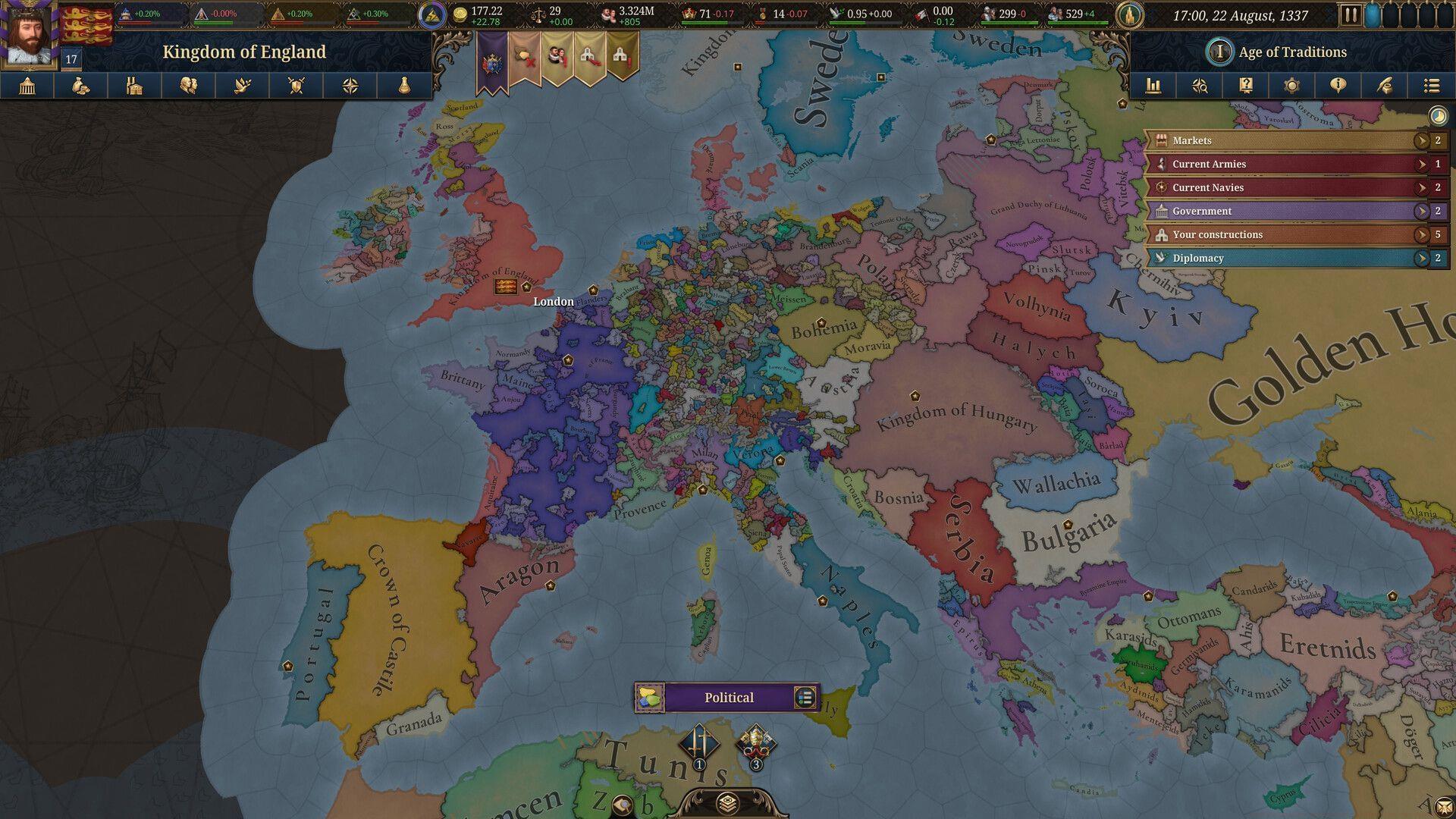
At the heart of Europa Universalis 5’s intricate simulation lies its population system, represented by distinct socio-economic classes known as Pops. These are not mere numbers but the living, breathing components of your state, each with specific roles, needs, and contributions. Mastering their allocation is the single most critical factor separating a flourishing empire from a faltering one.
Effective employment management ensures a steady flow of resources, a content populace, and a robust military, directly fueling your expansion and diplomatic clout. Conversely, neglect leads to a cascade of failures: unemployment saps productivity, discontent breeds rebellion, and your grand strategy crumbles from within.
Also read: What are the best nations to pick in Europa Universalis 5?
Your empire rests on the shoulders of six fundamental Pop classes. Understanding their unique functions and optimal workplaces is non-negotiable for success:
- Nobles: The aristocratic elite, operating from courts, embassies, and formal gardens. They are your primary agents for diplomatic actions, improving relations, and forging alliances. Under-employing Nobles weakens your international standing.
- Clerics: The spiritual and social backbone, serving in churches, temples, and missionary outposts. They provide societal cohesion, boost public order, and can facilitate cultural conversion. A strong Cleric class can mitigate unrest in newly conquered territories.
- Burghers: The merchant and artisan engine of your economy, thriving in markets, trade guilds, and specialized workshops. They directly increase trade value, tariff income, and the production of high-value manufactured goods. Prioritize Burghers in provinces with valuable trade goods.
- Laborers: The rural and industrial workforce, manning farms, mines, lumber camps, and factories. They are essential for raw resource extraction and basic commodity production. Their employment level directly correlates with your nation’s self-sufficiency in key materials.
- Soldiers: Your military manpower, stationed in barracks, castles, and garrison forts. They not only form your armies but also contribute to local defense and suppression of revolts. Strategic placement of Soldier Pops in border provinces or recently pacified regions is crucial.
- Peasants: The lower-class rural populace, working in villages, settlements, and supporting town development. They provide a baseline of agricultural output and population growth. While less specialized, they are a flexible labor pool that can fill gaps when other Pops are scarce.
The fundamental gameplay loop involves constructing buildings that create job slots and then ensuring the correct Pop class fills them. Misassignment—like putting Soldiers in a market—yields minimal benefits and wastes potential.
Employment Styles: Tactical Frameworks for Pop Distribution
Beyond manual micromanagement, EU5 provides four overarching employment styles—essentially AI governors—that automate how your Pops fill vacancies. Your choice of style is a strategic declaration of your current priorities.
Each style serves a distinct purpose:
- Equality: This style acts as a balancer, distributing jobs evenly across all building types and Pop classes. It’s optimal for the early to mid-game when your population composition is relatively balanced, or when you aim for stable, incremental growth without specialization. It prevents any one sector from being starved of workers.
- First Come, First Served: A rapid deployment tool. Pops will fill jobs in the exact chronological order you constructed buildings. Use this when you have a sudden surplus of a single Pop type (e.g., after conquering a province rich in Laborers) and need them productive immediately to boost your economy. It’s less efficient but very fast.
- Most Profitable First: The capitalist’s choice. This algorithm ruthlessly staffs the buildings with the highest estimated income per job first. Deploy this when your treasury is low, you need to service loans, or you’re preparing for a costly war. Warning: It can lead to long-term infrastructure neglect if used exclusively.
- Infrastructure, then Most Profitable: A hybrid, long-term growth model. It first ensures all core infrastructure buildings (like roads, ports, and administration) are fully manned, then switches to a profit-maximizing mode. This is arguably the most powerful late-game style, as it ensures your economic base is solid before layering on pure profit.
Critical Pro-Tip: You are not locked into one style. The game allows you to switch employment systems at any time from the Buildings tab of the Production menu. The adept player will rotate styles: use ‘Most Profitable First’ to fund a war, switch to ‘First Come, First Served’ to quickly employ captured populations, and then settle into ‘Infrastructure, then Most Profitable’ for peacetime development.
Also read: All cheats and console commands in Europa Universalis 5
Advanced Management: Pro Tips and Strategic Considerations
Transitioning from competent to exceptional Pop management requires understanding deeper interactions and avoiding common traps.
Common Mistakes to Avoid
- Ignoring Pop Happiness: Each Pop class has a happiness level tied to employment and wages. Continuously unemployed Pops of a specific class will become disaffected, increasing revolt risk in their province. Regularly check the Estates or Population tab for discontent.
- Over-specializing Provinces: While focusing a province on one yield (e.g., making it a pure Soldier farm) seems efficient, it makes that province extremely vulnerable if that Pop type becomes scarce due to war or plague. Aim for a degree of balance within key heartland provinces.
- Forgetting about Transportation Efficiency: Pops assigned to buildings in provinces with low infrastructure (roads, ports) will work at reduced efficiency. Before spamming factories in a remote province, invest in infrastructure first.
Optimization Tips for Advanced Players
- Synergistic Building Placement: Construct buildings that employ complementary Pops near each other. For example, place a Barracks (Soldiers) next to a Training Field (improves unit experience) and a Weapons Workshop (Burghers) for a dedicated military production complex.
- Late-Game Labor Shifting: In the late game, as technology advances, the relative value of Peasants and basic Laborers may decline. Consider using the “Promote Pop” decision (if available) or focusing new construction on buildings that employ Burghers and Specialists to elevate your economy.
- Crisis Management: During a devastating war or plague that drains a specific Pop, immediately switch to an employment style that protects your most critical sectors. You might manually prioritize keeping your vital cannon foundries (Burghers) staffed over less essential farms.
Ultimately, managing Pops in EU5 is a dynamic dance between short-term exigencies and long-term planning. Your employment strategy should be as fluid as your diplomatic and military strategies, constantly adapting to secure your nation’s prosperity.
No reproduction without permission:Tsp Game Club » How to manage employment in Europa Universalis 5 Master Europa Universalis 5's employment mechanics with advanced strategies for optimal Pop management and economic growth.